Whether a Bernedoodle Can Be Walked by a Child
It's a common and heartwarming image: a child proudly walking the family dog. But when that dog is a Bernedoodle, a breed known for its substantial size and often playful exuberance, the reality of a small human managing a large, strong canine can be a source of genuine concern for parents. This guide will explore the nuances of whether a Bernedoodle can truly be walked by a child, delving into safety, training, and responsible handling to ensure everyone stays happy and secure.
Understanding the Bernedoodle's Size and Strength
Let's be honest, those Bernedoodle puppies are utterly adorable, fitting perfectly into tiny arms. But they don't stay that way for long! One of the biggest factors in whether a child can walk a Bernedoodle safely is simply the dog's sheer physical presence. These dogs grow to be quite large and possess a surprising amount of strength, even when they're not actively trying to pull.
The Reality of a Growing Bernedoodle
A standard Bernedoodle can easily reach 70 to 90 pounds, and sometimes even more. Imagine a child, perhaps 60 or 70 pounds themselves, trying to control a dog that outweighs them, often by a significant margin. Even a mini Bernedoodle, while smaller, can still be a solid 25-50 pounds – still a lot for a younger child to handle if they decide to chase a squirrel. This rapid growth means that while your Bernedoodle puppy might be manageable for a child today, they'll quickly become a powerful animal with a mind of their own. It's not just about muscle, either; their robust bone structure and low center of gravity mean they can anchor themselves surprisingly well against a pull, making it an uneven tug-of-war for a smaller person. You might find yourself asking The Age a Bernedoodle Reaches Full Height sooner than you think, and realizing just how much dog you have on your hands.
When we talk about walking, we're not just envisioning a calm stroll around the block. Dogs encounter all sorts of distractions: other dogs, cyclists, a plastic bag blowing down the street, or even just an interesting smell. A Bernedoodle, despite its generally laid-back nature, is still a dog with instincts. If something suddenly catches their attention and they lunge, a child holding the leash could easily be pulled off their feet, sustain rope burns, or lose control entirely. It’s not a reflection on the child's capability or the dog's temperament; it's simply a matter of physics and the unpredictable nature of the world.
Why Size Matters for Control
The mechanics of walking a dog effectively rely on more than just holding the leash; it's about subtle cues, body language, and the ability to physically redirect or stop your dog if necessary. For a child, especially one who is still developing their motor skills and understanding of leverage, these nuances can be incredibly challenging. A sudden jerk from a 90-pound Bernedoodle can cause even an adult to stumble, let alone a child. Imagine trying to pivot or change direction quickly with a dog that is literally pulling you along.
The critical issue here isn't a Bernedoodle's potential aggression, which is generally quite low, but rather their sheer enthusiasm and strength. They often lean on people or will pull with all their might when excited. A Bernedoodle That Leans on Everyone is a common trait, and while endearing, it shows just how much weight they can exert. A child's grip strength might not be enough to hold onto a leash if the dog decides to put its full body weight into a pull. This isn't just a concern for the child's safety, but also for the dog's. If the leash is dropped, a loose Bernedoodle could run into traffic or get into other dangerous situations, which is a scary thought for any pet parent.
Temperament and Trainability Considerations
Bernedoodles are generally known for their wonderful, affectionate temperaments, a delightful blend of the Bernese Mountain Dog's calm loyalty and the Poodle's intelligence and playfulness. However, even the best temperament requires consistent training, especially when a child might be involved in handling.
The Bernedoodle's Affectionate but Sometimes Goofy Nature
Bernedoodles are typically very sweet and good-natured, often described as goofy and loving. They crave human companionship and are usually eager to please, which sounds like a perfect recipe for a child-friendly dog. However, their youthful exuberance can last longer than you'd expect; The Age a Bernedoodle Stops Acting Like a Puppy can be well past their first birthday. They can be easily distracted by novel sights, sounds, or smells, making a leisurely walk turn into an unexpected adventure. They might suddenly decide to greet a passing stranger or another dog with a joyous leap or an enthusiastic pull, forgetting the small human at the other end of the leash.
Even an impeccably behaved Bernedoodle, one that knows all its commands, can have moments of pure, unadulterated doggy joy. Picture this: your child is confidently walking your Bernedoodle, and a friendly neighbor approaches to say hello. Your Bernedoodle, being the social butterfly it often is, might jump up in excitement, not maliciously, but simply because it wants to engage. For a child, managing this sudden burst of energy and redirecting a large dog can be incredibly difficult, leading to potential tumbles or an overwhelming situation. It's important to understand that a Bernedoodle's loving nature doesn't automatically translate to perfect leash manners, especially when there's an exciting stimulus present.
Building a Solid Foundation of Leash Manners
Regardless of who is holding the leash, every Bernedoodle needs a strong foundation in leash manners. This means teaching them to walk politely without pulling from the moment they are puppies. This training should be consistent and reinforced by every member of the family, including children, but always under adult supervision. Positive reinforcement methods work wonders with Bernedoodles, as they respond well to rewards and praise. Programs like BAXTER & Bella offer excellent online resources and guidance for training puppies from the start, covering everything from basic obedience to polite leash walking, which can be invaluable.
Teaching a Bernedoodle to heel, to 'leave it' when distracted, and to walk on a loose leash is paramount. If a Bernedoodle constantly pulls, even a strong adult can struggle, so expecting a child to correct this behavior is unrealistic. Consistency is key here. Every time the dog pulls and gets rewarded by moving forward, the pulling behavior is reinforced. This means that even when a child is "just walking" the dog, they must be equipped with the knowledge and physical ability to consistently apply the training. Without this, you might end up with A Bernedoodle That Jumps on People or pulls its owner over, which is a recipe for frustration and potential injury.
Safety Measures and Practical Strategies for Child Walkers
Allowing a child to walk a Bernedoodle safely isn't about setting them up for failure. It's about careful planning, using the right tools, and providing constant supervision. It’s about empowering them to participate responsibly, not taking on the full burden alone.
Equipment That Can Make a Difference
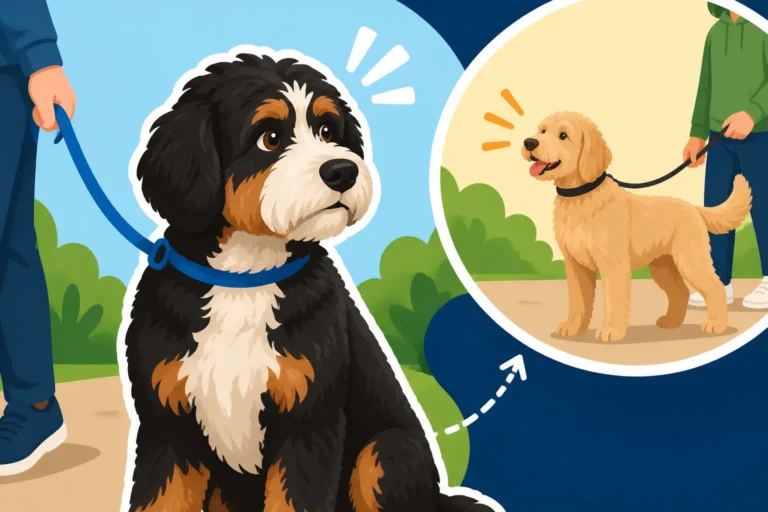
The right equipment can be a game-changer when a child is learning to walk a Bernedoodle. A standard flat collar and leash are often insufficient for controlling a powerful dog, especially if they decide to pull. Here are some options that can provide better control and comfort:
- Front-Clip Harnesses: These harnesses clip at the dog's chest, redirecting their forward momentum back towards the handler if they pull. This effectively lessens their pulling power and makes it easier for a child to manage. Brands available on Amazon offer a wide selection, and finding one that fits your Bernedoodle's deep chest and broad shoulders comfortably is crucial. Many Bernedoodle owners find these harnesses to be incredibly effective for teaching loose-leash walking, making it a much more pleasant experience for both dog and handler.
- Head Halters: For stronger, more determined pullers, a head halter can offer excellent control. It works similarly to a horse halter, guiding the dog's head, which in turn directs their body. While some dogs initially resist them, with proper introduction and positive reinforcement, many adapt well. This can be a very useful tool for a child, as it requires less physical strength to direct the dog. However, proper fitting and usage are essential to avoid discomfort for the dog.
- Sturdy Leashes with Comfortable Handles: Opt for a shorter, fixed-length leash (4-6 feet) rather than a retractable one, which offers very little control. Look for leashes with padded handles for a child's comfort and a strong clasp that won't easily break or come undone. A good quality leash will be a worthwhile investment, especially when considering the strength of a Bernedoodle that pulls its owner over.
| Equipment Type | Pros for Child Handler | Cons for Child Handler |
|---|---|---|
| Flat Collar | Simple, easy to put on | Little control against pulling, can hurt dog's neck |
| Front-Clip Harness | Reduces pulling power, redirects dog easily | Can sometimes chafe if not fitted correctly, dog might chew |
| Head Halter | Excellent control with minimal physical effort | Some dogs dislike it initially, requires careful introduction |
| Back-Clip Harness | Comfortable for dog | Does not reduce pulling, can make pulling worse |
| Retractable Leash | Gives dog more roaming space (discouraged) | No control, high risk of injury to handler/dog, tangles |
| Fixed 4-6 ft Leash | Good control, keeps dog close, less tangling | Less roaming space than retractable, must be held properly |
Supervised Walks and Shared Responsibilities
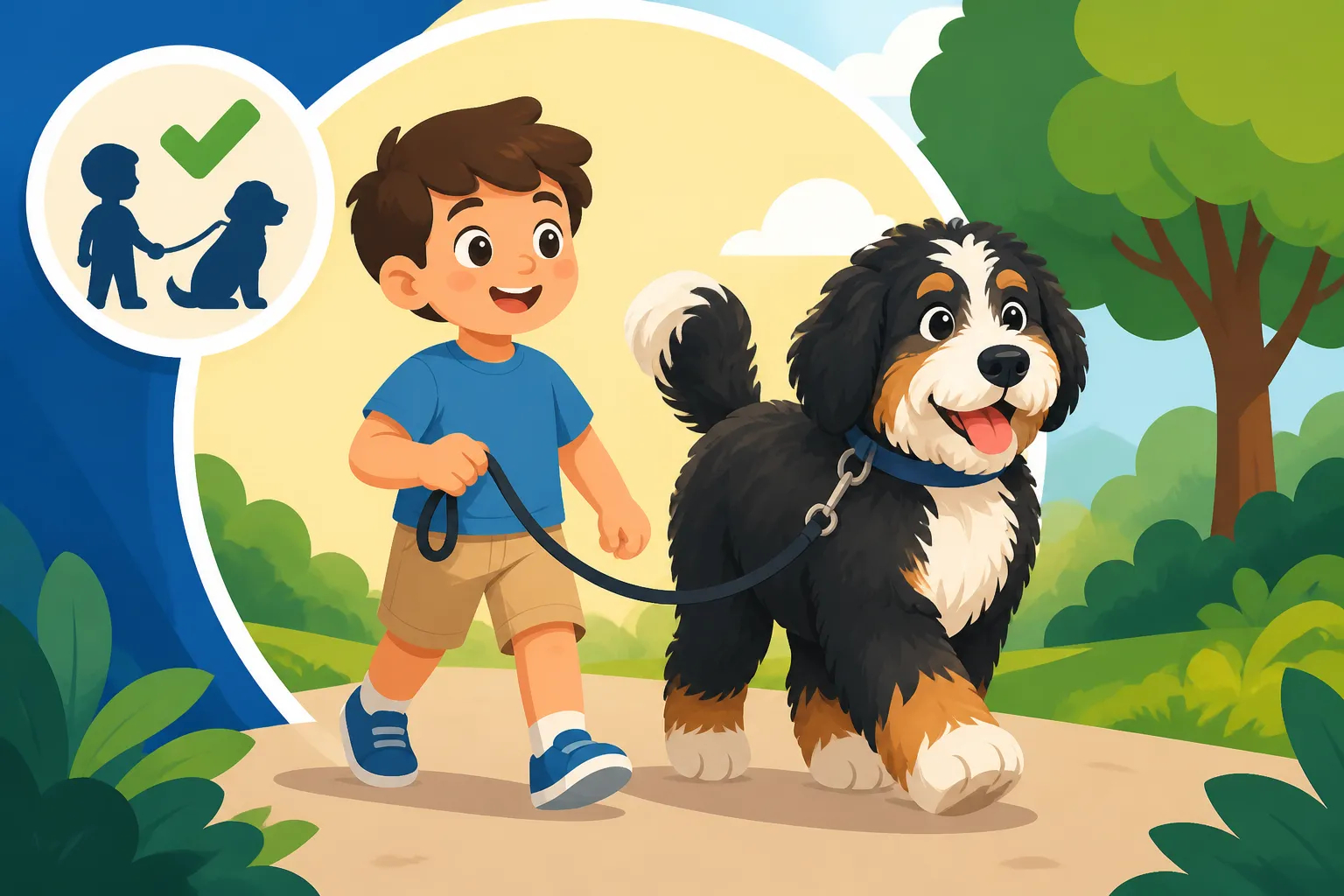
The idea that a child can simply take a Bernedoodle out for a walk alone is often unrealistic and unsafe. Instead, think of it as a supervised activity or a shared responsibility. A child can certainly be involved in walking the dog, but an adult should always be present, holding a backup leash or walking alongside, ready to step in if needed. This isn't just about controlling the dog; it's about teaching the child responsible pet ownership and how to react to unexpected situations.
For instance, your child could hold the primary leash with a front-clip harness, while you hold a secondary leash clipped to the dog's collar or another point on the harness. This way, the child gets the experience and learns, but you maintain ultimate control and safety. This approach also allows you to reinforce good behavior and guide your child through any challenges they encounter. It's also an opportunity to teach them about awareness of their surroundings and how to anticipate potential distractions. Remember, a Bernedoodle's well-being is paramount, and ensuring they are always under control is key. The Five Minute Rule on a Bernedoodle Puppy's Walks is great for young pups, but as they grow, the need for controlled, safe walks remains.
Age and Maturity of the Child
Physical size isn't the only factor; a child's age and maturity play a huge role. A responsible 12-year-old with a solid understanding of dog behavior and consistent training experience will be far more capable than an excitable 7-year-old, even if they are the same physical size. Consider:
- Emotional Maturity: Can your child remain calm and assertive if the Bernedoodle gets distracted or pulls? Do they understand that the dog is a living creature with needs, not just a toy?
- Physical Strength and Coordination: While equipment helps, a certain level of physical strength is still required to maintain control and react quickly.
- Consistency: Will your child consistently enforce leash manners, or will they let the dog pull occasionally, undermining previous training?
- Awareness: Can they pay attention to their surroundings for potential hazards (cars, other dogs, children) while also focusing on their Bernedoodle?
Rather than setting a hard age limit, evaluate your individual child and your specific Bernedoodle. Some Bernedoodles are calmer and less prone to pulling, while others retain a stronger puppy-like energy for longer. You'll need to know The Exercise a Standard Bernedoodle Needs Daily to judge if your child can meet that need safely. It's a spectrum, and finding the sweet spot where both child and dog are safe and happy is the goal.
Empowering Children as Responsible Dog Handlers
Involving children in dog walking, even with supervision, can be a fantastic way to teach responsibility and build a strong bond between them and their Bernedoodle. It's about equipping them with the knowledge and skills to be effective, rather than just letting them hold the leash.
Training the Child to Handle a Large Dog
Just as you train your Bernedoodle, you need to train your child. This isn't about barking commands at your kid, but about patient instruction and role-playing. Teach them how to hold the leash correctly (not wrapped around their hand, but with a secure grip), how to give clear verbal cues, and how to reward good behavior.
Practice in a controlled environment first, like your backyard or a quiet park. Show them how to anticipate when the dog might pull and how to calmly redirect their attention. Teach them to stop walking if the dog pulls, waiting for slack in the leash before continuing. This teaches both the child and the dog that pulling doesn't get them where they want to go. Online training platforms, like BAXTER & Bella, often have modules or tips for involving children in training, which can be immensely helpful. They can learn about body language, consistency, and the power of positive reinforcement. Understanding What a Bernedoodle Will Work For (treats, praise, toys) will also help your child motivate the dog effectively.
Setting Realistic Expectations and Boundaries
It's crucial to set realistic expectations for what your child can and cannot do independently. A child might be perfectly capable of walking a calm Bernedoodle around a quiet park path for a short duration, but they shouldn't be expected to navigate a busy street with lots of distractions, or manage an emergency situation.
Here's a breakdown of what a child can often do with supervision:
- Practice Loose-Leash Walking: In a quiet, fenced area, a child can practice walking with the dog on a loose leash, focusing on cues like "heel" and "stop."
- Short, Controlled Walks: On a familiar, low-distraction route, with an adult close by (perhaps even holding a secondary leash), a child can feel the pride of walking their dog.
- Training Exercises: Children can actively participate in training sessions, giving commands and rewarding their Bernedoodle. This builds their bond and the dog's responsiveness. Building a Recall on a Bernedoodle is an excellent exercise for a child and dog to practice together in a safe area.
What they shouldn't do alone:
- Walk in Busy Areas: High-traffic areas, crowded parks, or streets with lots of unpredictable elements are too risky for a child walking a large Bernedoodle alone.
- Handle Difficult Situations: If the Bernedoodle encounters an aggressive dog, a fearful person, or a sudden loud noise, a child is unlikely to have the physical or emotional capacity to handle the situation safely.
- Walk without Appropriate Equipment: A child should never attempt to walk a Bernedoodle without a harness or head halter that provides ample control.
By clearly defining roles and ensuring adult oversight, you can empower your child to be a vital part of your Bernedoodle's life, fostering responsibility and a deep connection, all while keeping safety as the top priority.
Disclaimer
This article is for general informational purposes only and does not constitute professional advice. Laws, prices and regulations vary by location and change over time. Consult a qualified professional for guidance on your specific situation.