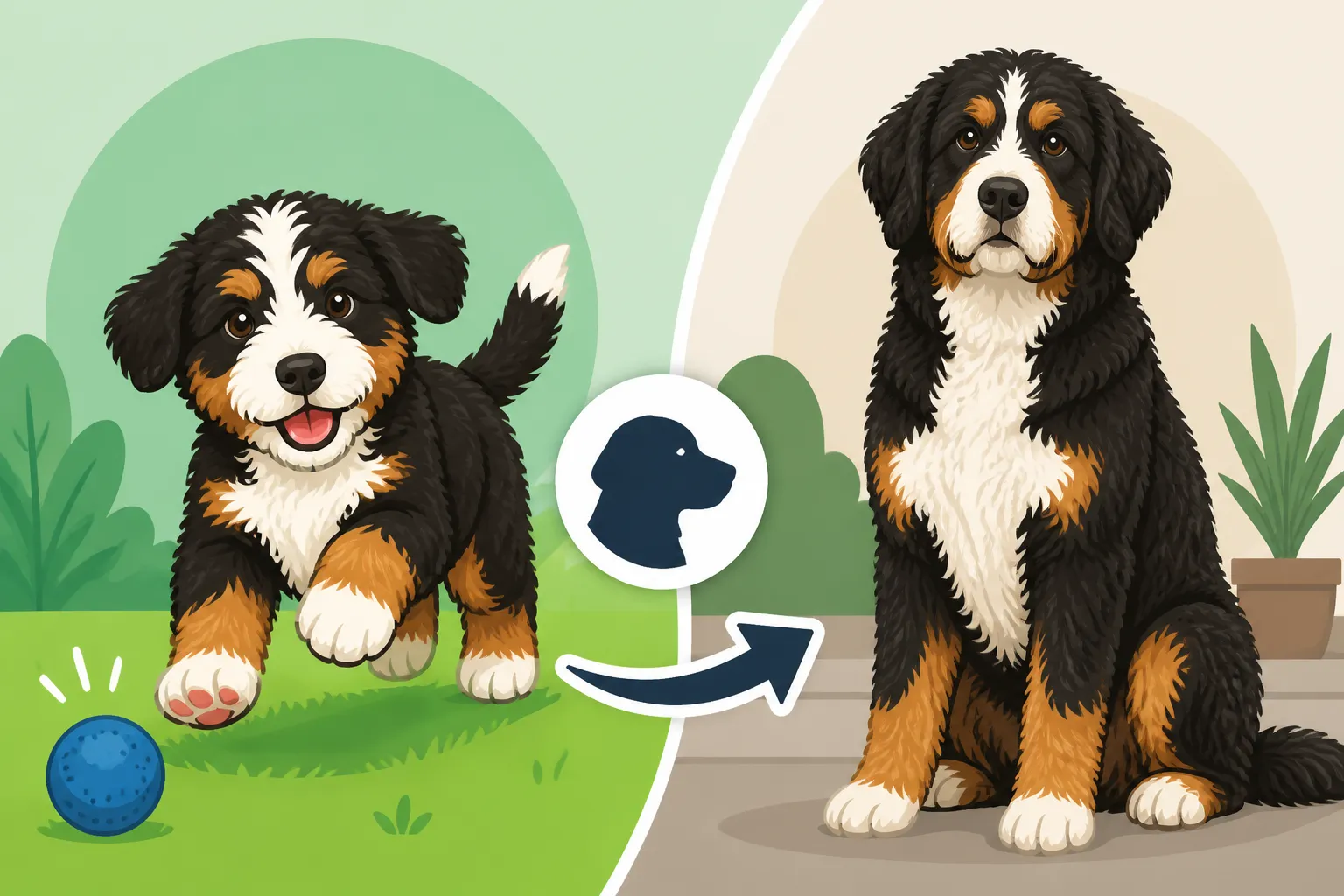
The Age a Bernedoodle Stops Acting Like a Puppy
Many Bernedoodle owners find themselves constantly asking when their charming, albeit sometimes chaotic, giant fluffball will finally settle down and stop acting like a perpetual puppy. It's a common frustration when your adorable eight-month-old is already bigger than many adult dogs but still exhibits the boundless energy and questionable decision-making of a much younger pup. This comprehensive guide will delve into the various stages of a Bernedoodle's development, shedding light on when you can realistically expect that transition from playful youngster to a more mature, calm companion.
The Unfolding Saga of Bernedoodle Puppyhood: It's Not Just About Size
It’s easy to look at a rapidly growing Bernedoodle puppy, already resembling a small bear at just a few months old, and assume they're practically an adult. But don't let their impressive size fool you. Their physical growth often outpaces their mental and emotional maturity by a significant margin, leading to that endearing but sometimes exasperating "big puppy" phase.
Defining "Puppy" Beyond the First Year
For many dog breeds, "puppyhood" is generally considered to last until about a year old. For a Bernedoodle, especially a standard size, that timeline often stretches a bit longer. They might hit their full adult height and nearly their adult weight by 12 to 18 months, but their behavior can remain distinctly juvenile. Think of it like a human teenager who looks like an adult but still needs guidance and supervision, sometimes struggling with impulse control. They're still learning, still testing boundaries, and still have a lot of brain development left to do. Expecting adult behavior from a physically large but mentally young dog can lead to frustration for both you and your Bernedoodle.
The Prolonged Playfulness of a Bernedoodle
One of the most beloved traits of the Bernedoodle is their joyful, sometimes goofy, and inherently playful nature. This isn't something that suddenly disappears at a specific age, but rather it gradually integrates into a more mature personality. During their extended puppy phase, their play can be quite boisterous. They might still be prone to mouthing, jumping, and exhibiting bursts of zoomies, even when they're well past the traditional puppy stage. This isn't misbehavior as much as it is a natural expression of their youthful energy and zest for life. Understanding this long developmental arc helps set realistic expectations for their temperament.
Physical Development: When Their Bodies Catch Up to Their Minds (Or Vice Versa)
The sheer speed at which a Bernedoodle grows can be astonishing. One day you have a tiny fluffball, the next you're tripping over a small pony. This rapid growth, however, comes with its own set of considerations, particularly regarding their skeletal and joint development, which plays a role in when they can truly act like an adult.
Growth Plates and Joint Health
A critical aspect of a large breed puppy's development is the closure of their growth plates. These are areas of cartilage in young dogs' bones that allow for growth. They typically close between 12 and 18 months of age, sometimes even later for very large breeds like the Bernedoodle. Until these plates are fully closed, their joints are particularly vulnerable to injury from high-impact activities like excessive jumping, long runs on hard surfaces, or repetitive stair climbing. This is why controlled exercise and proper nutrition are so crucial in their first year to 18 months. Even if they have the energy to run a marathon, their developing skeleton isn't ready for it. You can learn more about this by reading The Age a Bernedoodle Reaches Full Height.
The Role of Size in Physical Maturity
A standard Bernedoodle, which can easily reach 70-90 pounds or more, will naturally take longer to physically mature than a miniature or tiny Bernedoodle. Their larger frame requires more time for bones, ligaments, and muscles to strengthen and solidify. This extended physical development means they might remain clumsy or uncoordinated for longer, often bumping into things or misjudging distances. Owners of smaller Bernedoodles might notice their pups settling into a more "adult" physical demeanor earlier, simply because their bodies have less growing to do. Regardless of size, the common wisdom holds: Why a Bernedoodle Matures Slower Than It Grows.
The "Teenage" Bernedoodle: Navigating Adolescence
Ah, adolescence – a challenging but pivotal stage for both dogs and their human companions. For Bernedoodles, this period often begins around 6-8 months and can last well into their second year, sometimes even longer. It’s a time of significant hormonal changes, burgeoning independence, and sometimes, a frustrating regression in training.
The Age a Bernedoodle Finally Settles: A Gradual Process
There's no magic switch that flips, suddenly transforming your adolescent Bernedoodle into a perfectly behaved adult. The settling down process is incredibly gradual. During adolescence, you might find that your perfectly potty-trained pup has an accident indoors, or your dog who always came when called suddenly develops selective hearing at the dog park. This isn't spite; it's often a combination of hormonal surges, increased curiosity about the world, and a developing sense of self that sometimes overrides their learned behaviors. Persistence and patience with training during this phase are key. It’s also during this time that you might be wondering Whether a Bernedoodle Is Still a Puppy at Two.
Testing Boundaries and the "Adolescent Regression"
Just like human teenagers, adolescent Bernedoodles are prone to testing boundaries. They'll push limits, challenge established rules, and see what they can get away with. This can manifest as an increase in mouthing, destructive chewing (especially if they're bored), or simply ignoring commands they previously mastered. It can feel like they've completely forgotten everything you taught them, leading to the question, Whether a Bernedoodle Adolescent Forgets Its Training. This isn't a sign of a bad dog, but rather a normal developmental phase. Your consistent, positive reinforcement during this time is crucial to guide them through it. Investing in durable chew toys, perhaps from a selection on Amazon, can redirect destructive chewing habits during this challenging period.
Increased Energy and Exercise Needs
While puppies have bursts of energy followed by long naps, adolescent Bernedoodles often have sustained, high levels of energy. They need outlets for this energy, or they'll invent their own, often to the detriment of your furniture or landscaping. Regular, appropriate exercise is vital. This means not just letting them out in the yard, but engaging them physically and mentally with walks, play sessions, and training. Remember, The Exercise a Standard Bernedoodle Needs Daily is significant. Consider incorporating puzzle toys or scent work to tire their brains as well as their bodies. For consistent guidance through these stages, an online puppy school like BAXTER & Bella can be incredibly helpful, providing structured lessons that grow with your dog.
When the Brain Finally Matures: Emotional Stability and Calmness
Beyond the physical growth and the teenage antics, true maturity in a Bernedoodle comes when their brain development reaches a point where they can consistently demonstrate better impulse control, emotional regulation, and a more predictable temperament. This is when you'll truly start to see them act less like a puppy and more like a well-adjusted adult.
The Long Road to Emotional Regulation
For many large breeds, full mental and emotional maturity isn't reached until they are two, or even three years old. This means that while they might be physically immense at 18 months, their ability to regulate their emotions, handle novel situations calmly, or resist immediate gratification is still developing. They might still get overly excited when guests arrive, react more strongly to new stimuli, or struggle with self-control around enticing smells or other dogs. This slower emotional development is a hallmark of many larger, more "molosser" type breeds, and the Bernese Mountain Dog side of the Bernedoodle certainly contributes to this.
Impulse Control: The Hallmark of Maturity
One of the clearest indicators that your Bernedoodle is shedding its puppy behaviors is a noticeable improvement in impulse control. This means they can:
- Wait patiently for their food bowl instead of jumping and barking.
- Walk politely on a leash without pulling excessively towards every squirrel.
- Lie calmly at your feet during quiet times, rather than constantly seeking attention.
- Resist the urge to jump on visitors, even if they're very excited.
Achieving this level of impulse control requires consistent training and reinforcement throughout their puppy and adolescent stages. For managing pulls on the leash during walks, a front-clip harness can be a game-changer, providing better control without discomfort, and these are widely available on Amazon.
From Goofy to Graceful: The Shift in Demeanor
As their brains mature, you'll notice a subtle but significant shift in their overall demeanor. While the playful spark will always remain, the frenetic, clumsy energy of puppyhood will be replaced by a more composed and thoughtful approach to life. They’ll still be joyful, but perhaps less prone to spontaneous bursts of zoomies indoors, and more likely to settle down after a good play session. This is the stage where you truly start to appreciate the calm, affectionate nature that the Bernedoodle is so renowned for. It's when The Age a Bernedoodle Finally Settles becomes less of a question and more of a lived reality.
How Breed Influence Shapes Their Maturity Timeline
The Bernedoodle is a hybrid, a wonderful blend of two distinct breeds: the Poodle and the Bernese Mountain Dog. Understanding the inherent traits of both parent breeds is crucial to anticipating your Bernedoodle's developmental timeline and behavioral quirks. Why a Bernedoodle Grows Faster Than It Thinks is a common observation among owners.
The Bernese Mountain Dog's Slower Pace
The Bernese Mountain Dog is known for its sweet, gentle temperament and a tendency towards a slower, more deliberate maturation process. They are often described as "big puppies" for longer than many other breeds, both physically and mentally. Their robust, heavy build means their growth plates close later, and their emotional development takes time to catch up. They are often quite goofy and playful well into their second year. This influence definitely contributes to the Bernedoodle's extended puppy phase. If you're curious about this side of their heritage, read What the Bernese Contributes to a Bernedoodle.
The Poodle's Intelligence and Sensitivity
Poodles, on the other hand, are highly intelligent, quick learners, and often more sensitive. While they might pick up commands faster than a Bernese, their intelligence can sometimes lead to an adolescent phase characterized by testing limits and clever mischief if not properly channeled. The Poodle side might introduce a bit more bounce and exuberance, especially in younger Bernedoodles. However, their trainability is a huge asset in navigating the challenging adolescent period. For more on this, check out What the Poodle Contributes to a Bernedoodle. The combination of these traits means you get a dog that's smart but might take its sweet time to fully "grow up" and utilize that intelligence for consistent calm behavior.
Navigating Conflicting Developmental Timelines
The blend of these two breeds can create an interesting dynamic. You might have a Bernedoodle that is incredibly bright and understands commands quickly (Poodle influence) but is still prone to bursts of clumsy, uncoordinated play and delayed emotional responses (Bernese influence). This means your approach to training and management needs to be adaptable, recognizing that different aspects of their development might be progressing at different rates. Patience truly is a virtue with this hybrid, as they balance these two distinct inheritances.
Nurturing Maturity: Your Role in Their Development
While genetics and breed predispositions play a significant role, your consistent effort, environment, and training approach are paramount in guiding your Bernedoodle towards a well-adjusted adulthood. You can't rush maturity, but you can certainly foster it.
Consistent Training and Socialization
From the moment you bring your Bernedoodle puppy home, consistent training and broad socialization are non-negotiable. This means not just basic obedience, but exposing them to a variety of sights, sounds, people, and appropriate dog interactions. A well-socialized puppy is more likely to grow into a confident and well-adjusted adult, better equipped to handle novel situations without undue anxiety or over-excitement. Continue with training through adolescence, even when it feels like they're ignoring you. Reinforce good behaviors and redirect unwanted ones with patience and positive methods. For those moments when their recall seems to vanish, a long line, readily available on Amazon, can be a lifesaver for practicing recall in a safe, controlled environment.
Structured Exercise and Mental Stimulation
As discussed earlier, Bernedoodles, especially during their adolescent phase, have a lot of energy. Providing ample opportunities for structured exercise—like walks, hikes, or safe off-leash play—is crucial. But don't forget mental stimulation. These intelligent dogs need to use their brains! Puzzle toys, obedience training sessions, scent work, or even learning new tricks can be incredibly effective in tiring them out and preventing boredom-related destructive behaviors. A tired Bernedoodle is generally a well-behaved Bernedoodle. For puppies, remember the five-minute rule for walks: 5 minutes per month of age, twice a day, to protect their developing joints.
Patience, Empathy, and Realistic Expectations
Perhaps the most important thing you can offer your developing Bernedoodle is a healthy dose of patience and empathy. Understand that they are not being "stubborn" or "naughty" intentionally when they regress during adolescence or take a long time to settle. They are simply going through natural developmental stages. Celebrate the small victories, maintain a sense of humor, and remember that the goofy, loving "puppy" you adore will eventually mature into an equally loving, but more composed, adult companion. It's a journey, not a race.
Here's a table summarizing the general developmental stages of a Bernedoodle:
| Stage | Typical Age Range | Key Physical Characteristics | Key Behavioral Traits | Training Focus |
|---|---|---|---|---|
| Puppyhood | 8 weeks – 6 months | Rapid growth, developing coordination, baby teeth to adult teeth | High energy, short attention span, high curiosity, mouthing, house training | Socialization, basic obedience (sit, stay, come), crate training, house training |
| Adolescence | 6 months – 2 years | Approaching full size/height, growth plates closing, hormonal changes | Increased energy, testing boundaries, selective hearing, increased independence, clumsiness | Reinforce all basic commands, impulse control, advanced obedience, confidence building, mental stimulation |
| Young Adulthood | 2 years – 3 years | Full physical maturity, muscle development, weight filling out | Settling into routines, improved impulse control, more consistent temperament, still playful | Refine advanced commands, maintain consistency, explore dog sports/activities, advanced problem-solving |
| Adulthood | 3 years + | Stable physical condition | Calm, reliable, consistent temperament, deep bond with family | Ongoing maintenance of training, continued mental and physical enrichment, enjoying companionship |
This table provides a general guideline, and individual Bernedoodles may mature at different rates.
Disclaimer
This article is for general informational purposes only and does not constitute professional advice. Laws, prices and regulations vary by location and change over time. Consult a qualified professional for guidance on your specific situation.