Why a Bernedoodle Grows Faster Than It Thinks
Oh, the Bernedoodle adolescence! It's a phase that can truly test your patience, isn't it? One minute you have this sweet, cuddly fluffball, and the next, you're wrestling with a ninety-pound tornado that still thinks it's a lap dog. Many of us find ourselves scratching our heads, wondering why our giant puppies are still acting like, well, puppies, even as they tower over us. This comprehensive guide is going to dive deep into the fascinating (and sometimes frustrating) reality of why your Bernedoodle seems to grow faster physically than it does mentally, and how you can navigate this quirky, lovable stage with grace and a good sense of humor.
The Genetic Blueprint: Why Bernedoodles Are Fast Growers
It’s not just your imagination; Bernedoodles truly do put on size at an astonishing rate. This rapid physical development is deeply rooted in the genetics inherited from their parent breeds. Understanding this biological predisposition is the first step in coming to terms with the adorable, oversized goofball currently trying to sit on your feet.
The Bernese Mountain Dog Influence on Growth
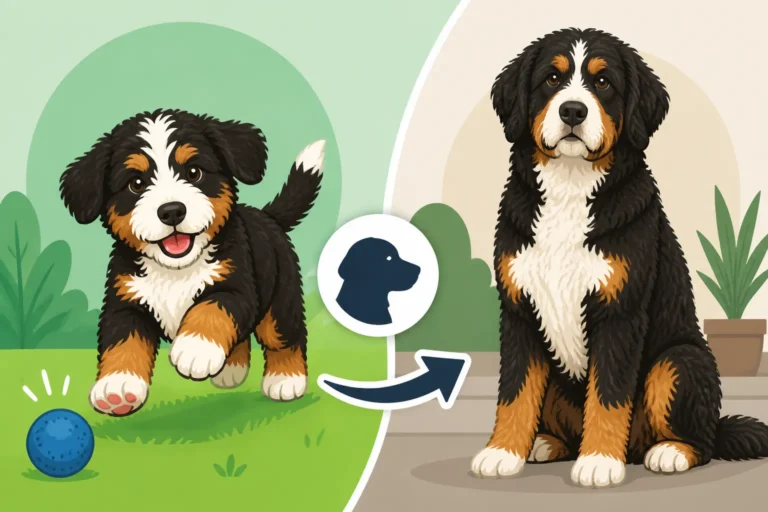
Think about the Bernese Mountain Dog parent. These are magnificent, substantial dogs, bred for work in the Swiss Alps, which naturally requires a robust physique. They are known for their rapid growth in their first year, often reaching most of their adult height and considerable weight by 10-12 months of age. This accelerated growth rate is a direct hand-me-down to your Bernedoodle. They inherit those long bones and the tendency to pack on muscle and substance quickly.
What this means for you is that your cute little Bernedoodle puppy might weigh a mere 15 pounds at 8 weeks, but before you can blink, they’re pushing 50 pounds by 5 or 6 months. It’s a bit like watching a time-lapse video in fast forward. This rapid increase in size isn't matched by an equally fast maturation of their internal systems or their brain development, which can lead to some interesting discrepancies. Their joints and skeletal structure are also undergoing immense changes during this period, which is why careful nutrition and controlled exercise, like what's discussed in Growing a Standard Bernedoodle Slowly on Purpose, are absolutely crucial to prevent future health issues.
The Poodle's Contribution to Brain Development
While the Bernese brings the rapid growth, the Poodle parent brings a different kind of genetic contribution to the Bernedoodle's overall development. Poodles are incredibly intelligent, often ranked among the smartest dog breeds. However, intelligence doesn't necessarily equate to emotional maturity or quick decision-making in the puppy and adolescent stages. In fact, highly intelligent breeds can sometimes seem more prone to mischievous or "thinker" behaviors during adolescence because they're constantly processing, experimenting, and pushing boundaries.
The Poodle side of your Bernedoodle's brain is highly capable, but it's also still developing its executive functions – things like impulse control, consequence understanding, and consistent recall. So, you might have a physically imposing Bernedoodle that can learn a new trick in five minutes, but then turn around and "forget" all its leash manners the moment a squirrel darts by. It’s this blend of rapid physical growth from the Bernese and a still-maturing, albeit intelligent, brain from the Poodle that creates the unique Bernedoodle adolescent experience. Why a Bernedoodle Matures Slower Than It Grows delves into this further, highlighting the extended period it takes for their minds to truly catch up with their bodies.
Adolescent Antics: The Teenage Bernedoodle Brain
Ah, the teenage years! Just like human teenagers, adolescent Bernedoodles can be a bundle of contradictions. One moment they're demonstrating impressive obedience, and the next they're behaving as if they've never heard a command in their lives. This phase, often kicking in around 6-8 months and lasting well into their second year, is where the "grows faster than it thinks" phenomenon becomes most apparent and, let's be honest, sometimes most exasperating.
The Gap Between Physical and Mental Maturity
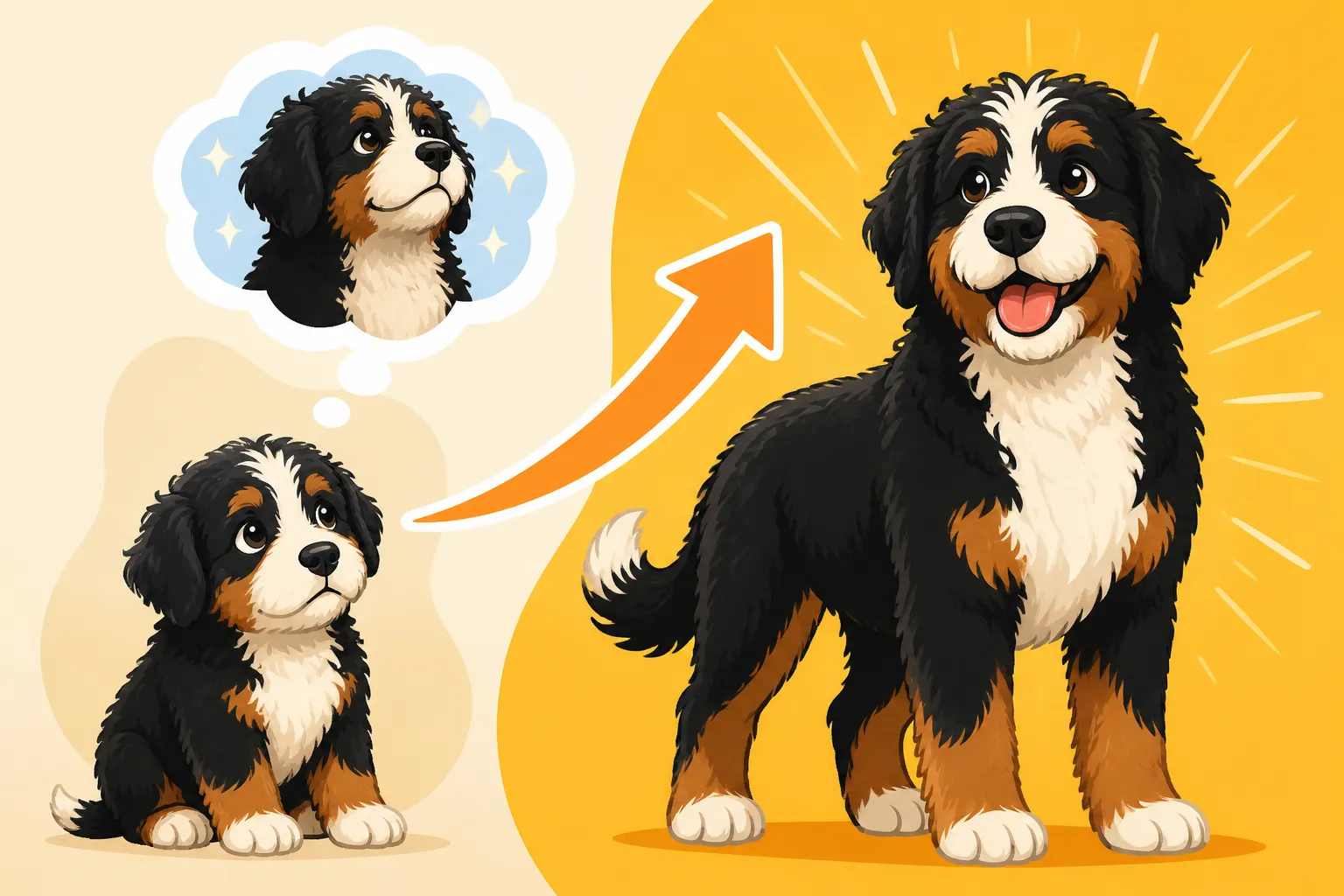
The reality is, most large and giant breed dogs, including Bernedoodles, don't truly finish maturing mentally until they are closer to two years old, sometimes even three for the largest individuals. Contrast that with their physical development, where they can reach 80-90% of their adult size by their first birthday. This creates a significant gap: you have a dog that looks like a fully grown adult but still possesses the impulse control, attention span, and sometimes the sheer clumsiness of a much younger puppy.
Imagine a six-foot-tall human teenager who still has the spatial awareness of a toddler. That's essentially what you're dealing with. They might accidentally knock over a lamp with their wagging tail, or nearly pull you off your feet on the leash simply because they haven't yet mastered coordinating their immense power with their still-developing brain. It’s not malicious; it's just a disconnect. Understanding The Age a Bernedoodle Stops Acting Like a Puppy can help manage expectations during this period, as it's often a much longer journey than new owners anticipate.
Reversion and Testing Boundaries
During adolescence, it's incredibly common for Bernedoodles to seem to "forget" everything they've learned, exhibiting a frustrating regression in training. Commands they once knew perfectly suddenly seem foreign, and established rules are pushed to their limits. This isn't usually a sign of a bad trainer or a "stupid" dog; it's a normal part of canine development where they're asserting independence, exploring their boundaries, and figuring out their place in the world.
They're essentially going through a "What happens if I don't do what they say?" phase. Your Bernedoodle might suddenly decide that coming when called is optional if there's an interesting smell, or that counter-surfing for a dropped snack is an excellent idea. This is also when they truly begin to understand their own physical capabilities and might try to challenge them – like seeing if they can really drag you down the street to greet another dog. Whether a Bernedoodle Tests Boundaries in Adolescence highlights this common behavior, which can be disheartening if you don't know it's a normal, albeit challenging, stage. Patience and consistent reinforcement are your best tools here.
Navigating the Challenges of a Large, Unrefined Puppy
Living with a Bernedoodle that's physically mature but mentally still a toddler can present some unique daily challenges. From accidental bumps to unexpected surges of energy, their sheer size magnifies every "puppy moment."
Managing Physical Strength and Lack of Coordination
One of the biggest hurdles is simply managing their physical presence. A growing Bernedoodle can easily outweigh many adults, and their bursts of enthusiasm can be overwhelming. A playful leap or an excited dash can send a small child (or even an unprepared adult) sprawling. They might not yet understand Whether a Bernedoodle Knows Its Own Size, which leads to them attempting to squeeze into laps that are far too small or trying to play tug-of-war with an intensity that could dislocate a shoulder.
Leash manners become paramount. A Bernedoodle hitting 70, 80, or even 90 pounds needs to understand how to walk politely on a leash, not just for your comfort, but for the safety of everyone around them. Imagine an uncoordinated freight train suddenly deciding to lunge at a leaf! This is why early and consistent training on Leash Manners on a Bernedoodle Heading for Ninety Pounds is so critical, ideally before they reach their full adolescent bulk. Sturdy harnesses, often found on Amazon, can be a lifesaver in controlling their power during walks, giving you more leverage and preventing injury to both you and your dog.
Setting Boundaries with a Giant Puppy
When your Bernedoodle is small, it’s easy to let certain things slide – a little jumping, a quick lean on your leg. But when that same behavior comes from a 70-pound dog, it's a different story. Setting and maintaining clear boundaries is essential, even if it feels like you're constantly reminding them of rules they should know. The goal is to teach them polite manners that will scale with their size.
For example, Teaching a Bernedoodle Not to Jump on Guests becomes a critical skill. What was once cute is now potentially dangerous. Similarly, managing their interaction with young children is vital. A joyous Bernedoodle might accidentally knock over a toddler without meaning to harm them. Consistent training, a united front from all family members, and managing the environment (e.g., gates, supervised interactions) are key to preventing these "oops" moments. Remember, your Bernedoodle isn't being stubborn or malicious; they're genuinely still learning the rules of a world they're quickly outgrowing in size but not in wisdom.
| Age (Approx.) | Physical Development | Mental/Behavioral Development | Common Challenges |
|---|---|---|---|
| 8-16 Weeks | Rapid growth, still puppy-like | Learning basic commands, house-training | Teething, biting, short attention span |
| 4-8 Months | Significant growth spurts, lanky | Increased curiosity, independence starts | "Forgetting" commands, testing limits, pulling on leash |
| 8-18 Months | Nearing adult size/weight | Adolescent rebellion, push for independence, higher energy | Destructive chewing, selective hearing, social awkwardness |
| 18-24+ Months | Reaching full physical maturity | Gradual settling, improved impulse control | Some lingering "puppy brain" moments, full adult energy |
Training Strategies for the Late Bloomer Bernedoodle
Training a Bernedoodle through their gangly, brain-lagging adolescent phase requires a slightly different approach than training a tiny puppy. It's less about introducing brand new concepts (though that's still happening!) and more about reinforcing, refining, and understanding that what you thought was learned might need revisiting.
Patience, Consistency, and Positive Reinforcement
The three pillars of adolescent Bernedoodle training are patience, consistency, and positive reinforcement. You’ll need a seemingly endless supply of all three. Your Bernedoodle isn't intentionally being "stubborn" when they ignore a command; it's often a combination of a still-developing brain, environmental distractions, and genuine forgetfulness during a period of rapid change. As the article Whether a Bernedoodle Is Stubborn or Just Slow might imply, they're often more slow to process than truly stubborn.
Consistent training sessions, even short ones, every single day are far more effective than sporadic long ones. Use high-value treats and enthusiastic praise to reward desired behaviors, making learning a positive and engaging experience. Avoid harsh corrections or punishment, which can damage your bond and make a sensitive Bernedoodle shut down. Instead, focus on redirection and showing them what to do. If they jump up, calmly turn your back until all four paws are on the floor, then reward. If they pull on the leash, stop walking until the leash is slack, then continue. Repetition, patience, and positive reinforcement are how you bridge that mental-physical gap.
Structured Learning and Mental Stimulation
While physical exercise is important for burning off youthful energy, mental stimulation is just as, if not more, crucial for a growing Bernedoodle. Their Poodle brain craves work, and channeling that intelligence into structured learning can help mature their minds. Consider engaging them in activities like puzzle toys, scent work, or learning complex tricks. These activities force them to think, problem-solve, and focus, helping to strengthen those developing cognitive pathways. Many excellent puzzle toys are available through retailers like Amazon, offering different levels of challenge to keep your Bernedoodle engaged.
Enroll in an obedience class, or if that's not feasible, consider an online training program like BAXTER & Bella. These programs offer structured curricula that guide you through building foundational skills and addressing common adolescent challenges. Having a clear plan and regular exercises to work on can be incredibly beneficial for both you and your Bernedoodle. It provides an outlet for their intelligence and helps solidify the manners you want to see. Don't underestimate the power of consistent mental exercise in helping your Bernedoodle's brain catch up with its body.
Essential Tools and Resources for Growing Bernedoodles
Managing a large, adolescent Bernedoodle requires more than just patience; it also requires the right tools and knowing where to turn for extra support. Being prepared with appropriate gear and having access to good training resources can make a significant difference in navigating this challenging phase.
Appropriate Gear for Big Puppies
When your Bernedoodle is growing at such a rapid pace, investing in the right gear is non-negotiable. Forget flimsy leashes and collars; you're going to need equipment that can stand up to the strength of a dog that could soon be pulling you like a sled dog. A sturdy, well-fitting harness, preferably one that clips in the front to help with pulling, is essential for leash training. Brands available on platforms like Amazon offer a wide range of options designed for large breeds. This helps manage their strength as you work on Leash Manners on a Bernedoodle Heading for Ninety Pounds.
You'll also need durable toys that can withstand powerful jaws and enthusiastic play. Large, robust chew toys are vital for satisfying their need to chew, especially if they're still in that "puppy" chewing phase well into their first year. A comfortable, supportive bed that can accommodate their rapidly expanding size will also be appreciated, protecting their growing joints. And don't forget a slow feeder bowl, which can help prevent bloat (a serious concern for deep-chested breeds like Bernedoodles) by making them eat more slowly. The Chest That Puts a Standard Bernedoodle at Bloat Risk is a critical read on this topic.
Professional Guidance and Online Programs
Sometimes, despite your best efforts, you might feel overwhelmed by your Bernedoodle's adolescent behaviors. This is perfectly normal, and there's no shame in seeking professional help. A certified professional dog trainer can offer invaluable insights, tailor-made strategies for your specific Bernedoodle, and help you address persistent issues like jumping, excessive pulling, or selective hearing. Whether a Bernedoodle Needs a Professional Trainer is a question many owners ponder, and often, the answer is yes, at least for a few sessions to get you on the right track.
For those who prefer a more flexible approach, online training programs can be a fantastic resource. Services like BAXTER & Bella offer comprehensive online courses that cover everything from basic obedience to more advanced manners, often with video tutorials and support from trainers. These programs allow you to learn at your own pace and fit training into your busy schedule, which is often a lifesaver when you're dealing with a rambunctious young dog. These resources can provide the structure and expert advice needed to guide your Bernedoodle through their "bigger than their brain" phase and into a well-behaved, mentally mature adult. Remember, The Age a Bernedoodle Finally Settles is often a long road, but with the right tools and support, it's a journey you can both enjoy.
Disclaimer
This article is for general informational purposes only and does not constitute professional advice. Laws, prices and regulations vary by location and change over time. Consult a qualified professional for guidance on your specific situation.