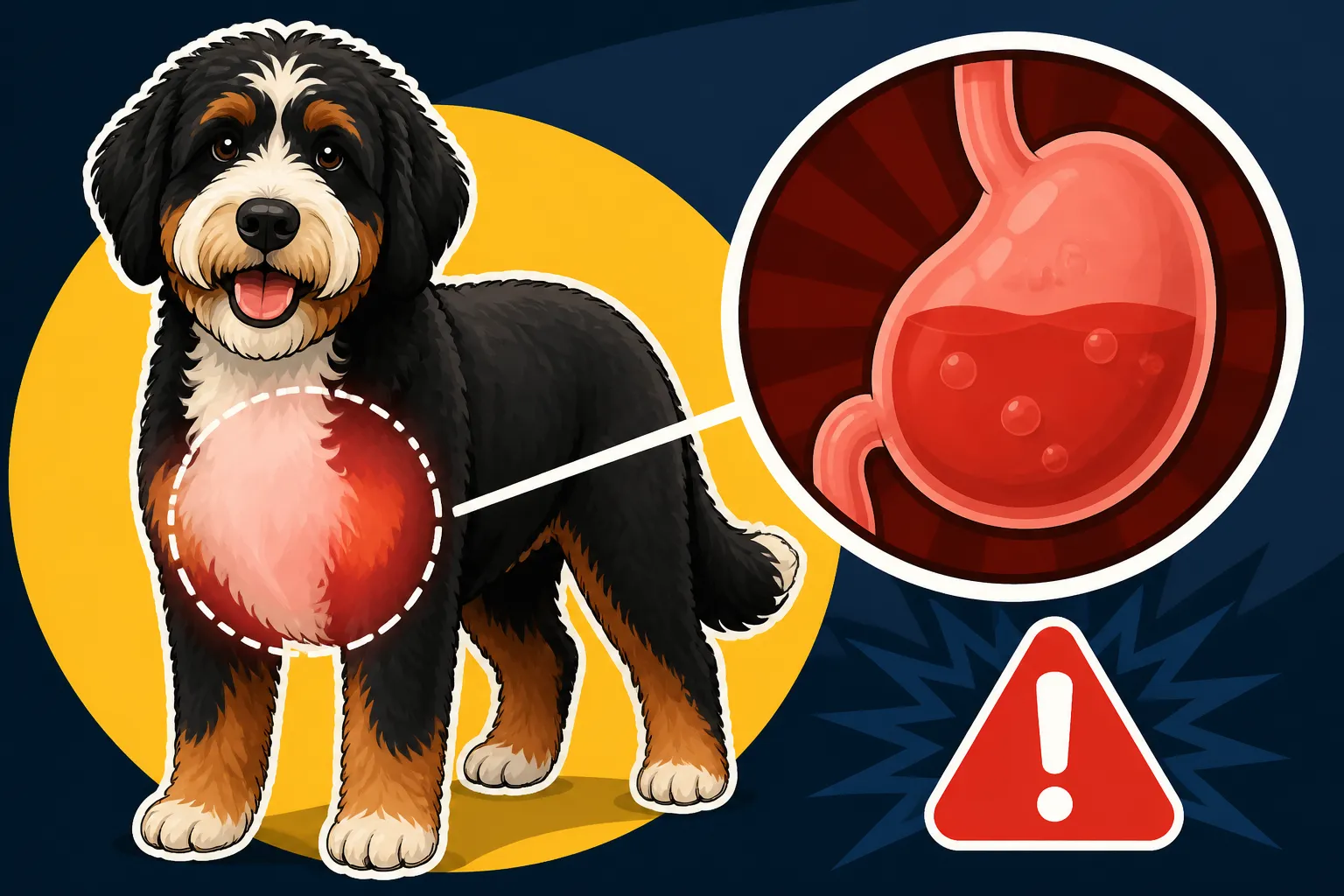
The Chest That Puts a Standard Bernedoodle at Bloat Risk
It's one of those gut-wrenching fears no Bernedoodle parent ever wants to face: the sudden, terrifying onset of bloat. This isn't just an upset tummy; it's a life-threatening emergency, and sadly, our beloved standard Bernedoodles, with their distinctive deep chests, are particularly susceptible. Understanding this risk and knowing what to do can quite literally be the difference between life and death for your furry family member. This guide is here to walk you through everything you need to know about this silent killer.
Understanding Gastric Dilatation-Volvulus (GDV)
When we talk about "bloat" in dogs, especially in larger, deep-chested breeds like standard Bernedoodles, we're not just referring to a full belly after a big meal. We're talking about a terrifying condition called Gastric Dilatation-Volvulus, or GDV. It’s a rapid-onset, excruciatingly painful, and often fatal disease that strikes without much warning, turning a happy afternoon into a desperate dash to the veterinary emergency room.
What Exactly Happens During Bloat
Imagine your dog's stomach. In GDV, it first rapidly fills with gas, food, or fluid, causing it to stretch and swell like a balloon. This is the "dilatation" part. Picture the discomfort your Bernedoodle must feel; it’s an immense pressure internally that can make them incredibly restless and visibly distressed. But the horror doesn't stop there. In most cases of bloat, this swollen stomach then twists on its axis, a phenomenon called "volvulus." This twisting motion completely pinches off the esophagus (preventing gas from escaping and food from going down) and the duodenum (blocking anything from moving out). More critically, it cuts off blood supply to the stomach, leading to tissue death and a cascade of other severe issues throughout the body.
The impact of this twisting is immediate and devastating. The trapped gas continues to expand, further compressing major blood vessels in the abdomen. This can lead to a drastic drop in blood pressure, shock, and organ damage. Within a matter of hours, sometimes even minutes, if left untreated, the lack of blood flow can cause parts of the stomach lining to die, rupture, and release toxins into the bloodstream, ultimately leading to organ failure and death. It's truly a horrific condition that underscores why prompt recognition and action are paramount.
The Swift and Silent Danger
One of the most insidious aspects of bloat is how rapidly it progresses. Your Bernedoodle might seem perfectly fine one moment, perhaps just finished eating or playing, and then suddenly you notice something is off. The initial signs can be subtle – a bit of restlessness, maybe trying to vomit but nothing comes up, or just looking uncomfortable. It’s easy to dismiss these early symptoms as minor stomach upset, especially if you haven't seen bloat before. But GDV doesn't wait. The speed at which a dog can go from showing mild discomfort to being in critical, life-threatening shock is astonishing and incredibly frightening for any owner.
Many owners recall going to bed with their Bernedoodle seemingly normal, only to wake up to a dog in severe distress, or worse, finding them passed away. This silent progression, especially in the dead of night, makes it incredibly challenging to intervene early enough. It’s not a condition that gives you much leeway for a "wait and see" approach. Every minute counts once the stomach begins to twist, highlighting why owners of deep-chested breeds need to be hyper-aware and ready to act.
The Deep-Chested Predisposition in Standard Bernedoodles
It’s no secret that certain dog breeds are more prone to bloat, and unfortunately, standard Bernedoodles fall into this higher-risk category. This isn't just bad luck; it's rooted in their unique physical characteristics, specifically the shape and depth of their chests.
Bernese Mountain Dog Anatomy and the Bernedoodle Inheritance
The Bernedoodle inherits its deep chest primarily from its Bernese Mountain Dog parent. Bernese Mountain Dogs are classic examples of deep-chested breeds, meaning their chests are longer from spine to sternum (top to bottom) compared to their width. When you look at a Bernese or a standard Bernedoodle, you'll notice their chests extend quite far down, creating a spacious cavity for the lungs and heart. While this might look majestic, it unfortunately creates a kind of "pendulum" effect for the stomach.
Think of it this way: in a dog with a broad, shallow chest, the stomach is more tucked up and has less room to swing freely. In a deep-chested dog like a standard Bernedoodle, there's more vertical space. This extra room allows the stomach, when distended with gas or food, to rotate more easily within the abdominal cavity. It’s like a bell hanging in a tall tower; it has more room to swing and twist. This anatomical predisposition isn't something that can be trained away or fundamentally changed; it's simply a genetic lottery associated with the Bernese heritage that makes our Bernedoodles more vulnerable to GDV.
How Breed Standard Plays a Role
The very traits that make standard Bernedoodles so striking – their large, robust build and often deep chests – are also what contribute to their bloat risk. While breeders focus on health clearances and temperament, the physical conformation inherited from the Bernese parent remains a significant factor. Standard Bernedoodles are typically large dogs, often weighing between 70 to 90 pounds or even more. Their overall size combined with that specific chest conformation places them squarely in the high-risk group.
This isn't to say that all deep-chested dogs will experience bloat, but the odds are significantly higher for them. Factors like eating habits, exercise around meals, and even stress can interact with this inherent anatomical risk to trigger an episode. It's a sobering thought that the physical beauty and impressive stature of these dogs also come with such a serious health concern. This is why vigilance and preventive measures become less of an option and more of a necessity for Bernedoodle owners. It's part of the commitment we make when we bring these wonderful, large dogs into our lives.
Identifying the Warning Signs of Bloat
Recognizing the signs of bloat early is absolutely critical. Since GDV can progress so quickly, you don’t have the luxury of waiting to see if symptoms improve. You need to be a detective, noticing even subtle changes in your Bernedoodle’s behavior and physical state.
Subtle Early Indicators
Sometimes, bloat begins with very subtle signs that can be easily missed or attributed to something less serious. This is where your intimate knowledge of your Bernedoodle's normal behavior comes into play. Keep an eye out for:
- Restlessness or Pacing: Your dog might seem unable to get comfortable, constantly shifting positions, or pacing anxiously around the house. This isn't just typical puppy energy; it's a persistent, unsettled feeling.
- Drooling Excessively: Increased salivation, sometimes quite profuse, can be a sign of nausea or discomfort.
- Licking Lips or Repeated Swallowing: Similar to drooling, these can indicate an upset stomach or an attempt to relieve discomfort.
- Looking Anxiously at Their Abdomen: Your Bernedoodle might keep glancing down at their belly, as if it hurts or feels strange.
- Vomiting Attempts with No Result (Non-Productive Retches): This is one of the most classic early signs. Your dog will try to throw up, strain and heave, but only produce foamy saliva or nothing at all. This is because the twisted stomach opening prevents anything from coming up.
- Abdominal Tenderness: If you gently touch your dog's belly, they might pull away, whine, or show signs of pain.
While none of these alone definitively confirm bloat, if you see a combination, especially the non-productive retching, it's time to take immediate action. It's always better to overreact and find out it was nothing serious than to wait and face a devastating outcome.
Critical Symptoms Requiring Immediate Action
As bloat progresses, the signs become much more pronounced and alarming. If you observe any of these symptoms, drop everything and head to the nearest emergency veterinary clinic without delay.
- Swollen or Distended Abdomen: This is often the most recognizable symptom. Your Bernedoodle's belly will appear visibly larger and feel tight, like a drum. This distention can happen very quickly.
- Pain Upon Abdominal Touch: Even a light touch to the abdomen will elicit a strong pain response, possibly a yelp or aggressive avoidance.
- Increased Heart Rate (Tachycardia) and Rapid, Shallow Breathing: As the dog goes into shock, their heart will race to compensate for the reduced blood flow, and breathing will become labored.
- Weakness and Collapse: Your dog may become lethargic, unable to stand, or even collapse. Their gums might appear pale or bluish as circulation falters.
- Extreme Restlessness Followed by Lethargy: The initial agitation might give way to severe weakness as their body shuts down from shock and pain.
It's important to remember that not all dogs will show every single symptom, or they might not show them in the same order. For instance, a very stoic Bernedoodle might hide their pain until they are already in critical condition. Trust your gut instinct. If your Bernedoodle is acting "off" and you have even the slightest suspicion of bloat, it's always worth the emergency vet visit. Many times, pet owners regret waiting, but rarely do they regret seeking immediate care.
Immediate Action and Emergency Care
When bloat strikes, time is your ultimate enemy. The statistics are stark: the survival rate drops significantly with every hour that passes without intervention. This is not a situation where you can call your regular vet during business hours and schedule an appointment for tomorrow. This is a 24/7 emergency that demands immediate, decisive action.
The Race Against Time to the Vet
Once you suspect bloat, your immediate priority is getting your Bernedoodle to an emergency veterinary clinic. Do not try home remedies, do not try to make them throw up, and do not waste time searching for advice online. Every single minute truly counts. Ideally, call ahead to the emergency clinic if you can, letting them know you're on your way with a suspected GDV case. This allows them to prepare their team and equipment for your arrival, saving precious moments.
When you're rushing your Bernedoodle, try to keep them as calm and comfortable as possible, though you'll undoubtedly be a bundle of nerves yourself. If your dog is large and struggling to walk, you might need help carrying them or using a makeshift stretcher. The goal is a swift and safe transport. Remember, getting your dog to a facility equipped for emergency surgery and critical care is the single most important thing you can do. Many pet insurance providers, like Healthy Paws, recognize the critical nature of these emergencies and can help alleviate the financial stress when these unexpected, life-threatening events occur, allowing you to focus on your dog's care.
What to Expect at the Emergency Clinic
Upon arrival, your Bernedoodle will likely be triaged immediately. The veterinary team will quickly assess their condition, check for signs of shock, and confirm abdominal distension. Diagnosis is usually made based on clinical signs and an X-ray of the abdomen, which will clearly show if the stomach is dilated and twisted.
If GDV is confirmed, the veterinary team will begin stabilizing your dog, which includes administering IV fluids to combat shock and potentially decompressing the stomach by inserting a tube down the esophagus or using a needle to release gas (trocarization) if the tube cannot be passed due to the twist. Once your Bernedoodle is stable enough, they will be rushed to surgery. The procedure, called a gastropexy, involves untwisting the stomach and then surgically attaching it to the abdominal wall. This attachment helps prevent future episodes of volvulus (twisting), although it doesn't entirely prevent the stomach from dilating (bloating with gas).
The surgery itself is complex and recovery requires intensive post-operative care, often involving several days in the hospital. The cost of such an emergency can be substantial, easily running into several thousands of dollars, making planning for pet insurance a wise decision for any standard Bernedoodle owner.
Proactive Prevention Strategies for Your Bernedoodle
While you can't completely eliminate the risk of bloat in a standard Bernedoodle, there are many proactive steps you can take to significantly reduce their chances of experiencing this life-threatening condition. Prevention truly is the best medicine here.
Dietary Management and Feeding Practices
How and what your Bernedoodle eats can play a major role in bloat prevention. It's not just about the food itself, but the entire feeding ritual.
- Smaller, More Frequent Meals: Instead of one large meal, break your Bernedoodle's daily food allowance into two or three smaller meals. This prevents the stomach from becoming overly distended at any one time. Think about how much food a ninety pound Bernedoodle eats monthly; dividing that into more portions is key.
- Slow Down Eating: If your Bernedoodle inhales their food, consider using a slow-feeder bowl or placing a large, clean rock (too big to swallow!) in their regular bowl. This prevents them from gulping down air along with their food.
- Avoid Exercise Before and After Meals: This is a crucial rule. Do not allow your Bernedoodle to engage in vigorous exercise or play for at least an hour before and two hours after eating. Jumping, running, and rolling can cause a full stomach to swing and potentially twist. Whether a Standard Bernedoodle Should Rest After Meals is not just a suggestion; it's a critical safety measure.
- Water Access and Control: Always ensure your Bernedoodle has access to fresh water. However, avoid allowing them to drink large quantities of water rapidly right before or after a meal, as this can also contribute to stomach distension.
- Consider the Food Type: While there's no single "bloat-proof" food, some studies suggest that diets with high fat content or those that list oils as one of the first four ingredients might be associated with a higher risk. Discuss your Bernedoodle's diet with your vet to ensure it's appropriate for their breed and activity level. Avoid any sudden, drastic changes to their food.
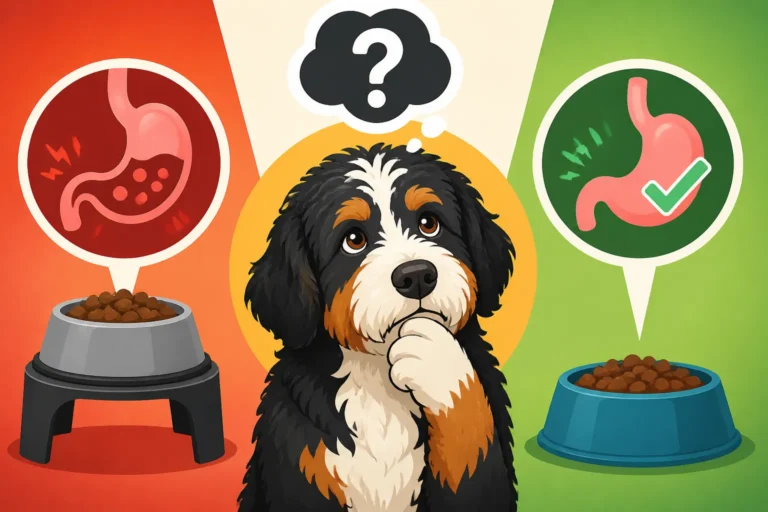
- Raised Bowls: A Contentious Topic: Historically, raised food bowls were recommended to prevent bloat. However, more recent research, including a large study by Purdue University, actually found an increased risk of GDV in large and giant breeds using raised bowls. While the science isn't entirely settled, it's generally advised to feed your Bernedoodle on the floor unless there's a specific medical reason for a raised bowl (e.g., severe arthritis in an older dog). So, Whether Raised Bowls Raise a Bernedoodle's Bloat Risk is a question worth discussing with your vet.
| Bloat Prevention Strategy | Why it Helps | What to Do |
|---|---|---|
| Meal Frequency | Prevents extreme stomach distension. | Divide daily food into 2-3 smaller meals. |
| Eating Speed | Reduces air gulping. | Use slow-feeder bowls or puzzle feeders. |
| Exercise Timing | Stops stomach from swinging and twisting. | No vigorous play 1 hour before, 2 hours after meals. |
| Water Intake | Avoids rapid stomach filling. | Provide constant access to water, but restrict large amounts immediately pre/post meal. |
| Food Type | Some ingredients may increase risk. | Consult vet on diet; avoid sudden changes. |
| Bowl Height | Research suggests raised bowls may increase risk. | Feed on the floor unless vet advises otherwise. |
The Role of Prophylactic Gastropexy
For many owners of deep-chested breeds, a prophylactic (preventative) gastropexy is a serious consideration. This is a surgical procedure where the stomach is permanently attached to the abdominal wall, significantly reducing the risk of the stomach twisting (volvulus) in the future. It doesn't prevent the stomach from filling with gas (dilatation), but it does prevent the deadly twist.
Often, owners opt to have a gastropexy performed at the same time their Bernedoodle is spayed or neutered. This combines two surgical events into one recovery period, making it less stressful for both the dog and the owner. Whether a Standard Bernedoodle Should Be Tacked at Spay is a common question, and for Bernedoodles, the answer is often a resounding yes from veterinarians due to their high risk profile. The procedure itself adds some time and cost to the spay/neuter surgery, but many consider it a small price to pay for the immense peace of mind it offers. Understanding What Gastropexy Adds to a Bernedoodle's Spay is crucial for making an informed decision about this life-saving preventative measure. While it's still a surgery with inherent risks, the benefits in a high-risk breed like the Bernedoodle often far outweigh them.
Lifestyle Adjustments to Minimize Risk
Beyond diet and surgery, some everyday lifestyle choices can further reduce your Bernedoodle's bloat risk:
- Manage Stress: Anecdotal evidence suggests that stress can be a trigger for bloat in some dogs. Try to keep your Bernedoodle's environment calm and predictable. If there are known stressors (e.g., thunderstorms, fireworks, separation anxiety), work on mitigating their impact.
- Limit Rapid Consumption of Large Amounts of Water: As mentioned with meals, don't let your Bernedoodle gulp down huge volumes of water after heavy exercise. Offer smaller, more frequent drinks instead.
- Regular, Moderate Exercise: Consistent, moderate exercise helps maintain good digestion and overall health. Avoid intense, sporadic bursts of activity, especially around meal times.
- Monitor for Other Health Issues: Underlying health problems can sometimes contribute to digestive upset or stress, which might indirectly increase bloat risk. Regular veterinary check-ups and being aware of What a Bernedoodle Needs Every Day for optimal health are always important.
By diligently implementing these preventive strategies, you can significantly empower yourself to protect your beloved Bernedoodle from the ravages of bloat. It's a testament to our commitment as pet parents to keep them safe and healthy.
Living with a High-Risk Bernedoodle: Peace of Mind and Preparedness
Even with the best preventive measures, the risk of bloat for a standard Bernedoodle is never entirely eliminated. Therefore, living with a high-risk breed means cultivating a mindset of preparedness and constant vigilance. It’s about being proactive, not reactive, and ensuring you’re ready for any eventuality.
Daily Vigilance and Routine
For owners of deep-chested Bernedoodles, daily life includes an unspoken routine of observation. You become attuned to your dog’s normal eating habits, their post-meal behavior, and their general demeanor. This isn't about paranoia, but about informed awareness.
Make it a habit to observe your Bernedoodle for a good hour or two after every meal. Are they restless? Trying to vomit? Is their belly looking distended? Knowing their typical habits – how much they normally eat, how they usually relax after a meal – helps you quickly spot when something is amiss. This level of attentiveness becomes second nature, like checking on a sleeping baby. Establishing a consistent feeding and exercise schedule can also help. Dogs thrive on routine, and predictable patterns can reduce stress and sudden changes in activity or intake that might contribute to bloat. It's about creating a safe, stable environment where any deviation from the norm immediately registers as a potential concern.
Pet Insurance and Financial Preparedness
Let's be realistic: emergency veterinary care, especially for something as complex and time-sensitive as GDV, is expensive. The cost of diagnosis, surgery, and post-operative critical care can quickly reach into the thousands of dollars. While we never want to think about our dogs needing such drastic intervention, it's a reality that we, as owners of high-risk breeds, must confront head-on.
This is where pet insurance becomes not just a helpful option, but a critical component of responsible Bernedoodle ownership. Companies like Healthy Paws offer comprehensive plans that can cover a significant portion of emergency veterinary bills, including those for GDV. Having a good pet insurance policy in place means that if your Bernedoodle ever does suffer from bloat, your primary concern can be their health and recovery, not the crushing financial burden. Imagine facing a $5,000-$10,000 vet bill on top of the emotional distress of your dog's critical condition – insurance can remove a huge layer of that stress. Researching policies that specifically cover hereditary conditions or emergencies early in your dog's life is a smart move. After all, the cost of not being prepared could be far greater than any monthly premium. It’s about buying peace of mind, knowing that you can provide your Bernedoodle with the best possible chance of survival should this emergency ever arise.
Disclaimer
The information provided in this article is for general informational purposes only and is not a substitute for professional veterinary advice, diagnosis, or treatment. Always seek the advice of your veterinarian or other qualified animal health provider with any questions you may have regarding a medical condition. Never disregard professional veterinary advice or delay in seeking it because of something you have read in this article.