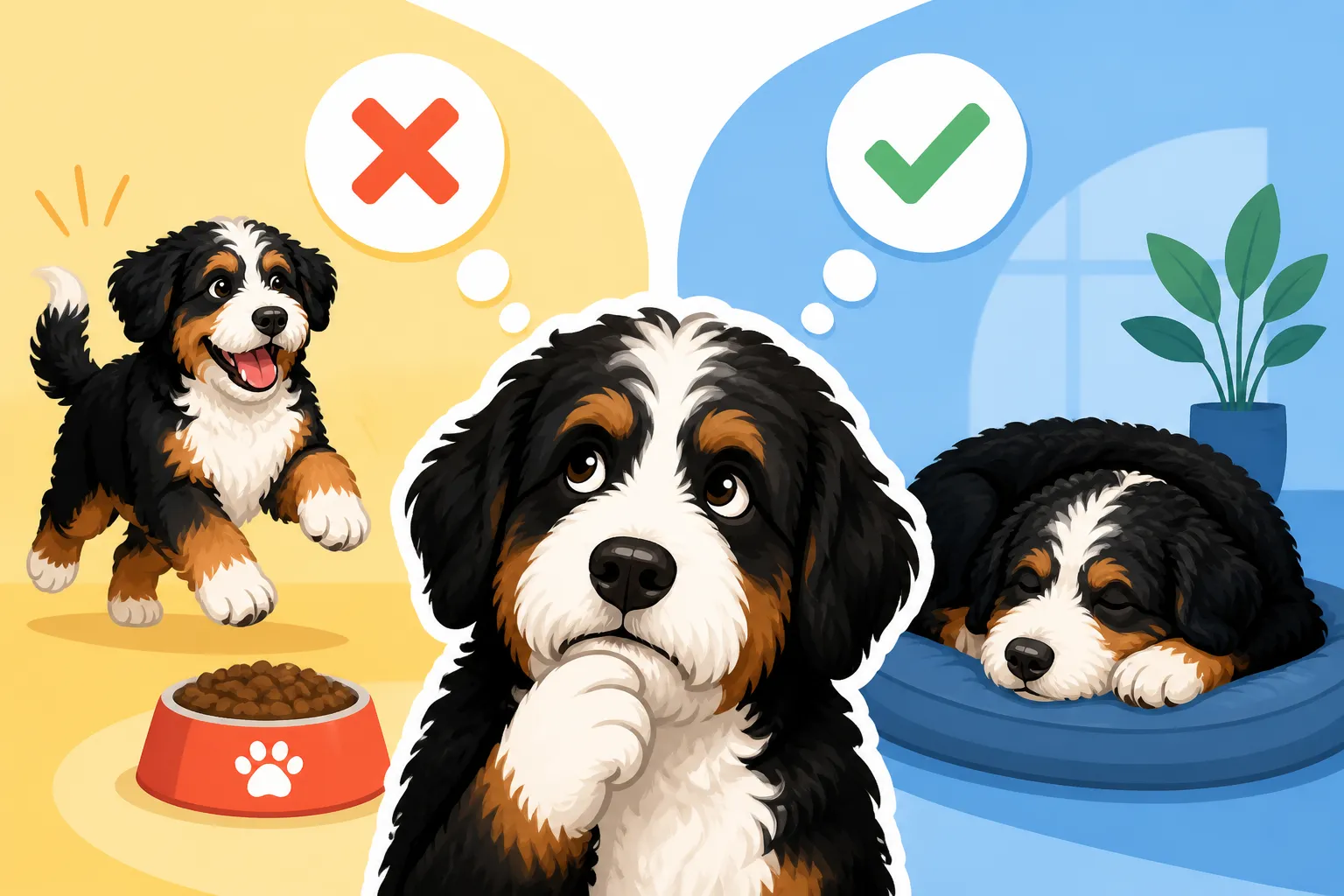
Whether a Standard Bernedoodle Should Rest After Meals
One of the most nerve-wracking things about owning a Standard Bernedoodle, especially a big, goofy one, is the constant worry about bloat. It's a terrifying, life-threatening condition that can strike quickly, and as a doting pet parent, you're always asking yourself if you're doing enough to protect your furry family member. This guide dives deep into the crucial practice of resting your Bernedoodle after meals, exploring why it's so important and what steps you can take to minimize the risk of this devastating emergency.
Understanding the Real Threat of Bloat in Standard Bernedoodles
Let's be brutally honest: bloat, or Gastric Dilatation-Volvulus (GDV), is every large-breed dog owner's nightmare, and Standard Bernedoodles are absolutely on the watch list. It's not just an upset tummy; it's a medical emergency where your dog's stomach fills with gas and then, terrifyingly, twists on itself. This twisting, known as volvulus, traps the gas, cuts off blood flow to the stomach and other vital organs, and can send your dog into shock, leading to death if not treated immediately. It’s a race against the clock, and the stakes couldn't be higher.
Many of us bring home these adorable, fluffy puppies, dreaming of their big, happy lives, without fully grasping the unique vulnerabilities they carry. While Bernedoodles are celebrated for their hybrid vigor, certain anatomical traits from their Bernese Mountain Dog lineage, combined with the deep chest often seen in large Poodles, make them particularly susceptible. Imagine your dog's stomach as a balloon inside their chest. When it inflates rapidly with gas and then gets jostled, it can literally flip over. This is why understanding Bloat in a Standard Bernedoodle's Deep Chest is so critical. It's a cruel reality that such a loving, gentle giant can be at risk from something as seemingly innocuous as eating too fast or playing too hard after a meal. The sheer size and depth of their chest cavity, especially in a fully grown standard Bernedoodle, provide the perfect "room" for this catastrophic event to occur.
The Absolute Necessity of Post-Meal Rest
The short answer is an emphatic "yes," a Standard Bernedoodle should absolutely rest after meals. This isn't just a recommendation; it's a vital preventative measure that could literally save their life. Think about it from a common-sense perspective: if you've just had a big meal, are you ready to hit the gym or run a marathon? Probably not. Your dog's digestive system needs time to do its job, and physical activity immediately following food intake can severely disrupt this process, potentially triggering bloat.
When a dog eats, especially a large meal, their stomach expands. If they then engage in vigorous activity—running, jumping, wrestling with other dogs, or even just chasing a ball—the stomach can literally swing and twist within their abdomen. This movement, combined with any gas that might have accumulated during eating, sets the stage for GDV. The stomach, heavy with food and gas, becomes an unstable pendulum. So, when you see your Bernedoodle finish their kibble and look at you with those eager eyes, ready for a romp, you have to be the responsible one and say, "Not yet, buddy." It’s tough, especially with a breed so full of life and eager to please, but that calm period is non-negotiable for their safety. Aim for a quiet, low-activity period of at least 1-2 hours after they've finished eating, and equally important, try to avoid strenuous exercise for about 30-60 minutes before mealtime as well.
How Much Rest is Enough?
Determining the right amount of rest can feel a bit like guesswork, but general guidelines are incredibly helpful. For a Standard Bernedoodle, a minimum of 60 to 90 minutes of calm, quiet rest after eating is usually recommended, with some vets suggesting up to two hours for extra caution, especially if they've had a particularly large meal. This means no running around the yard, no energetic games of fetch, and certainly no roughhousing with other pets or children. A gentle potty break on a leash is fine, but that’s about it.
Before meals, the same principle applies, but the timeframe can be a bit shorter – around 30 to 60 minutes of quiet time. You don't want their stomach already churning or them being overly excited and gulping air right before they eat. Establishing a consistent feeding routine that includes these rest periods is key. It helps to integrate these times into your daily schedule. For instance, a morning meal followed by a leisurely coffee for you and a snooze for them, then an evening meal followed by family relaxation time. Consistency helps your Bernedoodle adapt and understand the routine, making it less of a struggle to keep them calm.
The Science Behind the Stillness
While it might seem simple, the reasoning behind post-meal rest is deeply rooted in canine physiology. When a dog eats, their digestive system kicks into gear, producing acids and enzymes to break down food. Blood flow is directed to the stomach and intestines to aid in this process. Physical activity immediately after eating can divert this blood flow to muscles, hindering proper digestion and potentially leading to discomfort or, worse, gastric issues.
More critically, exercise introduces movement and pressure within the abdomen. Imagine a partially full, gas-filled bag being vigorously shaken. The contents slosh, gas bubbles mix, and the bag itself can twist. This is a simplified analogy for what can happen to a deep-chested dog's stomach. The precise mechanism of how activity triggers bloat is still being studied, but the consensus among veterinary professionals is strong: reduce post-meal activity to reduce risk. While there's no single magic bullet to prevent bloat entirely, understanding and implementing this rest protocol is one of the most significant preventative actions you can take as a Bernedoodle owner.
Practical Strategies for Bloat Prevention Beyond Rest
While resting after meals is crucial, it's just one piece of the puzzle. A multi-faceted approach to feeding and lifestyle can significantly reduce your Standard Bernedoodle's risk of bloat. This means looking at everything from how they eat to what their general environment is like.
Slowing Down the Speedy Eaters
One of the biggest culprits contributing to bloat is rapid eating. Many Bernedoodles, like their Bernese ancestors, can be enthusiastic eaters, sometimes inhaling their food in mere minutes. This quick ingestion often leads to swallowing a lot of air along with their kibble, which is a major risk factor for bloat. If you've ever thought, "Whether a Bernedoodle Inhales Its Food," the answer is often a resounding yes!
- Slow Feeder Bowls: These are fantastic inventions! They have ridges, mazes, or pillars inside that force your dog to eat around obstacles, slowing down their pace considerably. Brands like Outward Hound have various designs that can turn a two-minute meal into a ten or fifteen-minute eating session, drastically reducing air intake.
- Puzzle Feeders: Similar to slow feeders, but often more interactive. These might involve your dog nudging compartments or solving a simple puzzle to get their food. They not only slow down eating but also provide mental stimulation.
- Spreading Food Out: If you don't have a slow feeder, you can simply spread their kibble out on a large, flat baking sheet or even a clean floor space. This forces them to move around and pick up individual pieces, naturally slowing them down.
Managing Meal Portions and Frequency
The volume of food consumed at one sitting also plays a role. A large meal distends the stomach more significantly, increasing the potential for it to twist. Instead of one or two huge meals, consider breaking your Bernedoodle's daily food allowance into three smaller meals.
For instance, if your Bernedoodle requires "The Daily Cups a Standard Bernedoodle Needs," dividing that into morning, midday, and evening portions can be much safer than two large servings. This allows their digestive system to process smaller amounts more efficiently and reduces the likelihood of the stomach becoming overly full and distended. This is especially true for puppies; remember to adjust their feeding schedule as they grow, as "How Many Meals a Bernedoodle Puppy Needs Daily" can change with age.
The Raised Bowl Controversy
For years, it was common advice to feed large, deep-chested dogs from raised bowls, with the belief that it would reduce air intake and prevent bloat. However, more recent research has challenged this notion. Some studies, particularly one large study from Purdue University, actually suggested that raised feeding bowls might increase the risk of bloat in certain large and giant breeds. The exact reasons aren't entirely clear, but theories include changes in swallowing mechanics or encouraging faster eating due to a more comfortable posture.
So, when considering "Whether Raised Bowls Raise a Bernedoodle's Bloat Risk," the current expert consensus leans towards caution. It's often safer to feed your Bernedoodle from a bowl placed on the floor. If your dog has a medical condition that makes eating from the floor difficult (like severe arthritis in the neck or front legs), consult your vet for personalized advice.
Prophylactic Gastropexy: A Surgical Option
For many Standard Bernedoodle owners, the fear of bloat is so profound that they opt for a prophylactic gastropexy. This surgical procedure involves tacking the stomach to the abdominal wall, preventing it from twisting. While it doesn't prevent the stomach from dilating (filling with gas), it does prevent the much more dangerous volvulus (twisting), which is the life-threatening component of GDV.
This procedure is often performed at the same time as spaying or neutering, making it a convenient "two-for-one" surgery. If you're wondering "Whether a Standard Bernedoodle Should Be Tacked at Spay" or "What Gastropexy Adds to a Bernedoodle's Spay," it's definitely a conversation worth having with your veterinarian. While it's an invasive procedure, the peace of mind it offers many owners is invaluable, especially considering the high mortality rate and emergency costs associated with bloat surgery. When budgeting for your Bernedoodle's health, it’s a factor to seriously consider, and understanding what pet insurance like Healthy Paws covers for such procedures is always a good idea.
Recognizing the Alarming Signs of Bloat
Even with the best preventative measures, it's absolutely vital to know the signs of bloat. This condition progresses rapidly, and timely veterinary intervention is paramount. Every second counts, and recognizing the symptoms quickly can be the difference between life and death for your Bernedoodle.
The Red Flags You Cannot Ignore
Bloat symptoms can escalate from subtle discomfort to severe distress very quickly. Here are the key signs to watch for:
- Restlessness and Pacing: Your typically calm Bernedoodle might seem agitated, unable to get comfortable, constantly shifting positions, or pacing. This is often an early sign of discomfort.
- Unproductive Retching or Dry Heaves: This is perhaps the most classic and alarming symptom. Your dog will repeatedly try to vomit, straining forcefully, but nothing (or very little, like foamy saliva) comes up. This is a strong indicator that their stomach is blocked and twisting. If you see "The Retching That Means a Bernedoodle Has Torsed," do not delay.
- Distended or Swollen Abdomen: This might not be immediately obvious, especially under a thick Bernedoodle coat, but look for a firm, enlarged belly, particularly on the left side of their body, behind the rib cage. It might feel taut, like a drum.
- Pain and Tenderness: Your dog might whine, groan, or show signs of pain when you gently touch their abdomen. They might also stand with an arched back or refuse to lie down.
- Drooling and Excessive Salivation: Due to nausea and discomfort, they might produce more saliva.
- Weakness and Collapse: As bloat progresses and blood flow is severely compromised, your dog will become weak, lethargic, and may collapse. Their gums might appear pale, and their heart rate can be elevated.
- Rapid, Shallow Breathing: Difficulty breathing due to pressure on the diaphragm.
This is not a situation where you "wait and see." If you notice any combination of these symptoms, especially unproductive retching and abdominal distension, it's a dire emergency. Get your Bernedoodle to the nearest emergency veterinary clinic immediately. Call ahead if you can, so they can prepare for your arrival. Having a plan for emergencies, including knowing the location of your nearest 24/7 veterinary hospital and having pet insurance like Healthy Paws can literally be a lifesaver.
Bloat Symptom Checklist and Action Guide
Here's a quick reference table to help you identify symptoms and take appropriate action. Remember, this is a severe emergency.
| Symptom Category | Specific Signs to Watch For | Urgency Level | Recommended Action |
|---|---|---|---|
| Behavioral Changes | Restlessness, pacing, inability to get comfortable, whining, hiding, lethargy, reluctance to move | High | Contact your vet immediately. Describe symptoms clearly. Prepare for emergency transport. |
| Vomiting/Retching | Unproductive retching, dry heaves (straining with no vomit), frothy saliva | Critical | IMMEDIATE emergency vet visit. This is the most classic and dangerous sign. Do not wait. |
| Abdominal Signs | Swollen, hard, or distended belly (especially left side), tenderness when touched | Critical | IMMEDIATE emergency vet visit. This indicates severe gas buildup. |
| Physical Distress | Rapid shallow breathing, pale gums, excessive drooling, weak pulse, collapse, shock | Extreme | Rush to the nearest emergency vet. These are signs of advanced bloat and shock. Time is of the essence. |
In conclusion, while owning a Standard Bernedoodle brings immense joy and companionship, it also comes with a serious responsibility to understand and mitigate risks like bloat. By consistently ensuring your dog rests after meals, implementing slow-feeding strategies, considering prophylactic gastropexy, and staying vigilant for any warning signs, you can significantly improve their chances of living a long, healthy life free from this terrifying condition. Always consult your veterinarian for the best, personalized advice for your beloved Bernedoodle.
Disclaimer
The information provided in this article is for general informational purposes only and is not intended as a substitute for professional veterinary advice, diagnosis, or treatment. Always seek the advice of your veterinarian or other qualified pet health provider with any questions you may have regarding a medical condition or treatment and before undertaking any new health care regimen for your pet.