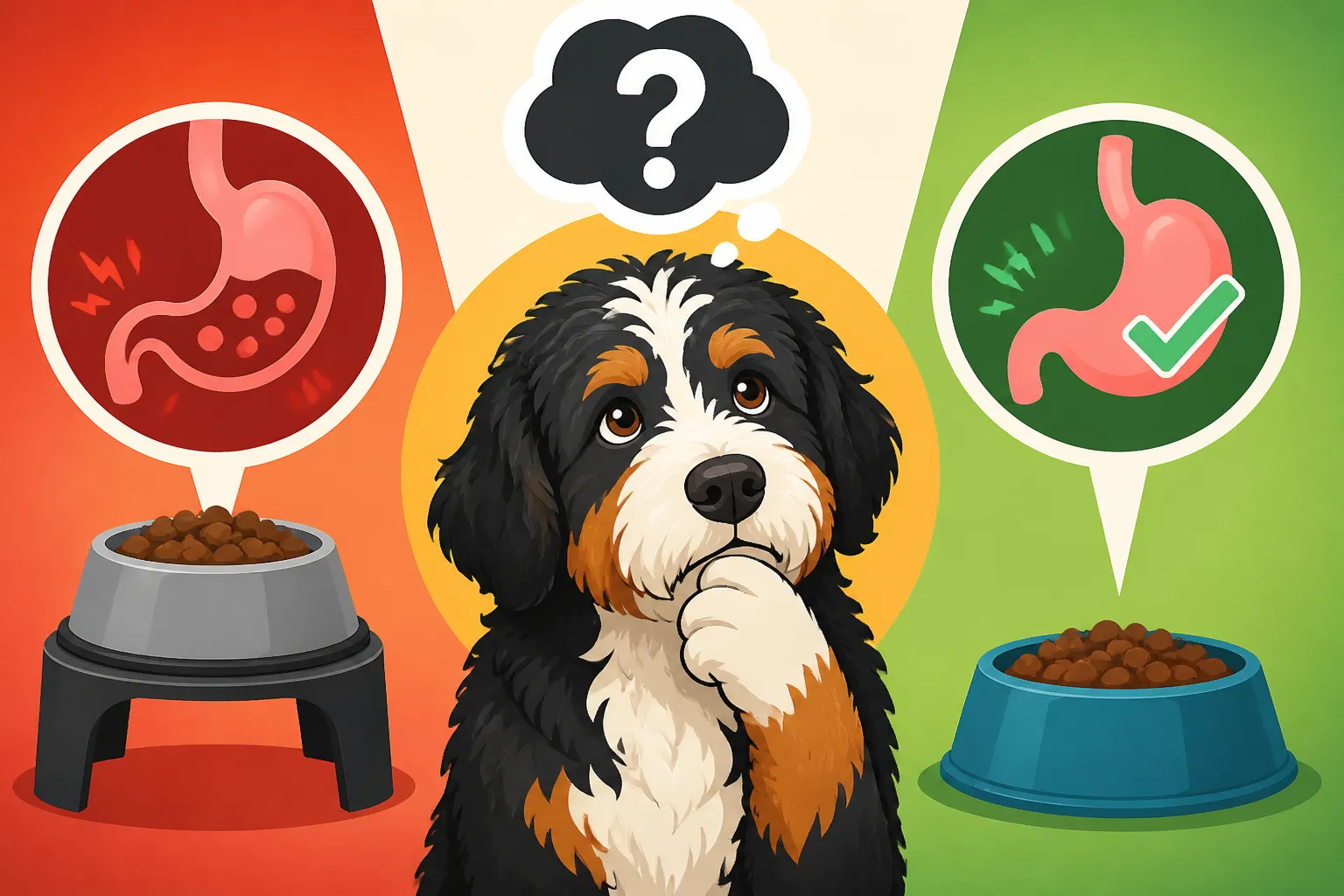
Whether Raised Bowls Raise a Bernedoodle’s Bloat Risk
It’s a heart-stopping moment for any large dog owner: the sudden onset of discomfort, the frantic pacing, the terrifying retching that produces nothing. Bloat, or Gastric Dilatation-Volvulus (GDV), is a fear that lurks in the back of many Bernedoodle parents' minds, especially given their deep chests. And for years, one piece of advice echoed through dog communities: raised bowls. But does feeding your beloved Bernedoodle from an elevated dish actually reduce their risk of this life-threatening condition, or could it, counterintuitively, make things worse? This guide will cut through the myths and give you the real scoop on raised bowls and bloat.
The Worry of Gastric Dilatation-Volvulus GDV in Bernedoodles
As Bernedoodle guardians, we adore their goofy charm and loving nature, but we also carry the weight of responsibility for their health. One of the most urgent and terrifying conditions we need to be aware of is Gastric Dilatation-Volvulus, or GDV, commonly known as bloat. It's a condition that can escalate from seemingly mild discomfort to a life-threatening emergency in a matter of hours, sometimes even minutes.
What Exactly is Bloat and GDV?
Imagine your dog's stomach, which normally sits relatively loosely in the abdomen, suddenly distending with gas and fluid, swelling up like a balloon. This is the "dilatation" part of GDV. If it stopped there, it would still be incredibly painful and dangerous, but often, it gets worse. In many cases, this distended stomach then twists on its axis, a process called "volvulus." When the stomach twists, it effectively pinches off both the entrance and exit, trapping gas, food, and fluid inside. Even more critically, the twisting cuts off the blood supply to the stomach wall and often impacts the spleen, leading to tissue death and the release of toxins into the bloodstream.
The symptoms progress rapidly, and without immediate veterinary intervention, GDV is almost always fatal. It's not just a bad stomach ache; it's a critical surgical emergency where every second truly counts. The speed at which this can happen is what makes it so terrifying. Your happy, playful Bernedoodle could be completely fine one minute and showing severe signs of distress the next.
Why Bernedoodles Face a Higher Risk
Bernedoodles, being a crossbreed of the Bernese Mountain Dog and the Poodle, inherit traits from both parents. While Poodles, particularly Standard Poodles, are deep-chested and thus at risk, it's the Bernese Mountain Dog lineage that particularly raises the alarm for GDV. Bernese Mountain Dogs are classic examples of large, deep-chested breeds, which are statistically much more prone to developing bloat. Their chest cavity is longer and narrower than it is deep, creating a physiological predisposition for the stomach to distend and twist within that space.
When you bring a Bernedoodle into your home, you’re not just getting an adorable, fluffy companion; you’re also signing up to be vigilant about potential health challenges passed down through their genetics. Even if your Bernedoodle isn't quite as barrel-chested as a purebred Bernese, that genetic blueprint for a deeper chest still puts them at a higher risk compared to, say, a Beagle. Understanding this inherent susceptibility is the first step in being a responsible and prepared owner. This heightened risk means we, as their caregivers, must be extra diligent. For more insight into genetic predispositions, you might find reading about Bloat in a Standard Bernedoodle's Deep Chest particularly illuminating.
Spotting the Frightening Signs of Bloat
Recognizing the signs of GDV immediately is paramount to your Bernedoodle's survival. Time is of the essence, and waiting to see if symptoms improve could be a fatal mistake. The most common and alarming symptom is unproductive retching or dry heaving. Your Bernedoodle will look like they're trying to vomit, their body will convulse, but nothing or very little will come up. This is because the twisted stomach prevents anything from passing.
Other critical signs include a distended or swollen abdomen, especially on the left side, which may feel taut or hard to the touch. Your dog might be restless, pacing, unable to get comfortable, or stretching in unusual ways as if trying to relieve pressure. They may also exhibit signs of pain, such as whining, groaning, or looking at their flank. As the condition progresses, they can become weak, collapse, have pale gums, or show signs of shock. If you observe any combination of these symptoms, particularly the unproductive retching and abdominal distension, do not hesitate. Call your veterinarian or an emergency animal hospital immediately. This is not a "wait and see" situation; it requires urgent professional intervention.
Decoding the Raised Bowl Debate: What the Research Says
For many years, the advice about feeding large, deep-chested dogs often included the recommendation to use raised food bowls. It seemed like a logical solution, and many dog owners, ourselves included, adopted this practice with the best intentions. However, what seems logical isn't always supported by scientific evidence, especially when it comes to complex medical conditions like GDV.
The Long-Standing Belief vs. Scientific Scrutiny
The common theory behind recommending raised bowls for bloat prevention was that they would improve a dog's posture while eating. The thinking went that if a dog didn't have to bend down as much, they would ingest less air, eat more slowly, and generally have a more comfortable, "natural" eating position, thus reducing the risk of bloat. This idea resonated with many, especially owners of tall or giant breeds, who observed their dogs hunching over low bowls. It seemed like a compassionate and common-sense approach to dog care. Many breeders and experienced owners swore by it, passing the advice down through generations of dog ownership.
However, the scientific community, always striving for evidence-based practices, felt it was crucial to put these long-held beliefs to the test. Anecdotal evidence, while comforting, cannot replace rigorous research when lives are on the line. The potential for misinformed advice to have severe consequences demanded a thorough investigation, which eventually led to one of the most comprehensive studies on the topic.
The Pivotal Purdue University Study
In 2000, a landmark study published by Purdue University in the Journal of the American Veterinary Medical Association (JAVMA) fundamentally changed our understanding of raised bowls and GDV. This extensive, multi-year study, involving over 1,900 dogs, including a significant number of large and giant breeds, meticulously analyzed various risk factors associated with bloat. The findings were, for many, quite shocking and counterintuitive: the study concluded that using raised food bowls increased the risk of GDV in large and giant breed dogs.
Specifically, it found that 20% of cases of GDV in large breeds and 50% of cases in giant breeds were attributed to feeding from a raised bowl. While the exact mechanism isn't fully understood, researchers hypothesized that elevated bowls might actually encourage dogs to eat faster, potentially leading to increased air swallowing during meals. Instead of reducing air intake, it might have the opposite effect by allowing for larger gulps. This research was a major turning point, prompting many veterinarians and responsible breeders to reconsider and reverse their previous recommendations regarding elevated feeders for bloat prevention.
When Raised Bowls Might Still Be Appropriate
It's important to clarify that while raised bowls are not recommended for bloat prevention, they do have a place for specific health conditions. For Bernedoodles, or any dog, suffering from certain orthopedic issues like severe arthritis, neck pain, or megaesophagus, an elevated feeder can provide significant comfort and aid digestion. For example, an older Bernedoodle dealing with Arthritis in a Bernedoodle at Eight might find bending down to eat incredibly uncomfortable or painful. In such cases, a raised bowl allows them to eat in a more natural, pain-free posture, which is beneficial for their quality of life.
Similarly, dogs with megaesophagus, a condition where the esophagus doesn't properly move food to the stomach, often require upright feeding to help gravity do the work. So, it's not that raised bowls are inherently "bad" in all contexts, but their purpose needs to be understood clearly. If your Bernedoodle has a condition that genuinely warrants a raised bowl, discuss it with your veterinarian to ensure you're addressing their specific needs safely, keeping in mind that it won't mitigate bloat risk.
Real Risk Factors for Bloat in Your Bernedoodle
If raised bowls don't help, and might even hinder, what does genuinely increase a Bernedoodle's risk of bloat? Understanding the true culprits is vital for implementing effective preventative strategies and keeping your beloved companion safe. It’s a complex issue, but several factors consistently emerge in research as significant contributors.
Genetic Predisposition and Breed Traits
Hands down, genetics play the most substantial role in a dog's susceptibility to GDV. As we touched on earlier, the deep-chested conformation inherited from the Bernese Mountain Dog is a major anatomical risk factor. This isn't something you can change, but it means you need to be acutely aware of your Bernedoodle's inherent vulnerability. It's like having a family history of certain health conditions – you can't alter your genes, but you can be proactive about screening and lifestyle choices.
Beyond just the Bernese side, if there's a history of bloat in your Bernedoodle's direct lineage (either the Poodle or Bernese parent lines), their risk dramatically increases. This is why choosing a responsible breeder who is transparent about the health history of their breeding stock is so crucial. They should be able to discuss incidents of bloat, if any, in the pedigree. Knowing your dog's background helps you understand their individual risk profile. While many hope that crossing breeds reduces genetic issues, it’s still important to understand Whether the Bernedoodle Cross Actually Reduced Cancer and other inherited conditions.
Eating Habits and Activity Levels
How your Bernedoodle eats and what they do around meal times are significant, modifiable risk factors. Picture this: your Bernedoodle gulps down a large meal in under a minute, then immediately wants to chase a ball or go for a strenuous walk. This scenario is a recipe for trouble.
- Rapid Eating: Dogs who eat very quickly, essentially "inhaling" their food, tend to swallow a lot of air along with it. This excess air contributes to stomach distension, which is the first step in the bloat process.
- Large, Single Meals: Feeding one massive meal a day puts a sudden, large volume of food and gas into the stomach. Breaking meals into smaller, more frequent portions reduces this immediate burden on the digestive system.
- Vigorous Exercise: Running, jumping, or intense play immediately before or after eating is a known risk factor. The physical agitation can cause the stomach, especially if full and gassy, to twist. It's like sloshing a full water bottle around; if there's space and momentum, things can shift. A calm period before and after meals is essential.
- Stress and Anxiety: Believe it or not, a dog's emotional state can also play a role. Anxious or highly stressed dogs might be more prone to various digestive issues, including bloat. Eating in a stressful environment, perhaps due to competition with other pets or loud noises, could contribute to faster eating and increased air intake.
Other Contributing Elements
While genetics and eating habits are primary, other factors can tip the scales of bloat risk for your Bernedoodle.
- Age: Older dogs tend to be at a higher risk for bloat. As dogs age, their ligaments and connective tissues can weaken, potentially making the stomach more prone to twisting. This doesn't mean younger Bernedoodles are immune, but vigilance becomes even more critical as they mature. You might be interested in What Changes in a Bernedoodle After Eight to understand age-related health shifts.
- Gender: Some studies suggest that male dogs might have a slightly higher incidence of bloat than females, though this difference is often not as pronounced as other risk factors.
- Temperament: Anxious, fearful, or overly excitable dogs may be more prone to bloat, possibly due to stress influencing their eating behaviors or overall physiological response.
- Diet Type (less definitive): While some theories have linked certain ingredients or kibble types to bloat, research on this is less conclusive than on eating habits. However, feeding a consistent, high-quality diet and avoiding sudden changes is always good practice for overall digestive health. A comprehensive pet insurance plan, like one from Healthy Paws, can offer peace of mind when facing unexpected health issues, whatever their cause.
| Factor | Known to Increase Bloat Risk? (Research-backed) | Common Belief Before Research? |
|---|---|---|
| Deep Chest Conformation | Yes | Yes |
| Genetic Predisposition | Yes | Yes |
| Eating Large, Single Meals | Yes | Yes |
| Eating Rapidly | Yes | Yes |
| Elevated Food Bowls | Yes (Increased risk) | No (Believed to decrease risk) |
| Vigorous Exercise Post-Meal | Yes | Yes |
| Stress/Anxiety | Possible/Contributory | Less commonly considered |
| Age (Older Dogs) | Yes | Less commonly considered |
Proactive Strategies to Protect Your Bernedoodle from GDV
Knowing the risks is one thing; actively working to mitigate them is another. As Bernedoodle parents, we have several practical tools at our disposal to significantly reduce the chances of this frightening condition striking our dogs. It's about building a consistent routine and making informed choices daily.
Smart Feeding Practices
The way you feed your Bernedoodle is one of the most powerful levers you have in bloat prevention. It's often where the biggest impact can be made, directly addressing two major risk factors: rapid eating and large meal volumes.
- Smaller, More Frequent Meals: Instead of one or two large meals a day, aim for at least two, preferably three, smaller meals. This distributes the food intake, preventing the stomach from being excessively full at any single time. If your adult Bernedoodle usually gets 4 cups of food per day, consider giving 2 cups in the morning and 2 cups in the evening, or even 1.3 cups three times a day.
- Slow-Feeder Bowls: These ingenious bowls, with their ridges and obstacles, force your Bernedoodle to eat around the impediments, slowing down their intake significantly. This reduces the amount of air they gulp with their food, a key factor in preventing stomach distension. Brands like Outward Hound offer excellent designs that are effective and widely available. This simple investment can make a huge difference in how quickly your Bernedoodle finishes their meal.
- Puzzle Feeders and Enrichment Toys: For even more mental stimulation and slower eating, consider puzzle feeders or KONG-type toys stuffed with food. These turn mealtime into a game, extending the duration of eating and making it a more engaging, less frantic experience.
- Consistent Access to Fresh Water, But Managed: Your Bernedoodle should always have access to fresh water. However, some vets recommend monitoring very large water intakes immediately after a big meal, as excessive water can also contribute to stomach distension. Offer smaller amounts more frequently after meals, or ensure they don't gorge themselves.
Lifestyle Adjustments and Veterinary Interventions
Beyond feeding, daily habits and medical decisions play a crucial role in safeguarding your Bernedoodle's health.
- Rest Before and After Meals: This is non-negotiable. Avoid strenuous exercise, vigorous play, or stressful situations for at least an hour before and at least an hour after meals. A quiet rest period allows their digestive system to work unhindered. A short, calm leash walk to relieve themselves is fine, but no running, jumping, or intense training sessions. This quiet time is especially important for growing Bernedoodles, whose joints are also vulnerable.
- Minimize Stress: As mentioned, stress can be a contributing factor. Provide a calm, consistent feeding environment. If you have multiple dogs, feed them separately to prevent competition and anxiety around food.
- Prophylactic Gastropexy: This is a surgical procedure where the stomach is permanently tacked to the abdominal wall, preventing it from twisting (volvulus). It doesn't prevent the stomach from dilating with gas, but it eliminates the most dangerous aspect of bloat – the twist. For deep-chested breeds like Bernedoodles, especially those with a family history of bloat, a prophylactic gastropexy is often recommended by veterinarians. This can often be performed at the same time as spaying or neutering, making it a single anesthetic event. Discussing Whether a Standard Bernedoodle Should Be Tacked at Spay with your vet is a conversation every owner of a deep-chested dog should have. It's a significant decision, but one that could save your dog's life.
- Regular Veterinary Check-ups: Maintaining open communication with your veterinarian is crucial. They know your Bernedoodle's health history best and can provide personalized advice and monitor for any emerging concerns.
The Importance of Preparedness
Even with the most diligent preventative measures, bloat can still happen. Being prepared for an emergency is not about being paranoid, but about being a responsible pet parent.
- Know Your Vet's Emergency Protocol: Ask your regular veterinarian what their emergency procedures are. Do they handle emergencies 24/7, or do they refer to a local emergency animal hospital after hours? Know the address and phone number of the nearest emergency vet clinic and keep it handy.
- Have a Plan for Transport: If your Bernedoodle is large and suddenly collapses, how will you get them into the car and to the vet? Think about this in advance. Having a strong blanket or stretcher on hand can be invaluable.
- Consider Pet Insurance: Emergency bloat surgery is incredibly expensive, often running into several thousands of dollars, easily reaching $5,000 to $10,000 or more depending on complications and location. Facing a life-or-death decision for your beloved Bernedoodle shouldn't be compounded by financial stress. Pet insurance can be a literal lifesaver, allowing you to focus on your dog's recovery without the added burden of overwhelming veterinary bills. Companies like Healthy Paws offer comprehensive plans that cover accidents and illnesses, including emergency surgeries like those for GDV. Having a reliable insurance policy, such as one from Healthy Paws, ensures that if the worst happens, you’re financially equipped to provide the immediate and extensive care your Bernedoodle will need. Investing in pet insurance like Healthy Paws is a proactive step that can offer immense peace of mind, knowing you can say "yes" to critical treatment without hesitation.
Disclaimer
This article is intended for informational purposes only and does not constitute veterinary advice. Always consult with a qualified veterinarian for any health concerns or before making any decisions about your Bernedoodle's care or treatment.