Arthritis in a Bernedoodle at Eight
It can be heartbreaking to see your once-bouncy Bernedoodle, a dog known for its playful spirit and zest for life, start to slow down. That little hitch in their step, the struggle to get up after a nap, or the hesitation before jumping into the car – these are often the first quiet whispers that something is changing. If your Bernedoodle is around eight years old, these subtle signs might be pointing to arthritis, a common but manageable condition that this guide will help you understand and navigate.
Understanding Arthritis in Your Eight-Year-Old Bernedoodle
When your Bernedoodle reaches the age of eight, they're often entering their senior years, especially if they are a standard size. Just like us, older dogs can develop aches and pains, and arthritis, specifically osteoarthritis, is one of the most common culprits. It’s not just a minor inconvenience; it can significantly impact their quality of life if left unaddressed. Understanding why it happens and what to look for is the first step in providing them with comfort and care.
What Causes Arthritis to Appear at Eight?
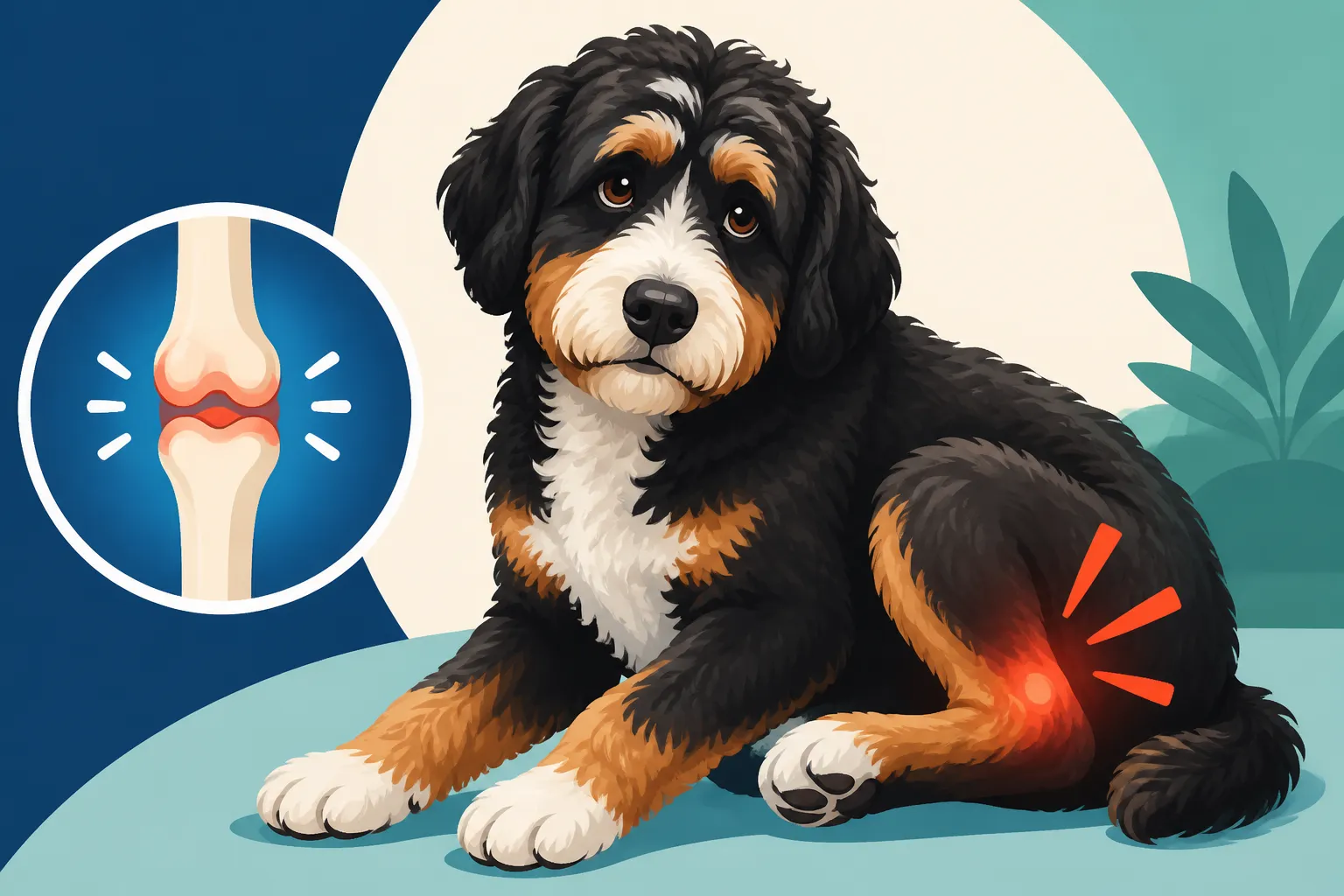
Arthritis in dogs, much like in humans, is primarily a degenerative joint disease. Over years of activity, play, and just plain living, the smooth cartilage cushioning the ends of their bones within a joint can start to wear down. This erosion leads to bone rubbing against bone, causing inflammation, pain, and reduced mobility. For a Bernedoodle, who often weighs between 70 and 90 pounds as a standard size, that's a lot of weight bearing down on those joints day in and day out. The constant stress, even from normal movements, takes its toll.
Beyond the natural wear and tear, Bernedoodles also carry genetic predispositions from both their parent breeds that can accelerate the onset of arthritis. The Bernese Mountain Dog side is notorious for conditions like hip and elbow dysplasia, where the joints don't form correctly, leading to abnormal wear from a young age. Even if your puppy didn't show overt signs of limping early on, these structural issues mean the joints were already compromised. Similarly, Poodles can contribute issues like luxating patellas, or "slipping kneecaps," which cause instability and can hasten arthritic changes in the knee. By the time a Bernedoodle reaches eight, any of these underlying conditions, combined with years of use, can manifest as noticeable arthritis. It's a natural progression, but one that can be managed effectively with early intervention.
The Subtle Signs You Might Miss
Detecting arthritis early in your Bernedoodle can be tricky because dogs are masters at hiding pain. They can't tell us what hurts, and their instinct is often to mask discomfort, especially if they're otherwise stoic. This means you need to be a keen observer of their everyday habits. The signs aren't always a dramatic limp; often, they are far more subtle. You might notice they're a little slower to rise after a long nap, perhaps taking a few extra seconds to stretch and find their footing. Maybe they're no longer greeting you at the door with the same exuberant jump, or they might hesitate before hopping onto the sofa or into the car – behaviors they once performed effortlessly.
Other quiet indicators include a slight change in their gait, perhaps a more stiff or stilted walk, especially after strenuous exercise or first thing in the morning. They might start favoring a certain leg, or you could observe them shifting their weight more onto their "good" side. You might see a decrease in their overall enthusiasm for activities they once loved, like a long walk in the park or a game of fetch. Some dogs might even exhibit behavioral changes, becoming a bit more irritable when touched in certain areas, or simply seeking more solitude. If your Bernedoodle is showing any of these new patterns, it's wise to consider that joint pain might be at play. It's not just about them "getting old"; it's about a specific, treatable condition that's making them uncomfortable.
Common Joints Affected and Specific Bernedoodle Vulnerabilities
When we talk about arthritis in Bernedoodles, certain joints are more commonly affected due to their genetic lineage and overall physical build. Understanding these specific vulnerabilities can help you communicate more effectively with your veterinarian and provide targeted care.
Hips and Elbows: The Bernese Legacy
The Bernese Mountain Dog, one half of your Bernedoodle's genetic makeup, is unfortunately predisposed to several significant orthopedic conditions, with hip and elbow dysplasia being at the top of the list. These are not minor flaws; they are developmental abnormalities where the joints do not form correctly, leading to loose joints, abnormal wear and tear, and inevitably, early-onset arthritis. Even if your Bernedoodle came from health-tested parents, the risk is still present to some degree, as these are complex inherited conditions.
For a Bernedoodle, especially a standard size that might weigh as much as 90 pounds, every step puts considerable stress on these weight-bearing joints. Over eight years, if there was any underlying dysplasia, that cumulative stress has likely exacerbated the damage, leading to inflammation and pain. You might observe signs like difficulty climbing stairs, struggling to stand up from a lying position, or a "bunny hop" gait where they move both back legs together when running. These are often clear indicators of issues with their hips, which can be further explored in a guide like Hips on a Ninety Pound Bernedoodle. Similarly, elbow dysplasia can cause lameness in the front limbs, stiffness after resting, and a reluctance to bear weight fully. Recognizing these issues is paramount because they are chronic and will only worsen without intervention. A look at Elbow Dysplasia in a Growing Bernedoodle can give you more insight into how these problems develop early on.
Knees and Spine: Poodle and General Concerns
While the Bernese side contributes greatly to hip and elbow issues, the Poodle influence can bring its own set of orthopedic concerns, particularly with the knees. Luxating patellas, or "slipping kneecaps," are more common in Poodles and smaller breeds but can certainly affect Bernedoodles. This condition occurs when the patella (kneecap) dislocates or moves out of its normal groove. While it might start with an occasional skip in their step, over time, the constant rubbing and instability can lead to significant arthritic changes in the knee joint. For a larger Bernedoodle, even a minor patellar luxation can cause considerable discomfort and impact their ability to run or jump smoothly.
Beyond the genetic predispositions, general spinal arthritis, known as spondylosis, can also become a concern for any older dog, including Bernedoodles, as they reach the age of eight. This condition involves the formation of bony spurs along the vertebrae of the spine, which can reduce flexibility and sometimes pinch nerves. Given the Bernedoodle's often long back and substantial body weight, the spine is another area that experiences a lot of daily stress. Signs of spinal arthritis might include a reluctance to jump, difficulty with stairs, or a change in how they hold their tail. They might become stiff or sore when trying to turn their body. It’s not uncommon for these issues to present as generalized stiffness rather than a specific limb lameness, making them harder to pinpoint without a vet's examination.
Getting a Diagnosis and What to Expect at the Vet
Suspecting your Bernedoodle has arthritis is one thing; getting a definitive diagnosis is another. This is where your veterinarian becomes your most important partner. Don't hesitate to book an appointment if you've noticed any of the subtle signs mentioned earlier. Early diagnosis means earlier intervention, which can significantly improve your dog's comfort and slow the progression of the disease.
The Diagnostic Process: From Exam to Imaging
When you bring your Bernedoodle to the vet with concerns about lameness or stiffness, the diagnostic process usually begins with a thorough physical examination. Your vet will observe your dog's gait as they walk, trot, and turn, looking for any asymmetries, limping, or abnormal movements. They'll then perform a hands-on orthopedic exam, gently palpating each joint, flexing and extending limbs, and assessing for pain, swelling, grinding sensations (crepitus), or reduced range of motion. This clinical assessment helps pinpoint which joints are most affected and the degree of discomfort your dog is experiencing.
To confirm the presence of arthritis and assess its severity, imaging is often necessary. X-rays are the gold standard for diagnosing osteoarthritis. Your vet might recommend X-rays of the hips, elbows, knees, or spine, depending on their findings during the physical exam. These images can reveal classic signs of arthritis, such as narrowed joint spaces, bone spurs (osteophytes), joint effusion (fluid buildup), and changes in bone density. X-rays also help rule out other conditions that might mimic arthritis symptoms, such as bone tumors, fractures, or infections. Sometimes, your vet may recommend sedation for X-rays, especially for larger dogs or those in significant pain, to ensure they can get clear, diagnostic images without causing your dog undue stress. This comprehensive approach ensures that the diagnosis is accurate, allowing for the most appropriate treatment plan.
Discussing Prognosis and Long-Term Management
Once arthritis is confirmed, your veterinarian will discuss the prognosis and what long-term management entails. It’s important to understand upfront that osteoarthritis is a chronic, progressive condition. There is no "cure" in the sense that the joint damage cannot be reversed. However, that doesn't mean your Bernedoodle is doomed to a life of pain. Far from it! The goal of treatment is to manage pain, reduce inflammation, slow the progression of further joint degeneration, and, most importantly, maintain or improve your dog's quality of life.
Your vet will work with you to develop a comprehensive, multi-modal treatment plan. This typically involves a combination of strategies, which we'll dive into more deeply below. Expect regular follow-up appointments, perhaps initially every few weeks or months, to assess how your Bernedoodle is responding to treatment and to make any necessary adjustments. This long-term partnership with your vet is crucial for ongoing success. You'll be discussing medication dosages, exploring supplementary therapies, and making lifestyle adjustments at home. It’s a commitment, but one that allows your beloved Bernedoodle to remain as comfortable and active as possible well into their golden years. Remember, seeing your Bernedoodle at eight means they are definitely a senior, and recognizing The Birthday a Standard Bernedoodle Counts as Senior is key to understanding their evolving needs.
Comprehensive Pain Management Strategies
Managing arthritis in your eight-year-old Bernedoodle requires a multi-faceted approach. It's rarely just one thing that makes all the difference; rather, it's a combination of interventions working synergistically to provide relief and improve mobility.
Medications and Supplements: Finding the Right Balance
When it comes to alleviating the pain and inflammation associated with arthritis, medications are often the first line of defense. Non-steroidal anti-inflammatory drugs (NSAIDs) are commonly prescribed and can be incredibly effective. Brands like Carprofen (Rimadyl), Galliprant, and Meloxicam (Metacam) are specifically formulated for dogs and work by reducing the inflammatory response in the joints, thereby decreasing pain. It's crucial to use only vet-prescribed NSAIDs and never human versions, as they can be toxic to dogs. Your vet will monitor your Bernedoodle's liver and kidney function with regular blood tests while they are on NSAIDs to ensure their safety.
Beyond NSAIDs, your vet might consider other pain relief options, such as Gabapentin for nerve pain, or Amantadine, which helps with chronic pain modulation. Another injectable medication, Librela, is a newer monoclonal antibody therapy that directly targets Nerve Growth Factor (NGF), a key mediator of pain. It can offer monthly relief without the same organ considerations as daily NSAIDs.
Alongside prescription medications, joint supplements play a vital supportive role. Ingredients like glucosamine, chondroitin, and MSM (methylsulfonylmethane) are popular for their purported ability to support cartilage health and reduce inflammation. Omega-3 fatty acids, found in fish oil, are also powerful natural anti-inflammatories. When choosing supplements, look for reputable brands with third-party testing to ensure quality and potency. Integrating a good pet insurance plan, like one from Healthy Paws, can be incredibly beneficial here, as ongoing medication and supplement costs can add up quickly over time. Having that financial support can allow you to make the best choices for your Bernedoodle without undue stress.
Lifestyle Adjustments for Comfort and Mobility
While medications address the internal pain, significant improvements in your Bernedoodle's comfort and mobility can come from thoughtful lifestyle adjustments at home. One of the most critical factors is weight management. Excess weight places enormous strain on already compromised joints, intensifying pain and accelerating degeneration. If your Bernedoodle is carrying a few extra pounds, even shedding a small amount can make a dramatic difference. Work with your vet to determine an ideal weight and create a feeding plan. You might be surprised to learn that Whether an Overweight Bernedoodle Loses Years is a very real concern, and getting their weight under control is paramount.
Controlled exercise is also essential. While you might need to scale back on intense activities, maintaining muscle mass through gentle, consistent exercise is vital for joint support. Short, frequent walks on soft surfaces like grass, rather than long, strenuous hikes on pavement, are ideal. Avoid activities that involve a lot of jumping, twisting, or sudden stops and starts. At home, consider investing in orthopedic dog beds that provide superior support and cushioning for their achy joints. Using ramps for getting into cars or onto furniture, or even for navigating stairs if possible, can significantly reduce impact on their hips and elbows. Raised food and water bowls can also alleviate strain on their neck and front legs during meal times. Furthermore, simple measures like warm compresses applied to sore joints, or gentle massage, can provide localized relief. Creating a warm, comfortable, and easily navigable home environment is key to helping your Bernedoodle age gracefully. If you notice your dog struggling more, especially in getting up, exploring resources like Supporting an Old Bernedoodle That Cannot Rise can offer practical solutions.
Advanced Therapies and Supportive Care
Sometimes, medication and lifestyle changes alone aren't enough, or you might be looking for additional ways to enhance your Bernedoodle's comfort. This is where advanced therapies and supportive care options come into play, offering targeted relief and rehabilitation.
Physical Therapy, Acupuncture, and Laser Therapy
Just like in humans, physical therapy, often called canine rehabilitation, can work wonders for arthritic dogs. A certified canine rehabilitation therapist can develop a tailored exercise program designed to strengthen the muscles surrounding the affected joints, improve range of motion, and reduce pain without putting undue stress on the joints themselves. Hydrotherapy, or exercising in water, is particularly beneficial for large breeds like Bernedoodles. The buoyancy of the water reduces weight bearing on the joints, allowing them to move more freely and build strength in a low-impact environment. Imagine your Bernedoodle happily walking on an underwater treadmill or gently swimming, gaining strength without the jarring impact of land exercise. For more specific guidance on this, a discussion on Exercise That Suits a Bernedoodle With Bad Elbows can be very insightful.
Acupuncture, an ancient Chinese practice, has also gained recognition in veterinary medicine for its effectiveness in pain management. By inserting fine needles into specific points on the body, it can stimulate the release of natural pain-relieving substances and improve blood circulation. Many arthritic dogs show significant improvement in comfort and mobility after a course of acupuncture sessions. Laser therapy (low-level laser therapy or photobiomodulation) is another non-invasive option. This therapy uses specific wavelengths of light to penetrate tissues, promoting cellular regeneration, reducing inflammation, and alleviating pain. It's often a comfortable and quick procedure that can provide noticeable relief, especially when used in conjunction with other treatments.
Surgical Options and Regenerative Medicine
While less common for generalized arthritis, surgical options might be considered in specific severe cases, especially when the underlying cause is a structural defect that can be corrected to prevent further deterioration. For instance, if your Bernedoodle has severe hip dysplasia causing debilitating pain, a total hip replacement could be an option. Similarly, persistent luxating patellas that are causing significant lameness might be surgically corrected to stabilize the knee joint. These are major surgeries, involving significant recovery periods and costs, but can dramatically improve a dog's quality of life in appropriate circumstances.
In the realm of newer treatments, regenerative medicine offers exciting possibilities. Platelet-Rich Plasma (PRP) therapy involves drawing your dog's blood, processing it to concentrate platelets (which contain growth factors), and then injecting this concentrated plasma into the affected joint. These growth factors can help reduce inflammation and promote tissue healing. Stem cell therapy is another advanced option, where stem cells (often derived from the dog's own fat tissue) are injected into the joints. These cells have the potential to differentiate into various cell types, including cartilage cells, and possess powerful anti-inflammatory properties. Both PRP and stem cell therapies are often considered when more conservative treatments aren't providing sufficient relief. It’s important to note that these advanced therapies can be quite expensive, so having a robust pet insurance plan like those offered by Healthy Paws can be a real lifeline, making these cutting-edge treatments financially accessible.
Proactive Care: Slowing the Onset of Arthritis
While arthritis can feel inevitable as our Bernedoodles age, there's actually a lot we can do, starting from puppyhood, to minimize the risk and slow its progression. Proactive care is truly the best defense.
Early Prevention and Puppyhood Considerations
The journey to healthy joints for your Bernedoodle really begins even before they come home. Responsible breeding practices are paramount. A reputable breeder will have both parent dogs undergo extensive health clearances, particularly for hip and elbow dysplasia, often through organizations like the Orthopedic Foundation for Animals (OFA) or PennHIP. While not a guarantee, these screenings significantly reduce the likelihood of passing on genetic predispositions. Asking a breeder about these certifications is a critical first step.
Once your Bernedoodle puppy is home, proper nutrition is key, especially for these rapidly growing large breeds. Overfeeding a puppy can lead to excessively fast growth, putting undue stress on developing joints. This is why many vets and breeders recommend feeding large-breed puppy formulas, which are specifically designed with appropriate calcium and phosphorus ratios to promote slow, steady growth. Avoiding over-supplementation with calcium is also important, as this can be detrimental to bone development. A deep dive into Growing a Standard Bernedoodle Slowly on Purpose can illustrate just how important this growth phase is. Furthermore, protecting those soft, developing joints from high-impact activities during puppyhood is crucial. Avoid excessive jumping, long runs on hard surfaces, and repetitive stair climbing until their growth plates have closed, usually around 12-18 months of age. Thinking about Whether a Bernedoodle Needs Joint Supplements From Young can also be a proactive step, especially if you have concerns.
Ongoing Wellness: Diet, Exercise, and Regular Vet Checks
As your Bernedoodle matures into adulthood and approaches their senior years, ongoing wellness becomes even more critical for joint health. Maintaining a healthy weight throughout their life is arguably the single most impactful thing you can do to prevent or delay arthritis. Even a few extra pounds add significant stress to their joints, particularly the hips and elbows. Regularly assess their body condition – you should be able to feel their ribs easily without seeing them, and they should have a discernible waist. Adjust their food intake and exercise as needed to keep them lean and fit.
Appropriate, consistent exercise is also vital. This means regular, moderate activity that builds and maintains muscle strength without causing joint trauma. Think consistent walks, gentle swimming (a fantastic low-impact option), or controlled play sessions. Avoid intense, sporadic bursts of activity, which can shock inactive joints. If your Bernedoodle shows any signs of discomfort during exercise, adjust the intensity and consult your vet. Routine veterinary check-ups are also non-negotiable. As discussed in The Screening a Bernedoodle Should Have Yearly, these visits allow your vet to monitor your dog's weight, assess their gait, palpate their joints for any early signs of stiffness or pain, and discuss preventive measures like joint supplements or dietary changes. Catching subtle changes early means you can intervene sooner, potentially slowing the progression of arthritis and keeping your Bernedoodle comfortable and happy for many more years. Consider specialized senior dog food formulations as they age, as these often contain joint-supportive ingredients and tailored calorie counts.
Arthritis Treatment Options Comparison
| Treatment Category | Examples | Benefits | Considerations |
|---|---|---|---|
| NSAIDs | Carprofen, Galliprant, Meloxicam, Librela | Reduces pain & inflammation, improves mobility | Vet prescription, potential side effects, regular monitoring needed |
| Joint Supplements | Glucosamine, Chondroitin, MSM, Omega-3s | Supports cartilage, mild anti-inflammatory, preventive | Over-the-counter (quality varies), takes time to show effect, not pain relief |
| Physical Therapy | Hydrotherapy, therapeutic exercises, massage | Strengthens muscles, improves range of motion, low-impact | Requires trained therapist, commitment to exercises, can be costly |
| Acupuncture | Traditional needle insertion | Reduces pain, improves circulation, holistic approach | Requires certified veterinary acupuncturist, multiple sessions needed |
| Laser Therapy | Low-Level Laser Therapy (LLLT) | Reduces inflammation, speeds healing, pain relief | Requires veterinary equipment, multiple sessions needed, non-invasive |
| Regenerative Medicine | PRP (Platelet-Rich Plasma), Stem Cell Therapy | Reduces inflammation, promotes tissue repair | Advanced, more invasive, expensive, not always covered by insurance (check Healthy Paws policies) |
| Weight Management | Diet adjustment, controlled exercise | Reduces joint strain, slows progression, improves overall health | Requires consistent owner commitment, can be challenging |
| Environmental Mods | Orthopedic beds, ramps, raised bowls | Increases comfort, reduces impact, aids mobility | Initial investment, might require home adjustments |
Disclaimer
This article is intended for informational purposes only and does not constitute medical advice. Always consult with a qualified veterinarian for any health concerns or before making any decisions about your Bernedoodle's medical care or treatment plan.