Whether a Mini Bernedoodle Bloats
It’s a terrifying moment for any dog owner: you notice your furry friend acting strangely, perhaps retching but producing nothing, with a distended belly that seems to swell before your eyes. This nightmare scenario is often bloat, or Gastric Dilatation-Volvulus (GDV), and it’s a critical emergency. While many associate this life-threatening condition with giant breeds, it's natural to wonder if smaller versions, like our beloved Mini Bernedoodles, are truly out of the woods. This guide will thoroughly explore the risk of bloat in Mini Bernedoodles, detailing what causes it, how to spot it, and crucially, how to prevent it.
Understanding Gastric Dilatation-Volvulus (GDV) in Dogs
Bloat, or Gastric Dilatation-Volvulus (GDV), isn't just an upset stomach; it's a rapidly progressing, life-threatening condition that can affect any dog, but certain breeds are at a significantly higher risk. It's one of those silent killers that can turn a perfectly normal day into a frantic rush to the emergency vet, and understanding its mechanisms is the first step in protecting your pup.
What Exactly is Bloat and Why is it Dangerous?
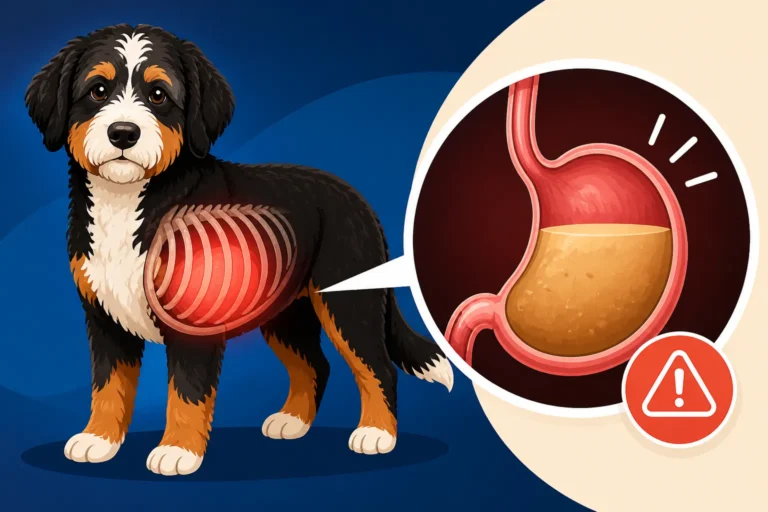
Imagine your dog's stomach. In a normal situation, it’s a flexible organ that digests food. In the initial stage of bloat, known as gastric dilatation, the stomach fills with gas, food, or fluid and expands like a balloon. This alone can cause immense pain and put pressure on surrounding organs, restricting blood flow and making it difficult for your dog to breathe. It’s uncomfortable, to say the least.
But the truly terrifying part, the "volvulus," occurs when that distended stomach twists upon itself. This twisting, often clockwise, pinches off both the entry and exit points of the stomach, trapping everything inside. Blood supply to the stomach is cut off, leading to tissue death. The spleen, which is attached to the stomach, often twists along with it, further complicating the situation. This twisting motion also impacts major blood vessels returning blood to the heart, leading to shock and a rapid decline in the dog's condition. Without immediate surgical intervention, GDV is almost always fatal, often within hours. This isn't just a belly ache; it's an internal catastrophic event.
Common Risk Factors for Bloat in Dogs
While the exact cause of GDV isn't always clear, a combination of factors can significantly increase a dog's susceptibility. Understanding these can help you mitigate risk.
Firstly, breed predisposition is huge. Deep-chested, large and giant breeds like Great Danes, German Shepherds, Irish Setters, and yes, Bernese Mountain Dogs, are notoriously prone due to their anatomical structure. Their chest cavity allows the stomach more room to swing and twist when distended.
Secondly, eating habits play a critical role. Eating one large meal a day, especially if consumed very quickly, can increase risk. The rapid ingestion of food, coupled with gulping air, can lead to stomach distention. Similarly, excessive drinking before or after meals, or even highly palatable foods that cause rapid eating, can be problematic.
Exercise around meal times is another major no-no. Intense play or running immediately before or after eating can cause the stomach to slosh and potentially twist. It’s like trying to do acrobatics right after a huge Thanksgiving dinner – not a good idea for anyone, especially a deep-chested dog.
Genetics and family history are also strong indicators. If a dog's parents or close relatives have experienced bloat, the risk for that dog increases. This is why a reputable breeder will always be transparent about health histories.
Lastly, age and temperament can contribute. Older dogs seem to be at a higher risk, and some studies suggest that fearful, anxious, or highly stressed dogs may also have an elevated risk, possibly due to physiological responses that affect digestion. Even factors like being male or having a nervous disposition have been implicated.
The Mini Bernedoodle and Bloat Risk
When we talk about Mini Bernedoodles, we're discussing a delightful crossbreed of a Bernese Mountain Dog and a Miniature Poodle (or sometimes a Standard Poodle bred down). Both parent breeds, surprisingly, have a history of bloat in their lines, albeit for different reasons and at varying degrees of prevalence. This mixed heritage makes the bloat question a bit nuanced for Mini Bernedoodles.
Do Mini Bernedoodles Inherit a Deep Chest?
This is where the anatomy gets interesting. Bernese Mountain Dogs are classic deep-chested breeds. Their chests are often longer than they are wide, which gives their stomach more room to move around when distended, increasing the likelihood of torsion. When you breed a Bernese with a Poodle, especially a Miniature Poodle, you’re aiming to reduce overall size, but the proportions can still carry through.
Miniature Poodles, while much smaller than Bernese Mountain Dogs, also possess a fairly deep, albeit narrow, chest cavity relative to their body size. Think about how a Standard Poodle is built – elegant, slender, but with a deep chest. The Miniature Poodle largely retains this characteristic. So, a Mini Bernedoodle essentially inherits this deep-chested trait from both sides, even if the overall size is scaled down. While their stomachs might not hold the same sheer volume of gas or food as a Standard Bernedoodle, the internal architecture that predisposes to twisting is still present. It's not just about how big the dog is, but how the chest is shaped. This means that even a smaller body doesn't entirely eliminate the anatomical risk factor associated with a deep chest.
Size and Breed Predisposition: How Miniaturization Changes the Equation
The very reason many people choose a Mini Bernedoodle over a Standard or full-sized Bernese is often for their more manageable size. There's a common misconception that smaller dogs are inherently less prone to bloat. While it's true that the absolute number of bloat cases is higher in giant and large breeds, this doesn't mean smaller dogs are immune. As mentioned, the Miniature Poodle side still brings a deep-chested build to the table, and while their risk might be lower than a Great Dane or a purebred Bernese, it's certainly not zero.
A Mini Bernedoodle typically weighs between 25 and 50 pounds, a size range that often includes breeds like Australian Shepherds or Cocker Spaniels, which generally have a lower bloat incidence than giant breeds. However, the genetic blueprint from both Bernese and Poodle parents means they carry a predisposition that wouldn't necessarily be present in other breeds of similar size. You might find that Whether a Mini Bernedoodle Outlives a Standard is a topic often discussed, but lifespan doesn't directly correlate with bloat risk in this specific context. The 'hybrid vigor' argument that some breeders tout for reduced health risks might hold true for some conditions, but for something as mechanically influenced as GDV, the anatomical structure remains a primary driver.
Recognizing the Signs of Bloat in a Smaller Dog
Detecting bloat swiftly is absolutely crucial for survival, and the signs in a Mini Bernedoodle are generally the same as in larger dogs, but they might be less pronounced or initially misinterpreted due to their smaller stature. It's vital not to dismiss subtle changes.
The most common signs include:
- Restlessness and discomfort: Your dog might pace, whine, or try to get comfortable without success. They might look at their belly, stretch, or constantly shift positions.
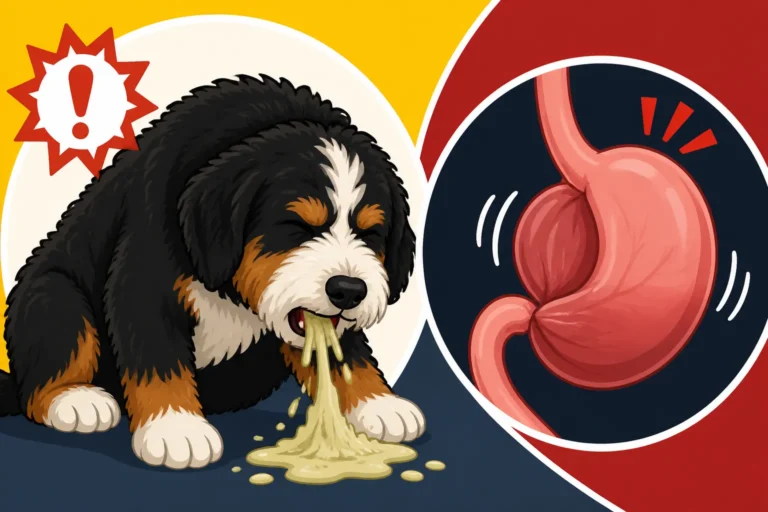
- Retching or unproductive vomiting: This is a classic sign. Your dog will try to throw up but nothing (or very little foamy saliva) comes out. This indicates that something is blocking the normal digestive process.
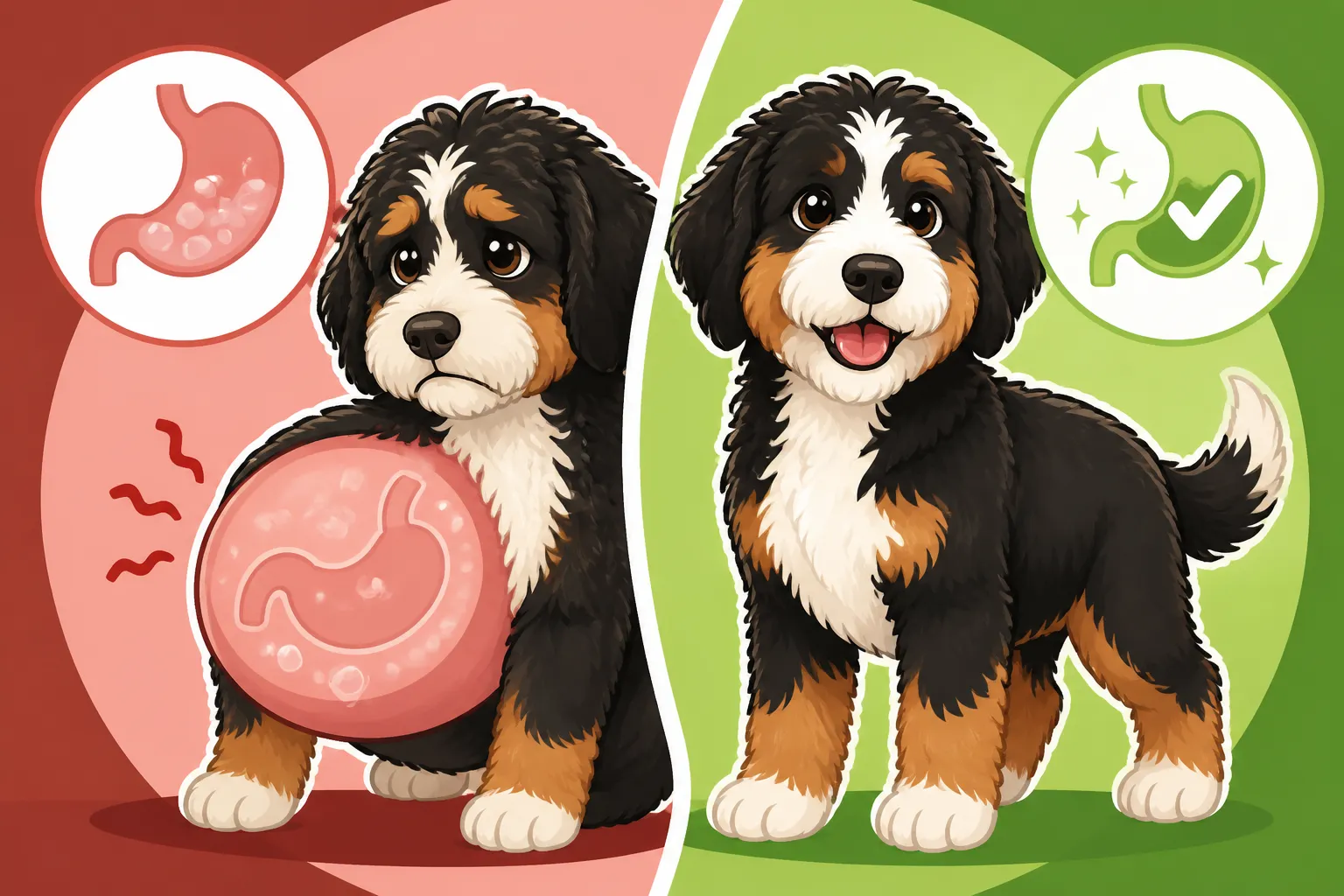
- Distended or swollen abdomen: The belly might look visibly larger, feel tight, and be painful to the touch. This can be harder to spot in fluffier Mini Bernedoodles, so feel their sides gently.
- Drooling and panting: Excessive drooling and heavy, rapid panting can be signs of extreme pain and distress.
- Weakness, collapse, or shallow breathing: As the condition progresses, your dog may become weak, stumble, collapse, and exhibit rapid, shallow breathing due to the pressure on their diaphragm. Their gums might also become pale.
Remember, time is of the essence. If you suspect bloat, even slightly, it’s always better to err on the side of caution and get to an emergency veterinary clinic immediately. Do not wait to see if symptoms improve; bloat can progress from mild discomfort to critical shock in a matter of minutes. Having a plan for emergencies, possibly even discussing it with your pet insurance provider like Healthy Paws, is always a good idea.
Proactive Steps to Minimize Bloat Risk for Your Mini Bernedoodle
While you can't eliminate the risk of bloat entirely, especially with a breed carrying the genetics of a Bernese Mountain Dog and a Poodle, there are many proactive steps you can take to significantly reduce the chances of your Mini Bernedoodle experiencing this life-threatening condition. These strategies focus on managing feeding routines, exercise, and overall health.
Smart Feeding Practices
How and what your Mini Bernedoodle eats can make a world of difference. It's not just about the food itself, but the entire dining experience.
Firstly, feed multiple small meals throughout the day rather than one large one. If you’re currently feeding once a day, breaking that into two or even three smaller meals can prevent the stomach from getting overly distended at any single point. This is a practice commonly recommended for breeds at risk of Bloat in a Standard Bernedoodle's Deep Chest.
Secondly, slow down rapid eaters. Some dogs inhale their food in seconds, gulping down a lot of air along with it. Using a slow-feeder bowl or a puzzle feeder can force your Bernedoodle to eat at a more leisurely pace, reducing air intake. You can also spread their kibble out on a large baking sheet, making them "hunt" for each piece.
Thirdly, the topic of elevated bowls is a bit controversial. For years, it was thought that elevated bowls reduced bloat risk, but some studies have actually suggested they might increase it in certain large breeds. The current consensus is that there isn't enough definitive evidence to recommend them for bloat prevention, and for some dogs, they might even be detrimental. It's best to consult your vet regarding your specific dog's needs, but don't assume an elevated bowl is a magic bullet against bloat. If you're wondering Whether Raised Bowls Raise a Bernedoodle's Bloat Risk, it's a valid concern with conflicting information out there.
Finally, avoid intense exercise or vigorous play around meal times. Give your Mini Bernedoodle at least an hour before and two hours after eating to settle down. This allows the food to digest partially and the stomach to empty, reducing the risk of it twisting if your dog jumps, runs, or rolls. Also, ensure fresh water is always available, but discourage excessive gulping of water, especially after a meal or exercise.
Lifestyle and Stress Management
Beyond feeding, your Bernedoodle's general lifestyle plays a significant role in their overall health, including susceptibility to bloat.
Controlled exercise is key. Regular, moderate exercise is excellent for your dog's health, but avoid high-impact activities immediately after eating. Instead, opt for a leisurely walk before mealtime or a couple of hours after. This is especially important for growing Bernedoodle puppies, as intense activity can also impact joint development, such as Elbow Dysplasia in a Growing Bernedoodle.
Reducing stress and anxiety can also be beneficial. As mentioned earlier, some research suggests a link between anxious temperaments and bloat. A calm, consistent routine, plenty of mental stimulation, and a secure environment can help reduce stress in your Mini Bernedoodle. If your dog suffers from anxiety, discuss strategies with your vet or a professional dog trainer.
Regular veterinary check-ups are non-negotiable. Your vet can assess your dog's overall health, discuss any concerns you have about bloat, and provide personalized advice. They can also provide guidance on The Screening a Bernedoodle Should Have Yearly to catch other potential health issues early. Don't underestimate the value of proactive veterinary care.
Considering a Prophylactic Gastropexy
For dogs at high risk of GDV, a prophylactic gastropexy is a surgical procedure that can be a literal lifesaver. This procedure involves surgically attaching the stomach to the abdominal wall, preventing it from twisting. It doesn't prevent the stomach from distending with gas (bloating), but it virtually eliminates the possibility of the life-threatening volvulus (twisting).
Many owners opt to have this procedure done electively, often at the same time as spaying or neutering. This is a common discussion point, as you might see references to What Gastropexy Adds to a Bernedoodle's Surgery or Whether a Standard Bernedoodle Should Be Tacked at Spay for larger dogs. For a Mini Bernedoodle, considering their genetic background, discussing this with your veterinarian is highly recommended. Your vet can evaluate your dog's individual risk factors, including their specific build and family history, to help you make an informed decision. While it’s an elective surgery, the peace of mind it offers many owners whose dogs are genetically predisposed to bloat is immense.
| Risk Factor | Description | Prevention Strategy |
|---|---|---|
| Deep Chest Anatomy | Both Bernese and Poodle lines contribute to a deeper chest relative to body size. | Cannot change anatomy; focus on managing other risk factors. Consider prophylactic gastropexy. |
| Rapid Eating | Dogs that gulp food and air quickly. | Use slow-feeder bowls, puzzle feeders, or spread food out. |
| Large, Infrequent Meals | Eating one big meal puts more strain on the stomach. | Feed two to three smaller meals per day. |
| Vigorous Exercise After Eating | Physical activity can cause a full stomach to slosh and twist. | Restrict exercise for at least 1 hour before and 2 hours after meals. |
| Excessive Water Intake | Gulping large amounts of water, especially around meal times. | Provide constant access to fresh water but discourage rapid, excessive drinking after meals or intense activity. |
| Stress/Anxiety | Some studies link anxious temperaments to increased bloat risk. | Maintain a consistent routine, provide mental stimulation, and address anxiety with your vet. |
| Genetics/Family History | Predisposition inherited from parent breeds. | Be aware of family history. Prophylactic gastropexy can negate genetic anatomical risk for twisting. |
Disclaimer
The information provided in this article is for general informational and educational purposes only and is not a substitute for professional veterinary advice. Always consult with a qualified veterinarian regarding any medical condition or health concerns your Bernedoodle may have. Do not disregard professional veterinary advice or delay in seeking it because of something you have read here.