Whether a Shaved Bernedoodle Handles Heat Better
It’s a common scenario for Bernedoodle owners: summer rolls around, the temperatures soar, and you look at that beautiful, thick, often dark coat on your furry companion and think, "Surely, shaving them down will make them more comfortable!" It seems like such a logical solution, doesn't it? We strip down to lighter clothes ourselves, so why wouldn't our dogs benefit from a good buzz cut? But the reality for a Bernedoodle, with its unique coat genetics, is far more complex than just grabbing the clippers. This guide will dive deep into why shaving a Bernedoodle might actually do more harm than good when it comes to heat management, and what truly effective strategies you can use to keep them cool and comfortable all summer long.
The Truth About Your Bernedoodle's Coat and Heat
When you look at a Bernedoodle, you see a magnificent blend of a Bernese Mountain Dog and a Poodle. Both breeds bring distinct coat characteristics to the table, and understanding this blend is crucial before deciding on a drastic grooming change like shaving. It's not just "fur"; it's a finely tuned system.
Understanding the Bernedoodle's Unique Double-ish Coat
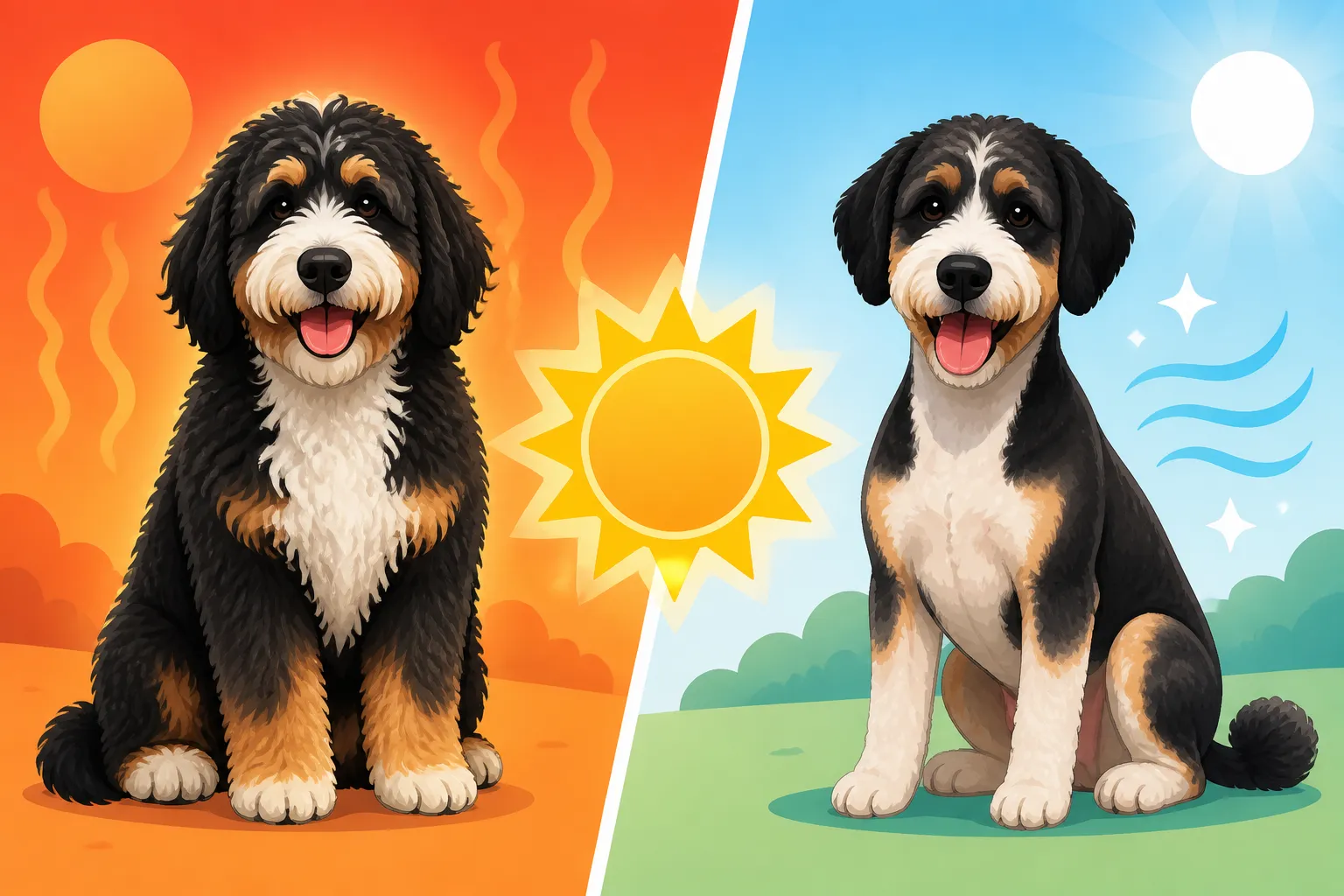
The Bernese Mountain Dog parent typically contributes a thick, double coat. This means they have a soft, dense undercoat that provides insulation and warmth in cold weather, and a longer, coarser outer coat (guard hairs) that repels water and dirt, and protects the skin from UV rays. Poodles, on the other hand, have a single layer coat of dense, curly hair that grows continuously. When these two are mixed, as in a Bernedoodle, you get a fascinating variety of coat types, from wavy and fleece-like to tightly curly. Many Bernedoodles, especially first-generation (F1) and some F1B generations, will inherit some degree of a "hybrid" coat that still retains characteristics of a double coat, or at least a very dense single coat with a significant insulating quality. This isn't the kind of coat that just acts like a sweater; it's designed to regulate temperature.
Even if your Bernedoodle doesn't have a textbook "double coat" like a purebred Bernese, their dense, wavy, or curly hair still forms a protective barrier. It's designed to trap a layer of air, which acts as insulation against both cold and heat. Think about the Bedouins in the desert wearing thick robes – it's the same principle. That trapped air creates a buffer between the scorching outside temperatures and the dog's skin, helping to keep them cooler than if their skin were directly exposed. This intricate natural design is often overlooked when owners consider shaving. It’s a very different situation than, say, a short-haired dog that doesn't have these natural defenses.
How a Natural Coat Actually Provides Insulation
Imagine a well-insulated house. The insulation works to keep the warm air in during winter, but it also works to keep the hot air out during summer, maintaining a stable temperature inside. Your Bernedoodle's coat functions in a similar way. The guard hairs, even in a wavy Bernedoodle coat, stand slightly away from the skin, allowing air to circulate. This airflow, combined with the underlying insulating layer (whether a true undercoat or simply dense Poodle-like hair), creates a microclimate near the dog's skin that is often cooler than the ambient air temperature.
This natural barrier is essential for a dog that is susceptible to overheating, like many larger, dark-coated breeds. You might have heard about how Why a Black Tri Bernedoodle Overheats – it's not just the color, but the density of the coat that contributes to how they handle heat. When this natural insulation is removed by shaving, you're essentially stripping away their built-in air conditioning system. It's counterintuitive, but often, the very thing we think is making them hot is actually helping them regulate their body temperature.
The continuous growth of the Poodle-derived coat also means that even without a traditional "blow out" like a Bernese, regular grooming maintains the integrity of this system. It prevents matting, which does trap heat and restrict airflow, and keeps the coat functioning as intended. Understanding this complex interplay is the first step in making informed decisions for your Bernedoodle's comfort.
The Surprising Risks of Shaving for Heat Management
While the intention behind shaving a Bernedoodle is usually good, the unforeseen consequences can often outweigh any perceived benefits, especially during warmer months. It's a decision that can impact not only their comfort but also their long-term coat health and skin integrity.
Sunburn and Skin Damage Concerns
One of the most immediate and significant risks of shaving a Bernedoodle is exposing their sensitive skin to the sun's harsh UV rays. Their thick coat provides a natural shield, much like sunscreen for humans. When this protection is removed, your Bernedoodle's skin can easily get sunburned, leading to pain, redness, peeling, and even increasing the risk of skin cancer over time. This is especially true for Bernedoodles with lighter skin pigmentation beneath their dark or multi-colored coats. Imagine spending a day at the beach without any sunscreen or clothing – that's essentially what you're doing to your dog.
Beyond immediate sunburn, prolonged exposure to the sun without a protective coat can lead to other skin irritations and problems. Dogs aren't meant to have direct sun exposure on their skin for extended periods. This risk alone is often enough to make owners reconsider a full shave, especially if their dog spends any significant time outdoors, even in a fenced yard. Companies like Healthy Paws, which offers pet insurance, can attest to the various skin issues vets see, some of which can be exacerbated by improper coat care and sun exposure. It’s always better to prevent these issues than to treat them later.
Guard Hair Damage and Coat Regrowth Issues
For many Bernedoodles, particularly those with straighter or wavier coats that lean more towards the Bernese side, shaving can permanently damage the guard hairs. These are the outer, tougher hairs that give the coat its structure and protective qualities. When they are cut, they don't always grow back the same. Instead, the softer undercoat might grow faster or thicker, leading to a "cottony" or "woolly" texture that is more prone to matting and less effective at repelling water or insulating. This can be incredibly frustrating for owners who then find themselves dealing with a coat that becomes a mat magnet, requiring even more intensive grooming down the line.
The coat regrowth can also be uneven, patchy, or simply not as aesthetically pleasing as the original coat. What you're left with is a coat that loses its natural functionality and often requires more professional attention to manage. This phenomenon is often referred to as "clipper alopecia" or "post-clipping alopecia" in extreme cases, where hair growth is significantly delayed or fails to return to its original state. It’s a gamble that many professional groomers advise against for these types of coats, precisely because the long-term impact on the coat's health and appearance can be quite dramatic.
Decreased Natural Cooling Efficiency
As discussed earlier, the Bernedoodle's coat, even if not a traditional double coat, is designed to regulate temperature by trapping air and creating insulation. When you shave it off, you remove this natural cooling mechanism. Without that insulating layer, the sun's heat directly hits the dog's skin, often making them hotter, not cooler. They also lose the natural air circulation that occurs within the layers of an untrimmed (but well-maintained) coat.
Think of it this way: while we might feel cooler with less clothing, dogs regulate heat differently than humans. They primarily cool themselves through panting and through the pads of their feet. Their coat is actually a key part of their defense against both cold and heat. Removing it can make them more vulnerable to heat stress and conditions like heatstroke. Recognizing Signs a Bernedoodle Is Overheating becomes even more critical if you've mistakenly shaved their protective layer away. Instead of helping, you've removed one of their main lines of defense against rising temperatures.
Effective, Safe Strategies to Keep Your Bernedoodle Cool
Instead of reaching for the clippers, there are numerous safe and effective strategies you can employ to help your Bernedoodle stay cool and comfortable when the mercury rises. These methods work with their natural physiology, rather than against it.
Timing Walks and Maximizing Shade
One of the simplest yet most impactful changes you can make is adjusting your Bernedoodle's exercise schedule. Avoid walking during the hottest parts of the day, typically between 10 AM and 4 PM. Instead, opt for early morning walks when the air is freshest and coolest, or wait until late evening after the sun has set and pavement temperatures have dropped. Remember, asphalt and concrete can get dangerously hot, burning your dog's paw pads even if the air feels mild to you. You can test the pavement with the back of your hand – if it's too hot for you to hold for five seconds, it's too hot for your dog's paws.
When you do go out, always seek shade. Walk in parks with plenty of trees, or stick to the shadier side of the street. Carrying water and offering frequent breaks is also crucial. For those wondering Whether a Bernedoodle Should Be Walked in Summer, the answer is yes, but with extreme caution and smart planning. These beautiful dogs, especially larger ones, can really struggle in heat. You might even find yourself altering your own routine to accommodate your pup, but it's well worth it for their well-being.
Hydration and Cooling Accessories
Keeping your Bernedoodle well-hydrated is paramount. Always have fresh, cool water available, both indoors and out. You might even add ice cubes to their water bowl to encourage drinking. For longer outings, bring a portable water bottle and collapsible bowl. There are also many fantastic cooling accessories available today designed specifically for dogs.
Cooling mats, for instance, often contain a gel that activates with pressure, providing a cool spot for your dog to lie on. Cooling vests or bandanas, which you soak in water and then wring out, help cool your dog by evaporative cooling, especially around their core and neck. Some Bernedoodles even enjoy a kiddie pool with a few inches of water for a refreshing dip in the backyard. These tools provide active cooling without interfering with their natural coat. Companies like Healthy Paws would also encourage these preventative measures, as good hydration and avoiding heat stress can prevent costly veterinary emergencies. For more specific guidance, explore articles like Cooling a Bernedoodle Down Safely.
Proactive Grooming for Airflow (Without Shaving)
Instead of shaving, the key to a comfortable Bernedoodle coat in summer is proactive and consistent grooming. Regular brushing, at least 2-3 times a week, is vital to prevent matting and ensure proper air circulation down to the skin. Matted fur traps heat, prevents airflow, and can be incredibly uncomfortable and even painful for your dog. A good slicker brush and a metal comb are your best friends here. For a truly thorough job, you should be able to get the comb right down to the skin. For heavier coated Bernedoodles, consider reading up on How Often a Bernedoodle Should Be Brushed and investing in The Slicker and Rake a Bernedoodle Needs.
For professional grooming, instead of a full shave, ask for a "summer trim" or a "utility clip" that leaves at least an inch or two of hair. This length provides enough protection from the sun while shortening the overall bulk of the coat, allowing for better airflow and easier maintenance. This type of trim can make a huge difference in comfort, especially around the belly and armpits where matting tends to occur and heat can get trapped. The goal is to thin out the coat and reduce length, not to remove its protective qualities entirely. Learn about The Summer Clip Length for a Bernedoodle to know what to ask your groomer for.
When a Professional Trim Might Still Be Appropriate (But Not a Shave)
There are indeed times when a shorter clip is beneficial for your Bernedoodle, but it's important to differentiate this from a complete shave-down. A responsible professional groomer will understand the nuances of a Bernedoodle's coat and can guide you towards the best option.
A good "summer trim" or "kennel clip" is often about reducing the bulk and length of the coat while leaving enough hair to still protect the skin from sun and maintain natural insulation. This might involve shortening the body hair to an inch or two, tidying up the legs, and keeping the face and tail trimmed to prevent matting and improve cleanliness. The idea isn't to expose the skin, but to manage the volume of hair, making it easier for air to circulate and for you to keep it brushed and mat-free. This approach lessens the risk of sunburn and coat damage while still offering a cooler feel.
In cases where a Bernedoodle's coat becomes severely matted, a complete shave might be the only humane option, regardless of the season. Matting is incredibly painful, can cause skin infections, and severely restricts airflow, actually trapping heat and making the dog much hotter. If this happens, a professional groomer will carefully shave the dog down, and then you can begin the process of regrowing a healthy coat. Be aware that depending on the severity of the matting, this might be a longer process, and you might encounter issues like Whether a Bernedoodle's Coat Grows Back After Shaving. This is a therapeutic shave, not a preventative heat measure.
Always consult with a reputable, experienced groomer who understands doodle coats. They can assess your Bernedoodle's specific coat type and condition and recommend the best course of action. They'll know how to maintain coat health while still providing a comfortable summer look that protects your dog. When it comes to managing the heat, remember that prevention and working with your dog's natural defenses are always the safest and most effective approaches.
Comparison of Shaving vs. Proper Grooming for Heat Management
Here's a quick look at the pros and cons of shaving versus appropriate grooming for your Bernedoodle in warm weather:
| Feature | Shaving Down to the Skin | Regular Trimming & Brushing (e.g., Summer Clip) |
|---|---|---|
| Immediate Feel | May feel cooler to the touch initially | Reduces bulk, allows better airflow |
| Sun Protection | None (high sunburn risk) | Maintains a protective barrier against UV rays |
| Natural Cooling | Compromises natural insulation and airflow | Enhances natural cooling by improving air circulation and reducing mats |
| Coat Health | Risk of guard hair damage, uneven regrowth, "clipper alopecia" | Preserves coat integrity and healthy growth cycle |
| Matting Risk | Eliminates existing mats, but regrowth can be more prone to new ones | Prevents mats when done regularly, easier to manage |
| Skin Health | Increased risk of irritation, bug bites, direct heat absorption | Protects skin from elements and external irritants |
| Maintenance | Requires careful sun protection, dealing with potential regrowth issues | Regular brushing and professional trims, less prone to serious issues |
Final Thoughts on Bernedoodles and Warm Weather
The desire to keep our Bernedoodles comfortable in the heat is completely understandable. We want what's best for our furry family members. However, when it comes to their beautiful, functional coats, the most intuitive solution—shaving it all off—is often not the best one.
Instead, embrace proactive and intelligent strategies. Schedule walks during cooler parts of the day, provide plenty of water and shade, and utilize cooling mats or vests. Most importantly, commit to a consistent grooming routine that keeps their coat clean, tangle-free, and well-aerated without stripping away its natural protection. A well-maintained coat, perhaps with a sensible summer trim that leaves a protective length, is your Bernedoodle's best defense against the summer heat. By understanding how their unique coat works, you can ensure they remain happy, healthy, and cool through all seasons.
Disclaimer
Please remember that this article provides general information and guidance. Every Bernedoodle is an individual, and specific health or grooming needs may vary. Always consult with your veterinarian for any health concerns or before making significant changes to your dog's diet, exercise, or grooming routine. For specific grooming advice, seek out a professional groomer experienced with Poodle and Doodle coats.