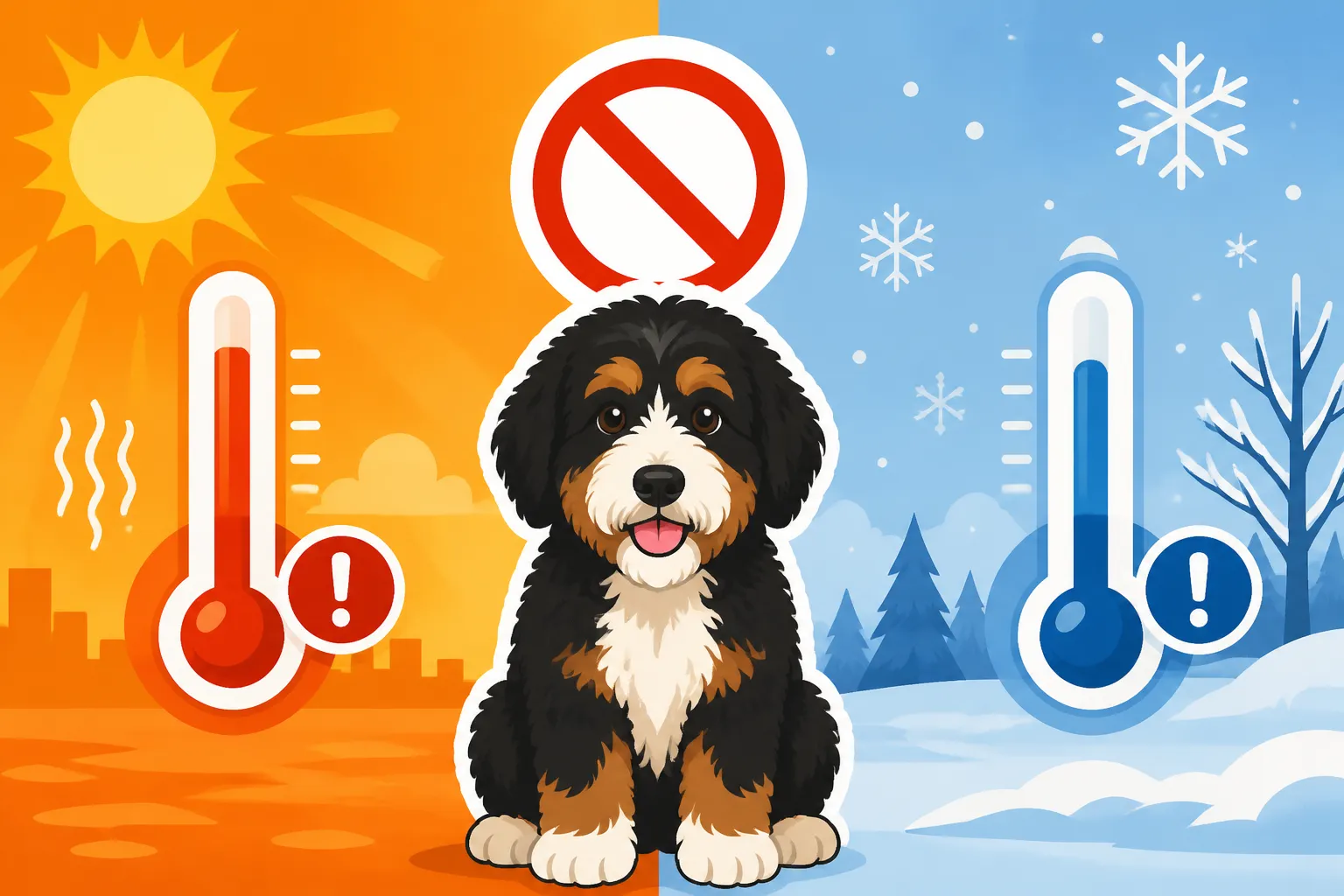
The Temperature a Bernedoodle Should Not Be Walked In
It’s a scenario many of us Bernedoodle parents know all too well: the sun is shining, the birds are singing, and your sweet, fluffy companion is looking at you with those expectant eyes, ready for an adventure. But then you feel the air, thick and heavy, and a wave of worry washes over you. How hot is too hot for a Bernedoodle walk? With their dense coats and big, loveable bodies, these wonderful dogs have specific needs when it comes to warmer weather. This guide is here to walk you through understanding those risks, recognizing the warning signs, and making smart decisions to keep your furry family member safe and happy, no matter the season.
Understanding Your Bernedoodle's Unique Heat Challenges
Bernedoodles are truly special dogs, combining the best traits of the intelligent Poodle and the gentle giant Bernese Mountain Dog. However, this delightful mix also brings certain considerations, particularly when it comes to regulating their body temperature. Their luxurious coats, while beautiful, are designed for much colder climates than many of us experience for large parts of the year, making heat a genuine concern.
The Bernese and Poodle Influence on Heat Tolerance
Let's break down where your Bernedoodle's unique thermal profile comes from. The Bernese Mountain Dog parent brings a heritage of working in the snowy Swiss Alps. They are built for endurance in cold weather, boasting a thick, insulating double coat that traps warmth effectively. This coat is fantastic for keeping them toasty when the snow falls, but it quickly becomes a liability when temperatures rise. Their large body mass also means they generate more internal heat and have a larger volume to cool down.
On the Poodle side, while they have a single, curly coat that is often associated with being "hypoallergenic" and less prone to shedding, it's still a very dense coat. When left long, it can be incredibly insulative. Standard Poodles, in particular, are active dogs that can generate a lot of body heat during exercise. When you combine these two breeds, you often get a Bernedoodle with a substantial coat, a larger frame, and a strong desire to be active, all of which contribute to a heightened risk of overheating. They simply aren't as efficient at dissipating heat as breeds with thinner, shorter coats.
Why a Bernedoodle's Coat is a Double-Edged Sword
That beautiful, often wavy or curly Bernedoodle coat is one of their most defining features, but it's genuinely a double-edged sword when it comes to heat. In winter, it's a blessing, keeping them warm and cozy. But as soon as the mercury climbs, that same coat acts like a thick, down-filled jacket that your dog can't take off. It traps heat close to their body, preventing air circulation and making it difficult for their natural cooling mechanisms to work.
Even if your Bernedoodle has a more Poodle-like, non-shedding coat, it can still pose a challenge. These coats require consistent grooming to prevent matting, which further compounds the problem. A matted coat becomes even denser and less breathable, creating hot spots and making it almost impossible for air to reach the skin. This isn't just uncomfortable; it’s a health hazard. Regular brushing, like the kind detailed in The Volume of Coat a Bernedoodle Owner Brushes Weekly, is crucial year-round, but especially in warmer months to keep the coat open and allow for some air flow, even if it’s minimal. You might even consider if Whether a Shaved Bernedoodle Handles Heat Better is an option for your dog, though that comes with its own considerations.
Factors Beyond Temperature: Humidity and Exercise Intensity
It's tempting to look at the thermometer alone and think, "Okay, 70 degrees is fine." But that number doesn't tell the whole story, especially for a Bernedoodle. Humidity is a huge, often underestimated, factor. Dogs cool themselves primarily by panting. As they pant, moisture evaporates from their tongue and respiratory tract, which helps to cool their blood. When the air is saturated with humidity, this evaporative cooling process becomes far less efficient. It's like trying to dry clothes in a damp basement – it just doesn't work well. So, a 75°F day with high humidity can feel much hotter and be far more dangerous for your Bernedoodle than a dry 80°F day.
Beyond the actual temperature and humidity, the intensity and duration of the exercise play a massive role. A leisurely stroll in the shade is vastly different from a rigorous game of fetch in direct sun. Even on a moderately warm day, prolonged or intense exercise can quickly push a Bernedoodle into dangerous territory. Their enthusiasm can often override their discomfort, meaning they might keep going long after they should have stopped. This is particularly true for younger Bernedoodles who haven't quite matured physically or mentally, as discussed in The Age a Bernedoodle Stops Acting Like a Puppy. As their owner, it’s up to you to be the smart one and set the boundaries.
Identifying Dangerous Temperatures for Bernedoodles
Knowing when the conditions are becoming risky is paramount for any Bernedoodle owner. We all want our dogs to get enough exercise, but we also need to prioritize their safety above all else, especially when the weather isn't cooperating. There are general guidelines, but also specific nuances to consider for your individual dog.
General Temperature Guidelines for Safe Walks
Let's talk numbers, though always remember these are guidelines, not hard and fast rules set in stone. For most Bernedoodles, temperatures below 68-70°F (20-21°C) with low humidity are generally considered safe for normal walks and outdoor play, provided they have access to water and shade. This is their sweet spot, where their cooling systems can usually keep up.
However, once the temperature starts creeping up above 75°F (24°C), especially if humidity is also high, you should exercise extreme caution. At this point, even a moderate walk can become risky. You'll need to shorten walks, seek out shaded areas exclusively, and keep a very close eye on your dog for any signs of discomfort. I often recommend the "five-second rule" for pavement: place the back of your hand on the asphalt. If you can't hold it there comfortably for five seconds, it's too hot for your Bernedoodle's paws. Not only can hot surfaces cause painful burns, but dogs also release heat through their paw pads, so hot pavement restricts this natural cooling.
When the thermometer hits 80-85°F (26-29°C) and higher, it's generally best to avoid walks altogether, especially for standard or larger Bernedoodles. At these temperatures, the risk of heatstroke becomes dangerously high, even with short excursions. This is when indoor activities, or very brief potty breaks in the coolest part of the day, become the only safe options. It’s a tough pill to swallow when your dog is eager to go out, but their well-being has to come first. Remember, it's not just about the walk itself, but how long the dog is exposed to these temperatures.
Here’s a quick reference table to help visualize the risk levels:
| Ambient Air Temperature (F/C) | Humidity Level | Bernedoodle Activity Risk | Recommendations |
|---|---|---|---|
| Below 68°F (20°C) | Low | Low to Moderate | Normal walks, monitor for exertion. |
| 68-75°F (20-24°C) | Low | Moderate | Shorter walks, offer water, seek shade. |
| 68-75°F (20-24°C) | High | High | Very short walks, strict monitoring, consider indoor activities. |
| 75-80°F (24-27°C) | Low | High | Avoid strenuous exercise, walk in early morning/late evening, use paw test. |
| 75-80°F (24-27°C) | High | Very High | Only brief potty breaks, prioritize indoor time. |
| Above 80°F (27°C) | Any | Extreme | Avoid outdoor walks. Stay indoors with AC. |
High Humidity: The Silent Threat
I cannot stress enough how much high humidity can elevate the risk for your Bernedoodle. It's often the hidden danger that catches owners off guard. Imagine trying to cool yourself down with sweat in a sauna – it just doesn't work effectively. That's essentially what your Bernedoodle is up against when the air is thick with moisture.
Their primary cooling mechanism, panting, relies on the evaporation of water from their respiratory tract. When the air is already saturated with water vapor, there's nowhere for that moisture to go. This significantly reduces their ability to dissipate heat, causing their core body temperature to rise rapidly, even if the actual air temperature isn't astronomically high. So, on a humid day, a temperature that might seem borderline okay for a quick outing can quickly become life-threatening. Always check the heat index or "feels like" temperature, which combines both heat and humidity, rather than just the dry air temperature.
Individual Variations: Age, Health, and Coat Color
While general guidelines are helpful, every Bernedoodle is an individual, and their personal tolerance for heat can vary significantly. Factors like age, overall health, and even coat color can play a crucial role.
Puppies and senior Bernedoodles are generally more vulnerable to heat. Puppies haven't fully developed their thermoregulation systems and can tire out quickly. Senior dogs, on the other hand, may have underlying health conditions that make them less resilient, as mentioned in What Changes in a Bernedoodle After Eight. Conditions like heart disease, respiratory issues, or even being overweight can drastically reduce their ability to cope with heat. For a heavier Bernedoodle, heat can be an additional stressor. If your dog is struggling with its weight, this adds another layer of risk, so keeping an eye on their physique is important, as being overweight can indeed shorten a dog’s life as discussed in Whether an Overweight Bernedoodle Loses Years.
Even something as simple as coat color can make a difference. Darker coats absorb and retain more solar radiation than lighter coats. So, a Bernedoodle with a primarily black or dark tri-color coat may heat up faster in direct sunlight than one with a lighter sable or phantom pattern. This is why Why a Black Tri Bernedoodle Overheats is a real and important consideration for those beautiful dark-coated dogs. Always consider these individual factors when deciding if it's safe to take your Bernedoodle out.
Recognizing and Preventing Heatstroke in Your Bernedoodle
The best defense against heatstroke is prevention, but knowing the signs and what to do in an emergency is absolutely critical. Heatstroke is a severe and potentially fatal condition, and rapid intervention can make all the difference for your Bernedoodle.
Early Warning Signs of Overheating
Your Bernedoodle will often give you clues that they're getting too hot long before heatstroke sets in. Learning to recognize these early warning signs is key to preventing a medical emergency. The most common and often first sign is excessive panting. While some panting is normal after exercise, look for panting that seems disproportionate to the activity, is very rapid, or sounds labored. Their breathing might become noisy.
Other signs include:
- Drooling: An increase in drooling, often thick or ropey saliva.
- Bright Red Gums: Check their gums; if they are unusually bright red or even dark brick red, it's a serious sign. As it progresses, gums can become pale or bluish.
- Lethargy or Weakness: Your usually energetic Bernedoodle might seem unusually tired, reluctant to move, or stumble.
- Uncoordinated Movement: They might stagger, appear dizzy, or have trouble balancing.
- Vomiting or Diarrhea: These can be signs of advanced overheating.
- Rapid Heart Rate: Their heart might be pounding.
- Glazed Eyes: Their eyes may appear distant or unfocused.
These signs, especially a combination of them, indicate your dog is struggling. Don't wait for all of them to appear; if you notice one or two, it's time to act immediately. For a deeper dive into the symptoms, check out Signs a Bernedoodle Is Overheating.
Immediate Actions if Your Bernedoodle Overheats
If you suspect your Bernedoodle is overheating, time is of the essence. Here's what you need to do:
- Get to a Cooler Environment: Immediately move your dog into the shade, an air-conditioned car, or indoors.
- Offer Water: If they are conscious and willing, offer small amounts of cool (not ice cold) water. Don't force them to drink, as they could aspirate it.
- Apply Cool Water: Use cool (again, not ice cold) water to wet down their body, focusing on areas with less fur and higher blood flow: their paws, belly, inner thighs, and ears. A wet towel can also be draped over them. Ice water can cause blood vessels to constrict, actually hindering cooling, and can lead to dangerous internal temperature drops too quickly.
- Fan Your Dog: Use a fan or even a piece of cardboard to create air movement over their wet body, helping the evaporative cooling process.
- Seek Veterinary Attention Immediately: Even if your dog seems to recover quickly, heatstroke can have delayed effects, including organ damage. Call your vet on the way so they can prepare for your arrival. This is where having pet insurance, like Healthy Paws, can offer immense peace of mind, knowing that you can focus on getting your dog the emergency care they need without immediate financial stress.
Remember, every minute counts in a heatstroke situation. Acting quickly and calmly can save your Bernedoodle's life. More advice on this critical topic can be found in Cooling a Bernedoodle Down Safely.
Proactive Strategies for Hot Weather Exercise
Prevention is always better than cure, especially when it comes to heatstroke. You can still ensure your Bernedoodle gets adequate exercise and mental stimulation during warmer months by adopting some smart strategies.
- Timing is Everything: Limit walks and outdoor play to the coolest parts of the day – early mornings before the sun gets too high, and late evenings after it has set and surfaces have cooled. Avoid midday sun entirely. This is essential, as discussed in Whether a Bernedoodle Should Be Walked in Summer.
- Seek Shade: Plan your routes to stay in shaded areas as much as possible. Parks with lots of trees are ideal.
- Hydration, Hydration, Hydration: Always carry fresh water for your Bernedoodle and offer it frequently. Consider a collapsible dog bowl. Ensure they have constant access to water at home.
- Cooling Gear: Invest in cooling vests, bandanas, or mats specifically designed for dogs. These can help keep their core temperature down.
- Avoid Strenuous Activity: On warmer days, ditch the intense fetch sessions or long jogs. Opt for shorter, leisurely strolls or mental enrichment games indoors.
- Grooming: Keep their coat well-groomed and free of mats. While shaving them completely can be risky (exposing skin to sunburn), a shorter clip can help in some cases. Discuss the best summer clip for your Bernedoodle with a professional groomer.
- Indoor Alternatives: On really hot days, embrace indoor play. Puzzle toys, training sessions, or even a trip to a dog-friendly indoor facility can provide mental and physical exercise without the heat risk. For those Bernedoodles who enjoy it, a kiddie pool with cool water can also be a fantastic way to cool off and have fun, as detailed in Whether a Bernedoodle Swims to Cool Off.
By being mindful and proactive, you can help your Bernedoodle enjoy the warmer months safely.
Making Smart Decisions for Your Bernedoodle's Well-being
Ultimately, keeping your Bernedoodle safe in warm weather comes down to a combination of knowledge, common sense, and being keenly attuned to your dog's individual needs. They rely on us to make these critical decisions for them.
The Importance of Common Sense and Observation
No thermometer reading or humidity percentage can replace your own judgment and keen observation of your Bernedoodle. You know your dog best. One Bernedoodle might be perfectly fine for a short, shaded walk at 70°F, while another, perhaps older or less conditioned, might start showing signs of discomfort. Pay attention to how they are breathing, their energy levels, and their overall demeanor. Are they lagging behind? Are they panting more heavily than usual for the same activity? These are your cues.
It's better to be overly cautious than to risk your dog's health. If you have even a flicker of doubt about the weather conditions or your dog's ability to cope, err on the side of caution. That extra half-hour in the air conditioning could save them from a dangerous situation. Think about it: a standard Bernedoodle typically needs a good amount of daily activity, as covered in The Exercise a Standard Bernedoodle Needs Daily, but that doesn't mean pushing them beyond safe limits. There are always creative ways to get that energy out indoors if necessary.
When In Doubt, Stay Inside or Opt for Indoor Activities
When the heat index is high, or your gut tells you it's simply too risky, the best option is often to stay indoors. This might feel disappointing, especially when your Bernedoodle is looking at you with that hopeful gaze, but it's the most responsible choice.
Don't despair about missed walks; there are plenty of fantastic ways to keep your Bernedoodle stimulated and happy inside. Engage them with:
- Puzzle toys: These are wonderful for mental exercise, challenging their brains to "work" for treats.
- Indoor fetch or tug-of-war: Clear a safe space in a cool room for some gentle play.
- Training sessions: Use the time to brush up on commands, teach new tricks, or practice polite behaviors. Even 10-15 minutes of focused training can be mentally tiring for a smart Bernedoodle.
- Scent games: Hide treats around the house and encourage them to sniff them out. This is a natural instinct and a great energy burner.
- Grooming sessions: Use this time to bond and maintain their magnificent coat, ensuring it stays mat-free and comfortable.
These alternatives ensure your Bernedoodle remains engaged and happy without putting them at risk of overheating.
The Role of Regular Vet Check-ups and Insurance
Maintaining your Bernedoodle's overall health through regular veterinary check-ups is paramount, especially when considering their heat tolerance. Your vet can assess your dog's individual health status, identify any underlying conditions that might increase their risk, and offer personalized advice on exercise and warm weather management. They can also discuss things like heartworm prevention, which is even more crucial for active dogs in warmer climates.
Furthermore, being prepared for unexpected emergencies is a smart move for any pet parent. Heatstroke, sadly, can happen quickly and the treatment can be costly. This is where a robust pet insurance policy can be a lifesaver. Companies like Healthy Paws understand the unique health needs of breeds like Bernedoodles, including conditions that might be exacerbated by heat, or the general higher risk for large breeds. Having coverage can alleviate the financial burden of emergency vet visits, allowing you to make medical decisions based solely on what's best for your beloved companion, rather than on your wallet. Looking into Insuring a Bernedoodle Against the Bernese Half can give you a better idea of what to expect when it comes to covering potential health issues.
Responsible Bernedoodle ownership means being vigilant about heat safety. By understanding the risks, recognizing the signs of trouble, and implementing proactive strategies, you can ensure your big, fluffy friend stays safe and enjoys a long, healthy life by your side.
Disclaimer
The information provided in this article is for general informational purposes only and is not a substitute for professional veterinary advice, diagnosis, or treatment. Always seek the advice of your veterinarian or other qualified health provider with any questions you may have regarding a medical condition.