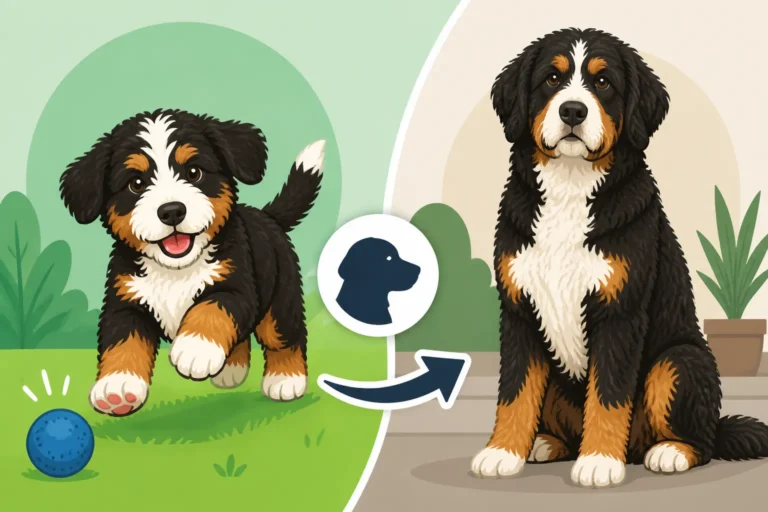
Whether a Bernedoodle Needs a Professional Trainer
Bringing home a Bernedoodle puppy is pure joy, filled with fluffy cuddles and endless potential. But let's be real, those adorable fluff balls quickly grow into substantial, often boisterous, companions who need consistent guidance and clear boundaries. Many new Bernedoodle parents find themselves wondering if they can truly navigate the sometimes-challenging waters of training on their own, or if investing in a professional trainer is the smarter, less stressful path. This guide will help you understand when and why professional help might not just be an option, but a truly necessary investment for fostering a happy, well-behaved Bernedoodle.
Understanding Your Bernedoodle's Unique Learning Style
Bernedoodles are a wonderful blend of two distinct breeds: the laid-back, affectionate Bernese Mountain Dog and the intelligent, often energetic Poodle. This combination gives them many desirable traits, but it also creates a unique training dynamic that can be both rewarding and, at times, perplexing. It's not always a straightforward path, and understanding these inherent tendencies is the first step in deciding if you need a professional guide.
The Bernese Mountain Dog's Temperament Contribution
From their Bernese side, Bernedoodles often inherit a sweet, gentle nature and a strong desire to please their family. This can make them incredibly biddable when they understand what you want. However, they can also carry the Bernese trait of being a bit slow to mature, and sometimes, a touch stubborn. Imagine trying to teach a command to a giant, fluffy toddler who perfectly understands you but just isn't quite feeling it at that moment. That's the Bernese influence right there. They're not intentionally disobedient, but they might take a moment (or several) to process and decide if your request aligns with their current agenda. This can be particularly frustrating when you're dealing with a rapidly growing puppy who is still figuring out its place in the world. Their desire to be close to their people also means they can develop separation anxiety if not properly managed, something a professional can help you preempt or address.
The Poodle's Intelligence and Sensitivity
Then there's the Poodle, bringing a whole different set of characteristics to the mix. Poodles are highly intelligent, eager to learn, and can pick up new commands with incredible speed. They often excel in dog sports and respond wonderfully to positive reinforcement. This sounds fantastic, right? And it often is! But this intelligence also comes with a high degree of sensitivity. A Bernedoodle with a strong Poodle influence might be more prone to becoming easily bored, anxious, or even shut down if training isn't engaging, consistent, and kind. They can react strongly to harsh corrections or inconsistent handling, leading to fear or a refusal to cooperate. Sometimes, what looks like stubbornness might actually be confusion or fear stemming from inconsistent signals. A professional trainer can help you decode these subtle cues and ensure your training methods are tailored to your specific dog's sensitivity. It’s a delicate balance, making sure to challenge their bright minds without overwhelming their gentle spirits.
Managing a Large, Enthusiastic Puppy
Perhaps one of the biggest reasons Bernedoodle owners seek professional help is simply due to their size and enthusiasm. These aren't small lapdogs; even a Mini Bernedoodle can be quite substantial, and a Standard Bernedoodle can easily reach 70-90 pounds, sometimes more. Raising a Bernedoodle Puppy That Will Outweigh You is no small feat. A six-month-old Bernedoodle can already be a powerhouse, and if they haven't learned basic manners by then, things like pulling on the leash, jumping on guests, or counter-surfing can become serious problems. Imagine being pulled down the street by 60 pounds of pure Bernedoodle excitement because they spotted a squirrel! Their puppy energy, coupled with their increasing strength, requires careful management and early, consistent training. What's cute at 20 pounds can be dangerous at 80. Professionals have strategies for managing strong, bouncy adolescents and can teach you how to communicate effectively with a dog whose physical capabilities might soon exceed your own.
When a Professional Trainer Becomes a Real Necessity
While some basic training can certainly be tackled at home, there are definite scenarios where a professional trainer isn't just a luxury, but a vital resource. Recognizing these moments early can save you a lot of stress, money, and potential heartache in the long run.
Addressing Specific Behavioral Issues
This is probably the most common reason people reach out for professional help. If your Bernedoodle is exhibiting specific behaviors that are disruptive, dangerous, or simply overwhelming, it's time to call in a pro. This could include excessive barking, destructive chewing, digging, resource guarding (being possessive over toys or food), nipping, or even showing signs of aggression. A professional trainer, especially one certified in behavior modification, can assess the root cause of these issues and develop a targeted plan. For instance, if your Bernedoodle is A Bernedoodle That Backs Away From Strangers or exhibiting other forms of shyness, a trainer can provide a structured plan for Building Confidence in a Timid Bernedoodle rather than inadvertently reinforcing the fear. Trying to fix complex behavioral problems yourself, especially with a large dog, can often make things worse or even put you and others at risk. They see things you might miss and have tools and techniques born from years of experience.
Navigating Puppyhood Milestones
Even if your Bernedoodle isn't displaying outright "bad" behaviors, the sheer volume of things a puppy needs to learn can be overwhelming for new owners. House training, crate training, bite inhibition, socialization, and basic obedience commands like "sit," "stay," and "come" are all critical foundations. A professional can guide you through these milestones, often preventing issues before they even start. Programs like BAXTER & Bella offer comprehensive online puppy training programs that can be incredibly helpful for new owners, guiding them step-by-step through critical puppy phases. This structured approach ensures you're teaching correctly from the start, minimizing frustration for both you and your puppy. Think about how much easier it is to learn proper technique from a coach than trying to figure out a new sport all by yourself. The same applies to teaching a puppy good habits.
| Puppyhood Milestone | Common Challenge for Bernedoodles | How a Trainer Helps |
|---|---|---|
| House Training | Large bladders, sometimes slow to grasp | Establishes consistent schedule, teaches recognition of cues, addresses accidents effectively. |
| Bite Inhibition | Mouthing is normal, but strong jaws | Teaches appropriate play, redirects biting, helps distinguish play bites from aggressive ones. |
| Socialization | Can be shy (Bernese side), or overly boisterous (Poodle energy) | Creates positive experiences, teaches appropriate interactions with people, dogs, and environments. |
| Basic Obedience | Stubborn streak (Bernese), quick to bore (Poodle) | Uses engaging, varied techniques; ensures consistency and proper cue delivery; builds strong foundations. |
| Crate Training | Can resist confinement if not introduced positively | Provides gradual introduction methods, makes crate a safe haven, addresses whining/barking. |
Advanced Training Goals
Perhaps you dream of your Bernedoodle being more than just a well-behaved family member. Maybe you envision them as a therapy dog, a hiking buddy who walks perfectly off-leash, or even participating in dog sports like Whether Bernedoodles Compete in Carting or obedience trials. These advanced goals almost always require professional guidance. Trainers can teach specialized skills, refine existing commands, and help your Bernedoodle reach its full potential. They can also provide a framework for Building a Recall on a Bernedoodle that's rock-solid, even in distracting environments, which is crucial for off-leash adventures. Trying to teach complex commands or sports without professional input can be incredibly frustrating and often leads to gaps in training that are hard to fill later.
What to Look For in a Bernedoodle Trainer
Once you've decided a professional trainer is right for you and your Bernedoodle, the next crucial step is finding the right one. This isn't a one-size-fits-all situation, and doing your homework is key to a successful partnership.
Understanding Different Training Philosophies
Dog training isn't a single, uniform discipline. There are various philosophies and methods out there, and it's important to understand them so you can choose a trainer whose approach aligns with your values and your Bernedoodle's personality. The most common distinction is between "positive reinforcement" and "balanced" training.
- Positive Reinforcement: This method focuses on rewarding desired behaviors with treats, praise, toys, or anything your dog finds motivating. It avoids physical punishment or intimidation, building a strong, trust-based relationship. This approach is generally highly recommended for sensitive breeds like Bernedoodles, as it prevents fear and fosters a love for learning. Many Bernedoodles respond wonderfully to this because of their Poodle intelligence and Bernese desire to please.
- Balanced Training: This approach uses both positive reinforcement for good behavior and corrections (aversives) for unwanted behavior. Corrections can range from verbal reprimands to leash pops or the use of tools like prong collars or e-collars. While some balanced trainers are highly skilled and gentle, it's crucial to ensure any balanced trainer you consider uses corrections minimally and ethically, and explains their reasoning clearly. For a sensitive Bernedoodle, excessive or harsh corrections can be counterproductive, leading to fear, anxiety, or a breakdown in trust.
Always ask a potential trainer about their core philosophy and what tools they use. For Bernedoodles, a trainer who emphasizes positive reinforcement and understands the nuances of both the Bernese Mountain Dog and Poodle temperaments is often the best fit.
Qualifications and Experience with Large Breeds
Just like any other profession, dog training has certifications and varying levels of experience. Look for trainers who are certified by reputable organizations, such as the Certification Council for Professional Dog Trainers (CCPDT) or the Karen Pryor Academy (KPA). These certifications indicate that the trainer has met specific standards of knowledge and ethical practice. More importantly, ask about their experience with large, strong breeds, especially doodles or similar mixes. Training a tiny Chihuahua is very different from training a 90-pound Bernedoodle. A trainer who understands the physical capabilities and growth stages of a large breed will be much better equipped to help you with issues like Leash Manners on a Bernedoodle Heading for Ninety Pounds or preventing joint strain during exercise. They should be able to articulate how they've successfully worked with dogs that share similar traits to Bernedoodles.
Evaluating a Trainer's Approach
Don't be afraid to interview potential trainers and ask for references. A good trainer will be happy to discuss their methods, answer your questions, and even allow you to observe a class or session. Pay attention to:
- Communication Style: Do they communicate clearly and respectfully with both you and your dog? A good trainer acts as a mentor to you, teaching you how to train your dog, not just training your dog for you.
- Problem-Solving: Do they offer custom solutions, or do they have a rigid, one-size-fits-all approach? Every dog is an individual, and a good trainer will tailor their methods to your Bernedoodle's specific needs and your family's lifestyle.
- Environment: Is the training environment clean, safe, and free from overwhelming distractions? For a The Shyness a Bernedoodle Gets From the Bernese, a calm initial environment is key.
- Results and Support: Can they provide examples of successful outcomes? Do they offer ongoing support after the training program ends? For example, BAXTER & Bella often provides lifetime access to their online resources and support, which can be invaluable for continued learning.
A trainer who focuses on teaching you how to interact and communicate with your Bernedoodle effectively is far more valuable than one who simply takes your dog away for a few weeks and returns them "fixed." You need to be equipped to maintain the training throughout your Bernedoodle's life.
Making the Most of Professional Training
Hiring a professional trainer is a significant investment, both in terms of time and money. To truly get your money's worth and ensure lasting success, your active participation is absolutely essential.
Your Role as the Primary Handler
A professional trainer is not a magic wand. They can provide expertise, guidance, and a structured curriculum, but you are the one who lives with your Bernedoodle every single day. This means you must be committed to being an active participant in the training process. Whether it's group classes, private sessions, or even an online program, you'll be learning just as much as your dog is. The trainer will teach you how to give commands, how to reinforce good behavior, and how to manage challenging situations. Your Bernedoodle needs to learn to respond to you, not just the trainer. So, show up, pay attention, ask questions, and be prepared to put in the work between sessions. This partnership is what truly cements the lessons and makes them stick in the real world.
Consistent Practice and Reinforcement
Consistency is the bedrock of all successful dog training. It's not enough to attend a weekly class and then forget about training until the next session. Your Bernedoodle needs daily, short, positive practice sessions to solidify what they've learned. This means incorporating commands into everyday routines, practicing recalls in safe, distracting environments, and continuing to reward desired behaviors. If one family member uses a different command word or allows behaviors that others don't, your Bernedoodle will quickly become confused, or worse, learn to ignore commands altogether. For instance, if your trainer helps you with The Stubborn Streak Under a Bernedoodle's Poodle Brain, it's up to you to consistently apply the strategies they recommend to overcome it. Tools purchased from places like Amazon, such as clickers, treat pouches, and appropriate leashes, can become invaluable aids in maintaining this consistency at home.
Integrating Training into Daily Life
The ultimate goal of training isn't just for your Bernedoodle to perform commands perfectly in a structured class setting; it's for them to be a well-mannered, happy companion in all aspects of your life. This means actively integrating training into your daily routines. For example:
- Meal Times: Practice "sit" and "stay" before putting the food bowl down.
- Door Manners: Work on waiting calmly at the door before going out for walks, rather than bursting through.
- Greetings: Teach a "four on the floor" rule to prevent A Bernedoodle That Jumps on People when guests arrive.
- Walking: Consistently apply the leash manners you learned to prevent pulling, even on short trips.
Remember, a Bernedoodle is a lifelong commitment, and their training journey is ongoing. Even after formal classes end, continue to refresh commands and introduce new challenges. This consistent effort, guided by professional advice when needed, will ensure you have a truly wonderful companion for The Twelve to Fifteen Years a Bernedoodle Is Sold On. Think of professional training not as a quick fix, but as investing in a robust communication system with your furry family member, setting you both up for a lifetime of understanding and joy.
Disclaimer
This article is for general informational purposes only and does not constitute professional advice. Laws, prices and regulations vary by location and change over time. Consult a qualified professional for guidance on your specific situation.