Whether Bernedoodles Compete in Carting
Many Bernedoodle owners look at their strong, intelligent, and often cuddly companions and envision them doing more than just being a beloved family pet. With their Bernese Mountain Dog heritage, it's natural to wonder if they still possess the instincts and physical capabilities for draft work, like pulling a cart. This guide will explore whether Bernedoodles truly have what it takes to compete in carting, delving into their genetic predispositions, the training involved, and how you can get your furry friend ready for this rewarding activity.
Understanding the Bernedoodle's Draft Work Heritage
The Bernese Mountain Dog, one half of your Bernedoodle's lineage, is renowned for its history as a draft dog. These magnificent Swiss dogs were originally bred to pull carts filled with milk, cheese, or other goods to market, herd livestock, and serve as watchful farm guardians. This history means that the instinct to pull and work alongside humans is deeply ingrained in their DNA. So, what happens when you introduce the intelligent, agile Poodle into that mix?
The Bernese Influence: Strength and Structure
The Bernese Mountain Dog brings a powerful, robust build, a deep chest, and a strong work ethic to the Bernedoodle equation. They are bred for endurance and strength, capable of moving significant weight over varied terrain. This structural soundness is crucial for any dog involved in draft work, as it minimizes the risk of injury and allows them to perform their tasks comfortably and efficiently. When you see a standard Bernedoodle, you'll often notice a similar sturdy frame, broad shoulders, and powerful hindquarters that echo their Bernese ancestry. This physical foundation is the primary reason why draft work is even a consideration for many Bernedoodles.
However, it's not just physical strength. Bernese Mountain Dogs are also known for their calm, steady temperament. They are often eager to please and form strong bonds with their handlers, which is essential for collaborative activities like carting. While the Poodle side adds its own set of remarkable traits, the Bernese contribution is undeniable when it comes to the potential for pulling.
The Poodle Contribution: Intelligence and Trainability
The Poodle, often underestimated for its working abilities, brings exceptional intelligence and trainability to the Bernedoodle. Poodles are quick learners, highly adaptable, and generally possess a strong desire to engage with their owners. These traits are incredibly valuable in any dog sport, especially one that requires precise commands, nuanced communication, and sustained focus, as carting does. A dog that picks up new concepts quickly and enjoys the learning process will thrive in a structured training environment.
While Poodles don't have a history of pulling carts, their athleticism and eagerness make them highly suitable for many dog sports, from agility to obedience. In a Bernedoodle, this Poodle intelligence can make training for draft work much smoother, turning what might be a purely instinctual activity for a Bernese into a more refined, responsive, and enjoyable partnership. It means your Bernedoodle isn't just pulling; they're understanding the why and the how of their task, responding to cues, and adjusting their pace and direction on command.
Hybrid Vigor and Temperamental Blends
One of the often-cited benefits of a hybrid breed like the Bernedoodle is "hybrid vigor," which can lead to improved health and a more balanced temperament. In the context of draft work, this can mean a Bernedoodle might inherit the best of both worlds: the Bernese's structural soundness and pulling instinct combined with the Poodle's sharp mind and biddability. You're looking for that sweet spot where a dog has enough physical presence and drive to pull, but also the mental capacity and desire to learn complex commands and work as part of a team.
However, it's important to remember that hybrid vigor doesn't guarantee a perfect blend in every individual. Some Bernedoodles might lean more heavily on the Bernese side, showing strong pulling instincts but perhaps a touch more stubbornness (which is a known Bernese trait, often described affectionately as "Bernese resistance"). Others might favor the Poodle's higher energy and focus, but might need more physical conditioning to build the necessary strength. It's a spectrum, and understanding your individual dog's personality and physical makeup is key. This is why The Draft Dog Work a Bernedoodle Can Still Do remains a popular topic of discussion among owners.
Preparing Your Bernedoodle for Draft Work
Deciding to pursue carting with your Bernedoodle is an exciting journey, but it requires careful preparation, starting with a solid foundation of basic obedience and physical conditioning. This isn't just about strapping a harness on and telling them to pull; it's about building trust, strength, and understanding.
Foundational Obedience and Conditioning
Before any serious carting training begins, your Bernedoodle needs a strong grasp of basic obedience commands. "Stay," "wait," "come," "heel," and directional commands like "left" and "right" (or "haw" and "gee" in traditional draft terms) are crucial for safety and control. Imagine your dog pulling a cart and deciding to chase a squirrel – that's a recipe for disaster. Consistent, positive reinforcement training is paramount. Online training platforms, like those offered by BAXTER & Bella, can provide a structured curriculum for building these essential skills from puppyhood, even if they don't specialize in draft work directly. They help you build that crucial communication pathway with your dog.
Physical conditioning is equally important. A Bernedoodle needs to be in good physical shape to engage in draft work safely. Regular, controlled exercise, good nutrition, and ensuring they are at a healthy weight will protect their joints and build stamina. Keeping a Standard Bernedoodle Sound Past Ten involves a lifetime of good care, and that starts early if you plan on active sports. Avoid strenuous activities that could strain developing joints, especially in a growing Bernedoodle puppy. Whether Pulling Damages a Young Bernedoodle's Joints is a valid concern, so listen to your vet and experienced trainers about appropriate ages to start. Generally, wait until your Bernedoodle is fully grown and their growth plates have closed, usually around 18-24 months for standard sizes, before adding significant weight to a cart.
Essential Equipment: Harnesses and Carts
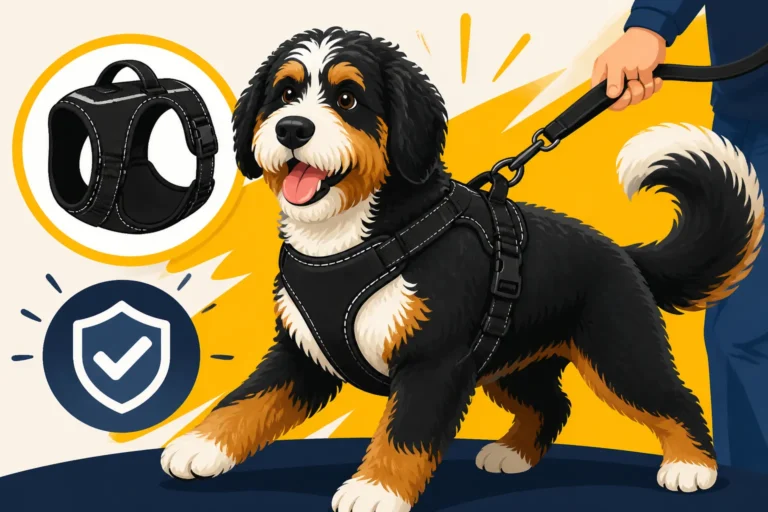
Choosing the right equipment is non-negotiable for comfort, safety, and performance. A proper draft harness is specifically designed to distribute weight evenly across the dog's chest and shoulders, avoiding strain on their neck or back. It's not the same as a walking harness! You'll need a well-fitted, padded draft harness that allows for a full range of motion. Many excellent options can be found on platforms like Amazon, but consulting with experienced draft dog trainers or clubs can help you find brands and styles that fit your Bernedoodle best. The Harness a Bernedoodle Needs for Drafting goes into more detail about selecting the right gear.
The cart itself also needs to be appropriate for your dog's size and strength. Starting with a lightweight cart is always recommended, gradually increasing the weight as your Bernedoodle builds confidence and strength. A well-balanced cart is key; it should be easy to maneuver and not put undue pressure on the dog. There are various types of carts, from two-wheeled to four-wheeled, and some are designed for specific types of terrain or purposes. For competition, you'll want something that meets the sport's requirements.
Gradual Training Progression
Training for draft work is a step-by-step process that builds confidence and skill. It usually starts with simply introducing the harness, then teaching the dog to walk comfortably in it. The next step is attaching traces (the lines that connect the harness to the cart) without a cart, allowing the dog to get used to the feel. Then, you introduce the cart itself, first allowing the dog to sniff and explore it, then attaching it without asking them to pull, and finally, asking for short, easy pulls.
Here's a general progression:
| Stage | Activity | Focus |
|---|---|---|
| Foundation | Basic obedience, leash manners, confidence building | Establish clear communication, build trust, ensure physical readiness |
| Harness Introduction | Wearing a draft harness without attachments | Get dog comfortable with the feel and fit of the specialized harness |
| Trace Introduction | Wearing harness with traces dragging on the ground | Familiarize dog with the sensation of something trailing behind them |
| Cart Introduction | Introducing the cart visually, then attached but not pulling | Desensitize to the cart's presence, sounds, and movements |
| Light Pulling | Short, easy pulls with an empty, lightweight cart | Build confidence, teach "pull" command, maintain enthusiasm |
| Increased Weight/Distance | Gradually add weight and distance to pulls | Build strength and endurance, practice directional commands |
| Refinement | Practice precision, obstacles, varied terrain, distractions | Prepare for competition scenarios, reinforce advanced commands |
Throughout this process, keeping training sessions positive, short, and fun is vital. Celebrate every success, no matter how small. A Bernedoodle's The Stubborn Streak Under a Bernedoodle's Poodle Brain can sometimes manifest if they're pushed too hard or if training becomes too monotonous. Patience and consistency are your best tools.
Competing in Bernedoodle Carting Events
So, your Bernedoodle has the aptitude, they've gone through the rigorous training, and they're happily pulling a cart. Now, can they actually compete? The answer is a resounding yes, although perhaps not under every traditional kennel club banner.
Recognising Draft Titles and Organizations
While the American Kennel Club (AKC) doesn't officially recognize Bernedoodles as a purebred breed, and therefore they cannot compete for AKC championship titles in conformation, many other organizations and venues are open to them in performance events. Specifically, several clubs and associations embrace mixed breeds for activities like draft work, offering titles and competitive opportunities.
The Bernese Mountain Dog Club of America (BMDCA), for example, has a comprehensive draft test program. While traditionally for purebred Bernese Mountain Dogs, many local clubs and regional events welcome "companion" or "mixed breed" entries. It's crucial to check with individual clubs and event organizers for their specific eligibility rules. Often, if your Bernedoodle demonstrates the necessary skills and temperament, they can participate and earn titles like "Draft Dog" (DD) or "Draft Dog Excellent" (DDX) through these types of organizations. Whether a Bernedoodle Can Earn a Draft Title is definitely a possibility, just not always through traditional purebred channels.
There are also independent or all-breed clubs that host draft tests or "fun pulls" that are open to any breed or mixed breed. These events often focus on showcasing a dog's ability to safely and effectively pull a cart, navigate obstacles, and demonstrate control and teamwork with their handler. The emphasis is on the dog's performance rather than its breed status.
What to Expect in a Draft Test
A typical draft test involves a series of exercises designed to assess a dog's control, obedience, and ability to pull a cart safely and efficiently. These usually include:
- Freight Haul: Pulling a weighted cart over a specified distance. This tests strength, endurance, and willingness to work.
- Maneuvering: Navigating the cart through a course with turns, obstacles (like cones or narrow gates), and often reversing. This highlights the dog's understanding of directional commands and the handler's ability to guide them.
- Haul to Handler/Freight: Leaving the cart, moving to the handler, and then returning to the cart on command, sometimes pulling it to the handler's location. This assesses obedience and control.
- Teamwork: The judge observes the handler and dog working together, looking for smooth communication, mutual respect, and a willing attitude from the dog.
- Backing Up: The dog might be asked to back the cart up a short distance.
- Holding Position: The dog and cart must remain stationary while the handler moves away, demonstrating control and patience.
Judges look for a dog that works willingly, is under control, and handles the equipment properly. They also evaluate the safety aspect, ensuring the dog isn't spooked by the cart or exhibiting dangerous behavior. It's a true test of the partnership between handler and dog.
Finding Local Carting Clubs and Events
The best way to get involved in carting competitions is to find a local draft dog club or group. A quick online search for "draft dog clubs [your state/region]" or reaching out to local Bernese Mountain Dog or Poodle clubs (even if your Bernedoodle isn't purebred, these groups often have connections to draft work) can yield valuable results. These clubs often offer training classes, workshops, and practice sessions, which are invaluable for learning the ropes and connecting with experienced mentors.
Attending local dog events or fairs that feature dog sports can also be a great way to see draft work in action and inquire about getting started. You might even discover specific Bernedoodle groups that focus on performance events. Don't be shy about asking questions! The dog sport community is often very welcoming and eager to share their passion. Remember that for a large dog, Raising a Bernedoodle Puppy That Will Outweigh You comes with its own set of unique training challenges, and these clubs can provide tailored advice.
Benefits and Challenges of Bernedoodles in Draft Work
Engaging in draft work with your Bernedoodle offers a multitude of benefits, both for you and your dog. However, it's also important to be realistic about the potential challenges.
The Rewards of Draft Work
For many Bernedoodles, draft work is a wonderful outlet for their physical and mental energy. It taps into their natural instincts and provides a "job" that many large, intelligent breeds thrive on. The physical exercise is excellent for maintaining a healthy weight and building strong muscles, which can contribute to Keeping a Standard Bernedoodle Sound Past Ten. The mental stimulation involved in learning commands, navigating courses, and problem-solving keeps their minds sharp and engaged.
Beyond the physical and mental benefits, draft work significantly strengthens the bond between you and your Bernedoodle. It's a team sport, requiring clear communication, trust, and mutual respect. The sense of accomplishment you both feel after mastering a new skill or completing a test is incredibly rewarding. It can also boost a Bernedoodle's confidence, especially if they are naturally a bit reserved or A Bernedoodle That Backs Away From Strangers. Success in a structured activity like carting can help them feel more secure and capable.
Lastly, being part of the draft dog community is a huge plus. You'll meet like-minded people who share your passion for working dogs, learn from experienced handlers, and enjoy a supportive environment. It's a fantastic way to socialize both yourself and your Bernedoodle in a controlled and positive setting.
Potential Challenges and Considerations
Despite the many benefits, there are challenges. The primary one is the time commitment. Training a Bernedoodle for draft work and competing requires consistent effort, regular practice, and often travel to events. This isn't a weekend hobby; it's an ongoing dedication.
Physical health is another critical consideration. While Bernedoodles generally inherit a sturdier build than many smaller dogs, they are still prone to some large-breed orthopedic issues like hip and elbow dysplasia, which are common in Bernese Mountain Dogs. Before starting any strenuous activity like carting, a thorough veterinary check-up, including hip and elbow screenings, is absolutely essential. A dog with underlying joint issues should not be put in a position to pull weight. You might want to review Hips on a Ninety Pound Bernedoodle and Elbow Dysplasia in a Growing Bernedoodle for more context on these issues.
Space and equipment are practical considerations. You'll need space to store a cart and a safe area to practice. Carts can be bulky, and transporting them to events requires a suitable vehicle. There's also the financial investment in quality harnesses, carts, and potentially entry fees for competitions or training classes.
Finally, remember that not every dog, even with the right breed mix, will enjoy every activity. While many Bernedoodles possess the aptitude, some simply might not have the inherent drive or temperament for draft work. Observe your dog closely during training. If they seem stressed, unwilling, or consistently unhappy, it might be time to explore other dog sports or activities that better suit their individual personality. The goal is always to enhance their quality of life, not to force them into something they dislike.
In conclusion, Bernedoodles absolutely can and do compete in carting! Their unique blend of Bernese strength and Poodle intelligence makes them excellent candidates for this traditional and rewarding dog sport. With proper training, the right equipment, and a supportive community, your Bernedoodle can not only enjoy the work but also earn recognized titles and truly shine as a working companion.
Disclaimer
This article is for general informational purposes only and does not constitute professional advice. Laws, prices and regulations vary by location and change over time. Consult a qualified professional for guidance on your specific situation.