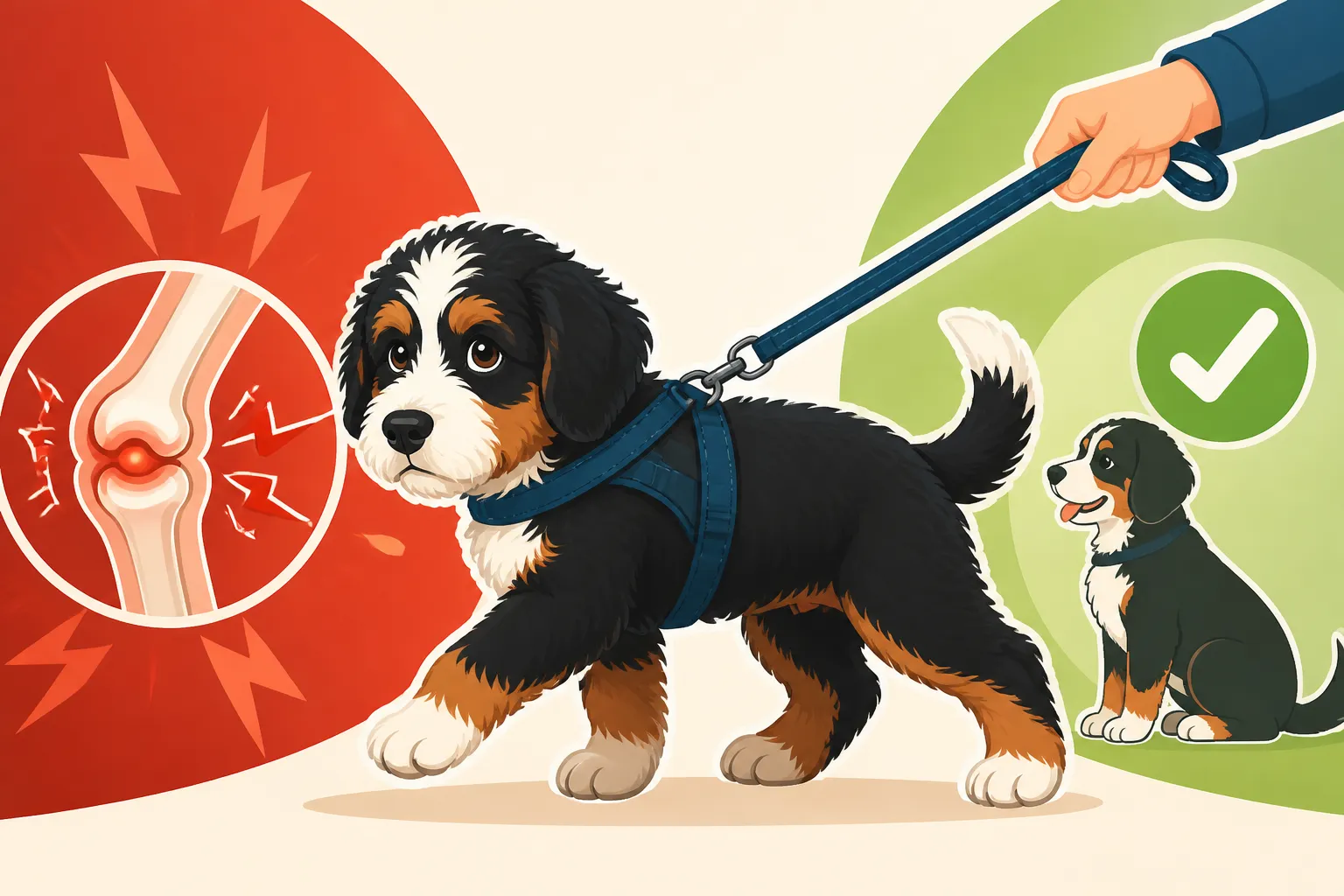
Whether Pulling Damages a Young Bernedoodle’s Joints
One of the biggest worries for any Bernedoodle parent is ensuring their beloved, rapidly growing puppy develops into a healthy adult, especially when it comes to those precious joints. It’s a common frustration to have a strong, enthusiastic young Bernedoodle on the leash, pulling with all their might, and you can’t help but wonder if all that force is doing lasting damage to their still-developing bones. This guide is here to shed light on how pulling can impact your young Bernedoodle's joints, offering realistic insights and actionable strategies to protect them for a long, happy life.
The Delicate Balance of Bernedoodle Puppy Growth
Raising a Bernedoodle puppy, especially a standard or even a mini, means witnessing an incredible growth spurt in a relatively short period. They go from tiny, fluffy bundles to substantial, energetic youngsters seemingly overnight. This rapid development is a joyous thing to behold, but it also means their skeletal system is undergoing significant changes, making it particularly vulnerable during this crucial time. It’s a delicate balance between providing enough exercise and activity for their boundless energy, and protecting their immature joints from undue stress.
Rapid Growth and Joint Formation
Imagine building a house quickly; if the foundation isn't laid perfectly or the materials aren't allowed to set properly, you're going to have problems down the line. A Bernedoodle puppy's bones and joints are much the same. During their first year, and sometimes even into their second, their bones are lengthening, and cartilage is transforming into solid bone at areas called growth plates. These growth plates are essentially soft, pliable areas at the ends of long bones that are busy expanding. They're not fully fused or hardened until your Bernedoodle reaches maturity, which can be around 12-18 months for mini Bernedoodles and even up to 18-24 months for standard sizes.
Because these growth plates are soft, they are much more susceptible to injury than mature bone. Any excessive or repetitive jarring, twisting, or impact can damage them. This damage might not be immediately obvious, but it can lead to abnormal bone development, increasing the risk of conditions like angular limb deformities or uneven growth. It's why veterinarians and experienced breeders often caution against high-impact activities, jumping from heights, or prolonged strenuous exercise during this critical developmental window.
Genetic Predispositions to Joint Issues
Beyond the general vulnerability of growing joints, Bernedoodles, as a hybrid of Bernese Mountain Dogs and Poodles, inherit certain genetic predispositions from both sides of their family tree. Both parent breeds are known to carry risks for specific orthopedic conditions. The Bernese Mountain Dog, in particular, is well-known for its propensity for hip and elbow dysplasia, which are abnormal formations of the hip and elbow joints. Poodles, while generally healthier in this regard, can also carry these traits, especially in their larger varieties.
This means your Bernedoodle puppy might already have a genetic blueprint that makes their joints a bit more susceptible to issues, even if they aren't showing signs yet. Environmental factors, like excessive stress on developing joints, can then act as a trigger, exacerbating these underlying genetic tendencies. Understanding this predisposition emphasizes the importance of protecting their joints through their developmental stages. It's not just about avoiding injury, but about giving them the best possible chance to develop healthy, stable joints. You can learn more about these specific concerns by reading Hips on a Ninety Pound Bernedoodle and Elbow Dysplasia in a Growing Bernedoodle.
Understanding the Mechanics of Pulling on a Leash
When your enthusiastic young Bernedoodle pulls on their leash, it’s not just an inconvenience for you; it's a significant physical event for their body. The forces involved might seem minor, but over time, and with repetitive action, they can exert considerable stress on various parts of their musculoskeletal system. It's not just about a momentary tug; it's about the consistent strain and unnatural body mechanics that can occur.
Stress on Neck, Shoulders, and Spine
Imagine wearing a collar that constantly pulls at your throat and neck – it's uncomfortable, right? For a Bernedoodle, especially when wearing a traditional neck collar, constant pulling creates direct pressure on the trachea, which can lead to coughing, gagging, and even long-term damage to the windpipe. More insidiously, this constant forward force also impacts the neck vertebrae and the muscles and ligaments supporting the head and spine.
When a Bernedoodle pulls, their head and neck are often extended forward, creating a misalignment with the rest of their body. This can cause strain in the shoulders and upper spine, potentially leading to muscle soreness, stiffness, and even subtle changes in gait or posture. Over time, repetitive stress in these areas can contribute to chronic pain or exacerbate underlying spinal issues. It's a bit like constantly walking with a heavy backpack pulling you forward, eventually your back and shoulders would start to ache.
Impact on Developing Limbs
The impact of pulling extends beyond just the neck and shoulders. When a Bernedoodle lunges or pulls hard, the force is transmitted down their front legs. Their developing growth plates, particularly in the elbows and wrists, absorb this shock. Repeated jarring can irritate these growth plates, potentially leading to inflammation, pain, or even micro-traumas that disrupt normal bone development. This is especially true if the Bernedoodle is pulling while also twisting or turning quickly.
Furthermore, the muscles and ligaments in their legs are constantly engaged in a tug-of-war against the leash. While some muscle development is good, this kind of constant, unbalanced strain can lead to uneven muscle development or excessive stress on the joints themselves. It’s not the controlled, balanced exercise that strengthens joints, but rather a chaotic, high-impact force that they are not yet fully equipped to handle. A puppy's joints are designed for growth, not for absorbing constant jerking forces.
The Difference Between Leash Pulling and Draft Work
It’s important to distinguish between uncontrolled leash pulling and structured, trained draft work. You might hear about Bernese Mountain Dogs (and by extension, Bernedoodles) being excellent draft dogs, capable of pulling carts or sleds. This is absolutely true, and some Bernedoodles excel at it! However, there's a world of difference.
Leash pulling is often sporadic, uncontrolled, and occurs with inappropriate equipment (like a neck collar). The dog isn't trained for it; they're simply reacting to their environment with excitement or anxiety, putting stress on their body in an unaligned and often jarring manner. The forces are typically uneven and can lead to sudden jolts.
Draft work, on the other hand, is a highly trained and controlled activity. Dogs are typically not started until their growth plates are fully closed (usually around 18-24 months or even older for large breeds like Bernedoodles). They wear specialized harnesses designed to distribute weight evenly across their chest and shoulders, allowing them to pull efficiently without straining their neck or spine. The training involves gradual conditioning, building strength, and teaching the dog to pull steadily and with proper form. It's a measured, intentional activity, completely unlike the haphazard pulling on a daily walk. For more on this, you might find The Draft Dog Work a Bernedoodle Can Still Do interesting.
Practical Strategies to Prevent Joint Damage from Pulling
The good news is that preventing joint damage from leash pulling in your young Bernedoodle is entirely within your control. It requires consistency, patience, and the right approach, but the investment in their long-term health is invaluable. By implementing some key strategies, you can teach your Bernedoodle excellent leash manners and protect their precious growing joints.
Early Leash Training and Positive Reinforcement
The foundation of good leash manners starts early, ideally as soon as your Bernedoodle puppy comes home and is comfortable with a collar or harness. Don't wait until they're a large, powerful adolescent to address pulling! Start with short, frequent training sessions in low-distraction environments. Use high-value treats and praise to reward your puppy for walking calmly by your side, even for just a few steps. The moment they start to pull, simply stop walking. The world stops when they pull, and restarts when the leash goes slack. This teaches them that pulling gets them nowhere, while a loose leash gets them where they want to go.
Consistency is absolutely key here. Everyone who walks the dog—family members, dog walkers—needs to use the same methods. Enrollment in a positive reinforcement puppy class, such as those offered by BAXTER & Bella or local dog training facilities, can be incredibly beneficial. These classes teach you the techniques and provide a safe, controlled environment for your puppy to practice. Remember, your Bernedoodle is smart, but they need clear, consistent communication from you to understand what's expected.
Appropriate Equipment Choices
The right equipment can make a world of difference in managing a pulling Bernedoodle and protecting their joints. For a young, growing Bernedoodle, a front-clip harness is often a game-changer. Unlike traditional back-clip harnesses that can actually encourage pulling (think sled dogs with harnesses designed to pull from the back), a front-clip harness redirects your dog's forward momentum. When they try to pull, the leash attachment on their chest causes them to turn back towards you, making it much harder and less comfortable for them to forge ahead.
Avoid neck collars for walking a puppy that pulls, as they put direct pressure on the trachea and neck vertebrae. If you must use a collar, ensure it's a flat buckle collar worn only for identification tags, and always attach the leash to a harness for walks. There are many excellent front-clip harness options available, and a quick search on Amazon will show you a variety of brands and styles. Look for one that is comfortable, durable, and adjustable to accommodate your Bernedoodle's growth. Pairing this with a sturdy, six-foot leash (not an extendable one, as these can teach dogs to pull) gives you good control.
| Harness Type | Pros | Cons | Joint Impact (if pulling) |
|---|---|---|---|
| Traditional Back-Clip Harness | Comfortable, secure, good for non-pullers | Can encourage pulling, less control | Minimal direct joint redirection |
| Front-Clip Harness | Discourages pulling, better control, safer for neck | Can sometimes twist slightly if dog pulls hard, may rub armpits (if ill-fitting) | Redistributes force, less neck/shoulder strain |
| Head Halter/Gentle Leader | Excellent control, quickly stops pulling | Requires training to accept, some dogs dislike the feel | Minimal direct joint impact, very gentle control |
| Neck Collar | Simple, good for ID tags | Dangerous for pulling, can damage trachea, offers poor control | High strain on neck/spine |
Managing Exercise and Growth
While your Bernedoodle puppy has bursts of energy, it’s crucial to manage their exercise routine carefully to protect their developing joints. Over-exercising a puppy can be just as detrimental as uncontrolled pulling. A commonly cited guideline is the "five-minute rule": for every month of age, your puppy should get about five minutes of structured exercise, twice a day. So, a four-month-old puppy would get two 20-minute walks. This isn't counting free play in the yard, but focused leash walks. You can read more about The Five Minute Rule on a Bernedoodle Puppy's Walks.
Avoid high-impact activities like excessive jumping, long runs on hard surfaces, or intense agility training until their growth plates are fully closed. Encourage softer, more controlled play. If you're walking them, keep it leisurely and focused on loose-leash training. When they reach adolescence, they might seem like a full-grown dog, but their bones are often still maturing. It’s a marathon, not a sprint, when it comes to their physical development.
The Role of Nutrition in Joint Health
Proper nutrition plays a foundational role in supporting healthy joint development in a growing Bernedoodle. Overfeeding a large breed puppy can lead to excessively rapid growth, which puts undue stress on their developing skeletal system and can increase the risk of orthopedic issues. It's not just about what they eat, but how much.
Choose a high-quality large breed puppy food that is specifically formulated to support slow, steady growth. These formulas typically have carefully balanced calcium and phosphorus levels, which are critical for bone development, to prevent bone growth disorders. Avoid adding supplements or extra calcium to their diet unless specifically recommended by your veterinarian, as this can upset the delicate balance. Follow the feeding guidelines on the food bag, but always monitor your puppy's body condition score. You should be able to feel their ribs easily without seeing them protruding. If you're unsure, consult your vet about the appropriate amount of food for your Bernedoodle's individual growth rate and activity level. You can learn more about this in Growing a Standard Bernedoodle Slowly on Purpose.
When to Seek Professional Guidance
Even with the best intentions and diligent training, sometimes a Bernedoodle puppy might still show signs of discomfort or persistent pulling that you can't manage alone. Knowing when to call in the professionals—your veterinarian or a certified dog trainer—is crucial for their health and your peace of mind. Ignoring subtle signs can lead to worsening conditions or prolonged discomfort for your dog.
Recognizing Signs of Joint Discomfort
Your Bernedoodle can't tell you in words if their joints are hurting, so it's up to you to be observant. Subtle changes in their behavior or movement can be early indicators of joint discomfort. Look out for things like a reluctance to jump, climb stairs, or play as vigorously as usual. You might notice a slight limp, especially after exercise, or a stiffness when they first get up after resting. They might start favoring one leg, or you might hear clicking or popping sounds from their joints.
Other signs can include sensitivity to touch in certain areas, a change in their gait (e.g., a "bunny hop" when running), or even excessive licking or chewing at a particular limb. If your Bernedoodle seems to be slowing down, is less enthusiastic about walks, or shows any signs of pain when you gently examine their legs or back, it's time to make an appointment with your veterinarian. Early detection and intervention can make a huge difference in managing and treating any developing joint issues. More information on this can be found in Signs a Bernedoodle Puppy's Elbows Hurt.
Consulting Your Veterinarian or a Certified Trainer
If you notice any of the signs of joint discomfort, or if your Bernedoodle's pulling seems intractable despite your best efforts, don't hesitate to reach out for expert help. Your veterinarian is the first point of contact for any health concerns. They can perform a thorough physical examination, and if necessary, recommend diagnostic imaging like X-rays to assess the health of your Bernedoodle's joints and growth plates. They can also rule out other medical conditions and provide guidance on pain management, joint supplements (like those you might find on Amazon), or specialized diets if needed.
For persistent pulling behavior that is proving difficult to correct, a certified professional dog trainer can be an invaluable resource. Look for trainers who specialize in positive reinforcement and have experience with large, strong breeds. They can assess your Bernedoodle's specific behavior, help you understand the root cause of the pulling (excitement, anxiety, lack of training), and teach you effective techniques to build a loose-leash walking habit. Sometimes, it just takes an experienced eye to tweak your approach and get you both on the right track. Remember, investing in professional guidance now can save you a lot of heartache (and vet bills) down the road.
Disclaimer
This article is for general informational purposes only and does not constitute professional advice. Laws, prices and regulations vary by location and change over time. Consult a qualified professional for guidance on your specific situation.