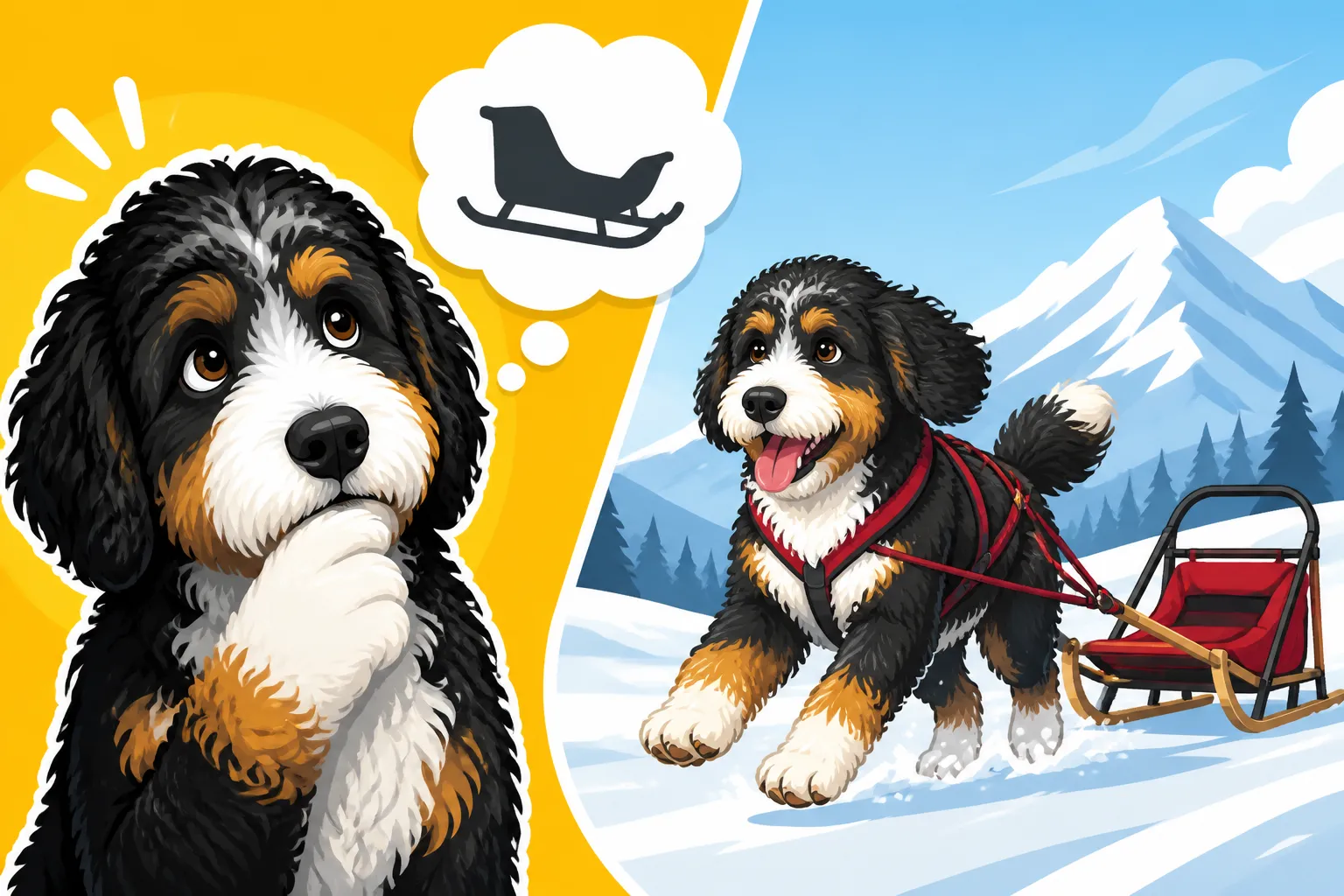
Whether a Bernedoodle Pulls a Sled
Many Bernedoodle owners, especially those living in snowy climates, look at their strong, sturdy companions and can't help but wonder if their furry friend could actually pull a sled. It’s a romantic image, isn't it? A beautiful Bernedoodle gracefully gliding through fresh snow, pulling a small sled. While the idea is certainly charming and taps into the working dog heritage of the Bernese Mountain Dog, the reality of whether your Bernedoodle is suited for serious sled pulling, and how to approach it safely, is more nuanced than a simple "yes" or "no." This guide will explore the various factors, from their physical build to their unique temperament, and provide a realistic perspective on engaging your Bernedoodle in winter pulling activities.
Understanding the Bernedoodle's Physical Prowess for Pulling
When you look at a Bernedoodle, especially a standard size, you see a dog that often carries a good deal of muscle and bone. Their Bernese Mountain Dog heritage certainly gives them a robust framework, designed for the rigors of mountain life, which historically included pulling carts of milk or goods. However, the Poodle influence introduces a different dynamic, affecting overall build, coat type, and even drive.
Size and Build: Are They Physically Equipped?
A Bernedoodle's size and build can vary wildly, even within the same litter, depending on the generation and the specific parentage. Standard Bernedoodles can easily reach 70 to 90 pounds, sometimes even more, making them physically capable of pulling weight. They often possess broad chests and strong hindquarters, which are advantageous for generating power. However, it's not just about weight; it's about skeletal structure and joint health. The Bernese Mountain Dog side is prone to certain orthopedic issues like hip and elbow dysplasia, which can be exacerbated by intense pulling activities if not managed carefully. The Poodle, while athletic, has a lighter frame and different joint concerns. Therefore, a Bernedoodle’s hybrid vigor doesn't always guarantee a bulletproof constitution, and careful assessment of their individual build and health clearances is paramount before considering any heavy work. You want to make sure their structure is sound. The Weight a Bernedoodle Can Safely Draft is an important consideration here, as it's not just about what they can pull, but what they should pull for their long-term health.
Coat Considerations: How Does Their Coat Factor into Cold Weather Work?
Bernedoodles are renowned for their luscious, often wavy or curly coats, which are a blend of the dense double coat of the Bernese and the single, low-shedding coat of the Poodle. This can be a huge advantage in cold weather, offering significant insulation. Many Bernedoodles absolutely revel in the snow, seemingly built for chilly adventures. However, even with a warm coat, there are limits. A very active session of sled pulling can cause them to overheat, particularly if the snow isn't fresh or the temperature isn't frigid. Darker coated Bernedoodles, like a black tri Bernedoodle, might absorb more solar radiation on sunny winter days, increasing this risk. Why a Black Tri Bernedoodle Overheats highlights how important it is to be mindful of their coat color and the environmental conditions. Moreover, their long, flowing hair, especially around their legs and belly, can accumulate snow and ice balls, which can be uncomfortable, cause matting, and even lead to frostbite in extreme conditions if not regularly checked and cleared. This isn't just a comfort issue; it's a practical consideration for sustained work.
Joint Health and Structure: Is Their Skeletal System Robust Enough?
This is perhaps the most critical physical factor. Both parent breeds have predispositions to joint issues, especially hip and elbow dysplasia. While reputable breeders screen their parent dogs for these conditions, the risk is never entirely eliminated. Engaging a Bernedoodle in strenuous activities like sled pulling puts significant strain on their joints, especially their hips, elbows, and spine. It's crucial that any Bernedoodle intended for pulling work has excellent health clearances from both parents and ideally, preliminary clearances for themselves if they are old enough. Growing puppies should never be asked to pull heavy loads, as their growth plates are still open and easily damaged. The goal should always be to foster Growing a Standard Bernedoodle Slowly on Purpose to protect their developing joints. Even adult Bernedoodles benefit from joint support, whether through appropriate exercise, a balanced diet, or even supplements. It's not just about if they can pull, but if they can do so without risking their long-term soundness and comfort.
Temperament and Trainability for Sled Work
Beyond their physical attributes, a Bernedoodle's mental and emotional makeup plays a huge role in their suitability for any working task, including sled pulling. They are known for being intelligent, eager to please, and often quite goofy, but also can inherit a stubborn streak.
Working Drive and Desire: Do They Have the Inherent Motivation?
Bernedoodles generally have a moderate energy level, a blend of the Bernese's laid-back nature and the Poodle's athletic spark. However, true "working drive"—that intrinsic desire to pull, herd, or retrieve with intense focus—isn't universally strong in every Bernedoodle. Some may absolutely love the task, finding joy in the rhythmic motion and the sense of purpose. Others might see it as just another walk, or even a chore. The Bernese side certainly contributes a willingness to work and a desire to be useful, but the Poodle side, while intelligent, often prefers agility, trick training, or retrieving. It's important to gauge your individual Bernedoodle's enthusiasm. Do they enjoy a "job"? Are they eager to learn new commands? Do they show sustained interest in tasks that require repetition? A dog that genuinely enjoys the work will be a far more engaged and happier sledding partner than one who is simply going through the motions.
Focus and Consistency: Can They Maintain Attention for Tasks?
Sledding, even for recreation, requires a certain level of focus and consistency. The dog needs to respond reliably to directional commands, maintain a steady pace, and ignore distractions. This is where the Bernedoodle's intelligence, inherited from both sides, can be a huge asset. Poodles are known for their sharp minds and ability to learn complex commands quickly. Bernese Mountain Dogs, while often slower to mature, are loyal and eager to please, and once they understand a task, they perform it reliably. However, that infamous "goofy" side of the Bernedoodle can sometimes mean a momentary lapse of focus, especially if a squirrel darts across their path or a new scent catches their attention. Early, consistent, and positive reinforcement training is key to building the focus needed for any sport. The Stubborn Streak Under a Bernedoodle's Poodle Brain is something to be aware of; while they are smart, they aren't always immediately compliant, and patience is a virtue in their training journey.
Sensitivity and Stubbornness: How Do These Traits Impact Training?
Bernedoodles can be quite sensitive, particularly to harsh corrections or negative training methods. They respond best to positive reinforcement, praise, and treats. If a Bernedoodle feels pressured or confused, they might shut down, or that Bernese stubbornness might kick in. This doesn't mean they're untrainable for sled work, but it means their handler needs to be patient, understanding, and consistent. You need to make the experience fun and rewarding, building their confidence step by step. If your Bernedoodle is naturally a bit timid or easily spooked, introducing them to the harnesses, the sled, and the sensation of pulling needs to be done with extreme care and positive associations. For more general advice on getting them started, consider resources like BAXTER & Bella, which offer online training programs that focus on positive reinforcement and building a strong foundation of obedience, which is crucial before tackling specialized skills like pulling.
Training and Equipment for Introducing Sledding
If you've assessed your Bernedoodle and feel they have the physical and temperamental traits for sledding, the next step is proper training and acquiring the right equipment. This isn't something you can just strap them into and go; it requires a systematic approach to ensure safety and enjoyment for both of you.
Starting Early: Age-Appropriate Training and Conditioning
As mentioned, puppies should never pull heavy loads. Their joints and skeletal system are still developing. The general rule of thumb for any weight-bearing activity is to wait until your Bernedoodle is fully grown, which for a standard size can be anywhere from 18 to 24 months. However, you can start foundational training much earlier. This includes:
- Obedience Training: Solid "whoa," "go," "left," and "right" commands are essential. A good recall is also vital.
- Harness Conditioning: Get them comfortable wearing a properly fitting harness designed for pulling. Start with short periods and positive reinforcement.
- Dragging Light Objects: Once they are comfortable with the harness and basic commands, you can introduce dragging very light, small objects (like a plastic bottle on a rope) to get them used to the sensation of something behind them.
- Building Stamina: Regular, appropriate exercise will build their endurance without overtaxing their young bodies. The Exercise a Standard Bernedoodle Needs Daily is a good baseline to start building their fitness.
Essential Gear: Harnesses and Sleds
The right equipment is non-negotiable for safety and comfort.
- Harness: A regular walking harness is not suitable for pulling. You need a specialized drafting or pulling harness that distributes the weight evenly across their chest and shoulders, avoiding pressure on their throat, spine, and joints. These harnesses are designed to allow full range of motion. Look for ones made from durable, padded materials. Searching on Amazon for "dog pulling harness" or "drafting harness" will give you many options, but always measure your Bernedoodle carefully to ensure a perfect fit. The Harness a Bernedoodle Needs for Drafting goes into more detail about selecting the right one.
- Sled/Load: For recreational sledding, a small, lightweight children's sled or a specially designed dog cart is often used. The load should always be appropriate for your dog's size, conditioning, and confidence. Start with an empty sled or a very light load, gradually increasing it as your dog gains strength and experience. Never overload them.
Building Stamina and Command Response: What's Involved?
Once your Bernedoodle is comfortable with the harness and light pulling, you can begin to build their stamina and refine their command response in a pulling context.
- Short Sessions: Start with very short pulling sessions, perhaps just a few minutes, on flat, easy terrain. Gradually increase the duration and distance.
- Positive Reinforcement: Keep it positive! Every successful pull, every correct turn, every stop on command should be rewarded with praise and treats.
- Consistent Commands: Use clear, consistent verbal cues for all actions. "Gee" for right, "Haw" for left, "Hup" for go, "Whoa" for stop are common mushing commands.
- Practice in Different Conditions: As they progress, practice in varying snow conditions (light powder, packed snow) and with minor distractions.
- Regular Breaks: Always provide plenty of water and opportunities for rest. Monitor your Bernedoodle for any signs of fatigue or discomfort.
Realistic Expectations and Alternatives
While the idea of a Bernedoodle pulling a sled is enticing, it's important to have realistic expectations and consider if it's truly the best fit for your individual dog and your lifestyle. Not every Bernedoodle will be a natural sled dog, and that's perfectly okay!
Sledding vs. Other Draft Work: Is There a Better Fit?
Sledding is just one form of draft work. Bernese Mountain Dogs, the ancestor to your Bernedoodle, were traditionally carting dogs, pulling small carts laden with goods. This "carting" or "dry-land drafting" might actually be a more accessible and year-round activity for many Bernedoodles. It involves pulling a wheeled cart on pavement or trails, which doesn't require specific snow conditions. Many Bernedoodles excel at this, deriving immense satisfaction from having a job to do. The Draft Dog Work a Bernedoodle Can Still Do and Getting a Bernedoodle Started in Carting offer fantastic insights into this alternative. The principles of training and equipment are very similar to sledding, making the transition between the two relatively easy if your dog enjoys pulling. For many, carting is a more practical way to engage their Bernedoodle's natural desire to work and pull, without the seasonal limitations of snow.
Enjoying Winter Activities: Other Ways to Engage Your Bernedoodle in the Snow
If serious sledding isn't quite right for your Bernedoodle, or if you simply want other ways to enjoy the winter wonderland together, there are plenty of options:
- Skijoring: This is where your dog pulls you on cross-country skis. It's a fantastic workout for both of you and generally involves less heavy pulling for the dog than a traditional sled, making it easier on their joints.
- Canicross: While typically a dry-land sport, canicross (running with your dog attached to you by a belt and bungee line) can be adapted for snowy trails, offering a great way to bond and burn energy.
- Snowshoeing/Hiking: Simply taking your Bernedoodle on long walks or snowshoe adventures in the snow can be incredibly fulfilling. Their thick coats make them excellent companions for winter treks.
- Fetch in the Snow: Sometimes the simplest games are the best! Many Bernedoodles absolutely adore romping in deep snow, chasing balls or playing hide-and-seek with toys. It provides great exercise and mental stimulation.
- Obedience or Rally in the Snow: Set up some cones or obstacles in a snowy field and practice your obedience commands or rally courses. It adds a fun, new dimension to familiar training routines.
Ultimately, whether your Bernedoodle pulls a sled, a cart, or simply pulls you along on a leash during a spirited snowy walk, the most important thing is that both of you are enjoying the activity safely and happily. Always prioritize your dog's health, comfort, and willingness to participate.
| Activity Type | Description | Physical Demands on Dog | Training Level Required | Seasonal (Snow) | Best For |
|---|---|---|---|---|---|
| Sled Pulling | Dog pulls a sled with varying loads over snow. | High | Advanced | Yes | Strong, driven dogs |
| Carting/Drafting | Dog pulls a wheeled cart over dry land. | Medium-High | Intermediate-Advanced | No | Strong, driven dogs |
| Skijoring | Dog pulls a person on skis. | Medium | Intermediate | Yes | Energetic, focused dogs |
| Canicross | Dog runs ahead, pulling a person attached by a belt. | Medium | Basic-Intermediate | No (or light snow) | Agile, endurance-focused dogs |
| Snowshoeing/Hiking | Leisurely walking/hiking with dog in snowy conditions. | Low-Medium | Basic | Yes | Any dog enjoying snow |
| Winter Fetch/Play | Playing with toys or engaging in free play in the snow. | Low-Medium | Basic | Yes | Any dog enjoying snow |
Disclaimer
This article is for general informational purposes only and does not constitute professional advice. Laws, prices and regulations vary by location and change over time. Consult a qualified professional for guidance on your specific situation.