Getting a Bernedoodle Started in Carting
If you've ever watched a magnificent Bernedoodle effortlessly pull a cart, you might be thinking, "Could my furry family member do that?" It's a question many Bernedoodle parents ponder, especially with these dogs' strong build and intelligent minds. This guide is all about helping you explore the rewarding world of carting, or draft work, with your Bernedoodle, covering everything from the initial spark of interest to safely pulling a cart down a trail.
Tapping into the Bernedoodle's Natural Draft Instincts
Bernedoodles are a fantastic blend of the robust Bernese Mountain Dog and the intelligent Poodle. This unique heritage means they often carry a latent desire for work, a drive that, if channeled correctly, can lead to incredible joy and a deeper bond between you and your dog. Carting isn't just a physical activity; it's a mental one, requiring focus, teamwork, and problem-solving.
The Bernese Mountain Dog's Legacy in Draft Work
The Bernese Mountain Dog, one half of your Bernedoodle's heritage, was originally bred in the Swiss Alps as a farm dog. Their jobs included herding cattle, guarding farmsteads, and, most notably, pulling carts laden with dairy products, woven goods, or other farm produce to market. They were the original "draft dogs," known for their strength, endurance, and calm demeanor while working. This deep-seated instinct for pulling and working alongside humans is often present in Bernedoodles, even if it's never been explicitly encouraged. Many Bernedoodle owners find their dogs naturally enjoy carrying backpacks or pulling on their leash with purpose, which can be an early indicator of a good candidate for draft work. It's truly fascinating to see this ancient working heritage manifest in our modern companions. You might find that your Bernedoodle just gets it when you introduce the concept of pulling. The Draft Dog Work a Bernedoodle Can Still Do dives deeper into this historical connection.
The Poodle's Contribution: Brains and Brawn
While the Bernese brings the brawn, the Poodle brings the brains – and surprisingly, a good deal of athleticism! Poodles, especially Standard Poodles, are highly intelligent, eager to please, and incredibly agile. They excel in dog sports like agility, obedience, and rally, demonstrating a keen ability to learn complex commands and routines. This intelligence is a huge asset in carting, as successful draft work requires more than just brute strength; it demands precise communication, understanding cues, and problem-solving skills, especially when navigating turns or obstacles. Your Bernedoodle benefits from this Poodle intelligence, making them often quick learners when it comes to understanding the mechanics and commands of carting. This combination of strength and smarts is why Whether a Bernedoodle Is Built to Pull a Cart is such a resounding yes for many of these dogs. It’s not just about the physical capacity, but the mental engagement that truly makes them shine in this role.
Getting Started: Essential Equipment for Safe Carting
Before your Bernedoodle ever pulls anything substantial, you need the right gear. Investing in proper, well-fitting equipment is paramount for both your dog's safety and comfort, and for preventing injuries. Rushing into this can lead to discomfort, fear, or even injury, which nobody wants.
Selecting the Right Draft Harness
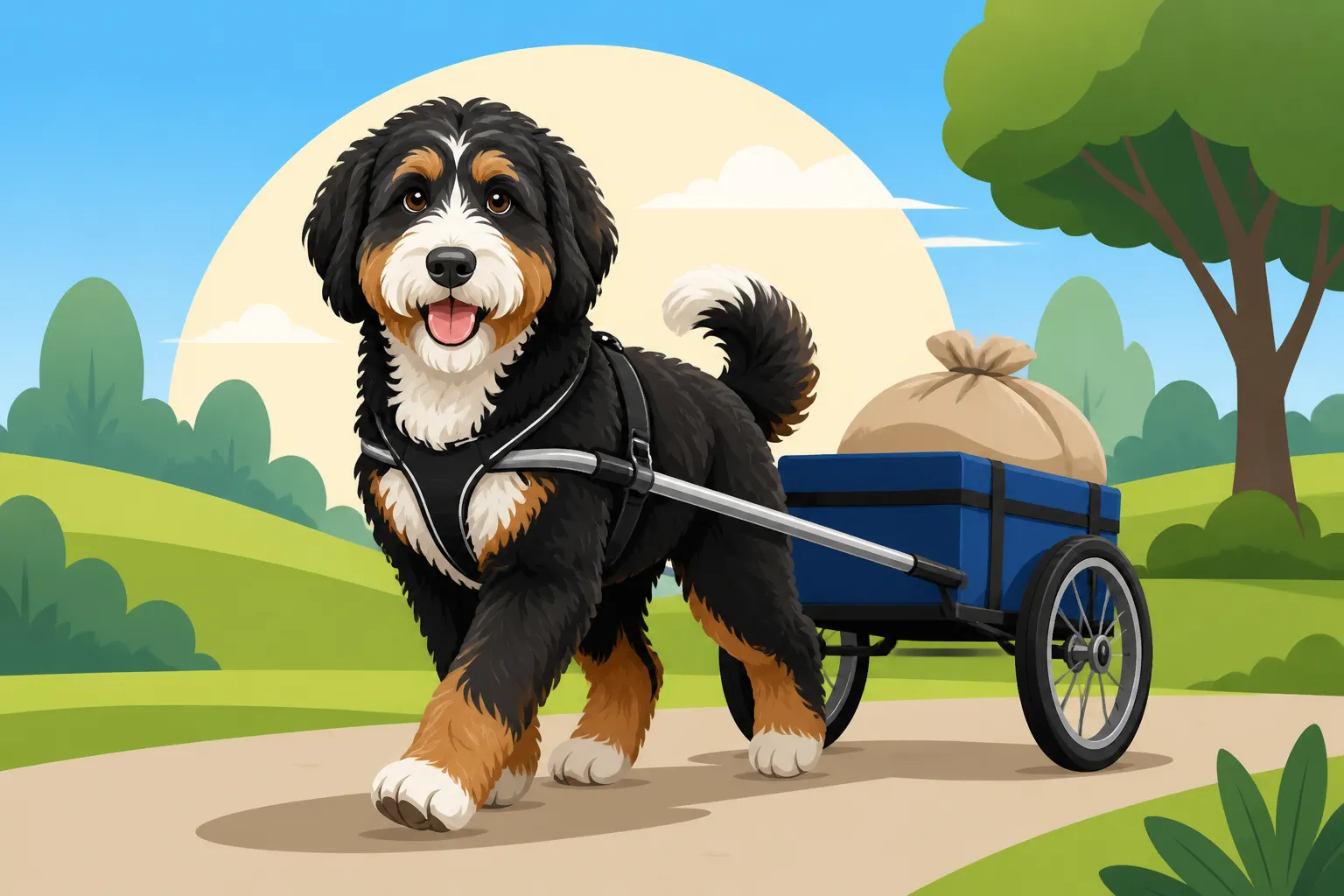
A regular walking harness simply won't cut it for draft work. You need a specialized draft harness designed to distribute weight evenly across your dog's chest and shoulders, allowing them to pull efficiently without straining their neck or spine. The most common types are the X-back harness and the trace harness. An X-back harness is often favored for straight-ahead pulling, like sledding or some forms of carting, as it keeps the pull even. Trace harnesses, sometimes called "freight" or "carting" harnesses, are designed with adjustable traces that connect to the cart, offering more flexibility for various types of draft work. The fit is crucial: it should be snug but not restrictive, allowing for full range of motion in the shoulders and hips. You should be able to slide a flat hand under all straps, but no more. A poorly fitting harness can cause chafing, restrict breathing, or lead to improper weight distribution, which is not only uncomfortable but dangerous for your Bernedoodle. Many online retailers, like Amazon, offer a wide variety of draft harnesses, but it's always best to measure your dog carefully and consult sizing guides. For more detailed insights, check out The Harness a Bernedoodle Needs for Drafting.
Choosing a Suitable Cart or Wagon
Once your Bernedoodle is comfortable in their harness, the next step is a cart! For beginners, a lightweight, two-wheeled cart or even a sturdy child's wagon is often ideal. The key is to start small and light. Look for carts made of durable, yet lightweight materials like aluminum or reinforced plastic. Ensure the wheels are appropriately sized for the terrain you'll be on – larger wheels handle rougher ground better. The shafts (the parts that extend forward from the cart and attach to the harness traces) should be adjustable to match your dog's height, allowing the cart to ride level. If the shafts are too high or too low, it can put undue stress on your Bernedoodle's back. Always start with an empty cart to get your dog accustomed to the sensation of it behind them. There are many options available, from basic utility wagons perfect for training, to beautifully crafted wooden carts for parades or competitive events.
Essential Accessories for Carting Safety
Beyond the harness and cart, a few other accessories are vital. Long lines (also known as "gang lines" in mushing) are essential for teaching directional commands and keeping control before you're fully hitched to a cart. These are typically 10-15 feet long and made of durable webbing or rope. A walking stick or training stick can be useful for guiding your dog and marking turns during early training. Don't forget high-value treats for positive reinforcement – carting is hard work, and your Bernedoodle deserves delicious rewards! Reflective gear for both you and your dog is a must if you plan to train in low light. Finally, a first-aid kit for dogs should always be on hand, just in case of minor scrapes or blisters. Having everything prepared beforehand means you can focus entirely on your Bernedoodle and the training process.
The Training Journey: From Foundations to Full Pull
Training your Bernedoodle for carting is a gradual process that builds confidence and skills incrementally. It's not about forcing them, but about gently introducing new concepts and celebrating every small success. Patience and positive reinforcement are your best friends here.
Basic Obedience and Foundation Skills
Before you even think about a harness or cart, your Bernedoodle needs solid basic obedience. Commands like "sit," "stay," "come," and "leave it" are non-negotiable. More importantly, they need to understand directional cues like "gee" (right) and "haw" (left), as well as a reliable "whoa" (stop) and "let's go" (start moving). Many fantastic resources are available to help with these foundational skills. Online programs, like those offered by BAXTER & Bella, often provide step-by-step guidance on positive reinforcement methods that are ideal for building a strong training relationship. A dog that is confident and responsive to your voice will be much safer and happier engaging in draft work. Practice these commands frequently, in various environments, until they are second nature. This groundwork is the bedrock of all successful advanced training. Getting a Bernedoodle Started in Carting really emphasizes these foundational skills for a reason!
Introducing the Harness and the Drag
Once your Bernedoodle is a superstar at basic obedience, it's time to introduce the draft harness. Let them wear it for short periods around the house, associating it with positive experiences like treats and praise. Never force them into it if they seem uncomfortable. Gradually increase the duration until they're completely unfazed. The next step is "the drag." Attach a lightweight, non-scary object to the harness traces – a short chain, a small plastic bottle on a rope, or even just the traces themselves dragging on the ground. The goal is for your Bernedoodle to get used to the sensation of something behind them. Start in a quiet, familiar area. Use your "let's go" command and praise enthusiastically when they move forward. If they stop or get spooked, gently reassure them and redirect their attention. Over several sessions, you can gradually increase the weight of the drag object, but always keep it light enough that it's easy for them to pull. The focus here is on comfort and building positive associations.
Hitching to the Cart and Navigating the World
This is the exciting part! With your Bernedoodle comfortable with the harness and dragging light objects, it's time to hitch them to the cart – again, starting with an empty cart. Have a helper hold the cart steady while you attach the traces. Start with very short sessions, just a few feet at a time, in a controlled, flat environment. Use your "let's go" command and walk alongside your dog, offering constant praise and treats. As they gain confidence, you can gradually introduce turns using your "gee" and "haw" commands, and practice stopping with "whoa." Remember, the goal isn't speed, but smooth, controlled movement. Slowly introduce different terrains and eventually, light weights in the cart. The total weight should always be appropriate for your Bernedoodle's size, age, and conditioning. The Weight a Bernedoodle Can Safely Draft is an excellent resource for understanding safe weight limits to prevent injury.
Safety First: Protecting Your Bernedoodle's Health
While carting is incredibly rewarding, it's also a physically demanding activity. Prioritizing your Bernedoodle's health and safety is non-negotiable to ensure a long, happy career in draft work. This means understanding their physical limits and taking proactive measures.
Health Clearances and Age Considerations
Before your Bernedoodle pulls anything heavier than a feather, it's absolutely critical to ensure they are physically sound. This means having appropriate health clearances, particularly for hips and elbows. Bernedoodles, inheriting from both parent breeds, can be prone to conditions like hip and elbow dysplasia. A veterinarian can help you understand what clearances are necessary and interpret results. Do not start any serious draft work until your Bernedoodle is fully grown, typically around 18-24 months for Standard Bernedoodles, to avoid damaging their developing joints. Starting too young or with underlying joint issues can lead to lifelong pain and injury. Hips on a Ninety Pound Bernedoodle and Elbow Dysplasia in a Growing Bernedoodle provide essential reading on these common issues and why proper clearances are so important. Always discuss your carting aspirations with your vet to get their professional opinion on your specific dog's readiness.
Environmental Factors and Conditioning
Think about the conditions your Bernedoodle will be working in. Extreme temperatures, especially heat, can be very dangerous for a heavily coated dog. Bernedoodles often have thick coats, making them susceptible to overheating. Always check the pavement temperature with your hand before walking, and avoid hot midday sun. Ensure your dog has access to plenty of water during and after sessions. Similarly, icy or uneven terrain can pose a risk of slips and falls. Start with smooth, flat surfaces and gradually introduce more challenging environments as your dog gains experience and muscle.
Just like human athletes, Bernedoodles need to be properly conditioned. Don't expect them to pull a heavy cart for miles on their first outing. Build up their strength and stamina gradually through regular exercise and short, frequent training sessions. Incorporate varied exercises, like swimming or hiking, to develop overall fitness. Monitor your dog closely for any signs of fatigue, lameness, or discomfort. Look for excessive panting, lagging behind, or a change in gait. If you see any of these, stop immediately and rest. The Exercise a Standard Bernedoodle Needs Daily offers general guidance on keeping your Bernedoodle fit, which is crucial for draft work.
Avoiding Common Mistakes and Injuries
One of the biggest mistakes beginners make is pushing their dog too hard, too fast, or with too much weight. This can lead to physical injury, but also to a negative association with carting. Always err on the side of caution. Never overload the cart; a general rule of thumb for a well-conditioned dog is to start with no more than 1-2 times their body weight on level ground, significantly less if going uphill or on rough terrain. Whether Pulling Damages a Young Bernedoodle's Joints underscores the importance of this cautious approach. Ensure the harness is always correctly fitted to prevent chafing or pressure points. Regularly inspect all equipment for wear and tear, especially traces and hitches. Pay attention to your Bernedoodle's pads – prolonged pulling on rough surfaces can cause abrasions. Consider booties for extra protection if you're on pavement or rocky trails. Consistent, positive, and safe training will build a happy and capable carting companion.
Beyond the Basics: Advanced Carting and Community
Once your Bernedoodle is a seasoned pro at pulling an empty cart around the neighborhood, a whole world of advanced carting opportunities opens up. This can range from competing in formal draft trials to simply enjoying longer, more challenging outings together.
Competitive Draft Work and Titles
Yes, Bernedoodles can compete in draft work! Organizations like the Bernese Mountain Dog Club of America (BMDCA) and various all-breed clubs offer draft trials where dogs can earn titles by demonstrating specific skills, such as pulling a cart through a course with various obstacles, backing up, navigating tight turns, and executing precise stops and starts. While the BMDCA is breed-specific, many other organizations welcome all breeds and mixes, including Bernedoodles, to participate. These events are not just about competition; they're wonderful opportunities to connect with other draft dog enthusiasts, learn from experienced handlers, and show off your Bernedoodle's incredible abilities. Earning a title is a testament to the strong partnership you've built with your dog. Whether the AKC Lets a Bernedoodle Enter Draft Trials is a relevant read for understanding the landscape of competitive opportunities.
Incorporating Carting into Daily Life
Even if competition isn't your goal, carting can be a fantastic way to enrich your Bernedoodle's life. Imagine taking your dog to the farmer's market, and they're happily pulling a wagon full of your produce purchases. Or using their strength to help carry firewood or gardening supplies around your property. Carting provides excellent exercise and mental stimulation, transforming mundane tasks into enjoyable team activities. Just remember to always prioritize safety and keep the weight and distance appropriate for your dog's conditioning. This practical application of their skills deepens your bond and gives your Bernedoodle a true sense of purpose. It can even be a fun way to train a Bernedoodle not to pull at eighty pounds by giving them a designated, controlled outlet for their pulling instinct.
Finding a Carting Community and Resources
You don't have to go it alone! Many draft dog clubs and communities exist, both locally and online. These groups offer invaluable resources, from experienced mentors who can provide hands-on guidance, to workshops, clinics, and even equipment lending libraries. Connecting with other Bernedoodle owners who are also interested in carting can provide a supportive network for troubleshooting challenges, sharing triumphs, and simply enjoying the camaraderie of fellow dog enthusiasts. A quick online search for "draft dog clubs near me" or "Bernedoodle carting groups" on social media platforms can often yield great results. These communities are fantastic for learning advanced techniques, like long-line handling or different hitching methods, and finding specialized equipment or even custom-made carts.
| Training Stage | Goal | Key Activities | Equipment Required | Duration |
|---|---|---|---|---|
| Foundation Obedience | Reliable basic commands & directional cues | Daily short training sessions, positive reinforcement, treat rewards | High-value treats, clicker (optional) | 2-4 months (ongoing) |
| Harness Introduction | Dog comfortable wearing draft harness | Wear harness during fun activities, positive association, short periods | Well-fitting draft harness | 1-2 weeks |
| The Drag | Dog comfortable with object dragging behind them | Attach light objects (chains, bottles) to harness, walk, praise | Draft harness, lightweight drag objects, long line | 2-4 weeks |
| Cart Introduction | Dog comfortable with empty cart, moving forward | Hitch to empty cart, short walks with "let's go," "whoa" commands | Draft harness, cart/wagon, long line | 2-4 weeks |
| Weight Progression | Dog comfortably pulling appropriate weight on various terrains | Gradually add weight, introduce turns/obstacles, increase distance | Draft harness, cart/wagon, appropriate weights | Ongoing, as conditioning improves |
| Advanced Skills | Precision in turns, backing, advanced obstacle navigation, endurance | Practice complex courses, longer treks, participate in workshops/trials | Draft harness, cart/wagon, advanced training tools | Ongoing, lifelong |
Disclaimer
This article is for general informational purposes only and does not constitute professional advice. Laws, prices and regulations vary by location and change over time. Consult a qualified professional for guidance on your specific situation.