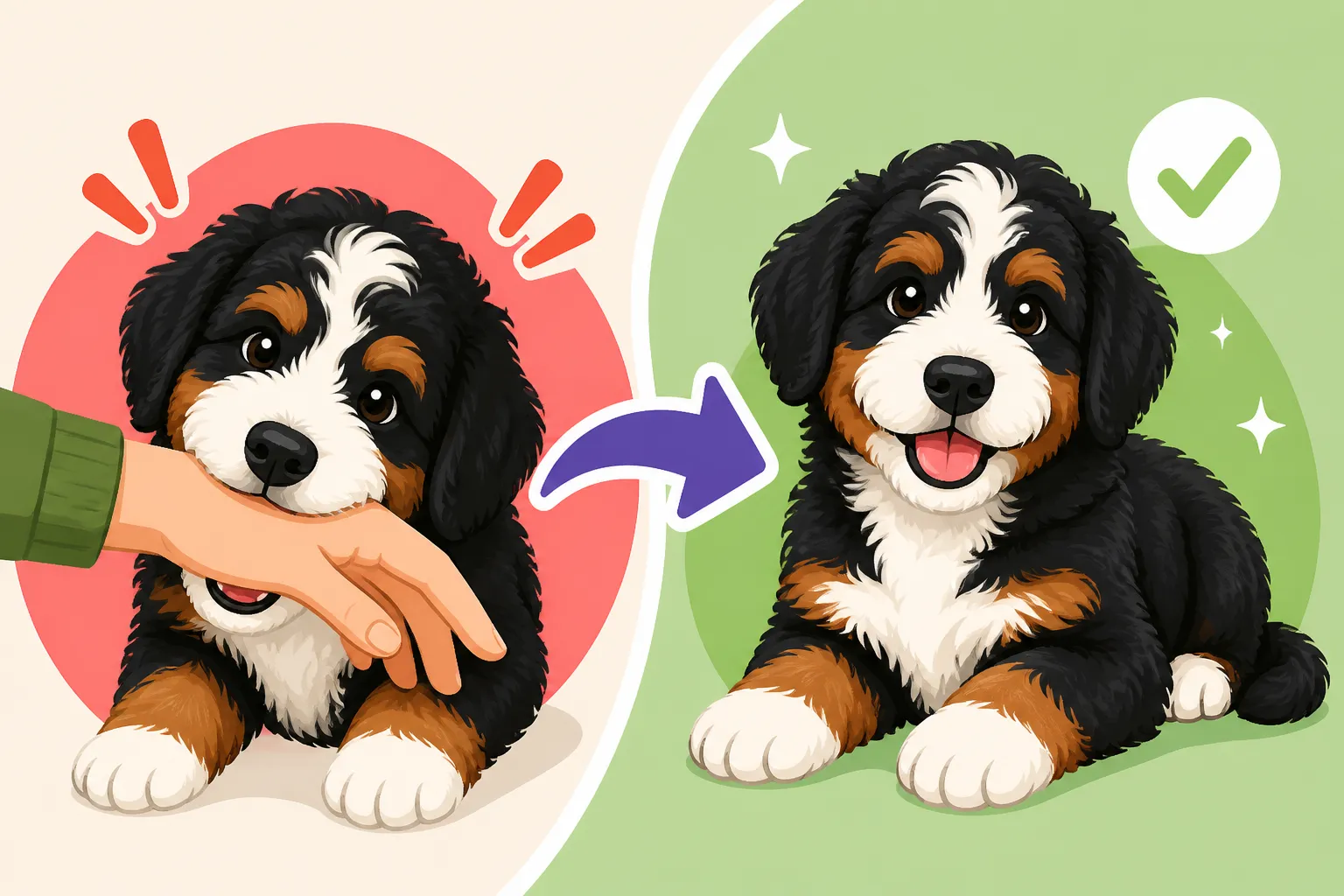
When a Bernedoodle Puppy Stops Mouthing
One of the most common and often frustrating behaviors new Bernedoodle puppy parents encounter is mouthing – those sharp little puppy teeth gnawing on fingers, clothes, and anything else within reach. It's a completely normal part of puppy development, but it can be painful and tiresome, leaving many owners wondering when, oh when, their adorable fluffball will finally learn to keep their teeth to themselves. This guide is here to shed light on exactly why Bernedoodles mouth, what developmental milestones influence this behavior, and, most importantly, provide actionable strategies to teach your sweet pup appropriate bite inhibition so those puppy nips become a thing of the past.
Understanding Why Your Bernedoodle Puppy Mouths
It’s crucial to remember that mouthing isn't usually a sign of aggression in a young Bernedoodle puppy. Rather, it’s a natural, instinctual behavior rooted in a few key developmental stages and biological needs. They’re not doing it to be naughty; they’re doing it because it’s how they explore their world and how they learned to communicate with their littermates.
The World is Explored Through Their Mouths
Imagine a human baby. What's one of the first things they do when they get their hands on a new object? Into the mouth it goes! Puppies are no different, except their oral exploration is even more intense and lasts longer. Their paws aren't as dexterous as human hands, so their mouths become their primary tool for understanding textures, temperatures, shapes, and what’s edible or not. Your Bernedoodle puppy is using their mouth to investigate everything, from your favorite armchair to your unsuspecting hand. This is particularly true for intelligent breeds like Bernedoodles, who are constantly processing new information. They’re essentially taking mental notes with their mouths.
This stage of exploration is vital for their cognitive development. If you watch a litter of puppies play, you’ll see them constantly mouthing each other. This isn't just play; it's a critical learning process for them to understand bite pressure. They learn what's too hard by getting a yelp from a sibling, which then teaches them to moderate their bite. When your Bernedoodle puppy comes home, you become their new "littermate" in many ways, and they'll naturally extend this exploratory and learning behavior to you.
Teething Troubles and Gum Relief
Just like human babies, Bernedoodle puppies go through a teething phase, and it can be quite uncomfortable for them. Their tiny, needle-sharp puppy teeth start to emerge around 3-4 weeks, and by 8 weeks, they usually have a full set of 28 deciduous teeth. Then, starting around 12-16 weeks (roughly three to four months old), these puppy teeth begin to fall out, making way for their 42 permanent adult teeth. This process can last until they are about six or seven months old.
During this time, your puppy's gums will be sore, swollen, and itchy. Mouthing and chewing on objects provides immense relief, acting as a natural gum massage. Unfortunately, your hands and arms are often the most readily available and interesting "chew toys." It's not personal; it's just that your skin offers a unique texture and warmth that can be particularly soothing. Providing appropriate chew toys during this period is essential to redirect this natural urge. Think about rubber chew toys that can be frozen, or even some specific dental chews designed for puppies on sites like Amazon. These can offer significant comfort and help save your hands from those sharp little nips.
The "When" of Mouthing: Developmental Stages and Expectations
Understanding the typical timeline for puppy mouthing can help manage expectations and guide your training efforts. While every Bernedoodle is an individual, there's a general progression of this behavior.
Early Puppyhood: The Peak of Mouthing (8-16 Weeks)
When your Bernedoodle puppy first arrives home, usually around 8 weeks, you'll likely experience the peak of their mouthing behavior. Their tiny, needle-sharp teeth are in full force, and their instinct to explore and play with their mouths is strong. This is also the period when they are most receptive to learning bite inhibition. Think of it as a critical window for teaching them what's acceptable. If they were with their littermates and mother, they would have already started learning some of these lessons, but now it's up to you to continue that education.
During this time, they’ll mouth everything – your fingers, your hair, your clothes. It might feel relentless. This is also when they need ample appropriate chew items to redirect that natural urge. Consider a variety of textures: soft rubber, firmer nylons, or even a chilled carrot for sore gums. The goal here is not to stop all mouthing, but to teach them what to mouth and how gently to mouth. Consistency is key here. If you're teaching your puppy What a Bernedoodle Puppy Should Learn First, bite inhibition should be high on that list.
Adolescent Challenges: Testing Boundaries (4-8 Months)
As your Bernedoodle puppy transitions into adolescence, roughly between four and eight months, you might see a slight resurgence or persistence of mouthing, especially if consistent training hasn't been in place. This is often linked to their adult teeth fully emerging, which can create another round of gum discomfort. More significantly, this is a period where many puppies start to test boundaries. They’re growing rapidly, gaining confidence, and figuring out their place in the world. A large standard Bernedoodle, already feeling quite powerful, might try a harder bite to see what they can get away with.
During this adolescent phase, your Bernedoodle's brain is still developing, and they might experience what some call "selective amnesia" regarding their training. They know better, but they might try to push the limits. This is where patience and unwavering consistency become paramount. You might feel like you're repeating yourself, but it’s crucial to stick to your established rules. This period is also often when a Bernedoodle is still full of puppy energy but has the size and strength to make those playful nips feel much more significant. For example, if you're working on Leash Manners on a Bernedoodle Heading for Ninety Pounds, you might find them mouthing the leash or your hand more when excited.
Maturity and Reduced Mouthing: The Goal (8-12+ Months)
For most Bernedoodles, significant, painful mouthing should largely subside by the time they are 8 to 12 months old, assuming consistent and effective training has been applied. By this point, their adult teeth are fully in, the intense teething discomfort is gone, and they should have a firm understanding of bite inhibition. This doesn't mean they'll never put their mouth on you playfully again – a gentle "mouthing" might still occur during excited play or when seeking attention, but it should be soft, harmless, and easily redirected.
Some Bernedoodles, particularly those with a very playful or "oral" personality, might continue to offer soft nips or carry objects in their mouths into their second year, even past The Age a Bernedoodle Finally Settles. The key difference is the intensity and purpose of the mouthing. It should be controlled, not painful, and often paired with another behavior like nudging for attention. If you've been diligently working on Redirecting a Bernedoodle That Grabs Clothing, by this stage, they should automatically seek out an appropriate toy instead of your sleeve.
Here's a general timeline for Bernedoodle puppy mouthing development:
| Age Range | Mouthing Characteristics | Training Focus |
|---|---|---|
| 8-12 Weeks | Peak needle-teeth mouthing. Exploration, play with littermates (you!). | Bite inhibition (soft mouth). Yelp/withdraw. Redirect to appropriate chews. |
| 12-16 Weeks | Teething begins in earnest. Increased need for chewing relief. | Continue bite inhibition. Provide lots of varied chew toys. |
| 4-6 Months | Adult teeth emerging. Possible regression in bite inhibition as gums are sore. | Reinforce "no skin" rule strictly. Consistent redirection. Management of adolescent energy. |
| 6-8 Months | Teething generally complete. Adolescent testing boundaries. Stronger jaw muscles. | Consistency is key. Zero tolerance for painful bites. Focus on impulse control. |
| 8-12 Months | Mouthing greatly reduced, typically gentle and easily redirected. | Refine gentle play. Ensure all interactions are positive and controlled. |
| 12+ Months | Occasional soft mouthing in play or for attention. Should be well-controlled. | Maintain good habits. Enjoy a well-mannered Bernedoodle! |
Strategies to Gently Discourage Mouthing
Stopping those sharp puppy nips isn't about punishment; it's about clear communication, consistency, and redirection. Your Bernedoodle wants to please you, but they need to understand the rules.
Teaching Bite Inhibition: The "Ouch!" Method
This is perhaps the most fundamental and effective technique for teaching your Bernedoodle puppy to have a soft mouth. It mimics how puppies learn from their littermates. When one puppy bites another too hard, the bitten puppy will yelp loudly, startling the offender and causing them to back off.
Here’s how to apply it:
- Exaggerated "Ouch!": The instant your Bernedoodle's teeth make contact with your skin, even if it doesn't really hurt, let out a high-pitched, sharp "Ouch!" or "Yipe!". Make it sound genuinely painful. Your puppy should be startled by the sound.
- Withdraw Attention: Immediately after the "ouch," withdraw all attention. This means standing up, turning your back, or even briefly leaving the room for 10-20 seconds. This teaches your puppy that hard biting makes the fun stop. Puppies thrive on attention, so losing it, even briefly, is a powerful consequence.
- Resume Play (if appropriate): After a short break, you can re-engage with your puppy. If they mouth you hard again, repeat the "ouch" and withdrawal. The goal is for them to learn that gentle mouthing keeps the play going, while hard mouthing stops it.
- Practice Progressive Softness: As your puppy learns to mouth more gently, you can raise your threshold. If they mouth you a little harder than a soft "pressure," give a slightly softer "ouch" and withdraw. The ultimate goal is for them to never put their teeth on your skin with any pressure at all, only perhaps a very gentle lick or soft nudge. This method works well in conjunction with positive reinforcement for good behavior. For more detail on managing strong puppy bites, you might want to read Whether a Bernedoodle Puppy Bites Hard.
Redirection to Appropriate Chews and Toys
Since mouthing is a natural behavior, completely suppressing it isn't realistic or fair. Instead, you need to teach your Bernedoodle puppy what they can mouth. This is where a variety of engaging chew toys comes in.
- Always Have a Toy Handy: Keep appropriate chew toys in every room where your puppy spends time. When your Bernedoodle starts to mouth your hands or clothing, immediately say "No bite!" (or a similar clear, consistent command) and then offer an acceptable chew toy. When they take the toy, praise them enthusiastically! "Good chew!"
- Variety is Key: Bernedoodles, with their intelligent Poodle lineage, can get bored easily. Offer a range of toys with different textures, shapes, and challenges. Some can be rubber, some rope, some puzzle toys that dispense treats. Brands like Kong (available on Amazon) offer durable, stuffable toys that can keep your Bernedoodle engaged for extended periods, especially when filled with peanut butter or frozen yogurt.
- Interactive Play: Don't just give them toys; play with them! Engage in tug-of-war with a rope toy (teaching "drop it" is crucial here), or roll a ball for them to chase. This fulfills their need for interaction and physical outlet, reducing their urge to mouth you out of boredom or excess energy. Remember to offer toys, not your hands, for play sessions. This also helps with redirecting them when they are grabbing clothing, as discussed in Redirecting a Bernedoodle That Grabs Clothing.
Consistency and Management
The success of any training method hinges on consistency. Every member of the household must be on the same page. If one person allows mouthing while another discourages it, your Bernedoodle will get confused, and the behavior will persist longer.
- Establish Clear Rules: Decide as a family what constitutes unacceptable mouthing. Is any tooth contact off-limits? Or is a very gentle "mouth hug" okay? Generally, for a large breed like a Bernedoodle, it's best to aim for no teeth on skin at all to prevent accidental injuries as they grow stronger.
- Manage Environments: Prevent opportunities for unwanted mouthing. If your puppy always mouths your ankles when you walk into the kitchen, have a toy ready to offer the moment you enter, or put a barrier in place initially. If they get overly excited and mouthy during playtime, take a short break to allow them to calm down before resuming.
- Positive Reinforcement: Always reward calm behavior and appropriate chewing. If your Bernedoodle is quietly gnawing on their chew toy, go over and offer calm praise or a gentle head scratch. This reinforces the good choices they are making. Online training platforms like BAXTER & Bella provide structured guidance and support for these training challenges, offering resources that can help maintain consistency across all family members. They often emphasize positive reinforcement techniques that are invaluable for Bernedoodles.
When to Seek Professional Help
While mouthing is a normal puppy behavior, there are instances where it goes beyond typical puppy antics and warrants professional intervention. It's vital to recognize these signs early.
Persistent, Hard Biting Past Six Months
If your Bernedoodle puppy is consistently applying significant pressure with their bites, actually breaking skin, or leaving noticeable bruises past the age of six months, and your consistent efforts with bite inhibition and redirection aren't yielding results, it's time to seek help. By this age, the intense discomfort of teething should largely be over, and they should have a much better grasp of how hard is too hard. A Bernedoodle, particularly a standard size, can exert considerable force, and painful biting in adolescence can become a serious problem if not addressed. This isn't just about discomfort; it indicates a lack of effective communication or understanding on the puppy's part, which can escalate into more serious issues if left unchecked.
Consider the scenario: you've been diligently working on the "ouch" method, redirecting to toys, and offering plenty of appropriate chews, yet your six-month-old Bernedoodle still latches onto your arm during play, refusing to let go without a struggle, and the bites are genuinely painful. This goes beyond normal puppy behavior. A certified professional dog trainer or a veterinary behaviorist can assess the situation, identify underlying causes, and provide a tailored training plan. They might observe interactions you don't even realize are contributing to the problem, or they might introduce new techniques that resonate better with your specific Bernedoodle's personality.
Escalating Aggression or Fear-Based Biting
Any signs of actual aggression or fear-based biting are red flags that require immediate professional attention. This is distinctly different from playful puppy mouthing. Signs of aggression can include growling, snarling, stiff body language, whale eye (showing the whites of their eyes), or lunging, especially if these behaviors are accompanied by biting. Fear-based biting often occurs when a puppy feels cornered, threatened, or overwhelmed, and they may snap or bite to create distance.
For example, if your Bernedoodle puppy snaps when you try to take away a prized toy (resource guarding), or becomes aggressive when you try to groom them, or if they bite strangers out of fear rather than playful exploration, these are serious behavioral issues. It’s critical not to try to handle these situations with punishment, as it can often exacerbate fear and aggression. Instead, a qualified professional specializing in canine behavior can help diagnose the root cause and implement behavior modification strategies. This might involve working on Building Confidence in a Timid Bernedoodle if the biting is fear-driven. Early intervention is key here to prevent these behaviors from becoming ingrained and potentially dangerous as your Bernedoodle grows into a powerful adult. Don't hesitate to reach out to a professional; it's an investment in your dog's future and your family's safety. When deciding Whether a Bernedoodle Needs a Professional Trainer, persistent or aggressive mouthing is a definite 'yes'.
Maintaining a Gentle Mouth Through Adulthood
Even after your Bernedoodle has seemingly stopped the intense mouthing of puppyhood, it’s important to reinforce good habits throughout their life. This ensures they remain a joy to live with and interact safely with everyone.
Continued Enrichment and Appropriate Outlets
A bored Bernedoodle is a destructive Bernedoodle, and often, that destruction involves using their mouth on things they shouldn't. As your Bernedoodle matures, their need for mental and physical stimulation doesn't disappear; it simply changes. Providing consistent enrichment will prevent them from reverting to old habits or developing new, undesirable chewing behaviors out of boredom or anxiety.
Think about activities that engage their intelligent minds and provide physical exercise. Daily walks are great, but also consider puzzle toys, interactive feeders (many great options on Amazon!), scent work games, or even enrolling in advanced obedience classes. A good session of fetch, a brisk hike (within the limits of The Five Minute Rule on a Bernedoodle Puppy's Walks for younger pups), or a training session can tire them out both physically and mentally, reducing the likelihood of them seeking out inappropriate items to chew. Many Bernedoodle owners also find that activities like The Draft Dog Work a Bernedoodle Can Still Do or agility can provide an excellent outlet for their energy and intelligence, keeping their minds and bodies active.
Regular Handling and Desensitization
Even the calmest adult Bernedoodle needs to be comfortable with handling for grooming, vet visits, and general care. If your Bernedoodle learned to avoid mouthing during puppyhood, fantastic! But it’s crucial to continue regular handling practice, making it a positive experience. This is especially important for areas like their paws, ears, and mouth.
For example, regularly inspect their teeth, gently touch their paws, and lift their ears. Pair these actions with positive reinforcement, such as a favorite treat or calm praise. This ongoing desensitization ensures that your Bernedoodle remains comfortable and cooperative, reducing any potential for reactive nipping if they're startled or uncomfortable during handling. If they ever do become mouthy during handling, immediately revert to the "ouch" and withdrawal method, just as you would with a puppy. Maintaining this consistent reinforcement helps ensure that they don't develop a habit of mouthing when feeling vulnerable or uncomfortable. For general tips on how to introduce a new puppy to many experiences without fear, you can look into Socializing a Bernedoodle Before Twelve Weeks.
Monitoring Stress and Anxiety Levels
Sometimes, an increase in mouthing or chewing, even in an adult Bernedoodle, can be a sign of underlying stress or anxiety. Changes in routine, new family members, moving to a new house, or even separation anxiety can manifest in destructive chewing. Your Bernedoodle might not be able to articulate their feelings, but their behavior can give you clues.
If you notice a sudden increase in chewing or mouthing after a period of calm, consider if anything in their environment or routine has changed. Are they getting enough exercise? Are they spending too much time alone? Are there new noises or experiences causing them distress? Addressing the root cause of the anxiety, perhaps through increased exercise, more mental stimulation, or even consulting with your veterinarian about anti-anxiety measures, can help reduce the unwanted behaviors. Remember that Whether a Bernedoodle Is Sensitive to Being Told Off can influence how they respond to stressful situations, so gentle and understanding approaches are always best.
Disclaimer
This article is for general informational purposes only and does not constitute professional advice. Laws, prices and regulations vary by location and change over time. Consult a qualified professional for guidance on your specific situation.