Whether a Bernedoodle Puppy Bites Hard
Bringing home a Bernedoodle puppy is pure joy, but let's be honest, those adorable fluffballs often come equipped with tiny, incredibly sharp teeth that can turn playtime into a painful ordeal. Many new Bernedoodle parents find themselves wondering if their little land shark is normal, or if their puppy's hard biting is a sign of something more concerning, especially given how big these dogs will eventually get. This guide is here to walk you through why Bernedoodle puppies bite, how to manage that infamous "shark week" phase, and what you can do to teach your puppy appropriate bite inhibition to ensure a happy, comfortable life together.
Understanding Bernedoodle Puppy Nipping and Biting
It's a common misconception that a puppy who bites hard is destined to be an aggressive adult dog. For most Bernedoodle puppies, nothing could be further from the truth. Puppy biting is a perfectly natural, albeit frustrating, stage of development. Understanding the root causes can help you approach it with patience and the right strategies.
The "Shark Week" Phase: Why Puppies Bite
Think of a Bernedoodle puppy as a tiny explorer trying to understand its world primarily through its mouth. Everything new, interesting, or even just there gets a taste test. This is often playfully called "shark week" by puppy owners, and it's something every puppy, regardless of breed, goes through.
When puppies are with their littermates, they learn bite inhibition naturally. If one puppy bites another too hard, the bitten puppy yelps and stops playing. This teaches the biter that hard bites end the fun. When you bring your Bernedoodle puppy home, you become their new "littermate." They need to learn the same lessons from you. Given the Bernedoodle's intelligent Poodle heritage, they're often quick studies, but they also have that playful, sometimes clumsy Bernese side, which means their enthusiasm can sometimes override their developing manners. They might not realize how much those tiny teeth actually hurt your delicate human skin compared to their siblings' fur. This is a crucial time to start teaching them What a Bernedoodle Puppy Should Learn First.
Beyond exploration, teething also plays a huge role. Just like human babies, puppies experience discomfort as their sharp deciduous (baby) teeth erupt and then fall out to make way for adult teeth. Chewing and mouthing help to alleviate this pressure and pain. If your Bernedoodle puppy is between 8 weeks and 6 months old, a significant portion of their biting behavior is likely linked to this natural biological process. They're not being malicious; they're trying to find relief.
Distinguishing Play Biting from Aggression
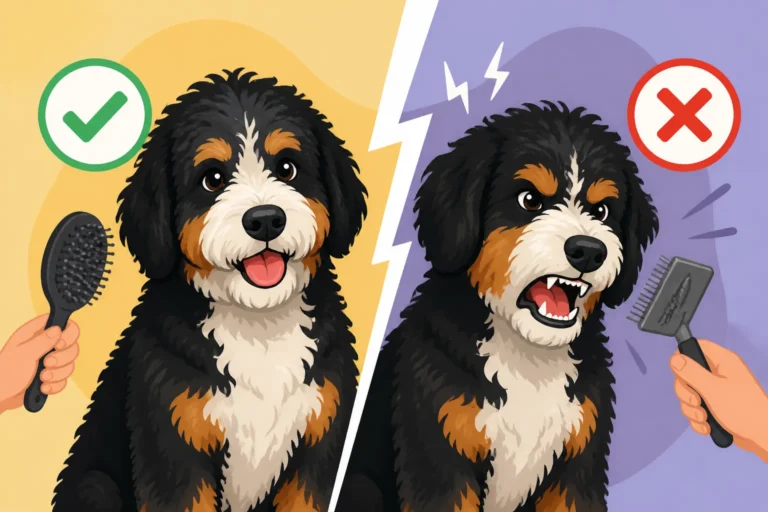
It’s vital for every Bernedoodle owner to understand the difference between normal puppy play biting and genuine aggression. The vast majority of puppy biting, even hard biting, falls into the category of play behavior.
Here’s how to usually tell the difference:
- Play Biting:
- Often accompanied by a loose, wiggly body, wagging tail, play bows, or zoomies.
- The puppy's ears are relaxed, not pinned back or stiff.
- The bites are usually quick nips, sometimes followed by licking, or a "soft mouth" grab.
- The puppy might growl playfully, but it sounds different from an aggressive, warning growl.
- The puppy stops if you yelp loudly or disengage.
- There's no stiffening, lip curling, or sustained hard pressure.
- Aggressive Biting (Rare in young puppies, but important to recognize):
- The puppy's body might be stiff, tense, or frozen.
- Often accompanied by lip lifting, snarling, prolonged hard growling, or a hard stare.
- The bites are sustained, deep, or intended to cause harm, not just engage in play.
- The puppy might guard resources (food, toys) or show fear.
- It's not easily interrupted or redirected.
If you ever suspect genuine aggression in your Bernedoodle puppy, it’s crucial to contact a certified professional dog trainer or veterinary behaviorist immediately. However, for the typical Bernedoodle puppy, those hard nips are just them trying to figure out the rules of engagement, and with consistency, they can learn to control their bite pressure.
The Impact of a Bernedoodle Puppy's Bite
While all puppies go through a biting phase, the experience can feel particularly intense with a Bernedoodle. Their unique blend of traits from the Bernese Mountain Dog and the Poodle means they grow quickly into large, strong dogs, making early bite inhibition training even more critical.
Those Needle-Sharp Puppy Teeth
Let's not sugarcoat it: Bernedoodle puppy teeth are like tiny, razor-sharp needles. They can pierce skin, snag clothing, and leave behind red marks that sting. It's perfectly normal to feel frustrated, overwhelmed, and even a little hurt when your sweet, fluffy puppy seems determined to use your hands and ankles as a chew toy. This isn't just a minor inconvenience; it can be genuinely painful and can make interacting with your puppy less enjoyable. Imagine trying to play fetch or offer a treat, only to have your fingers nipped repeatedly. It's not fun, and it's a common source of anxiety for new Bernedoodle owners, especially those with children who might not understand that the puppy isn't being mean.
The concern often goes beyond just the immediate pain. Many owners worry, "If my puppy bites this hard now, what will happen when they’re 80 pounds?" This is a completely valid fear, and it's precisely why addressing hard biting early on is so important for a breed that can get quite large. Teaching them Redirecting a Bernedoodle That Grabs Clothing is a specific, practical skill that can help with this.
Managing Bite Inhibition in a Larger Breed
Bite inhibition isn't about stopping your dog from ever putting their mouth on you; it's about teaching them how gently they can do so. For a large breed like a Bernedoodle, this skill is paramount. A playful nip from a small dog might be a minor inconvenience, but the same level of pressure from a full-grown Standard Bernedoodle could accidentally cause serious injury, especially to vulnerable individuals like small children or elderly family members. The sheer force behind an accidental bite from a large dog means that establishing a "soft mouth" early on is non-negotiable.
Consider a scenario where your Bernedoodle is 70 pounds and gets overstimulated during play. If they haven't learned to control their jaw pressure, even an innocent, excited mouth-play could be problematic. This is why it’s not enough for a Bernedoodle puppy to just stop biting; they need to learn that if their teeth do make contact, it should be with the utmost gentleness. This foundational training builds a safer relationship for everyone involved, making sure that when your Bernedoodle greets visitors or plays with the family, their interactions are joyful, not painful or frightening. The goal is a Bernedoodle that can gently take a treat from your hand without you even feeling their teeth, which is a testament to excellent bite inhibition. This also ties into important family dynamics, as you want a Bernedoodle that is Whether a Bernedoodle Is Gentle With a Baby.
Practical Strategies for Discouraging Hard Biting
The good news is that Bernedoodle puppies are smart and eager to please, even if they have a bit of The Stubborn Streak Under a Bernedoodle's Poodle Brain. With consistent and patient training, you can guide them through this nippy phase. The key is to communicate clearly what is acceptable and what is not, in a way they understand.
The "Yelp and Withdraw" Method
This strategy mimics how puppies learn from their littermates. When a puppy bites another too hard, the bitten puppy will often yelp loudly and immediately stop playing. This teaches the biter that hard bites equal the end of fun. You can replicate this with your Bernedoodle puppy:
- Exaggerated Yelp: The moment your Bernedoodle puppy's teeth make painful contact with your skin, let out a high-pitched, loud "YELP!" — don't make it angry, just a sudden, surprised sound.
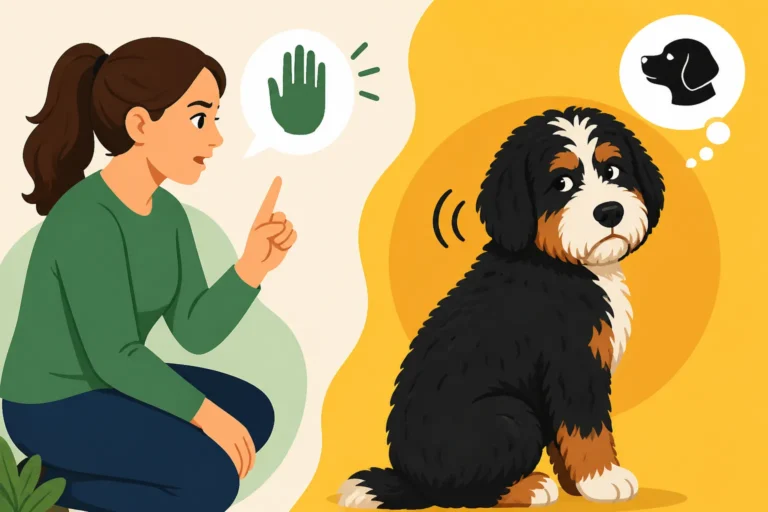
- Immediate Disengagement: As soon as you yelp, completely withdraw your hand or body part. Turn your back, or even leave the room for 10-20 seconds. This is not a punishment, but a clear signal that the fun stops when the biting gets too hard.
- Resume Play (if appropriate): After a short break, you can re-engage with your puppy. If the biting starts again, repeat the process.
The crucial part here is consistency. Everyone in the household needs to use this method every single time the puppy bites too hard. If one person allows hard biting and another doesn't, the puppy will get confused. Over time, your Bernedoodle puppy will learn that soft mouths get to continue playtime, while hard bites make the fun disappear. Some online resources, like BAXTER & Bella, offer structured programs that can guide you through this kind of foundational puppy training, providing video examples and support to ensure you're applying the techniques correctly.
Redirecting to Appropriate Chew Toys
Puppies need to chew. It's a fundamental behavior driven by exploration, teething, and stress relief. Instead of trying to stop the chewing, redirect it to appropriate outlets. Always have a variety of sturdy chew toys readily available.
When your Bernedoodle puppy starts nipping at your hands, feet, or clothing:
- Interrupt Gently: Say "No" or "Oops" calmly.
- Offer a Toy: Immediately present an enticing chew toy. Wiggle it, make it interesting. As soon as your puppy takes the toy in their mouth, praise them calmly: "Good chew!"
- Positive Reinforcement: Lavishly praise and reward them (with a treat or continued gentle play) when they chew on the toy instead of you.
Variety is key here. Some puppies prefer soft, rubbery toys for teething, others like harder, textured toys, and some love puzzle toys filled with treats. You can find a vast array of options on Amazon, from durable rubber KONGs to Nylabones designed for teething puppies. Rotate the toys regularly to keep them novel and exciting. If your puppy seems to have a preference for specific textures, lean into that! For instance, some Bernedoodles love a braided rope toy, while others prefer something smoother. Having something always at hand to offer is vital in teaching them that this is what you chew, not that.
Time-Outs and Management
Sometimes, a puppy gets overstimulated and simply can't stop nipping, even with redirection. This is where short, calm time-outs become invaluable.
If your Bernedoodle puppy is biting too hard and ignoring your yelps or redirection attempts:
- Remove Yourself (or the puppy): Calmly pick up your puppy and place them in a safe, puppy-proofed area (like their crate or a playpen) for a very short time-out, usually 30-60 seconds. Alternatively, if your puppy is too big or feisty, you can calmly walk out of the room yourself for a brief period.
- No Scolding or Attention: Do not scold, yell, or give eye contact during the time-out. The goal is to remove all attention and fun, not to punish. The time-out ends when the puppy calms down.
- Resume Calmly: Once the time is up, or the puppy is quiet, let them out or re-enter the room. If the biting starts again, repeat the time-out.
Managing the environment is also crucial. If your Bernedoodle puppy consistently nips at your ankles when you walk by, try wearing sturdy shoes or avoiding situations where they can practice this behavior until their bite inhibition improves. Use baby gates to limit access to certain areas, or keep a leash on your puppy indoors for gentle control when they get too mouthy. Remember, preventing the behavior before it starts is often more effective than constantly reacting to it. Consistency in these steps will also help address other common puppy behaviors like Teaching a Bernedoodle Not to Jump on Guests.
Essential Tools and Ongoing Training for Bite Management
Managing hard puppy biting isn't a one-and-done solution; it's an ongoing process that evolves as your Bernedoodle grows. Providing the right tools and maintaining consistent training are key to success.
Teething Aids and Frozen Chews
Just as with human babies, a teething Bernedoodle puppy will benefit immensely from items that soothe their sore gums. Providing these can significantly reduce unwanted nipping simply because you're addressing their physical discomfort.
Consider incorporating these into your routine:
- Frozen Kongs: Fill a classic KONG with a smear of peanut butter (check ingredients for xylitol!), cream cheese, or wet dog food, then freeze it. The cold, hard surface and the challenge of getting the treat out can occupy your puppy for a good while.
- Frozen Carrots or Bananas: Offer small, frozen pieces as a healthy, cold chew. Supervise your puppy, especially with harder items, to ensure they don't break off large chunks and choke.
- Wet, Frozen Towels: Dampen a small towel, twist it, and freeze it. This provides a safe, chewable ice pack for their gums.
- Specialized Teething Toys: Many companies make toys specifically designed to relieve teething pain. Look for textured rubber toys that are durable and safe for large breed puppies. Amazon has a wide selection of these, often with reviews from other large puppy owners which can be very helpful.
Remember to supervise your puppy with any chew item, especially new ones, to ensure they don't ingest pieces that could cause harm.
Consistent Training and Socialization
Beyond addressing the immediate biting behavior, integrating bite inhibition into a broader training and socialization plan is crucial. A well-socialized and trained Bernedoodle is generally a more confident and calmer dog, less prone to overstimulation that can lead to excessive nipping.
Here’s how training and socialization play a role:
- Basic Obedience: Commands like "sit," "stay," and "leave it" are not just tricks; they are tools for managing your Bernedoodle's behavior. A "leave it" command can be invaluable if your puppy is trying to mouth something inappropriate. A "sit" can redirect their focus when they're getting too mouthy during greetings. Consistency in all training aspects helps with When a Bernedoodle Puppy Stops Mouthing.
- Appropriate Socialization: Exposing your Bernedoodle puppy to a variety of sights, sounds, people, and other well-behaved dogs during their critical socialization window (roughly 3-16 weeks) helps them develop into a well-adjusted adult. This includes gentle handling by different people, which can make them less prone to nipping out of fear or overexcitement. Learn more about Socializing a Bernedoodle Before Twelve Weeks.
- Continued Practice: Even after your Bernedoodle puppy's adult teeth come in around six months, continue to reinforce gentle mouthing. Occasionally engage in soft play with your hands (if appropriate for your puppy's temperament) and immediately stop if they put too much pressure. This is a lifelong lesson, especially given that The Age a Bernedoodle Finally Settles can be later than you might expect.
By being proactive, providing appropriate outlets, and communicating clearly, you can successfully navigate the hard-biting puppy phase and raise a well-mannered, gentle Bernedoodle.
Here's a quick reference table for common puppy biting scenarios and solutions:
| Scenario | Why it Happens | What to Do |
|---|---|---|
| Nipping Hands During Play | Excitement, exploring, learned behavior from littermates. | 1. Yelp loudly! 2. Immediately withdraw hand/attention. 3. Redirect to a suitable chew toy. 4. If biting persists, give a short, calm time-out. |
| Biting Ankles/Pants | Overstimulation, seeking attention, prey drive. | 1. Stop moving immediately. 2. Redirect with a toy. 3. If persistent, step over a baby gate or calmly leave the room for a brief time-out. 4. Wear long, sturdy pants during prime "ankle-biter" hours. |
| Mouthing While Petting | Seeking interaction, uncomfortable with handling, overtired. | 1. If painful, yelp and stop petting. 2. If gentle mouthing, continue petting briefly, then stop. 3. Practice polite "consent" for petting: pet, pause, if puppy leans in, continue. If puppy moves away, stop. |
| Hard Biting During Teething | Pain/discomfort from erupting teeth. | 1. Provide a variety of appropriate chew toys, especially frozen ones (Kongs, carrots, wet towels). 2. Ensure they always have access to safe chew items. |
| Overexcited Biting | Puppy gets too riled up during play. | 1. Recognize signs of overstimulation (frantic play, zoomies, ignoring commands). 2. Implement structured breaks or calm time-outs before they get too wound up. 3. End play sessions before peak frenzy. |
Disclaimer
This article is for general informational purposes only and does not constitute professional advice. Laws, prices and regulations vary by location and change over time. Consult a qualified professional for guidance on your specific situation.