Whether a Head Halter Controls an Eighty Pound Bernedoodle
It's a common, utterly frustrating scenario: you've got this magnificent Bernedoodle, full of life and love, but when you step out the door for a walk, they transform into a ninety-pound sled dog, dragging you down the street with every squirrel sighting. Managing a powerful, enthusiastic large dog on a leash can feel overwhelming, leading many owners to wonder if they'll ever enjoy a peaceful stroll. This guide aims to thoroughly explore whether a head halter can be the game-changer you need to regain control and enjoy walks with your strong, beloved Bernedoodle.
Understanding the Challenge of a Strong Bernedoodle on Leash
Let's be real, a Bernedoodle, especially a standard size, is a robust dog. They inherit the solid build of the Bernese Mountain Dog and often the boundless energy of the Poodle. This combination, while resulting in a wonderful companion, also means they come equipped with significant pulling power. It's not malicious, it's just pure dog exuberance, but it can quickly become a safety hazard for both you and your furry friend.
The Power Behind a Large Bernedoodle's Pull
Imagine trying to hold back a small pony with just a piece of string. That's how it can feel when your eighty-pound Bernedoodle spots a rabbit or another dog across the park and lunges with all their might. Their muscular shoulders and strong neck are built for movement, and without proper training and tools, they'll use that natural strength to get where they want to go, often at your expense. Many owners find themselves developing shoulder pain or even falling, especially if they have A Standard Bernedoodle and a Small Child or are older. It's not just about comfort; it's about control and safety. If your dog pulls so hard they slip their collar or you lose your grip, it can lead to dangerous situations for everyone involved.
Why Traditional Collars Often Fall Short
A standard buckle collar, while perfectly fine for ID tags and light restraint, offers very little leverage or control over a large, determined dog. When your Bernedoodle pulls against a buckle collar, all the pressure is concentrated on their throat and windpipe. This isn't just uncomfortable for them; it can actually cause damage, like tracheal collapse, especially with repeated, strong pulling. Flat collars can also encourage pulling because the dog learns that lunging forward results in them getting closer to their desired object. Even choke chains or prong collars, while offering more control through discomfort, are often seen as aversive tools and can cause physical harm or fear if not used by a very experienced hand. Many owners want a kinder, more effective solution that doesn't rely on pain or fear, and that's where the search for alternatives begins.
How a Head Halter Works to Control an Eighty-Pound Bernedoodle
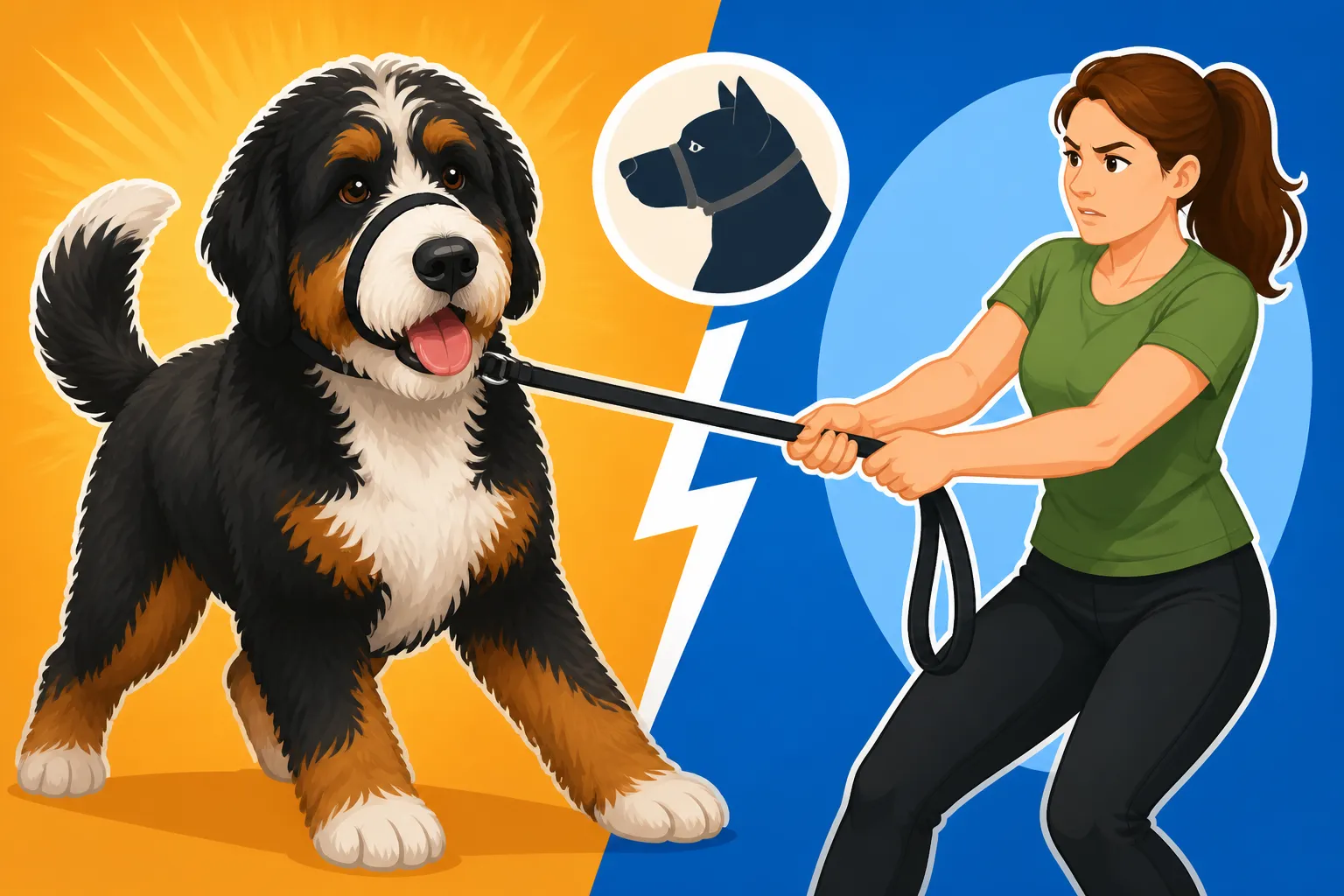
A head halter, sometimes called a head collar or gentle leader, works on a simple, yet incredibly effective principle. Instead of controlling the dog from the neck, it controls the dog from their head and muzzle, much like a halter on a horse. This gives you significantly more leverage and allows you to steer your Bernedoodle's entire body more easily.
The Mechanics of Head Halter Control
Think of it this way: where the head goes, the body follows. A head halter fits over your Bernedoodle's muzzle and behind their ears, with the leash attaching under their chin. When your dog tries to pull forward, the leash connection under the chin gently redirects their head to the side or down, breaking their forward momentum. It's not about applying force to their throat or neck; it's about influencing their direction. This redirection is usually enough to disrupt their focus on pulling and encourage them to walk calmly beside you. It also means that even a smaller person can manage a large dog like a Bernedoodle because the physical effort required to redirect their head is far less than trying to brace against their entire body weight. This subtle control prevents the dog from getting the full leverage of their chest and shoulders, which are their main pulling engines.
Key Benefits for Large, Strong Dogs
For an eighty-pound Bernedoodle, the benefits of a head halter can be truly transformative. First and foremost, it offers immediate and significant control. You'll likely notice a difference on your very first walk. Secondly, it's generally considered a humane tool. There's no choking or painful pressure, just gentle guidance. This makes it a preferred choice for many owners and trainers who prioritize positive reinforcement. Thirdly, it's an excellent training aid. Because it discourages pulling so effectively, it helps teach your Bernedoodle that loose-leash walking is the desired behavior. Over time, many dogs trained with a head halter can transition to a regular flat collar or harness for walks, having learned good leash manners. It's a tool that empowers both owner and dog, fostering a more pleasant walking experience for everyone. Many dog trainers recommend head halters for large breeds, advocating for their safety and effectiveness in teaching proper leash etiquette, especially when addressing issues like Whether a Bernedoodle Pulls Its Owner Over.
Choosing the Right Head Halter for Your Bernedoodle
Selecting the correct head halter isn't just about grabbing the first one you see. Just like finding the right pair of shoes, fit and comfort are paramount for your Bernedoodle. A poorly fitting head halter can cause chafing, discomfort, and even anxiety, making your dog hate the experience and resist wearing it altogether.
Sizing and Fit Are Crucial
Most head halters come in various sizes, and it's essential to measure your Bernedoodle's muzzle and neck circumference according to the manufacturer's guidelines. A head halter should be snug enough that it doesn't easily slip off, but not so tight that it pinches or restricts your dog's ability to pant, drink, or open their mouth comfortably. You should be able to fit one finger comfortably under all straps. The nose loop typically sits high on the bridge of the nose, just below the eyes, while the neck strap should sit snugly behind the ears, much like a regular collar. Different brands, like those you might find on Amazon, will have slightly different sizing charts, so always double-check. Don't be afraid to try a couple of sizes if you're unsure, as the correct fit is the single most important factor for success.
Material and Design Considerations
Head halters come in different materials, usually nylon webbing, sometimes with padding for extra comfort. For a large dog like a Bernedoodle, look for durable, high-quality materials that can withstand regular use and the occasional shake of a strong head. Some designs incorporate reflective stitching, which is a nice safety feature for evening walks. There are also different styles, such as those with a more minimalist design or those with additional cushioning on the nose loop. Read reviews from other large dog owners to see which designs hold up best and are most comfortable for their pets. A brand like BAXTER & Bella, while known for their training programs, often advocates for humane training tools, and a good quality, well-fitted head halter aligns with that philosophy. Consider how easy it is to clean, especially if your Bernedoodle loves to roll in questionable things or splash in puddles.
| Feature | Description | Importance for Bernedoodles |
|---|---|---|
| Material | Durable nylon webbing, sometimes with neoprene or fleece padding. | Essential for longevity and preventing chafing on a strong dog. |
| Sizing Accuracy | Clear measurement guides, multiple sizes available. | Crucial for a secure yet comfortable fit to avoid slipping or pain. |
| Adjustability | Multiple adjustment points on both neck and muzzle straps. | Allows for a custom fit on unique Bernedoodle head shapes. |
| Leash Attachment | Metal ring or D-ring located under the chin. | Central to the redirection mechanism, must be strong. |
| Comfort Features | Padding on nose loop or neck strap, soft edges. | Reduces rubbing and increases acceptance, especially during training. |
| Visibility (Optional) | Reflective stitching or bright colors. | A bonus for safety during low-light walks with a large dog. |
Introducing and Training Your Bernedoodle to a Head Halter
Just strapping a head halter onto your Bernedoodle and heading out the door is a recipe for disaster. Your dog will likely hate it, paw at it, and try to rub it off. The key to success is a gradual, positive introduction, making the head halter a good thing, not a punishment. Patience here will pay dividends in the long run.
Making the First Introduction Positive
Start by simply showing your Bernedoodle the head halter, letting them sniff it. Follow this immediately with a high-value treat. Repeat this several times. Next, try to get them to put their nose through the loop briefly, even for a second, and immediately reward. Don't worry about fastening it yet. The goal is to create a positive association, where the appearance of the head halter predicts yummy treats. You might even feed them a meal with the head halter lying near their bowl, so they associate it with positive experiences. This initial phase might take a few days, depending on your dog's personality and their initial reaction to new things. The concept is similar to getting your Bernedoodle used to other forms of handling, such as when Teaching a Bernedoodle to Lie Down for Three Hours of Grooming.
Gradual Training and Positive Reinforcement
Once your Bernedoodle is comfortable with their nose going through the loop, gently fasten the neck strap for a few seconds. Immediately reward and remove it. Gradually increase the time they wear it, always associating it with treats, praise, or a favorite toy. Start by just wearing it around the house for short periods. Play a quick game, give a few treats, then take it off. This helps them understand it's not a permanent fixture and that good things happen when it's on. Only when they are completely comfortable wearing it indoors should you venture outside, even if it's just to the backyard for a few minutes. Always keep those positive reinforcements flowing!
Addressing Common Resistance and Discomfort
It's common for Bernedoodles to paw at the head halter, try to rub it off, or look generally miserable at first. This is where your patience truly comes into play. If they react negatively, avoid scolding them. Instead, distract them with a treat or a toy. If they're pawing, gently redirect their paw and reward them for not pawing. Sometimes, a quick walk or engaging them in a game will help them forget about it. Ensure the fit is absolutely perfect – a loose or too-tight halter will cause more issues. Some dogs simply take longer to adjust. If your Bernedoodle is truly distressed, go back a step in your training or consult a professional dog trainer. Online resources, often found through communities like BAXTER & Bella, can offer valuable tips and video demonstrations for acclimating dogs to new equipment. Remember, it's about comfort and making it a positive tool, not a wrestling match.
Potential Drawbacks and Alternatives for Strong Pullers
While head halters are fantastic tools for many Bernedoodles, they aren't a one-size-fits-all solution. It's important to be aware of potential downsides and to know what other options are out there if a head halter doesn't quite click for your dog.
Not Every Dog Loves a Head Halter
Some Bernedoodles, despite the most patient and positive introduction, simply never fully accept a head halter. They might continue to paw at it, try to rub it off on every bush, or just seem generally uncomfortable and unhappy when wearing it. For these dogs, forcing the issue can do more harm than good, potentially creating a negative association with walks and even with you. It's also important to ensure that the head halter is used correctly; improper use can lead to discomfort or even injury. For instance, yanking sharply on the leash attached to a head halter can cause neck strain. The goal is gentle guidance, not forceful correction. Observing your dog's body language is critical. If their ears are perpetually flattened, their tail is tucked, and they're constantly trying to remove it, it might not be the right tool for them.
Exploring Other Training Tools and Methods
If a head halter isn't working out, don't despair! There are other excellent tools and training methods available. Front-clip harnesses are a very popular alternative for strong pullers. Unlike back-clip harnesses that can encourage pulling (like a sled dog harness), a front-clip harness has the leash attachment point on the dog's chest. When your Bernedoodle pulls, they are gently redirected to the side, similar to a head halter, without putting pressure on their throat. Many brands available on Amazon offer well-designed front-clip harnesses that are comfortable and effective.
Beyond tools, dedicated loose-leash walking training is paramount. This involves consistent positive reinforcement, rewarding your Bernedoodle for walking nicely by your side, and stopping every time they pull. This can be a slow process, but it builds good habits over time. Professional trainers can offer invaluable guidance, teaching you techniques like the "about turn" or "stop and go" method. Sometimes, a combination of tools and training works best. For instance, using a front-clip harness while diligently practicing loose-leash walking can provide both immediate control and long-term behavioral change. Don't forget that consistent exercise is key for a Bernedoodle; a tired dog is often a better-behaved dog on the leash, which ties into understanding The Exercise a Standard Bernedoodle Needs Daily. Whatever path you choose, remember that consistency, patience, and positive reinforcement are the cornerstones of successful leash training for your powerful Bernedoodle.
Disclaimer
This article is for general informational purposes only and does not constitute professional advice. Laws, prices and regulations vary by location and change over time. Consult a qualified professional for guidance on your specific situation.