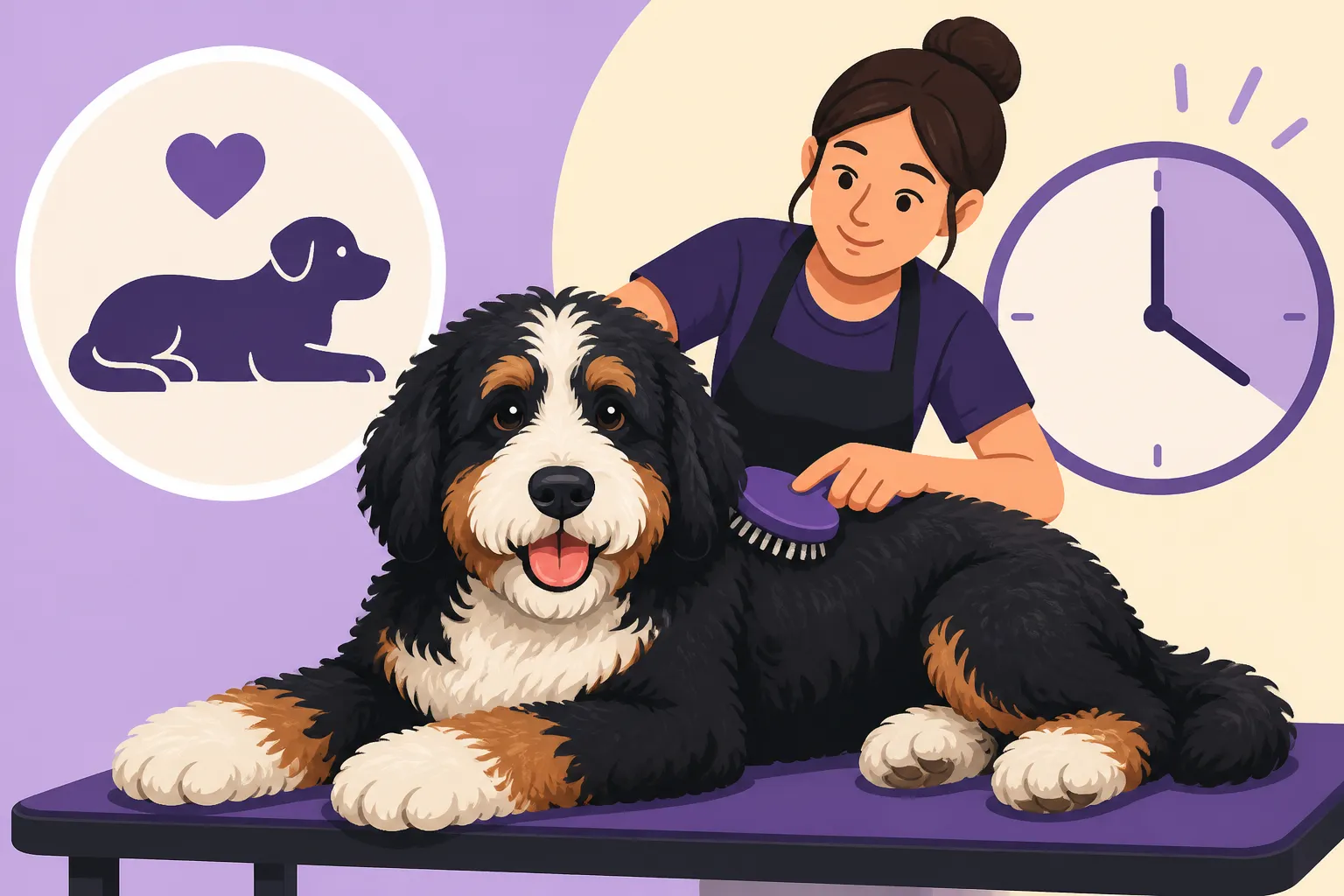
Teaching a Bernedoodle to Lie Down for Three Hours of Grooming
One of the biggest hurdles many Bernedoodle owners face is the sheer amount of grooming these wonderful dogs require. It’s not just about brushing; it’s about getting your large, fluffy companion to calmly accept being handled, brushed, and trimmed for what can often feel like an eternity—sometimes three hours or more! This guide is here to walk you through the process of teaching your Bernedoodle to lie down cooperatively for these extended grooming sessions, turning a dreaded chore into a manageable, even pleasant, routine.
Understanding the Bernedoodle Grooming Challenge
Let's be real, a Bernedoodle's coat is a thing of beauty, but it's also a full-time commitment. Unlike some breeds where a quick brush-through once a week suffices, our fluffy friends often demand daily attention, and professional grooms are frequent and lengthy. Understanding why this is such a unique challenge is the first step to tackling it head-on.
The Physical Demands of Their Coat
Bernedoodles inherit a fascinating mix of coat types from their Bernese Mountain Dog and Poodle parents. Often, you'll find a wavy, low-shedding coat that feels soft but mats incredibly easily. This isn't just a surface-level issue; those mats can form right down to the skin, causing discomfort, skin irritation, and even pain. To prevent this, thorough brushing, often involving line brushing to get to the skin, is essential. This kind of brushing isn't fast, especially on a large standard Bernedoodle. Imagine trying to comb through a child's tangled hair for an hour, but that child weighs 80 pounds and has four legs! It's a huge undertaking, and it’s why understanding The Weekly Hours a Standard Bernedoodle's Coat Takes is so crucial.
Then there's the sheer volume. Even a mini Bernedoodle can have a surprising amount of hair, and a standard Bernedoodle often has what feels like an endless supply. You're dealing with dense fur on their body, long feathering on their legs and tail, and that adorable beard and topknot that needs constant attention. Trying to groom this while your dog is standing, shifting, or trying to play can turn a thirty-minute session into a two-hour wrestling match, leaving both of you exhausted and frustrated.
The Mental Aspect: Patience and Trust
Beyond the physical challenge of the coat, there's the mental game. For a Bernedoodle to lie still for extended periods, they need immense patience, trust in their handler, and a solid understanding of what's expected of them. Many dogs, especially puppies, have a limited attention span. Asking them to stay in one position for an hour, let alone three, goes against every natural instinct to explore, chew, or nap somewhere else. This isn't stubbornness, though it can feel like it; it's often a lack of conditioning and a test of their learned impulse control.
Think about it from their perspective: a strange (or sometimes familiar, but still annoying) brush is tugging at their fur, clippers are buzzing near their sensitive paws, and loud dryers are blasting air. It can be overwhelming and even scary if they aren't properly desensitized. A dog that doesn't trust the grooming process will be a wiggling, squirming mess, making grooming not only difficult but potentially dangerous for both the dog and the groomer. This is why building positive associations and gradually increasing their tolerance is absolutely paramount.
Starting Early: Puppy Foundations for Grooming Tolerance
The absolute best time to start preparing your Bernedoodle for long grooming sessions is when they are a tiny, adorable puppy. Every positive interaction you have with them around grooming tools and handling will pay dividends as they grow into big, beautiful adults.
Handling Exercises: Touch, Reward, Repeat
From the moment you bring your Bernedoodle puppy home, start handling them everywhere. Not just petting, but purposeful touching. Gently touch their paws, spreading their toes. Lift their ears and look inside. Open their mouth briefly and touch their gums. Touch their tail, even lift it. Give them a delicious treat and calm praise every single time you do this. The goal is to make every touch a positive, rewarding experience. This teaches them that being handled is not scary, and often leads to good things.
Don't overdo it initially. A few seconds of gentle handling in different areas, followed by a treat, is plenty. Gradually increase the duration of the touches. If your puppy is calm while you gently run your fingers over their back for five seconds, try ten. If they're good with you holding their paw for a few seconds, try a few more. This creates a foundation of body awareness and comfort, making future grooming much less stressful. This kind of consistent, positive reinforcement is something resources like the BAXTER & Bella online puppy school champion, emphasizing gentle methods for lifelong success.
Short, Positive Grooming Sessions
Introduce actual grooming tools early and make the sessions extremely brief and positive. Don't wait until your puppy is matted to introduce a slicker brush or a comb. Let them sniff the brush. Give a treat. Touch the brush to their coat for a second. Treat. Build up to one stroke, then two. Always end on a positive note, even if you only managed a few seconds of brushing. The same goes for nail trims. Touch their paw, touch the clippers to a nail, pretend to clip, and treat. Gradually work up to actual clips.
The goal isn't to get them perfectly groomed at eight weeks old; it's to create positive associations. These short, sweet sessions should feel like a game, not a chore. Use your happiest voice, lots of high-value treats (think cooked chicken or cheese), and plenty of praise. If they start to get anxious or wiggle, take a break and try again later, keeping the sessions even shorter. Consistency is key here. A little bit every day is far more effective than one long, stressful session once a week. You'll be amazed at how quickly they learn to tolerate and even enjoy these mini-grooms.
Basic Commands: "Down" and "Stay"
Before you can ask your Bernedoodle to lie down for three hours, they need to understand what "down" means and, critically, what "stay" means. Start teaching these commands in a low-distraction environment. Use a lure (a treat held to their nose) to guide them into a down position, then immediately reward them when their elbows hit the ground. Practice this many, many times, adding the verbal cue "down" as they move into position.
Once they reliably go into a down, start introducing the "stay" command. Begin with very short durations (one second!), always rewarding them for staying. Slowly increase the time, literally second by second. Then, add distance: take one step away, then return and reward. Two steps away, return and reward. Only progress when your Bernedoodle is consistently successful at the current step. This isn't about speed; it's about building a solid, reliable foundation. A Bernedoodle that can hold a "down-stay" for five minutes in a quiet room is well on their way to tolerating longer grooming sessions. For more detailed training methods, exploring resources like BAXTER & Bella can provide structured courses that are easy to follow for both you and your puppy.
Building the "Down-Stay" for Grooming
Once your Bernedoodle understands "down" and "stay" in general contexts, it's time to apply these commands specifically to the grooming environment. This transition requires patience, consistency, and a deep understanding of positive reinforcement.
Luring, Rewarding, and Gradually Extending Duration
To teach your Bernedoodle to lie down for grooming, you’ll want to start with them on your grooming table or designated grooming spot. Use a high-value treat to lure them into a "down" position. As soon as they are down, mark the behavior with a verbal "yes!" or a clicker, and give them the treat. Repeat this several times until they are confidently going into a down. Now, introduce the "stay" command. Ask for a "down," then say "stay" and immediately give a treat. The goal initially is to reward before they even think about moving.
Slowly, and I mean slowly, extend the duration. Instead of treating immediately, wait one second, then two, then three, all while they are in the "down-stay." If they move, gently reset them and start again. Use a steady stream of small, pea-sized treats during the "stay" to reinforce the desired behavior. You’re essentially telling them: "This is a great place to be, and good things happen when you stay here." Practice this daily, aiming to add just a few seconds each time. Don't rush it; pushing too fast will lead to frustration and a breakdown of the learned behavior. Consistency is much more valuable than speed when it comes to long-duration stays.
Introducing Grooming Tools During the Stay
Once your Bernedoodle can hold a "down-stay" for a minute or two, start to introduce grooming tools. Begin with the least intrusive tool, probably a soft brush or a comb. Ask for the "down-stay," then gently touch the brush to their fur, reward. Stroke once, reward. Stroke a few times, reward. Gradually increase the number of strokes and the area you are brushing, always rewarding for remaining calm and in position. If they get up or show signs of discomfort, stop, reset, and go back to an easier step. The moment they lie down calmly and accept even a few brush strokes is a win worthy of a big reward.
This method is about building positive associations. Every brush stroke, every gentle snip near their paws, should be paired with a treat and praise. For tasks like drying, which can be noisy and intense, start with the dryer off, letting them sniff it. Turn it on briefly far away, reward for no reaction. Gradually bring it closer, always observing their comfort levels. It’s a marathon, not a sprint, to build their tolerance to sounds, sensations, and prolonged handling. This patient approach is what will prevent your Bernedoodle from developing a fear of grooming, ensuring they don't become one of those dogs that resist brushing, making the entire process even longer and more painful for both of you.
Generalizing the Behavior and Adding Distractions
The ultimate goal is for your Bernedoodle to lie down for grooming regardless of what’s happening around them or who is doing the grooming. To achieve this, you need to generalize the "down-stay" behavior. Start by practicing in different locations within your home – on the floor, on a mat, on a low table. Once they are comfortable, introduce very mild distractions. Maybe a family member walks quietly through the room, or a soft radio plays in the background. Reward heavily for maintaining their stay through these minor interruptions.
As they become more proficient, slowly increase the level of distraction. This could mean having another pet in the room (at a safe distance), or having more movement around them. The key is to keep the distractions low enough that they can still succeed, and always reward lavishly for their compliance. Remember, a Bernedoodle's intelligence can sometimes come with a stubborn streak The Stubborn Streak Under a Bernedoodle's Poodle Brain, so consistency and clear expectations are your best friends. This generalization will prepare them not only for home grooming but also for visits to a professional groomer, where the environment is naturally more stimulating.
Essential Tools and Environment for Success
Having the right tools and creating a dedicated, comfortable grooming environment can dramatically improve your Bernedoodle's willingness to lie down and cooperate for long sessions. It's about making the process as smooth and comfortable as possible for everyone involved.
The Grooming Table: Stability and Height
If you're serious about grooming your Bernedoodle at home, a grooming table is almost non-negotiable, especially for a standard-sized dog. Trying to groom a large, squirming Bernedoodle on the floor is back-breaking and often results in an incomplete job. A good grooming table provides a stable, elevated surface that brings your dog up to your level, saving your back and giving you better control. Look for one with a non-slip surface and, crucially, a grooming arm with a noose or belly strap. This allows you to safely secure your Bernedoodle, preventing them from jumping off or wiggling too much, which is essential for duration training. You can find a wide variety of these on platforms like Amazon, offering different sizes and features to suit your specific Bernedoodle.
Introducing the table positively is key. Let your puppy explore it, give treats on it, and make it a fun place. For larger Bernedoodles, teaching them to hop up (or using a ramp) and then immediately rewarding them for lying down on the table will build positive associations. The table isn't a punishment stand; it's where good things (treats and praise) happen for being calm and still. Getting a Bernedoodle Used to the Grooming Table is a foundational step that will make all subsequent grooming much easier, regardless of how long the session lasts.
Specialized Brushes and Tools
Bernedoodle coats demand specific tools. A high-quality slicker brush is essential for getting through their dense fur and preventing mats. You'll also need a metal comb, ideally with both wide and fine teeth, to ensure you're getting all the way to the skin. For truly dense areas or if you encounter any matting, a deshedding rake or a mat splitter can be invaluable. However, always exercise caution with mat splitters to avoid cutting the skin. A force dryer is another game-changer; it dramatically reduces drying time after baths and helps blow out loose undercoat, preventing mats before they start. While the initial investment might seem high, a good force dryer will save you countless hours and potentially significant professional grooming costs.
Having these tools readily available and in good condition will make the grooming process more efficient and less irritating for your dog. Dull clippers or low-quality brushes can pull on their fur, causing pain and making them more resistant to lying down and staying still. Invest in good quality equipment that makes the job easier for you and more comfortable for your Bernedoodle. These tools are readily available online, with Amazon being a popular choice for many owners.
Creating a Calm and Consistent Environment
Your Bernedoodle's grooming spot should be a calm, predictable, and quiet space. Choose an area of your home where you won't be easily interrupted and where your dog feels secure. Minimize distractions by turning off the TV, silencing your phone, and ensuring other pets or children aren't running around. A consistent location helps your dog understand what's expected of them when they're brought there. You can enhance the calming effect by having soft lighting or playing quiet, soothing music.
Consistency in your routine is also vital. Try to groom your Bernedoodle at a similar time each day or week, depending on their coat needs. Dogs thrive on routine, and knowing what to expect can significantly reduce anxiety. Before you even start grooming, spend a few minutes with calming praise and gentle petting. This helps them relax and signals that it’s time to settle down. A predictable, calm environment, combined with positive reinforcement, will make your Bernedoodle far more inclined to lie still and accept the long grooming session.
| Grooming Challenge | Training Approach | Essential Tools/Techniques |
|---|---|---|
| Wiggly Dog | Short, positive sessions; "down-stay" progression; high-value treats. | Grooming table with arm, non-slip mat, calming verbal cues. |
| Matting/Tangles | Daily brushing from puppyhood; line brushing technique. | Slicker brush, metal comb, detangler spray, force dryer. |
| Pawing/Biting Tools | Desensitize to tools (sniff, touch, reward); positive association. | Specific grooming tools (quiet clippers, gentle brushes), ample treats. |
| Fear of Dryer Noise | Gradual introduction (far away, low setting); reward calm behavior. | Quiet force dryer, ear protection for dog (snoods), fan. |
| Refusal to Lie Down | Lure into down position; build duration of stay; consistent rewards. | Favorite treats, consistent command, designated calm grooming space. |
| Long Session Boredom | Frequent, small rewards; short breaks; vary grooming areas. | Interactive mat or lick mat with treat paste for distraction. |
Troubleshooting Common Grooming Resistance
Even with the best intentions and early training, Bernedoodles can sometimes develop resistance to grooming. It's important to understand the root cause of this resistance to address it effectively, rather than just getting frustrated.
Addressing Fear and Anxiety
If your Bernedoodle suddenly becomes resistant, or if they were never comfortable with grooming, fear or anxiety is often at play. This isn't stubbornness; it's a genuine emotional response. The buzzing of clippers, the pulling of a brush on a mat, or the loud blast of a force dryer can be genuinely terrifying to some dogs. Signs of fear include tucking their tail, trying to escape, excessive panting, drooling, yawning, or even growling. If you see these signs, stop. Pushing through fear will only make it worse.
The solution is counter-conditioning and desensitization. This means gradually exposing them to the feared stimulus while pairing it with something positive. For example, if they fear the clippers, bring the clippers out (off), give a treat. Touch the clippers (off) to their body, give a treat. Turn them on (far away), give a treat. Slowly, over days or weeks, bring the sound and sensation closer, always pairing it with high-value rewards and stopping before they show signs of fear. This is where patience truly comes into play. You might also want to explore calming aids, such as pheromone sprays or calming treats, in consultation with your vet, especially before truly challenging sessions.
Managing Pain or Discomfort
Sometimes, resistance isn't about fear but about actual pain or discomfort. A hidden mat pulled by a brush can be incredibly painful, making your Bernedoodle associate grooming with hurt. Joint pain, especially in an older or growing Bernedoodle with conditions like elbow or hip dysplasia (something Bernedoodles can inherit from their Bernese lineage, see: Hips on a Ninety Pound Bernedoodle or Elbow Dysplasia in a Growing Bernedoodle), can make lying in certain positions uncomfortable for extended periods. If your dog suddenly refuses to lie down or shows pain when touched in certain areas, a vet visit is in order to rule out any underlying medical issues.
Even if there's no major medical issue, ensuring their comfort during grooming is key. Use a soft, supportive mat on the grooming table. If they have arthritis, consider elevating their food and water bowls to reduce strain. Be extra gentle, especially when brushing near joints or sensitive areas. If a mat is causing pain, don't try to rip it out. Instead, carefully work around it or consider getting it professionally shaved out by a groomer who can do it safely. Sometimes What a Matted Bernedoodle Costs to Shave seems high, but it's worth it for your dog's comfort.
Overcoming Boredom or Stubbornness
Once you've ruled out fear and pain, you might be dealing with boredom or what feels like stubbornness. Bernedoodles are intelligent and can be quite willful! If they're simply bored, those three hours can feel like an eternity. To combat this, keep the energy positive and engaging. Use high-value, novel treats they don't usually get. Break up the session with very brief "stretch breaks" where they can stand up for a moment before resuming the down-stay.
You can also try using a lick mat smeared with peanut butter or a high-value paste, attaching it to the grooming table to provide a positive, prolonged distraction. Vary the order of grooming tasks to keep them from anticipating the next unpleasant step. For persistent "stubbornness," revisit your basic "down-stay" training. Are your rewards truly motivating? Are you being consistent enough? Sometimes, going back to basics with shorter sessions and more frequent rewards can reset their motivation. Remember, the goal isn't just compliance, it's making them want to cooperate.
Maintaining the Skill and Making it a Positive Experience
Teaching your Bernedoodle to lie down for three hours of grooming is not a one-and-done process. It's an ongoing commitment to reinforce the behavior and ensure grooming remains a positive experience throughout their life.
Consistency and Regular Practice
Just like any learned behavior, if you don't use it, you lose it. Regular, consistent practice is crucial. This doesn't mean you need to do a full three-hour groom every day, but incorporate elements of the long "down-stay" into your weekly routine. Practice short "down-stays" on the grooming table a few times a week, even if you're just doing a quick brush of their face or paws. The more regularly your Bernedoodle practices lying calmly in their grooming spot, the more ingrained the behavior becomes. Think of it as muscle memory for good behavior.
Regular full grooming sessions, whether at home or with a professional, also reinforce the training. If you're wondering How Often a Bernedoodle Should Be Brushed, the answer for most is daily, with full body grooms every 6-8 weeks. Each session is an opportunity to practice and reward that calm, cooperative "down-stay." If you let too much time lapse between sessions, your Bernedoodle might "forget" their training or regress to old, wiggly habits.
High-Value Rewards and Positive Reinforcement
Never underestimate the power of high-value rewards. What motivates your Bernedoodle? Is it freeze-dried liver, cheese, chicken, or a favorite squeaky toy? Use these special rewards only during grooming sessions to make the experience extra special and desirable. Don't just give one treat; scatter small treats throughout the "down-stay" as you groom, especially when you're working on a particularly sensitive area or when they've been still for a long stretch. This constant positive reinforcement keeps them engaged and reminds them that good things happen when they cooperate.
Verbal praise in a soothing, happy tone also plays a big role. "Good stay, my sweet pup!" or "Excellent job, what a good boy/girl!" paired with a gentle stroke can be just as reinforcing as a treat for some dogs. The goal is to create a strong positive emotional response to grooming, associating it with pleasure and rewards rather than boredom or discomfort. Even after a long session, finish with a burst of praise, a favorite toy, or a short play session to end on an uplifting note.
Knowing When to Call a Professional
Despite your best efforts, some grooming tasks are simply too challenging or time-consuming to do at home, or your Bernedoodle might have specific needs you can't meet. This is where a professional groomer comes in. They have specialized equipment, experience with all kinds of temperaments, and the physical stamina to tackle a three-hour groom safely and efficiently. If your Bernedoodle is struggling, a professional can often work magic with their expertise, building on the positive foundations you've laid.
Communicate openly with your groomer about your Bernedoodle's temperament and any challenges you've faced. Let them know what training you've done for "down-stay" and what rewards work best. A good groomer will also use positive reinforcement techniques and understand how to work with a dog to build trust. Remember that The Seventy to Hundred Fifty Dollar Bernedoodle Groom is an investment in your dog's health and comfort, and a professional can often achieve results that are simply not feasible for a home groomer. Don't feel like you've failed if you need to call in the experts – you're simply giving your Bernedoodle the best care possible.
Disclaimer
This article is for general informational purposes only and does not constitute professional advice. Laws, prices and regulations vary by location and change over time. Consult a qualified professional for guidance on your specific situation.