Getting a Bernedoodle Used to the Grooming Table
Oh, the grooming table! For many Bernedoodle owners, those two words conjure up images of a wrestling match, a tug-of-war, or a frantic dance between a well-meaning human and a large, fluffy, and often uncooperative canine. Getting your big, lovable Bernedoodle to stand calmly for grooming on a raised table can feel like an impossible feat, leading to stress for both of you and making routine care a dreaded chore. This guide is all about transforming that experience, helping you introduce the grooming table in a way that builds confidence, cooperation, and even joy, turning what could be a battle into a bonding experience.
Understanding the Grooming Table Challenge
Let's be real, a Bernedoodle isn't exactly built for delicate poses or remaining perfectly still for extended periods, especially when they're not used to it. Their sheer size, combined with their unique coat and sometimes stubborn personality, can make the grooming table a formidable adversary if not approached correctly. It’s crucial to understand why your Bernedoodle might be resisting before we can figure out how to help them embrace the experience.
The Bernedoodle's Unique Traits
One of the first hurdles is simply the physical presence of a Bernedoodle. These dogs can range from 25 pounds for a Mini to upwards of 90 or even 100 pounds for a Standard. Imagine trying to groom a wiggly, reluctant eighty-pound dog on a raised surface! It's not just difficult; it can be downright dangerous for both of you. Their strength means that a quick lunge or a sudden sit can send them tumbling, or leave you with a strained back. This physical reality underscores why a calm, cooperative dog on the table is absolutely non-negotiable for safety.
Then there's that delightful mix of temperaments. Bernedoodles get their charm from their parent breeds: the gentle, often laid-back Bernese Mountain Dog, and the intelligent, sometimes quirky Poodle. While Poodles are often very amenable to grooming due to their heritage as show dogs, the Bernese side can bring a stubborn streak that says, "I'm not so sure about this, and I'd rather not." This combination means you have a smart dog who could learn quickly, but might also dig in their heels if they decide they're not on board. They’re intelligent enough to quickly learn negative associations if grooming is rushed or uncomfortable, making it an uphill battle.
And, of course, the coat! The Coat a Bernedoodle Gets From Two Heavy Coated Parents is truly magnificent, but it comes with a price: regular, thorough grooming. Whether your Bernedoodle has a wavy, curly, or even a straighter coat, it's prone to matting. Armpits, behind the ears, the britches—these are all notorious mat hotspots. Without a dog that is comfortable being brushed and dried on a stable surface, keeping that coat healthy and mat-free becomes an almost impossible task. Professional groomers also rely on dogs being accustomed to the table, so if your dog fights it at home, they're likely fighting it at the salon too, which adds to their stress and your grooming bill.
Why Resistance Happens
Often, a Bernedoodle's resistance to the grooming table stems from a simple lack of early, positive exposure. Think about it: many puppies are rarely placed on a raised surface until they visit the vet or a groomer for the first time. For a large puppy, this sudden elevation can be startling and feel unstable. If their first few experiences involve prolonged, uncomfortable brushing or loud dryers, they quickly develop a negative association. They might view the table as a place where scary things happen, where they're held against their will, or where they simply feel insecure.
It's also common for dogs to develop a fear of heights or unstable surfaces. A wobbly table, a slick surface, or even just the feeling of being off the ground can trigger anxiety. Imagine standing on a wobbly ladder while someone tries to comb your hair – it wouldn't be comfortable! Dogs pick up on our anxiety too. If you're stressed about grooming, your Bernedoodle will feel that tension and assume there's something to be worried about. This can create a vicious cycle where their fear makes them harder to groom, which makes you more stressed, and so on.
Starting Early: Puppy Foundation for Grooming Table Success
The golden rule for grooming table success is this: start early, start slow, and make it positive. The moment you bring your Bernedoodle puppy home, you have an opportunity to shape their future grooming experiences. Don't wait until their coat is matted or they're too big to lift. Think of it as part of their essential puppy socialization, just like meeting new people or learning house manners.
Introducing the Table as a Safe Space
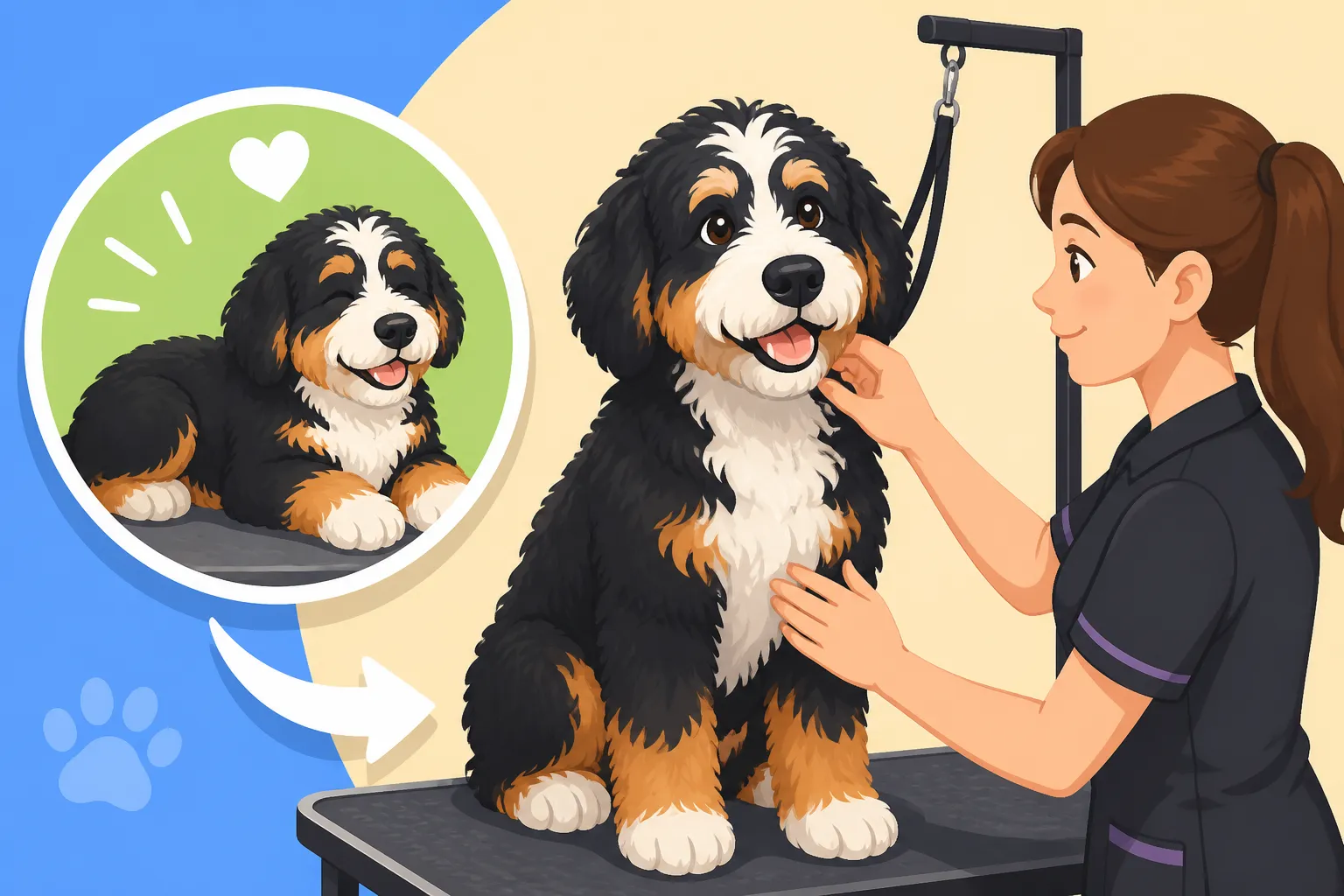
Begin by introducing the grooming table not as a "workstation," but as just another piece of furniture, and a positive one at that. You don't even need a fancy grooming table at first; a sturdy, non-slip workbench, a stable laundry folding table, or even a covered picnic table can work if you don't have a dedicated grooming table yet. The key is stability and a non-slip surface. Place it on the floor first, at puppy level, and let your Bernedoodle explore it. Toss some high-value treats on it, encouraging them to jump on and off freely.
Once they're comfortable with the table on the floor, gradually raise it, just an inch or two at a time, for very short periods. The goal is to make standing on the table a routine, boring, and highly rewarded activity. Keep these early sessions super brief – literally 30 seconds to a minute – and end on a positive note. Praise lavishly and offer their favorite treat or a quick game of tug. You want them to think, "Oh, this table means good things happen, and then I get to leave!" Over time, you'll extend the duration and height as their confidence grows. Consistency in these early stages is far more important than intensity.
Desensitization to Touch and Handling
Beyond just the table itself, your Bernedoodle needs to be completely comfortable with being touched all over, especially in sensitive areas. This is something you can and should start from day one. Gently handle their paws, spreading their toes, feeling their nails. Touch their ears, lifting them, looking inside. Open their mouth, touch their gums and teeth. Stroke their tail. Do this daily, associating every touch with gentle praise and small, tasty treats. The more comfortable they are with your hands on them, the easier grooming will be.
Once they tolerate general handling, slowly introduce grooming tools. Let them sniff the brush, the comb, and even the clippers (while off). Touch them with the back of the brush first, then very gently with the bristles, always followed by a treat. For a Bernedoodle, you’ll be doing a lot of brushing, so making this a pleasant experience is paramount. Imagine trying to brush out mats if your dog pulls their paw away every time you try to touch it. This foundation work will be invaluable when you start actually grooming them. Consider reading Getting a Bernedoodle to Lie on Its Side for tips on how to make long grooming sessions more comfortable for your dog, no matter where they are.
Crate Training and Settle Command
A well-crate-trained Bernedoodle often transitions more easily to the grooming table. Why? Because crate training teaches them impulse control, patience, and how to relax in a designated space. A "settle" or "place" command, where your dog learns to lie down and stay in a specific spot, is also incredibly beneficial. These skills translate directly to the grooming table, where staying still and calm is the ultimate goal.
If your Bernedoodle has learned that being contained (in a crate) or being asked to stay in one spot (on a "place" mat) results in good things, they'll be more receptive to the slight confinement of a grooming arm or the expectation of stillness on the table. You can even practice your "settle" command on the grooming table itself once they are comfortable standing there. This helps them understand that the table is a place for calm, focused behavior, not a playground for wiggles and escapes.
Positive Reinforcement Techniques for the Grooming Table
The cornerstone of successful grooming table training is positive reinforcement. We're not trying to force our Bernedoodle into submission; we're trying to motivate them to cooperate by making it the most rewarding activity ever. This builds trust and makes grooming something they anticipate, rather than dread.
High-Value Rewards and Praise
When training for something challenging like the grooming table, you need to pull out the big guns in terms of rewards. Skip the everyday kibble and bring out the "jackpot" treats: cooked chicken, cheese, hot dogs, or whatever your Bernedoodle goes absolutely bonkers for. The value of the reward needs to outweigh the perceived discomfort or novelty of the situation. As BAXTER & Bella, a well-known puppy training program, often emphasizes, training should always be fun and rewarding for your dog.
Timing is everything with positive reinforcement. Reward your Bernedoodle during the desired behavior (e.g., while they are standing still on the table) and immediately after a positive interaction (e.g., after you've gently brushed a small section of their leg). If you wait too long, they might not connect the reward to the action you want to reinforce. Couple these treats with enthusiastic verbal praise ("Good stand!," "Yes, calm!") and gentle, reassuring strokes. This combination teaches them that being on the table, being still, and allowing handling brings wonderful things.
Breaking Down the Grooming Process
Trying to tackle a full bath, brush, and blow-dry all at once on the table is too much, especially initially. Break the entire grooming process down into tiny, manageable steps. On one day, perhaps you just practice getting on and off the table, with lots of rewards. The next day, you might focus on gently brushing one paw. The day after, maybe just combing a small section of their back. Each successful, short interaction builds confidence.
The "touch and treat" method is incredibly powerful here. Gently touch a paw with your hand, treat. Repeat. Then, gently hold the paw for a second, treat. Slowly increase the duration of the touch or hold. Once they're comfortable with your hands, introduce the brush. Touch the brush to their paw, treat. Take one gentle stroke, treat. Over time, you can build up to longer strokes and cover more body parts. This methodical approach is critical for sensitive areas like ears, paws, and the tail. For specific guidance on paw handling, check out Getting a Bernedoodle Used to Having Its Feet Held. This step-by-step approach ensures that your Bernedoodle never feels overwhelmed and associates each small action with a positive outcome.
Using a Grooming Arm and Loop
Many owners are hesitant to use a grooming arm and loop, fearing it's a form of restraint. However, when used correctly, these tools are primarily for safety and to teach your Bernedoodle to stand still. For a large, often bouncy Bernedoodle, a grooming arm and loop prevent them from accidentally jumping or falling off the table, which could lead to serious injury. It also helps them understand that once they are on the table, they are expected to stay there, reducing the likelihood of them trying to escape.
Introduce the grooming loop gradually. First, let your Bernedoodle sniff it, then drape it over their neck loosely while offering treats. Once they're okay with that, gently clip it to the grooming arm, keeping it loose but secure enough to prevent jumping. Never leave your dog unsupervised when attached to a grooming arm! Over time, they'll learn that the loop means it's "grooming time" and that cooperating while in the loop leads to rewards and a quick release. Remember, the goal isn't to tie them down, but to provide a clear, gentle boundary that keeps them safe and encourages stillness. The right equipment can make all the difference, and a sturdy loop attached to a robust arm, suitable for your dog's size, is essential. For general handling, The Harness That Holds a Ninety Pound Bernedoodle could also provide insight into secure equipment.
Essential Tools and Setup for a Successful Grooming Table Experience
Having the right equipment is non-negotiable when it comes to successfully grooming a Bernedoodle, especially on a table. It's not just about efficiency; it's about comfort and safety for both you and your dog. Investing in quality tools will save you headaches, backaches, and trips to the emergency vet or expensive dematting appointments.
Choosing the Right Grooming Table
This is perhaps the single most important piece of equipment. For a Bernedoodle, you cannot skimp here. You need a table that is:
- Sturdy and Stable: Absolutely no wobble. A Bernedoodle can weigh upwards of 90 pounds, and a flimsy table is a recipe for disaster. Look for heavy-duty construction.
- Non-Slip Surface: The tabletop must have a textured, rubberized surface to prevent slips and falls. This dramatically increases your dog's confidence and reduces anxiety.
- Appropriate Size: It needs to be large enough for your Bernedoodle to stand and turn comfortably, but not so large that they can wander around excessively.
- Adjustable Height: This is a lifesaver for your back! Being able to raise or lower the table to a comfortable working height means you're not bending over awkwardly for long periods, which keeps you more relaxed and focused. You can find excellent adjustable height grooming tables on platforms like Amazon, offering a range of sizes and features.
A good table not only provides a safe platform but also physically separates your dog from the distractions of the floor, signaling that it's "work time."
Grooming Arm and No-Sit Haunch Holder
While we touched on the grooming arm earlier, it's worth reiterating its importance. A robust, sturdy grooming arm that clamps securely to your table is critical. For larger dogs, a double arm system can offer even more stability and flexibility for positioning the dog. The grooming loop attaches to this arm.
Beyond the standard grooming loop, a "no-sit haunch holder" can be incredibly useful, especially for Bernedoodles who like to plop down mid-groom. This is a secondary loop that goes under your dog's belly or around their hindquarters, gently discouraging them from sitting or lying down without causing discomfort. Like the main grooming loop, it should be adjusted to be snug but not tight, providing a gentle reminder to stand rather than a harsh restraint. These tools, when used correctly and introduced positively, become part of the routine and help your Bernedoodle understand the expectation of standing for the duration of the groom.
The Right Brushes and Equipment
Even the best table won't help if you don't have the right tools to tackle that glorious Bernedoodle coat. What Home Grooming Kit a Bernedoodle Needs is a great resource, but here are the absolute essentials for table work:
- Slicker Brush: A high-quality, firm slicker brush is your primary weapon against mats. You'll use this to brush through the coat in sections, getting down to the skin.
- Metal Comb: A good sturdy metal comb, with both wide and fine teeth, is essential for checking your work and finding any hidden tangles or mats that the slicker brush missed. Always follow up slicker brushing with a comb to ensure you've truly removed all knots.
- Force Dryer: This is a game-changer, not just for speed, but for preventing mats. A high-velocity force dryer (often available on Amazon) blows water out of the coat, straightening the hair and fluffing it up, which makes brushing easier and helps prevent tangles from forming. It’s also much more effective than a human hairdryer for getting through a thick Bernedoodle coat, drying to the skin, which is crucial for preventing mildew and skin issues under that dense fur. A dog who is comfortable with a force dryer will have a much more pleasant grooming experience.
- Quality Clippers and Shears: As your confidence grows, you might invest in professional-grade clippers for sanitary trims or full body clips. Sharp blades are key to preventing discomfort and irritation.
Troubleshooting Common Grooming Table Woes
Even with the best intentions and early training, your Bernedoodle might still present some challenges on the grooming table. Don't get discouraged! Many of these issues are common and can be addressed with patience, consistency, and sometimes a slight adjustment to your approach.
The Wriggly Worm Bernedoodle
If your Bernedoodle insists on wiggling, trying to sit, or constantly shifting their weight, it can make even simple tasks like brushing a single leg incredibly frustrating. The first thing to do is shorten your sessions dramatically. If you're currently trying for 15 minutes, cut it back to 5, or even 2 minutes. The goal is to always end before they start resisting. You want to capture those brief moments of stillness and reward them heavily.
Next, elevate your reward game. Is your usual treat good enough, or do you need to bring out something truly irresistible? Cooked chicken, tiny pieces of cheese, or soft, smelly training treats often work wonders. Keep the treats coming as long as they are still, pausing only to reset and offer another treat. You can also incorporate short training bursts. Ask for a "stand" or "stay" command on the table, reward them for holding it, then release them. This reinforces that standing still is a command, not just a suggestion. Remember, Building a Bernedoodle Up to a Three Hour Groom means starting with just a few minutes of cooperative standing.
Fear of the Dryer
The sound and sensation of a force dryer can be incredibly intimidating for some dogs, and Bernedoodles with their sensitive ears might be particularly wary. If your Bernedoodle panics at the dryer, you need to go back to desensitization. Start by just having the dryer in the room, off, while you give treats. Then, turn it on low in another room, far away, while you treat your dog. Gradually, over days or even weeks, bring the running dryer closer, always pairing it with treats and praise.
When you do start to use it on them, begin with the lowest setting and aim it at their least sensitive body part, like their back, never directly at their face or ears. Keep sessions very short. You can also try putting cotton balls in their ears (just inside the ear canal, not shoved deep) to dampen the sound. Consider a Snood or Happy Hoodie to cover their ears and muffle the noise further. For more in-depth advice, A Bernedoodle That Panics at the Dryer offers specific strategies to overcome this fear. Patience is key here; rushing the process will only make the fear worse.
Biting or Snapping During Grooming
This is a serious issue that needs immediate attention, as it compromises safety for both you and your Bernedoodle. First, rule out pain. A vet check is essential to ensure there isn't an underlying orthopedic issue, skin irritation, or other medical condition making them uncomfortable. Dogs often communicate pain through aggression.
If pain is ruled out, it's often a sign of fear, anxiety, or a lack of boundaries. For safety, muzzle training should be introduced. A basket muzzle allows your dog to pant and take treats, making it a positive tool rather than a punishment. Introduce it gradually with positive reinforcement, just like any other new piece of equipment. If your Bernedoodle shows any signs of aggression, stop the session immediately. Do not push through it, as this can escalate the problem. This is a clear indicator that you need to scale back to much shorter, less intrusive sessions, focusing purely on positive association and comfort. If the biting or snapping is persistent or escalating, it's time to seek help from a professional positive reinforcement dog trainer or a veterinary behaviorist. They can assess the underlying cause and develop a safe, effective plan.
Maintaining a Positive Grooming Table Routine
Once you've put in the hard work to get your Bernedoodle comfortable with the grooming table, the trick is to maintain that positive association. Consistency, gentle handling, and knowing when to seek professional help are all vital for long-term success.
Consistency is Key
The more predictable and routine grooming becomes, the less anxious your Bernedoodle will be about it. Establish a regular schedule for table sessions. For Bernedoodles, whose coats can mat quickly, this might mean short daily sessions or longer sessions every few days. Even if it's just five minutes of standing on the table, being brushed in one small section, and then getting a treat, that consistent positive exposure reinforces good behavior. Check out How Often a Bernedoodle Should Be Brushed for a deeper dive into brushing frequency for these dogs.
Keeping the routine predictable also means using the same tools, in roughly the same order, in the same location if possible. Dogs thrive on routine, and knowing what to expect reduces their stress. If grooming table sessions are sporadic and unpredictable, your Bernedoodle might revert to old anxieties because they haven't had enough positive reinforcement to make it a firmly ingrained habit. Think of it like brushing your teeth – it's a daily ritual you don't think twice about. We want grooming to be that mundane, positive ritual for your Bernedoodle.
Making Grooming a Bond-Building Experience
Grooming isn't just about coat care; it's an incredible opportunity to strengthen your bond with your Bernedoodle. Approach each session with a calm, positive demeanor. Your energy is contagious, and if you're stressed or frustrated, your dog will pick up on that immediately. Speak in a soothing voice, offer gentle strokes, and remember to breathe!
Always, always, always end on a high note. Even if the session was tough, try to finish with one successful, calm interaction, followed by a jackpot treat and enthusiastic praise. This leaves your Bernedoodle with a positive memory, making them more willing to get on the table next time. After a successful grooming session, engage in a quick game of fetch, a short walk, or some cuddle time. This further reinforces that grooming leads to even more good things. It's about building a partnership, where your Bernedoodle trusts you and understands that cooperating brings rewards and strengthens your relationship.
When to Seek Professional Help
There will be times when, despite your best efforts, you hit a wall. Don't view this as a failure; view it as an opportunity to get expert guidance.
- Persistent Fear or Aggression: If your Bernedoodle continues to show significant fear, panic, or aggression on the table, it's time to call in a professional. A certified professional dog trainer specializing in positive reinforcement, or a veterinary behaviorist, can offer tailored strategies and hands-on guidance. They can help identify underlying issues and create a plan that is safe and effective for both you and your dog.
- Complex Grooming Needs: Bernedoodle coats can be incredibly challenging. If you find yourself constantly battling severe matting, or if you want to learn how to do more intricate clips, a professional groomer can be an invaluable resource. They can teach you techniques, recommend specific tools, and even provide "cooperative grooming" sessions where they help your dog become more comfortable with the process. Sometimes, the sheer volume of coat for The Weekly Hours a Standard Bernedoodle's Coat Takes is overwhelming, and a professional can help.
- Your Own Well-being: If grooming your Bernedoodle is causing you immense stress, physical strain, or making you dread caring for your dog, it's okay to ask for help. A professional groomer can take on the bulk of the work, allowing you to focus on maintaining positive, shorter sessions at home. Don't forget that Whether a Groomer Needs Help With a Bernedoodle is a real question, and sometimes, a two-pronged approach with home maintenance and professional trims is the best way to go. Prioritizing your sanity and your dog's comfort is paramount.
| Phase of Training | Key Actions | Duration per Session (Initial) | Primary Rewards |
|---|---|---|---|
| I. Introduction to Table | Table on floor, treats on/off, gentle praise | 1-2 minutes | High-value treats, verbal praise |
| II. Elevated Comfort | Table slightly raised, standing practice | 2-3 minutes | High-value treats, toys, praise |
| III. Tool & Touch Prep | Handling paws, ears; introduce brush/comb | 5 minutes | Treats, calm affection |
| IV. Grooming Arm Acclimation | Loop on, loose, treats; gradually tighten | 5-7 minutes | Treats, quiet praise |
| V. Short Brushing Sessions | Brush one small body part, consistent rewards | 5-10 minutes | Jackpot treats, enthusiastic praise |
| VI. Dryer Desensitization | Dryer off, on low/far, gradually closer | 2-5 minutes | Constant treats, calming words |
| VII. Full Routine Building | Gradually extend duration, add more steps | 10-30 minutes | Mixed rewards, play, positive end |
Disclaimer
This article is for general informational purposes only and does not constitute professional advice. Laws, prices and regulations vary by location and change over time. Consult a qualified professional for guidance on your specific situation.