What Home Grooming Kit a Bernedoodle Needs
The constant battle with a Bernedoodle's magnificent, yet demanding, coat is a reality for every owner. Between professional grooming appointments that can really add up, you're faced with a choice: let those beautiful locks turn into a matted mess, or take matters into your own hands. This guide is here to empower you with the knowledge of exactly what home grooming kit a Bernedoodle needs, turning the daunting task into a manageable routine that keeps your furry friend comfortable and looking their best, without breaking the bank.
The Essentials: Brushes, Combs, and Detanglers
When it comes to a Bernedoodle's coat, you can't just have any brush. Their unique blend of Bernese Mountain Dog and Poodle genetics results in a variety of coat types, from wavy to curly, all prone to matting if not properly maintained. Investing in the right tools from the start is absolutely non-negotiable.
The Mighty Slicker Brush
This isn't just a brush; it's your frontline defense against mats. A good quality slicker brush is an absolute must-have in your Bernedoodle grooming arsenal. Its fine, wire bristles are designed to reach deep into the coat, separating individual hairs and gently pulling out loose fur before it can form tangles. Imagine trying to untangle a ball of yarn with just your fingers – that's what it feels like for a cheaper brush trying to tackle a Bernedoodle's coat.
When shopping for a slicker, don't skimp. Look for one with a comfortable, ergonomic handle, because you'll be using it a lot. The pins should be sturdy but flexible, and dense enough to effectively work through the coat. Many experienced groomers recommend brands like Chris Christensen or Activet for their superior quality and effectiveness on thick, doodle coats. You'll want to use this brush several times a week, if not daily, paying close attention to high-friction areas like behind the ears, armpits, and under the collar. Remember, you're not just brushing the top layer; you're systematically working through the coat, section by section, all the way down to the skin. This technique, often called "line brushing," is the only way to ensure you're getting all those sneaky mats.
The Versatile Metal Comb
Once you've done your diligent work with the slicker brush, how do you know you've actually gotten all the mats out? This is where your metal comb, often referred to as a greyhound comb, comes in. It's your quality control tool, an essential follow-up to the slicker brush, and absolutely critical for ensuring your dog is truly tangle-free.
A good metal comb will typically have two sections: one with wider-set teeth and another with finer teeth. You'll start with the wider end to gently comb through the entire coat after brushing. If the comb glides smoothly from root to tip, you've done a fantastic job. If it snags, even slightly, it means you've found a hidden mat that the slicker might have missed. Don't push through it! Go back with your slicker and work that spot until the comb passes freely. The finer-toothed end is perfect for delicate areas like the face, beard, and behind the ears, where smaller tangles can quickly become huge problems. You can find excellent metal combs on sites like Chewy, which makes it easy to compare different styles and find one that fits your hand and your dog's coat type. Regular combing also helps stimulate the skin and distribute natural oils, contributing to a healthy, shiny coat.
Detangling Sprays and Conditioners
Let's be real, mats happen. Even with the most diligent brushing, life gets in the way, and sometimes those Bernedoodle curls just decide to knot up. That's where a good detangling spray or leave-in conditioner becomes your best friend. These aren't just fancy extras; they are vital tools that can save your dog from pain and your wallet from expensive groomer charges for dematting.
A quality detangling spray lubricates the hair shaft, making it easier for mats to loosen and for your slicker brush and comb to glide through the coat without causing pain or breakage. You should always use a detangling spray on dry or slightly damp hair before attempting to brush out any significant tangles. Never, ever brush a dry, matted Bernedoodle coat without some sort of lubricant – you'll just pull, hurt your dog, and likely make the mat worse. Look for products specifically formulated for dogs, ideally with conditioning ingredients that also nourish the coat. Brands like Cowboy Magic or Chris Christensen often have highly-rated detangling solutions. For a Bernedoodle with a particularly thick or prone-to-matting coat, a good leave-in conditioner can also be applied after a bath to help prevent future tangles and keep the coat soft and manageable. This can make a huge difference, especially during the dreaded "coat change" phase when their puppy fluff transitions to adult fur, which is prime time for matting. The Month a Bernedoodle Puppy Starts Matting Daily is a real challenge, and these products can be a lifesaver.
Clippers and Shears: Taking Control of the Coat
While brushing is your daily maintenance, sometimes you need to get down to business with more serious tools. For keeping your Bernedoodle tidy, healthy, and comfortable, especially in warmer months or if you want a specific length, clippers and shears are indispensable.
Investing in Quality Clippers
Many Bernedoodle owners shy away from clippers, fearing they'll mess up their dog's beautiful coat. However, a good set of clippers is actually one of the most empowering tools you can own. Think about it: professional groomers use them constantly, and with a little practice, you can too. The key is to invest in professional-grade equipment, not flimsy human hair clippers. Bernedoodle coats are dense and often thick, and cheap clippers will just snag, pull, and frustrate both you and your dog.
Look for a clipper motor that is powerful and designed for thick coats, often described as "heavy-duty" or "professional." Brands like Andis, Wahl, or Oster are popular choices. You'll also need a variety of blades, typically ceramic or stainless steel, which come in different lengths (e.g., a #10 blade for sanitary trims and paw pads, and longer comb attachments or snap-on combs for body length). A good starting point might be a #10, #30, and a few comb attachments. Cordless options offer more flexibility, but make sure they hold a charge for the duration of your grooming session – grooming a large Bernedoodle can take a while! Remember that blades can get hot, so you'll need blade coolant or multiple blades to swap out to prevent burning your dog's skin.
Scissors and Thinning Shears for Detail Work
Clippers are great for overall length, but for those intricate details that really make your Bernedoodle look polished, you'll need shears. These tools allow for precision and a natural, soft finish that clippers alone can't achieve.
Straight shears are perfect for tidying up the fur around your dog's paws, giving them a clean, defined look, and for trimming the hair around their eyes to ensure they can see clearly and to prevent irritation. You'll also use them for carefully shaping the beard and tail. Safety shears with blunt tips are a wise choice, especially when working around sensitive areas like the eyes, to minimize the risk of accidental pokes. Thinning shears, with their notched blades, are fantastic for blending clipper lines, softening harsh edges, and reducing bulk in areas like the ears or top of the head without taking off too much length. This creates a much more natural, softer look. Always use sharp, high-quality shears; dull scissors will only pull hair and make the job more frustrating and uncomfortable for your dog. If you're nervous about using them, remember that practice makes perfect, and watching online tutorials can be a huge help.
Nail Care Tools
Nail trims are one of those essential grooming tasks that often get overlooked or cause anxiety for both pet and owner. However, keeping your Bernedoodle's nails trimmed short is not just about aesthetics; it's crucial for their joint health and comfort, especially with a dog that can reach [Ninety Pounds on a Bernedoodle]. Long nails can push back into the nail bed, causing pain and splaying the toes, which can lead to long-term orthopedic issues.
You have a couple of main options for nail care: traditional clippers or a dremel. Clippers come in guillotine or scissor styles. Many large dog owners prefer the scissor-style clippers for the leverage they offer on thick Bernedoodle nails. The biggest challenge with Bernedoodles, like many dark-nailed breeds, is identifying the quick (the blood vessel and nerve within the nail). Cutting into the quick is painful and causes bleeding, which can make your dog fearful of future trims. Always have styptic powder on hand to stop any bleeding. A dremel, or rotary tool, grinds the nail down gradually, making it easier to avoid the quick and often creating a smoother, shorter nail. Many dogs tolerate the dremel better once they're accustomed to the vibration and sound. Introduce either tool slowly and positively, using lots of treats. Even if you rely on a professional groomer, learning to do quick touch-ups at home can save you headaches and keep your dog much more comfortable between appointments. Regular short trims are always better than infrequent, drastic ones.
Bathing and Drying: The Foundation of a Healthy Coat
A clean Bernedoodle is a happy Bernedoodle, and a properly bathed and dried one is a mat-free Bernedoodle. This isn't just about making them smell good; it's about maintaining skin health and preparing the coat for brushing and clipping.
Shampoos and Conditioners Formulated for Dogs
The temptation to use human shampoo on your Bernedoodle might arise, especially if you run out of dog shampoo. Resist it! Human shampoos are formulated for a different pH level than canine skin and can dry out your dog's skin and coat, leading to irritation and other problems like Skin Problems Under a Bernedoodle's Heavy Coat. Always use shampoos and conditioners specifically designed for dogs.
When choosing products, consider your Bernedoodle's specific needs. Do they have sensitive skin? Look for hypoallergenic, oatmeal-based, or gentle formulas. Is their coat particularly prone to matting? A detangling shampoo and a rich conditioner can make a world of difference. For dogs that spend a lot of time outdoors, a deep-cleaning or deodorizing shampoo might be helpful. Conditioner is just as important as shampoo for a Bernedoodle; it helps to hydrate the coat, make it softer, and significantly reduce tangles. Leave-in conditioners can also be applied after the bath to add an extra layer of protection and shine. Brands like Earthbath, TropiClean, or Chris Christensen offer a wide range of high-quality canine bathing products. You can often find great deals on these at online retailers like Chewy.
The Power of a High-Velocity Dryer
This is, without a doubt, one of the most underestimated tools in a Bernedoodle owner's home grooming kit. If you've ever tried to towel-dry a Bernedoodle, you know it's a losing battle. Their thick, dense coat holds an incredible amount of water, and if not dried thoroughly and correctly, it's a breeding ground for mats and skin issues. Air-drying a Bernedoodle is almost guaranteed to result in a matted mess because the hair shrinks and tangles as it dries.
A high-velocity, forced-air dryer (not your human hairdryer, which can burn their skin and isn't powerful enough) is essential. It blows water out of the coat, rather than just evaporating it, drastically reducing drying time and, more importantly, preventing mats. As you dry, you'll want to line brush the coat to ensure every strand is dry and separated right down to the skin. This powerful blast of air literally straightens the hair, making it easier to brush and preventing those dreaded knots. When using a force dryer, always keep the nozzle moving and avoid pointing it directly into your dog's face or ears, as the sound can be intense. Ear protection for your dog, like happy hoodies, can also be a good idea. Believe me, once you experience the efficiency and mat-prevention power of a good force dryer, you'll wonder how you ever managed without one. Drying a Bernedoodle to the Skin is the goal, and this tool is how you achieve it.
Bathing Stations and Accessories
Bathing a large, enthusiastic Bernedoodle can quickly turn into a wrestling match if you're not prepared. Having a dedicated space and a few helpful accessories can make the whole process much smoother and safer for both of you. You might not need a fancy professional tub, but thinking through your setup can save a lot of backache and mess.
For standard-sized Bernedoodles, a walk-in shower or a large utility sink can work. For mini or tiny Bernedoodles, a kitchen sink or a dedicated pet tub might be more manageable. The most important accessory is a non-slip mat to put in the tub or shower. This prevents your dog from sliding around, which can be scary for them and dangerous for their joints. A tether or suction cup restraint can also be incredibly helpful to keep your dog safely in place while you work, freeing up both of your hands. Keep all your shampoos, conditioners, and brushes within easy reach. Small washcloths are great for gently cleaning their face and ears. And always make sure the water temperature is comfortable – lukewarm, never hot. The goal is to make bath time as positive and stress-free as possible, so your Bernedoodle doesn't dread the experience.
Beyond the Basics: Maintaining Health and Comfort
Grooming isn't just about clipping and brushing; it's about comprehensive care that contributes to your Bernedoodle's overall health and well-being. These often-overlooked items are vital for preventing common issues and keeping your companion comfortable.
Ear Cleaning Solutions and Cotton Balls
Bernedoodles, with their adorable floppy ears inherited from both the Bernese Mountain Dog and the Poodle, are unfortunately prone to ear infections. These drop ears create a warm, moist environment that can trap dirt, wax, and moisture, making them a perfect breeding ground for yeast and bacteria. Regular ear cleaning is not just a suggestion; it's a necessity.
Your home grooming kit should definitely include a dog-specific ear cleaning solution and plenty of cotton balls or soft gauze pads. Never use cotton swabs inside the ear canal, as you risk pushing debris further in or damaging the delicate ear structures. Instead, apply the cleaning solution into the ear canal, gently massage the base of the ear to break up wax, and then wipe away any visible debris with the cotton ball. You'll be amazed (and probably a little grossed out!) by what comes out. Perform this cleaning weekly or bi-weekly, or more often if your Bernedoodle loves to swim. Look for signs like head shaking, scratching at the ears, redness, or a foul odor – these are all indicators of a potential ear infection that needs veterinary attention. Early intervention can prevent a minor irritation from becoming a full-blown, painful infection. This kind of preventative care can also help keep your veterinary bills down, something pet insurance providers like Healthy Paws would appreciate! Ear Infections in a Bernedoodle's Drop Ear are a common ailment that proactive cleaning can often mitigate.
Dental Care Essentials
Just like in humans, good oral hygiene is intrinsically linked to overall health in dogs. Dental disease is rampant in the canine population, and it can lead to far more serious problems than just bad breath, including heart, kidney, and liver issues. It's a silent threat that many owners overlook until it's too late.
Brushing your Bernedoodle's teeth should be a regular part of your home care routine. Start early when they're puppies to get them accustomed to it. You'll need a dog-specific toothbrush (human toothpaste contains ingredients like xylitol that are toxic to dogs, so always use dog toothpaste). These often come in finger brush styles or angled brushes to reach all surfaces. Aim for daily brushing, or at least several times a week, to effectively remove plaque before it hardens into tartar. Beyond brushing, there are other tools that can help, such as dental chews (like some options from Chewy), water additives designed to reduce plaque, or even specialized dental diets. While these supplemental aids are helpful, they are not a substitute for regular brushing. Establishing a good dental routine from a young age can prevent costly and painful dental procedures down the line and contribute significantly to your Bernedoodle's long-term health.
Grooming Table and Restraint
For larger breeds like Bernedoodles, trying to groom them on the floor or a low surface can be a back-breaking endeavor. A dedicated grooming table, while an investment, can truly transform your home grooming experience, making it more comfortable and safer for both you and your dog.
An elevated grooming table allows you to work at a comfortable height, saving your back and knees. More importantly, it provides a designated, elevated surface where your dog learns that grooming time means standing still. Most grooming tables come with a grooming arm and a loop (often called a "grooming noose") which is critical for safety and control. The loop gently keeps your dog's head up and prevents them from jumping off the table, reducing the risk of injury. Never, ever leave your dog unattended on a grooming table, even with a loop. Introduce the table slowly, making it a positive experience with treats and praise. Even if your Bernedoodle is a bit antsy at first, consistent, positive reinforcement will teach them that the grooming table is a calm place where good things (like treats!) happen. This setup facilitates proper line brushing, precise clipping, and overall makes the daunting task of grooming a large, fluffy Bernedoodle much more manageable and less physically taxing. Getting a Bernedoodle Used to the Grooming Table is a process, but it pays off hugely.
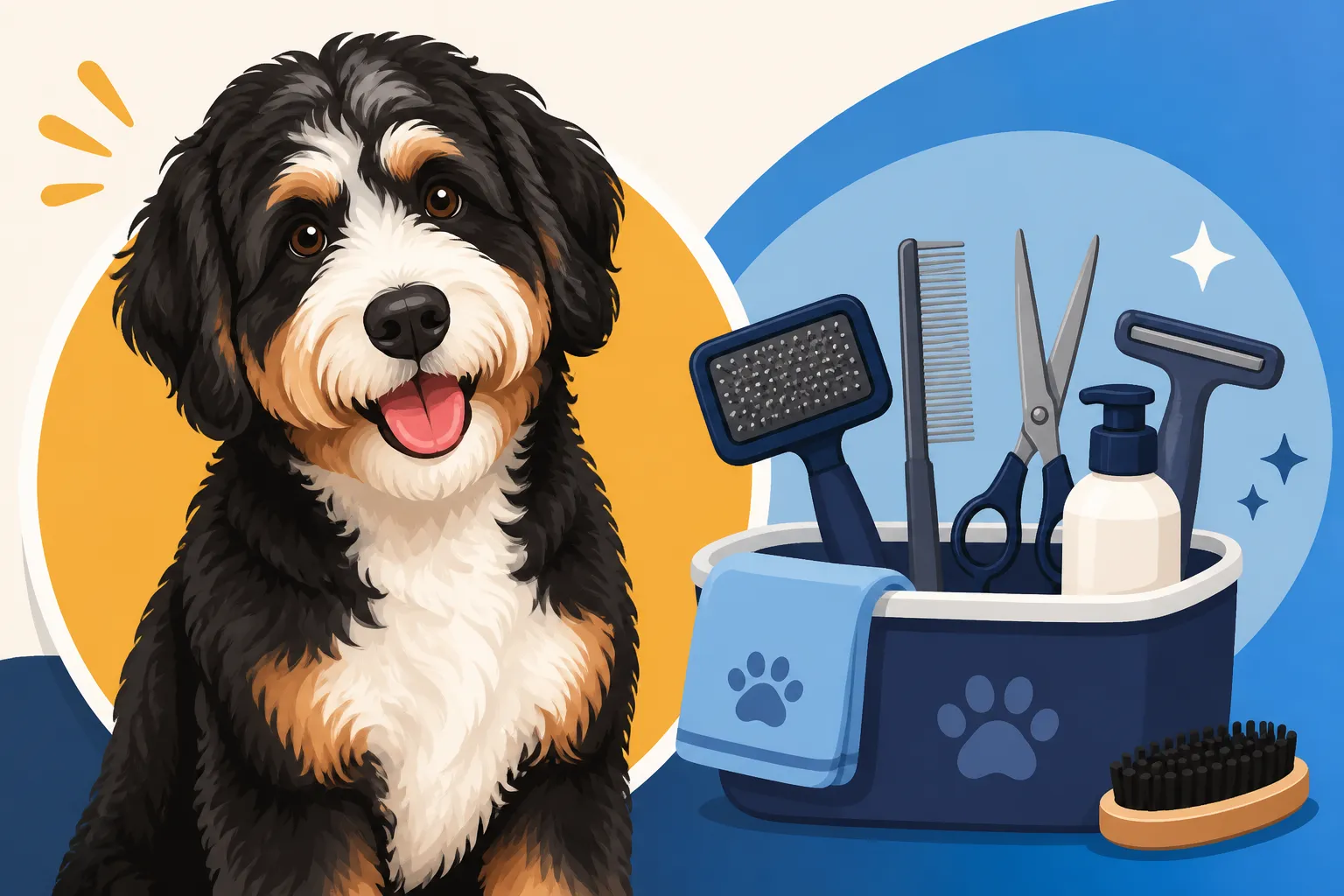
Here's a quick rundown of your essential Bernedoodle home grooming kit:
| Item Type | Specific Tool | Primary Use | Frequency |
|---|---|---|---|
| Brushing & Dematting | Slicker Brush | Deep detangling, removing loose undercoat | Daily to 3x/week |
| Metal Comb | Checking for mats, finishing work, fine detail | Daily to 3x/week | |
| Detangling Spray | Lubricating mats, preventing breakage | As needed | |
| Clipping & Trimming | Professional Clippers | Overall body clips, sanitary trims, paw pads | Every 4-8 weeks |
| Clipper Blades (#10, etc.) | Specific lengths for different areas | As needed with clippers | |
| Straight Shears | Trimming face, paws, ears, tail for precision | As needed | |
| Thinning Shears | Blending lines, reducing bulk, softening edges | As needed | |
| Bathing & Drying | Dog Shampoo & Conditioner | Cleaning coat, maintaining skin health, detangling | Every 4-8 weeks |
| High-Velocity Dryer | Thorough drying, preventing mats | After every bath | |
| Non-slip Bath Mat | Safety in tub/shower | Every bath | |
| Health & Comfort | Nail Clippers/Dremel | Trimming nails for joint health and comfort | Weekly to Bi-weekly |
| Styptic Powder | Stopping quick bleeds | As needed | |
| Ear Cleaner & Cotton Balls | Preventing ear infections, removing debris | Weekly to Bi-weekly | |
| Dog Toothbrush & Paste | Maintaining oral hygiene, preventing dental disease | Daily to 3x/week | |
| Grooming Table & Arm | Elevated workstation, safe restraint | Every major groom |
Disclaimer
This article is for general informational purposes only and does not constitute professional advice. Laws, prices and regulations vary by location and change over time. Consult a qualified professional for guidance on your specific situation.