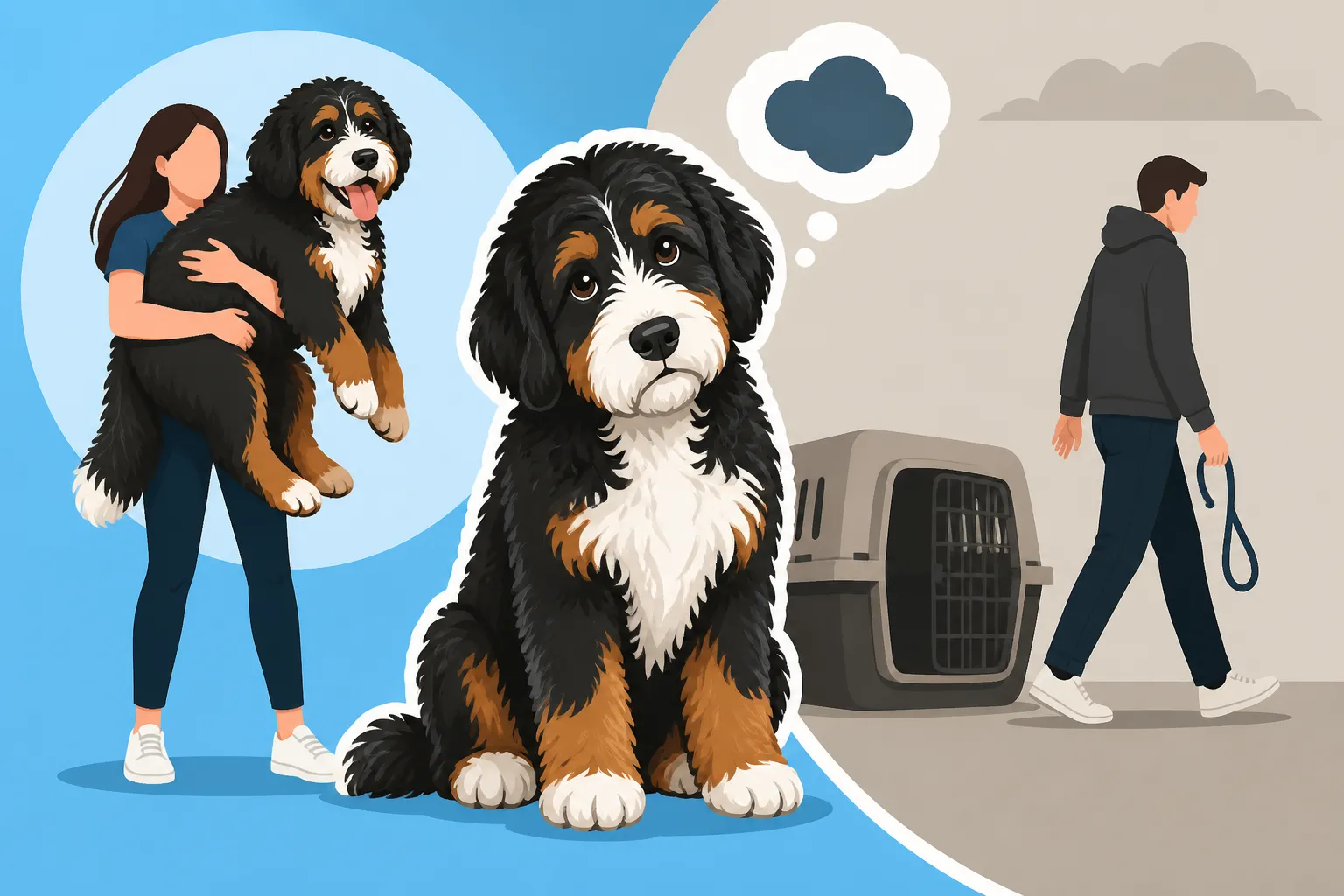
Whether Size Is Why Bernedoodles Are Surrendered
It’s a heartbreaking reality that many wonderful dogs end up in rescue, and for Bernedoodles, a common, often unacknowledged reason can be their sheer size. Owners sometimes find themselves completely overwhelmed when their adorable, fluffy puppy grows into a large, powerful dog, leading to difficult decisions. This guide will delve into whether size truly is a primary factor in Bernedoodles being surrendered, exploring the common misconceptions around their growth, the challenges an unexpectedly large dog presents, and how prospective owners can set themselves up for success from the very beginning.
Understanding Bernedoodle Sizes and Growth Expectations
One of the biggest draws of the Bernedoodle is often the promise of a dog that combines the best traits of the Bernese Mountain Dog and the Poodle, including a potentially more manageable size than a full Bernese. However, the "doodle" aspect can sometimes create a false sense of predictability regarding adult size.
The Range of Bernedoodle Sizes and How They're Marketed
Bernedoodles are typically categorized into three main size ranges: Standard, Mini, and Tiny (or Micro). A "Standard" Bernedoodle is generally expected to weigh anywhere from 70 to 90+ pounds and stand 23-29 inches tall at the shoulder. These are substantial dogs, often reaching or exceeding the size of many adult Bernese Mountain Dogs. "Mini" Bernedoodles aim for a weight between 25-50 pounds and 18-22 inches, while "Tiny" or "Micro" Bernedoodles are supposed to be under 25 pounds and 12-17 inches.
The challenge comes in the marketing and the inherent unpredictability of crossbreeds. While breeders strive for consistency, genetics aren't always a perfect science, especially in earlier generations of a hybrid cross like the Bernedoodle. People often fall in love with the idea of a Mini or Tiny Bernedoodle but might not fully grasp that even these can sometimes lean towards the larger end of their predicted range, or even grow beyond it entirely, making them much bigger than anticipated.
Growth Spurts and Adult Weight Realities
Bernedoodle puppies, especially Standards, grow incredibly fast. It feels like they double in size overnight! A tiny eight-week-old fluffball can quickly become a clumsy, gangly teenager within a few months, putting on several pounds a week. Owners who aren't prepared for this rapid growth can be caught off guard. This isn't just about weight, but also about raw strength and energy that comes with a rapidly developing large-breed dog.
Many Bernedoodles won't reach their full adult weight and height until they are between 12 to 18 months old, with some larger individuals continuing to fill out until they are two years old. This means that for a significant portion of their "puppyhood," they are physically mature but still mentally immature, retaining all that delightful, challenging puppy energy in a much bigger package. A dog that's expected to be 50 pounds might hit that weight by 8-10 months, still growing and maturing, which can be a shock if you were picturing a smaller, more contained dog. The Age a Bernedoodle Reaches Full Height is a common concern.
When Size Predictions Go Wrong
There are several reasons why a Bernedoodle's adult size might deviate from predictions. Firstly, the "doodle" genetics are less predictable than purebreds. Even if a breeder uses a Miniature Poodle and a smaller Bernese, there's always a chance for a puppy to inherit more of the Bernese's genes for size. Secondly, unethical breeders might misrepresent parent sizes or generational crosses, leading to puppies that are much larger than the "mini" or "tiny" label implies.
Sometimes, it’s simply a statistical outlier – a "runt" from a Standard litter that grows larger than expected, or a "mini" that just gets more size genes from its Bernese grandparent. The puppy you picked might have been the smallest of the litter, but that doesn't guarantee it will be the smallest adult. This unpredictability, combined with the hopeful anticipation of a specific size, can lead to genuine dismay when the dog reaches maturity and is significantly larger than the owner is equipped to handle.
The Challenges of an Unexpectedly Large Bernedoodle
When a Bernedoodle outgrows its owner's expectations, it doesn't just become a matter of aesthetic preference; it presents a host of practical and emotional challenges that can strain even the most dedicated pet parent.
Space and Living Environment Constraints
Imagine adopting a Bernedoodle puppy, believing it will be a comfortable 40-pound dog perfect for your cozy city apartment. Then, it grows to be a strapping 85-pound gentle giant. Suddenly, your living space feels significantly smaller. A large dog needs room to stretch, play, and simply exist without constantly bumping into furniture or people. This is especially true for the more active Bernedoodles who inherit a decent energy level from their Poodle parent.
For those in apartments or homes with small yards, a large dog can feel like a cage in reverse. They might not have enough space to truly unwind or play indoors, leading to pent-up energy that manifests as destructive behaviors. Furthermore, navigating narrow hallways, small staircases, or even getting into and out of cars can become an unexpected daily struggle. Whether a Standard Bernedoodle Needs a Big Yard is a valid question many owners face.
Physical Management and Strength Requirements
A fully grown Bernedoodle can weigh as much as an adult human, and often more than a child or elderly person. Managing a strong, enthusiastic 80-pound dog on a leash requires significant physical strength and proper training. An exuberant jump to greet a visitor, or a sudden pull after a squirrel, can easily knock someone off their feet, especially if they are not prepared or physically capable. This can be particularly challenging for first-time dog owners, individuals with physical limitations, or families with young children who might be easily overwhelmed or even injured by a large, boisterous dog.
Training becomes paramount with a large dog, but if owners are already struggling with the sheer physical demands, consistency in training can falter. A lack of control over a large dog can lead to fear of walking them, limiting their exercise and socialization, which in turn can exacerbate behavioral issues. Leash Manners on a Bernedoodle Heading for Ninety Pounds is not just a training tip; it's a safety imperative.
Increased Costs for Larger Dogs
It’s no secret that bigger dogs generally come with bigger bills, and this can be a huge shock for owners expecting a smaller, less costly companion. Everything from food to medication is scaled up. A standard Bernedoodle eats a considerable amount of food – often several cups of kibble per day. If you're feeding a quality kibble, the monthly grocery bill for your dog alone can be substantial. Brands like Chewy offer bulk options, which can help, but the sheer volume still translates to cost. Many owners also opt for fresh food diets like those offered by Ollie, which while excellent for health, also scale significantly with portion size.
Beyond food, larger dogs typically require larger crates, larger beds, and more robust toys. Vet visits, especially for medications, vaccinations, or unexpected illnesses, will often incur higher costs due to dosages based on weight. And don't forget pet insurance! While a policy from a provider like Healthy Paws can be a lifesaver for major unexpected health issues, the premiums for a large-breed dog can be higher. This financial burden, particularly if unforeseen, can stretch budgets to their breaking point, making it harder to provide proper care. What Feeding a Ninety Pound Bernedoodle Costs is a question that needs serious consideration upfront.
The Role of Realistic Expectations and Preparation
The key to preventing size-related surrenders lies firmly in proactive research and realistic preparation. A Bernedoodle is a wonderful companion, but only for those who truly understand and are ready for what that commitment entails.
Researching Breeders and Understanding Genetics
This is where your journey begins. A responsible breeder will be transparent about the size of their parent dogs, often providing height and weight measurements, and even pictures or information on previous litters to show the typical size outcomes. They should also be clear about the expected size range for their puppies, giving you an honest assessment that leans towards the upper end of the spectrum rather than the lowest. Don't be shy about asking to see the dam and sire, and inquire about their OFA or PennHIP clearances for hips and elbows, as these structural issues can become more pronounced and costly in larger dogs.
Understanding the generation of your Bernedoodle (F1, F1b, Multigen) can also offer some insight, though it's never a guarantee. An F1 Bernedoodle (50% Bernese, 50% Poodle) can have more size variability than an F1b (75% Poodle, 25% Bernese), which often aims for a smaller, less shedding dog. However, even within these designations, individual genetic lottery still plays a role. Good breeders will prioritize health and temperament over specific size, often leading to more predictable outcomes. The Five Clearances a Bernedoodle Breeder Should Have is vital information for any prospective owner.
Preparing for the "Worst-Case" Size Scenario
When you're looking at a Bernedoodle puppy, it's always best to prepare for it to be at the upper end of its predicted adult size, or even slightly above. If a Mini Bernedoodle is advertised as 25-50 pounds, mentally prepare for a 55-pound dog. If a Standard is 70-90 pounds, imagine a 95-pound furry friend. This mindset shift can prevent disappointment and ensure you have the resources, space, and physical capability for a larger dog.
This preparation includes:
- Space assessment: Do you have enough room for a large dog to move comfortably without feeling cramped?
- Vehicle compatibility: Can a large dog comfortably fit in your car for vet visits, adventures, or even just a trip to the pet store?
- Physical strength: Are you, and other primary caregivers, physically able to handle a strong, potentially boisterous dog?
- Budgeting: Have you allocated funds for the higher costs associated with feeding, grooming, and vet care for a large dog?
Training and Socialization for Big Dogs
Early and consistent training is absolutely non-negotiable for a large breed like the Bernedoodle. A well-trained 80-pound dog is a joy; an untrained one can be a destructive, uncontrollable force. Start puppy classes as soon as possible, focusing on basic obedience like leash manners, sit, stay, and recall. Positive reinforcement methods work wonders with these intelligent dogs. What a Bernedoodle Puppy Should Learn First should include foundational commands.
Socialization is equally critical. Expose your Bernedoodle puppy to a wide variety of sights, sounds, people, and other friendly dogs in a positive and controlled manner. A confident, well-adjusted large dog is far less likely to be fearful or reactive, which can be dangerous given their size. A shy or timid Bernedoodle can be a handful. Building Confidence in a Timid Bernedoodle from a young age is crucial. Remember, a large dog needs to be a good citizen in public because their size automatically commands more attention and sometimes, more fear from others.
Supporting Bernedoodles in Need and Responsible Ownership
It's a tough conversation, but understanding why dogs are surrendered is key to fostering more responsible ownership and supporting the animals who need it most.
Why Rescues See Size-Related Surrenders
Rescue organizations often see a pattern of Bernedoodles being surrendered around their adolescent phase, typically between 8 months and 2 years old. This is precisely when they hit their full size and strength, but often still possess the mental maturity of a puppy. Owners who were not prepared for a dog of that magnitude find themselves physically and financially overwhelmed. They might realize they can't control the dog on walks, or that the dog takes up too much space, or that the monthly costs for food, grooming, and unexpected vet bills are simply unsustainable.
Sometimes, it's also linked to apartment complex weight restrictions or landlord policies that weren't anticipated or truly understood before the puppy grew. A small puppy might have been fine, but a fully grown Standard Bernedoodle might exceed the weight limit or simply be deemed "too large" by management. This highlights a systemic issue where the charm of a "designer breed" can overshadow the practical realities of owning a large, long-term companion. Why Bernedoodles Are Surrendered is a multifaceted issue, with size playing a significant part.
The Importance of Rescue Organizations
Thankfully, wonderful rescue organizations exist specifically for Doodles and other large breeds that find themselves in these difficult situations. These rescues often have extensive networks of foster homes where these dogs can decompress, receive training, and be properly evaluated before being matched with a new, more suitable family. They provide a crucial safety net for dogs whose original homes couldn't meet their needs, whether due to size, unexpected behavior, or financial strain.
If you are considering a Bernedoodle, looking into rescue is always a fantastic option. Not only are adoption fees typically lower than breeder costs, but rescue dogs often come with a known history and a better understanding of their adult size and temperament. It's a way to give a deserving dog a second chance and ensure they end up in a home truly prepared for them. Whether a Rescue Bernedoodle Arrives Matted and Whether a Rescue Bernedoodle Has Been Health Tested are important questions to ask when considering adoption.
Making an Informed Decision
Ultimately, the decision to bring a Bernedoodle into your home should be made with eyes wide open, fully understanding the potential for a large, energetic, and sometimes costly companion. Don't let the allure of a cute puppy or the promise of a specific size override practical considerations. Research the breed thoroughly, talk to multiple responsible breeders, and ideally, meet adult Bernedoodles to get a true sense of their size and presence.
Prepare for the commitment – the grooming demands, the training requirements, the daily exercise needs, and the financial investment over a decade or more. If you can honestly say you're ready for a potentially 90+ pound dog, regardless of what the "mini" label might imply, then a Bernedoodle can be an incredible, loving addition to your family.
Here's a quick overview of Bernedoodle sizes and typical characteristics:
| Bernedoodle Size Class | Typical Adult Weight (lbs) | Typical Adult Height (inches) | Common Living Challenges | Key Considerations |
|---|---|---|---|---|
| Tiny/Micro | Under 25 | 12-17 | Less physically robust | Can be fragile, careful handling |
| Mini | 25-50 | 18-22 | Still solid, strong | Can exceed size expectations |
| Standard | 70-90+ | 23-29 | High strength, space needs | Significant space, strength, budget |
This article is for general informational purposes only and does not constitute professional advice. Laws, prices and regulations vary by location and change over time. Consult a qualified professional for guidance on your specific situation.