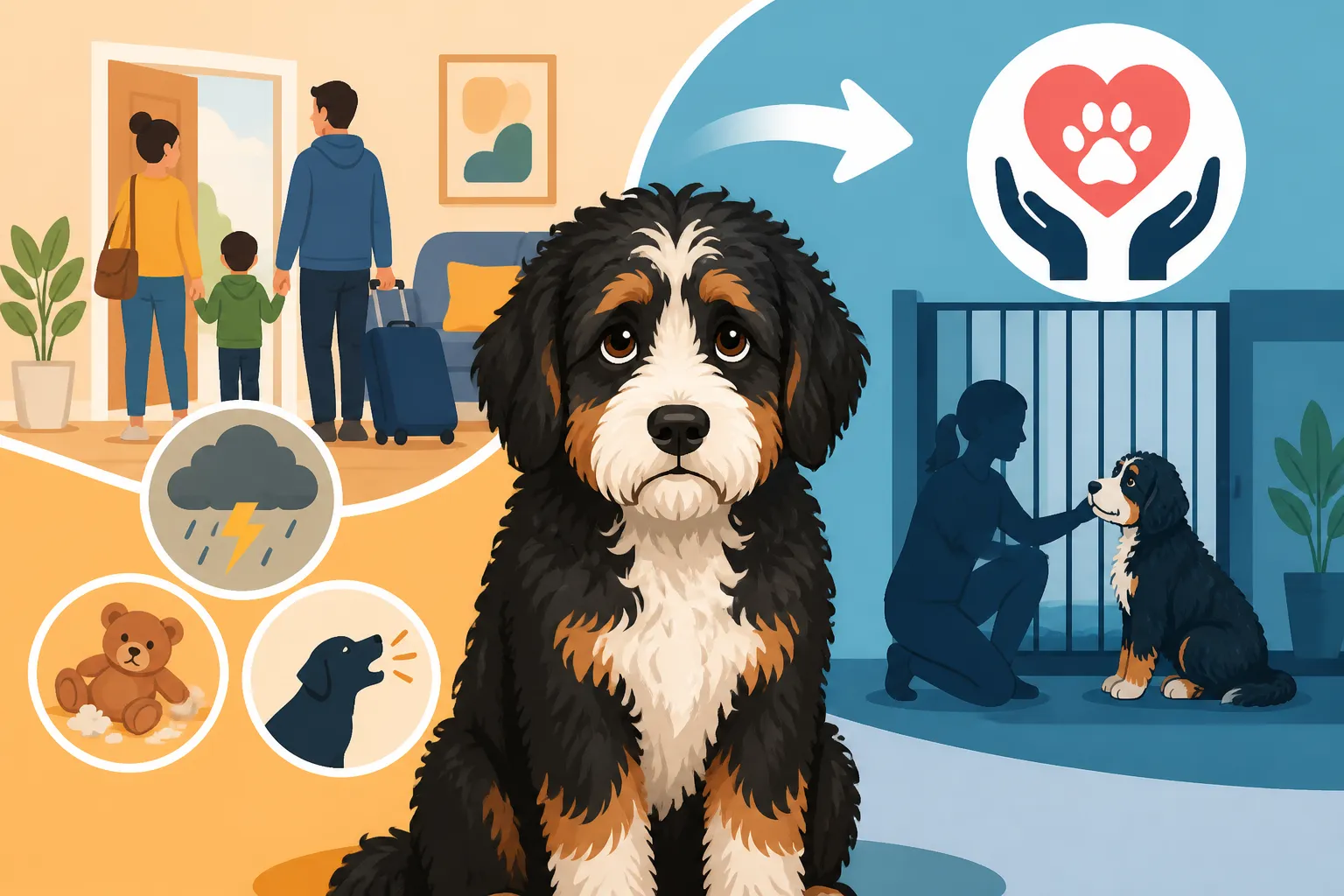
Why a Bernedoodle Reaches Rescue at Eighteen Months
It's a heartbreaking scenario we see far too often in the Bernedoodle world: a gorgeous, often still-puppyish Bernedoodle finds itself in rescue at around 18 months old. This isn't just a sad statistic; it's a profound moment of crisis for both the dog and its original family, often stemming from a mix of unrealistic expectations, unforeseen challenges, and the sheer demanding reality of raising a large, intelligent, and energetic doodle through its awkward adolescence. This guide will delve into the multifaceted reasons why Bernedoodles frequently end up in rescue at this pivotal age and what prospective owners can do to prevent it.
The Reality of Adolescence and Unmet Expectations
When you bring home that fluffy, waddling Bernedoodle puppy, it’s easy to get swept up in the adorable moments. Those first few months are filled with sweet cuddles, tiny barks, and comical antics. But puppies grow up, and the 18-month mark often lands squarely in the middle of canine adolescence – a period of intense physical and mental development that can be incredibly challenging for unprepared owners.
The "Puppy Brain" vs. "Adult Body" Dilemma
One of the biggest disconnects owners face is that their Bernedoodle's body often matures much faster than its brain. By 18 months, your Bernedoodle might be a towering seventy to ninety pounds, looking every inch an adult dog. Yet, mentally, they can still be very much a clumsy, impulsive, and attention-seeking teenager. This means you have a large, strong animal with the decision-making skills of a much younger dog. They might still jump on guests with enthusiasm, pull on the leash with the strength of a small pony, or "forget" their house-training manners when overly excited.
This developmental lag is a recipe for frustration. Owners expect a calm, well-mannered adult, but instead, they have a giant, rambunctious adolescent who still needs consistent guidance. The sheer physical presence of an untrained large dog is far more impactful than that of an untrained small one. A little puppy jumping up is cute; a 75-pound Bernedoodle doing it can knock over a child or an elderly person. This disparity between appearance and behavior often leads to the exasperated thought, "Why is my 18-month-old still acting like this?" It's normal, but it's also a significant factor in rehoming. The Age a Bernedoodle Stops Acting Like a Puppy delves into this more.
Overestimating Training Commitment
Many people fall in love with the Bernedoodle's intelligence, often highlighted by the Poodle parentage. While Bernedoodles are indeed smart, intelligence doesn't automatically translate to obedience without diligent, consistent training. The Bernese Mountain Dog side can bring a charming stubborn streak, meaning your Bernedoodle isn't always going to be a eager-to-please, quick-to-learn prodigy. At 18 months, if that consistent training hasn't been a cornerstone of their upbringing, you're likely dealing with a powerful dog who has learned to do things their way.
This is the age when basic commands might be "selectively heard," leash manners go out the window, and recall becomes a distant memory when a squirrel appears. Owners might feel like they've failed, or worse, that the dog is intentionally defiant. The reality is that training is an ongoing conversation, not a one-time class. What worked at 8 weeks might need refreshing, adapting, and reinforcing at 18 months. The commitment needed to guide a Bernedoodle through adolescence is substantial, and if owners haven't budgeted the time and mental energy for this, resentment can build, making rescue seem like the only option. A Bernedoodle That Will Not Stand for Brushing often stems from a lack of early and consistent positive training.
The Fading "Puppy Cuteness" Factor
Let's be honest, there's a certain grace period when a puppy is small and undeniably cute. A chewed shoe or an accident on the rug might be met with an "aww, he's just a baby!" But when that "baby" is a full-grown, shaggy dog, those same behaviors are perceived very differently. The patience that was abundant for a 10-pound furball can wear thin for an 80-pound adolescent.
The sheer novelty of having a Bernedoodle also starts to fade around this age. The Instagram-perfect puppy photos give way to the reality of daily dog ownership: muddy paws, demanding exercise needs, constant grooming, and the occasional destruction. If the primary motivation for getting a Bernedoodle was its adorable puppy looks rather than a deep understanding of the breed's adult needs, the bloom can quickly come off the rose. This is a tough truth, but it's a common psychological shift that contributes to dogs being rehomed once they are no longer tiny, manageable pups.
Unforeseen Costs and Time Commitments
Beyond behavior, the practical realities of owning a Bernedoodle can blindside even well-intentioned owners. The financial and time investment required for an 18-month-old Bernedoodle is significant, often much higher than anticipated during the initial puppy-buying excitement.
Grooming Demands Hit Hard
The Bernedoodle coat is often one of its most appealing features – soft, fluffy, and generally low-shedding. However, this beautiful coat is also a high-maintenance beast, and this becomes particularly apparent around 12 to 18 months. During this period, a Bernedoodle’s soft puppy fluff transitions into its denser adult coat, creating a perfect storm for matting. It feels like overnight your dog goes from needing a casual brush to developing knots that seem to weave themselves into a felted blanket.
Suddenly, those quick 10-minute brushes you were doing no longer cut it. You're facing hours of line brushing weekly, or the alternative: professional grooming bills that can easily reach into the triple digits every 6-8 weeks. Many owners are shocked to discover that grooming can cost them Six Hundred to Twelve Hundred a Year Grooming a Bernedoodle, or even more if their dog arrives at the groomer matted and needs a complete shave-down. If you bought your Bernedoodle for its "non-shedding" qualities without fully understanding the grooming commitment, this reality can be a huge, expensive wake-up call. Buying good quality grooming tools, perhaps from a retailer like Chewy, can help manage some home grooming, but it's still a time-consuming chore.
High Energy and Exercise Needs
While Bernedoodles are often described as laid-back, especially compared to some other doodles, an 18-month-old Bernedoodle is still a young, large dog with a need for consistent exercise. They are not content to just lie on the couch all day. A lack of appropriate physical and mental stimulation at this age often manifests as destructive behavior: chewing furniture, digging holes, barking excessively, or developing anxiety. An hour-long walk might seem sufficient, but many Bernedoodles, especially the standard size, require more than that, perhaps two good walks a day, plus playtime and mental enrichment activities.
The energy levels of an adolescent Bernedoodle can easily overwhelm owners who are busy with work, family, or other commitments. It's tough to come home from a long day and then have to embark on another long walk or an intense play session, particularly when your dog is still pulling on the leash. This is where the initial picture of a calm, easy companion clashes with the reality of an energetic, demanding young adult.
Unexpected Veterinary Bills
Despite being a "hybrid vigor" breed, Bernedoodles are not immune to health issues, some of which are inherited from their parent breeds. Hip and elbow dysplasia, for example, are common in large breeds like the Bernese Mountain Dog, and while responsible breeders screen for these, issues can still arise in a growing Bernedoodle. These conditions can start to show symptoms or require diagnosis around the 18-month mark. The cost of diagnostics, pain management, and potential surgeries for conditions like Elbow Dysplasia in a Growing Bernedoodle or Hips on a Ninety Pound Bernedoodle can quickly run into thousands of dollars.
Other issues like allergies, skin problems under that heavy coat, or even unexpected illnesses can emerge. Without pet insurance, these sudden veterinary expenses can be crippling for a family on a budget. Organizations like Healthy Paws offer pet insurance plans that can help mitigate these costs, but not everyone plans for this. When an owner is already struggling with behavioral issues and grooming costs, a significant vet bill can be the final straw, leading them to believe they can no longer afford to care for their beloved pet.
Lifestyle Mismatches and Changing Circumstances
Sometimes, it's not the dog that changes, but the owner's life or their initial understanding of what owning a Bernedoodle truly entails. The 18-month mark often coincides with significant shifts in human lives, and unfortunately, the dog can become an unintended casualty.
The Size Surprise
Even if you saw the parents, it can be hard to truly grasp the sheer size and strength of a full-grown Standard Bernedoodle until you’re living with one. At 18 months, many Bernedoodles have reached or are very close to their adult height and weight, which can be anywhere from 70 to over 100 pounds. This is a lot of dog to manage in a smaller home, or if you're not physically strong enough to handle them on a leash when they pull.
Owners who envisioned a "fluffy companion" might find themselves overwhelmed by the reality of a giant dog sprawling across the living room, accidentally knocking things over with their wagging tail, or needing a massive crate. The joyful exuberance of a huge dog can be endearing, but it can also be a challenge if space is limited or if the owner isn't prepared for the physical demands. This is especially true for families with young children, where a large, clumsy adolescent can unintentionally cause bumps and tumbles.
Family Dynamics and Major Life Changes
Life happens, and sometimes, a Bernedoodle bought during one phase of life doesn't fit into the next. A new baby, a job relocation, a divorce, or even a sudden change in financial stability can drastically alter a family's ability to care for a large, high-needs dog. A Bernedoodle, being highly social and often quite sensitive, thrives on routine and companionship. If a new baby demands all of the owner's attention, or a new job means significantly longer hours away from home, a Bernedoodle who suddenly feels neglected can develop behavioral problems, further straining the family.
It's common for Bernedoodles to be surrendered to rescue around this age because a new child has entered the home, and the family can no longer manage both the baby and a rambunctious adolescent dog. Or perhaps a move to an apartment with strict pet policies means the large dog no longer has a place to live. These are heartbreaking decisions, but they highlight the importance of truly considering the long-term impact of dog ownership on all potential future life changes.
The Myth of the "Easy" Doodle
The "doodle" craze often markets these designer breeds as the perfect, hypoallergenic, intelligent, and easy-to-train family dog. While many Bernedoodles possess wonderful qualities, this generalized marketing can lead to severely unrealistic expectations. They are not a "starter dog" by any means. They require significant investment in training, socialization, grooming, and exercise.
The idea that simply crossing a Bernese and a Poodle eliminates all potential health or behavioral issues is a dangerous myth. They are still dogs, with individual personalities, genetic predispositions, and needs that demand dedicated, educated owners. When the reality of their needs clashes with the "easy dog" narrative, frustration sets in, and owners may feel deceived or inadequate. This often leads to the search for a rescue organization that understands the breed and can find the Bernedoodle a home with owners who truly grasp what they're signing up for. Whether a Bernedoodle Is Too Much Dog for a Novice is a crucial question every prospective owner should ask themselves.
What Happens Next? The Rescue Journey
When a Bernedoodle reaches rescue at 18 months, it's a testament to the fact that something, somewhere, went wrong. But it's also a chance for a new beginning.
The Heartbreaking Decision to Rehome
For owners, the decision to surrender their Bernedoodle to a rescue is rarely made lightly. It's often a last resort, born out of exhaustion, financial strain, or a genuine belief that they can no longer provide the dog with the life it deserves. There's immense guilt and sadness involved. Sometimes, owners try to rehome their Bernedoodle themselves through social media or classifieds, but this can be risky for both the dog and the new family. Rescue organizations often provide a safer, more structured pathway.
These organizations understand the complexities of Bernedoodles and the reasons they might be surrendered. They can assess the dog's temperament, health, and needs, and then work to find a home that is a truly good fit, reducing the chances of the dog ending up in another difficult situation.
How Rescues Step In
Doodle-specific rescues, or all-breed rescues that frequently handle doodles, are invaluable in these situations. They provide a safe haven, often with experienced foster families who can help decompress the Bernedoodle, work on any behavioral issues, and provide much-needed structure. These rescues screen potential adopters rigorously, ensuring they understand the commitment involved with a Bernedoodle, from its grooming needs to its exercise requirements and potential health concerns. They act as advocates for the dogs, ensuring their next home is indeed their forever home.
| Aspect | Initial Expectation (Puppy Stage) | Reality at 18 Months (Adolescence) |
|---|---|---|
| Size & Strength | Adorable, manageable puppy | Large, powerful, sometimes clumsy adolescent |
| Temperament | Calm, cuddly, intelligent "easy" dog | Goofy, energetic, stubborn, testing boundaries |
| Training Needs | Quick to learn, one-time puppy class is enough | Ongoing, consistent, firm but gentle guidance for a large dog |
| Grooming Needs | Minimal brushing, cute fluffy coat | Daily brushing to prevent matting, costly professional grooming |
| Exercise Needs | Short walks, backyard play | Multiple long walks/play sessions, needs mental stimulation |
| Costs | Puppy purchase, initial supplies | High grooming bills, potential vet costs (e.g., joint issues), food for large dog |
| Time Commitment | Manageable, fits into current lifestyle | Significant daily commitment, can feel overwhelming with life changes |
What to Consider Before Bringing a Bernedoodle Home
If you're considering adding a Bernedoodle to your family, understanding these common pitfalls can help you avoid becoming another statistic. Do your research beyond the cute pictures. Understand The Full Cost of Twelve Years With a Bernedoodle, not just the initial purchase price. Talk to current Bernedoodle owners about their experiences with adolescent dogs. Be honest with yourself about your lifestyle, time availability, physical capabilities, and financial readiness. Can you genuinely commit to years of consistent training? Can you afford regular professional grooming, or are you prepared to dedicate hours each week to home grooming? Are you ready for potential large vet bills, or have you budgeted for pet insurance?
Consider starting your Bernedoodle's life with high-quality nutrition, perhaps from a brand like Ollie, as a good foundation can positively impact their overall health and development. Invest in durable chew toys from Chewy to redirect adolescent chewing. Most importantly, remember that adopting a dog is a lifelong commitment, and while the 18-month mark is tough, it's just one phase in a dog's journey. With preparation, patience, and unwavering commitment, you can navigate these challenges and enjoy many wonderful years with your Bernedoodle.
Disclaimer
This article is for general informational purposes only and does not constitute professional advice. Laws, prices and regulations vary by location and change over time. Consult a qualified professional for guidance on your specific situation.