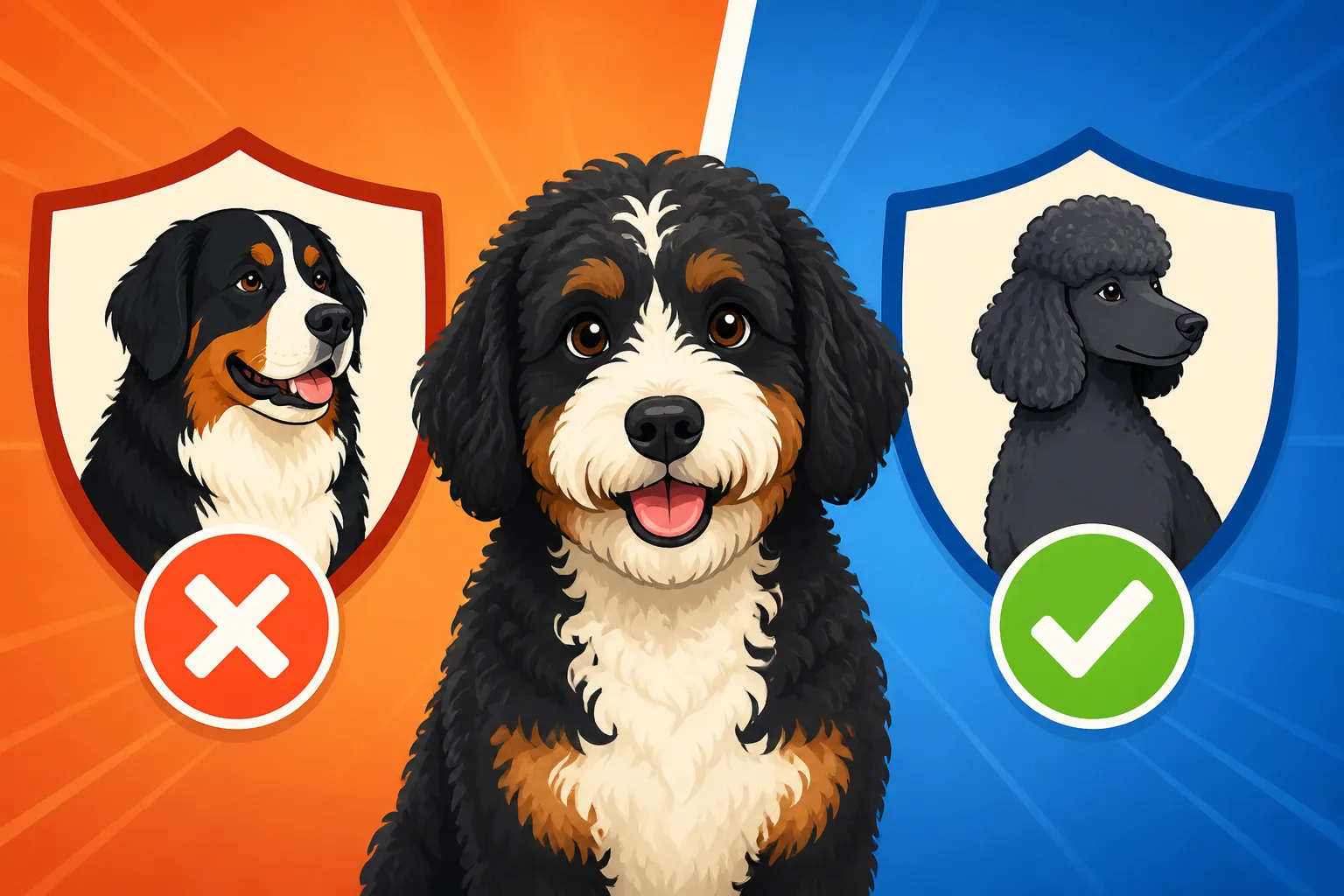
Whether an Insurer Rates a Bernedoodle as a Bernese
One of the biggest worries for any Bernedoodle owner, or prospective owner, is making sure you’re prepared for potential veterinary costs, and that often means diving into the world of pet insurance. It's a common frustration to wonder how insurance companies will view your beloved mixed breed, especially with the known health challenges of the Bernese Mountain Dog parent. This guide aims to demystify whether insurers categorize your Bernedoodle with its Bernese lineage, helping you understand what to expect and how to secure the best coverage for your furry family member.
Understanding How Pet Insurance Companies Categorize Breeds
When you start looking into pet insurance, it can feel like you're learning a whole new language. You're trying to protect your Bernedoodle, a dog cherished for its unique blend of traits, but the insurance world often operates on rigid classifications. They’re essentially trying to assess risk, and for them, purebred dogs often come with a well-documented list of predispositions.
The "Purebred" vs. "Mixed Breed" Conundrum
For a long time, pet insurance companies tended to simplify things: you were either a purebred with known breed-specific issues, or a mixed breed with generally lower perceived risk due to "hybrid vigor." However, as designer breeds like the Bernedoodle have surged in popularity, this black-and-white approach has become much more nuanced. Insurers can't simply ignore the genetic contributions of both parent breeds. They know that while a Bernedoodle isn't a pure Bernese, it certainly isn't exempt from the health conditions prevalent in its parent lines. It's like having a family history of certain conditions – even if you're a blend of two families, those predispositions don't just vanish.
Think about it this way: if you bring home a purebred Golden Retriever, the insurance company has decades of data on common Golden Retriever ailments – hip dysplasia, certain cancers, heart conditions. They price their policies accordingly. When it comes to a mixed breed, especially one with such distinct and often large parent breeds like the Bernese Mountain Dog and the Poodle, they can't just throw out all that historical data. They look at the genetic soup, so to speak, and try to anticipate what issues might arise, knowing your Bernedoodle has inherited a blend of possibilities from both sides of the family tree.
Why Breed-Specific Risks Matter to Insurers
Insurers are in the business of calculating probabilities. Every dog breed, purebred or not, comes with a genetic blueprint that can predispose them to certain health conditions. For example, large breeds are often more prone to orthopedic issues, while some smaller breeds might have more dental problems. These tendencies translate directly into actuarial data, helping insurance companies determine the likelihood and potential cost of future veterinary claims.
When it comes to the Bernedoodle, insurers aren't just looking at "dog." They're seeing a cross between a Bernese Mountain Dog and a Poodle, and they're keenly aware of the health profiles of both those breeds. This isn't about judging your dog; it's about predicting costs. A breed known for expensive surgeries or chronic conditions will naturally have higher associated insurance premiums. This is why understanding the health heritage of your Bernedoodle is so crucial, not just for their well-being, but for your wallet too. It's about being prepared for the realities of potentially inherited conditions.
The Nuance of Designer Dogs Like the Bernedoodle
The rise of "designer dogs" like the Bernedoodle has created a unique challenge for the pet insurance industry. These aren't just random mixes; they are intentionally bred crosses with predictable parentage. As such, insurance companies can't simply treat them as generic "mixed breeds" where the genetic lottery is completely unknown. Instead, they increasingly analyze the health profiles of the parent breeds.
This means that while your Bernedoodle might inherit the Poodle's intelligence and lower-shedding coat, they also inherit the potential for health issues from both sides. Insurers are becoming more sophisticated in their algorithms, looking at the common ailments of Bernese Mountain Dogs (like certain cancers and joint problems) and Poodles (like Addison's disease or bloat), and weighing how these might combine or dilute in the Bernedoodle cross. It's a complex calculation, often reflecting the hope for hybrid vigor – the idea that mixing genes can reduce the incidence of certain diseases – versus the reality that many predispositions remain. Sometimes, they might even group Bernedoodles into a general "large mixed breed" category, or, more specifically, factor in the Bernese and Poodle traits explicitly.
The Bernese Mountain Dog Factor in Bernedoodle Insurance
It's no secret that the Bernese Mountain Dog, while a magnificent and loving breed, can be prone to certain significant health issues. These aren't minor concerns; they're often serious conditions that can lead to substantial veterinary bills. When an insurance company assesses your Bernedoodle, they absolutely have the Bernese parentage in mind.
Common Health Concerns of Bernese Mountain Dogs
Bernese Mountain Dogs, bless their hearts, are known for a few specific health challenges that unfortunately contribute to their shorter average lifespan. One of the most prominent concerns is cancer, particularly Histiocytic Sarcoma and Whether a Bernedoodle Escapes It. This aggressive cancer can be devastating and costly to treat, if treatment is even an option. Beyond cancer, joint problems are another major hurdle. Hip and elbow dysplasia are unfortunately common in Bernese Mountain Dogs, leading to pain, mobility issues, and potentially expensive surgeries or long-term management plans.
Other concerns can include degenerative myelopathy, a progressive disease of the spinal cord, and bloat, a life-threatening condition where the stomach twists. These conditions, especially when they require extensive diagnostics, surgery, or ongoing medication, can quickly rack up thousands of dollars in veterinary expenses. An insurer is acutely aware of this breed's predispositions, which is a major factor in how they assess risk for any dog carrying Bernese genetics.
How These Risks Translate to a Bernedoodle
The hope with a Bernedoodle is that mixing the Bernese with the Poodle will introduce hybrid vigor, effectively diluting some of these inherited risks. While there's anecdotal evidence and some research suggesting this can be true for certain conditions, it's not a guarantee, and insurance companies know it. Your Bernedoodle still carries a percentage of Bernese genes, which means the potential for those breed-specific issues like cancer and joint problems is still very real. You'll find many Bernedoodle owners still facing challenges like Hips on a Ninety Pound Bernedoodle or concerns about cancer.
For example, while a Bernedoodle might have a slightly lower incidence of certain cancers compared to a purebred Bernese, the risk isn't eliminated. The genetic markers for these diseases can still be present and expressed. Similarly, the large size and rapid growth rate inherited from the Bernese side can still predispose a Bernedoodle to orthopedic issues, even if the Poodle genes offer some mitigation. This means that when an insurer looks at your Bernedoodle, they often don't just see a "mixed breed"; they see a dog with a notable Bernese heritage, and they price accordingly.
When a Bernedoodle Might Be Grouped with its Bernese Ancestry
It's not uncommon for pet insurance providers to either categorize Bernedoodles as "large mixed breeds" with premiums leaning towards the higher end due to their size and parent breed predispositions, or, in some cases, to directly factor in the Bernese Mountain Dog's specific health profile. This isn't usually an explicit "your Bernedoodle is a Bernese" declaration, but rather an implicit weighting of known Bernese risks into the policy pricing.
For instance, if a Bernedoodle presents with symptoms commonly associated with Bernese health issues – say, lameness suggesting hip dysplasia – the insurance company will certainly consider the Bernese lineage in their assessment, both for coverage and for future premium adjustments. Some policies might have higher deductibles or slightly increased premiums for breeds or crosses known for orthopedic issues or specific cancers. When you're comparing policies from providers like Healthy Paws, it's crucial to look for details on how they handle specific conditions known to affect the Bernese side of your Bernedoodle, as this can give you a clearer picture of their assessment strategy. This grouping reflects the reality that the genetic lottery of a mixed breed often includes a strong hand from the parent lines.
The Poodle Influence and Overall Bernedoodle Health
Of course, the Bernedoodle isn't just a Bernese. The Poodle side of the equation brings its own set of characteristics and health considerations, which also play a significant role in how insurance companies assess your dog's risk profile.
Poodle Health Traits and Their Impact
Poodles, particularly Standard Poodles, are generally considered to be a healthier breed with a longer average lifespan than the Bernese Mountain Dog. However, they are not without their own specific health predispositions. Common Poodle health concerns include Addison's disease, epilepsy, certain eye conditions like progressive retinal atrophy (PRA), and even Bloat in a Standard Bernedoodle's Deep Chest. While the Poodle's contribution to a Bernedoodle's genetic makeup often aims to improve overall longevity, these Poodle-specific conditions are still a factor for insurers.
The Poodle's intelligent and active nature might suggest a dog that's less prone to obesity-related issues, which can impact joint health. However, conditions like Addison's disease can be tricky to diagnose and manage, requiring long-term medication and monitoring, which can become expensive. Similarly, managing epilepsy can involve ongoing prescriptions and vet visits. Insurers take all of this into account, trying to create a comprehensive risk assessment that reflects the full genetic picture of your Bernedoodle.
The Role of "Hybrid Vigor" in Insurance Assessment
The concept of "hybrid vigor," or heterosis, suggests that crossing two genetically distinct purebreds can lead to a healthier, more robust offspring. The idea is that by introducing a wider gene pool, you can reduce the likelihood of inheriting recessive genes that cause certain diseases, which are more likely to appear when a breed has been extensively line-bred. Many Bernedoodle breeders aim for this exact outcome, hoping to extend the lifespan beyond The Seven Years a Bernese Lives and the Twelve a Bernedoodle Might and reduce the incidence of conditions like cancer.
Insurance companies are aware of the theory of hybrid vigor, and some may adjust premiums slightly downward for mixed breeds compared to their purebred parents, especially if the mix is known to genuinely dilute serious risks. However, hybrid vigor is not a magic bullet. It doesn't guarantee your Bernedoodle will escape all genetic ailments; it simply alters the probability. Insurers are looking for concrete evidence over time that Bernedoodles, as a population, actually experience significantly fewer expensive health issues compared to Bernese Mountain Dogs. Until then, while the Poodle influence can be a positive factor, it may not completely offset the concerns brought by the Bernese lineage. It's a balance of potential benefits against inherent risks.
The Reality of Bernedoodle Health Challenges
Despite the hopes for hybrid vigor, Bernedoodles are not immune to serious health problems. They can still inherit issues from either parent, or even develop new concerns unique to their specific genetic combination. Conditions like hip and elbow dysplasia, various cancers, Degenerative Myelopathy Both Bernedoodle Parents Can Carry, and bloat remain real possibilities. In fact, many Bernedoodle owners eventually face significant health decisions and costs throughout their dog's life, especially as they enter their senior years, which can be around What Changes in a Bernedoodle After Eight.
This reality means that while an insurer might not strictly rate your Bernedoodle as a pure Bernese, they are certainly not ignoring the Bernese health profile. Instead, they’re likely creating a risk profile that incorporates elements of both parent breeds, perhaps with some adjustment for the mixed-breed status. This can still result in higher premiums or specific exclusions compared to some other mixed breeds, but potentially lower than if it were a pure Bernese Mountain Dog. It really underscores why good health testing from a breeder is paramount, covering both Poodle and Bernese specific conditions. You want to ensure your breeder has conducted The SOD1 Test Both Bernedoodle Parents Need, for example.
| Common Bernedoodle Health Concerns | Primary Parent Predisposition | Potential Insurance Impact (General) |
|---|---|---|
| Hip/Elbow Dysplasia | Bernese Mountain Dog | Higher premiums, potential waiting periods, or exclusions for pre-existing conditions if not disclosed. |
| Certain Cancers (e.g., Histiocytic Sarcoma) | Bernese Mountain Dog | Higher premiums; may influence lifetime payout limits. |
| Bloat (GDV) | Poodle (and deep-chested Bernese) | May factor into overall risk for gastrointestinal emergencies. |
| Addison's Disease | Poodle | Can lead to higher premiums due to long-term medication costs. |
| Degenerative Myelopathy | Bernese Mountain Dog | May be considered a neurological condition risk, impacting premiums. |
| Von Willebrand's Disease | Bernese Mountain Dog | Less common but can impact surgical costs if not identified. |
Practical Steps for Insuring Your Bernedoodle
Navigating pet insurance can feel like a maze, but with a Bernedoodle, being proactive and informed is your best strategy. You want to ensure you get coverage that genuinely protects your dog without breaking the bank.
Comparing Policies and Reading the Fine Print
This is where the real work begins, but it’s absolutely worth it. Don't just pick the first policy you see or the cheapest option. You need to compare coverage limits, deductibles, reimbursement percentages, and, crucially, what isn't covered. Pay close attention to waiting periods for different conditions – especially for orthopedic issues like hip and elbow dysplasia, which often have longer waiting periods. Some policies might exclude conditions common to the Bernese, or treat them differently if they are considered "hereditary."
Look at major providers and see how they phrase their mixed-breed coverage. Do they ask for parent breeds? Do they have a specific category for Bernedoodles, or are they lumped into a broader "large mixed breed" category? Understand how pre-existing conditions are handled – ideally, you want to insure your puppy before any issues arise. Research different companies thoroughly, perhaps looking at reviews from other Bernedoodle owners or online resources. This diligence now can save you immense heartache and financial strain down the line, contributing to the true What a Bernedoodle Costs Over Its Whole Life.
Asking Direct Questions to Insurance Providers
Never be afraid to pick up the phone or send an email with specific questions. This is your pet's health and your money on the line! Here are some questions you should definitely ask:
- "How do you categorize Bernedoodles for underwriting purposes?"
- "Do you factor in the Bernese Mountain Dog's predispositions for cancer or joint disease when calculating premiums for a Bernedoodle?"
- "Are there any breed-specific exclusions for Bernedoodles, or specific conditions common to the Bernese or Poodle that are treated differently?"
- "What are the waiting periods for orthopedic conditions, and how do pre-existing conditions impact coverage for a Bernedoodle?"
Get clear, written answers if possible. The goal is to avoid any nasty surprises when you finally need to file a claim. You want to understand their stance on conditions like Whether the Bernedoodle Cross Actually Reduced Cancer and how that impacts your specific dog's policy.
The Importance of a Full Health History and Clearances
Perhaps the single most important thing you can do for your Bernedoodle, both for their health and for insurance purposes, is to start with a responsible breeder who provides a comprehensive health history and all relevant clearances for both parent dogs. This includes OFA or PennHIP certifications for hips and elbows, eye certifications, and genetic testing for conditions like von Willebrand's disease and degenerative myelopathy. The Five Clearances a Bernedoodle Breeder Should Have is not just a wishlist; it's a foundational requirement.
When applying for insurance, be prepared to provide as much of this information as possible. A healthy puppy from well-screened parents presents a lower risk to an insurer, which can sometimes translate into better premiums or more comprehensive coverage. Conversely, a lack of health history or known issues in the parent lines could lead to exclusions or higher rates. Even if you get your dog from a rescue, try to gather any available health background. Companies like Chewy or Ollie that prioritize pet health might also offer resources or even partnerships with insurance providers, so it’s worth exploring all avenues to build the best health profile for your pup. The more transparent and proactive you are, the better equipped you'll be to secure the right insurance for your beloved Bernedoodle.
Disclaimer
This article is for general informational purposes only and does not constitute professional advice. Laws, prices and regulations vary by location and change over time. Consult a qualified professional for guidance on your specific situation.