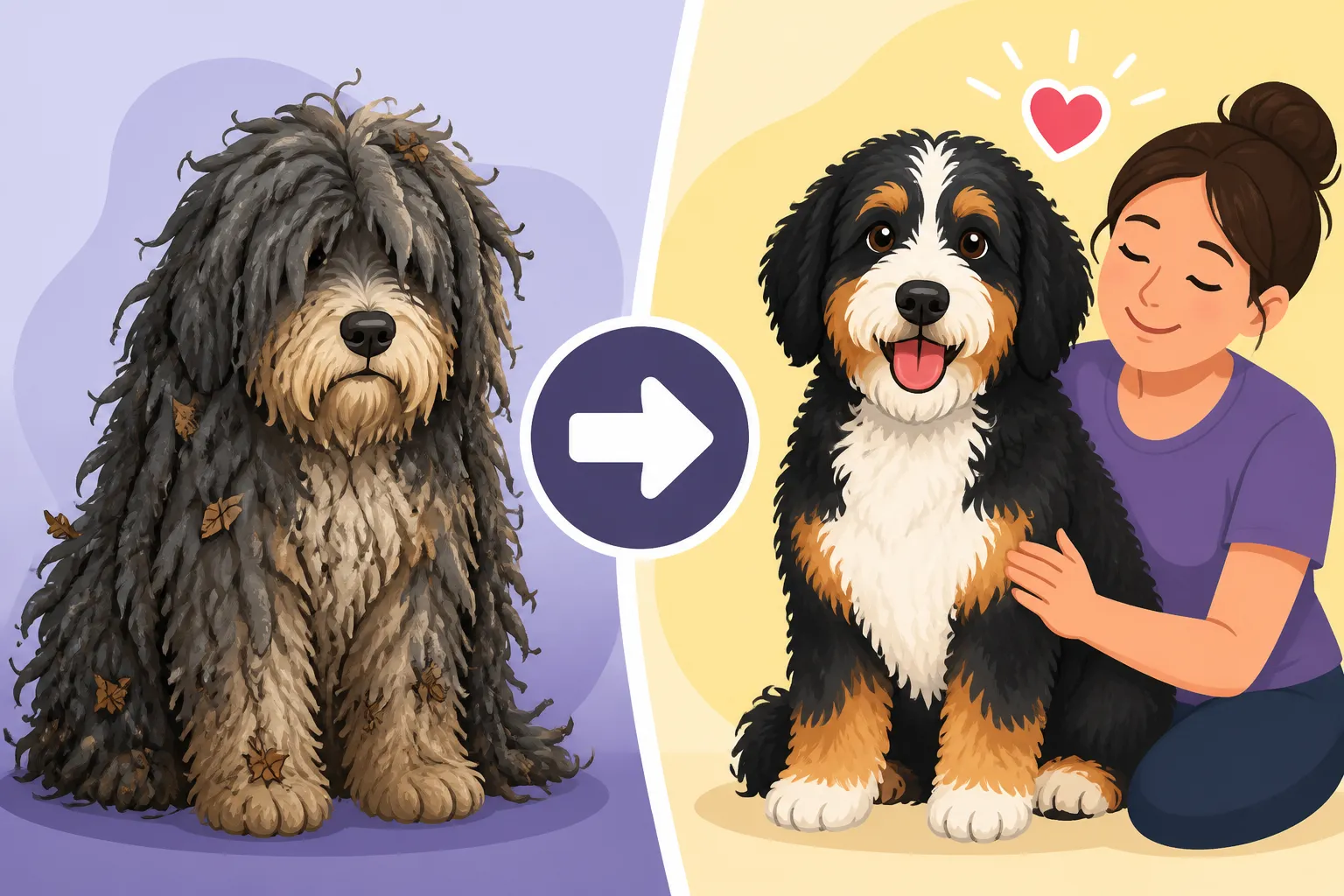
Whether a Rescue Bernedoodle Arrives Matted
Bringing a rescue Bernedoodle home is an incredibly rewarding experience, full of love and new beginnings. However, many prospective owners worry about the condition their new furry family member might be in, particularly concerning their often-luxurious but high-maintenance coat. This guide will help you understand why rescue Bernedoodles often arrive matted, what to expect, and how to lovingly restore their coat and comfort.
The Bernedoodle Coat: A Recipe for Matting Without Care
Let's be honest, the Bernedoodle coat is part of their undeniable charm. Those soft waves and curls are absolutely gorgeous. But that beauty comes with a significant responsibility, and if that responsibility isn't met, matting is almost an inevitability.
The Unique Texture of a Bernedoodle's Fur
A Bernedoodle's coat is a fascinating blend, inheriting traits from both the Poodle and the Bernese Mountain Dog. You might see anything from a straighter, wavier coat (which often sheds more than people expect) to tight Poodle curls. The most common is a soft, wavy fleece coat. What many don't realize is that even these "low-shedding" coats still trap loose hairs within their existing curls. Unlike a dog that sheds its coat directly onto your furniture, the Bernedoodle's shed hair gets caught in the active coat. This trapped hair, combined with friction from movement, dirt, and moisture, creates tangles. These tangles quickly tighten into dense, felt-like mats that can pull painfully on the skin. It's a double-edged sword – the very trait that makes them appealing to those seeking less shedding is also what makes their coat so prone to matting without diligent care. This is particularly true if they also inherit some of the thick undercoat from their Bernese side, which adds another layer of challenge.
Common Areas Where Mats Form Quickly
You'd be surprised how quickly a small tangle can become a significant mat, especially in certain hotspots. These are the areas where friction is highest or where the coat is particularly dense and fine. The first place you often find them is behind the ears, where head movements and ear flaps create constant rubbing. The armpits and groin are other prime spots, often concealed by longer fur, making them easy to miss during a quick brush. Think about how much movement happens in those areas! Then there are the "britches" – the longer fur on their hindquarters – which can become a dense, matted mess, especially with any moisture or dirt. And don't forget the collar area, which sees constant rubbing. Many owners also find mats forming between their Bernedoodle's paw pads, which can become incredibly painful and affect their gait. Regular, thorough brushing in these specific areas is critical, as explained in articles like The Mat That Forms Where a Bernedoodle's Ear Folds and Mats in a Bernedoodle's Armpits and Britches.
How Matting Affects a Dog's Health and Comfort
Beyond just looking unsightly, matting is genuinely detrimental to a dog's health and comfort. Imagine constantly having your hair pulled, and then multiply that pain across your entire body. Mats pull on the skin, causing constant discomfort and sometimes leading to open sores. They also create an ideal breeding ground for bacteria, yeast, and parasites. The dense, matted fur traps moisture against the skin, leading to painful skin infections (often called "hot spots"). Air can't circulate, so the skin can't breathe properly. Severe matting can even restrict movement, making it hard for your Bernedoodle to walk, run, or even lie down comfortably. It can hide injuries or skin conditions from view, delaying treatment. When you consider the deep chest and heavy coat of a standard Bernedoodle, you can appreciate the potential for overheating and skin issues to become severe under a matted coat, especially in warmer climates.
What to Expect When Rescuing a Bernedoodle
When you open your heart and home to a rescue dog, you're signing up for a journey that sometimes begins with overcoming challenges from their past. The condition of their coat is often a direct reflection of the care they've received, or sadly, lacked.
The Realities of Dogs in Rescue Situations
Rescue organizations work tirelessly, often with limited resources and an overwhelming number of animals needing help. Dogs arrive at shelters and rescues from all sorts of situations: strays found wandering, owner surrenders due to financial hardship or inability to cope, or animals seized from neglectful environments. These dogs often come with a variety of needs – medical, behavioral, and certainly, grooming. While rescues strive to provide the best care possible, immediate, extensive grooming, especially for a large, heavily-coated dog like a Bernedoodle, might not be their first priority or within their immediate capacity. Medical emergencies, behavioral assessments, and basic feeding and housing usually take precedence. It's a sad truth that a Bernedoodle, with its demanding coat, is particularly vulnerable to looking neglected if its previous owners couldn't keep up, or if it spent time as a stray.
Why Matting is a Common Issue in Rescue Bernedoodles
Given the challenging nature of the Bernedoodle coat and the circumstances of rescue, it's not at all uncommon for a rescue Bernedoodle to arrive matted. There are several reasons for this. First, many owner surrenders happen precisely because the owners were overwhelmed by the grooming demands. They might not have understood The Volume of Coat a Bernedoodle Owner Brushes Weekly or the commitment it requires. Secondly, stray dogs often go weeks or months without any grooming, accumulating dirt, burrs, and tangles that quickly become severe mats. Even in foster care, a volunteer might not have the specialized tools, skills, or time to thoroughly line brush a large, sometimes fearful, Bernedoodle to the skin. Professional grooming is expensive, and rescue funds are often stretched thin. So, while rescues do their best, a severely matted coat might be a persistent problem until the dog finds a permanent home.
Asking the Right Questions About Your Potential Rescue's Condition
When you're considering a rescue Bernedoodle, it's absolutely okay – and encouraged – to ask questions about their physical condition, including their coat. Don't feel like you're being intrusive; you're simply being a responsible future owner. Inquire with the rescue: "What's the current condition of their coat? Have they had any professional grooming recently? Is there severe matting, and if so, where?" If possible, ask for recent photos or even a video that clearly shows their coat. Understanding whether a rescue Bernedoodle arrives matted before you bring them home helps you prepare both mentally and financially for the immediate care they'll need. It also gives you a heads-up on potential underlying skin issues that might require a vet visit, which is a good reason to investigate Whether a Rescue Bernedoodle Has Been Health Tested.
Navigating the First Steps with a Matted Rescue Bernedoodle
So, you've brought your beautiful Bernedoodle home, and yes, they're sporting a coat that looks like it's been through a washing machine on the wrong setting – maybe even a dryer without softener. It's okay. You've got this, and the relief you'll bring them is worth every effort.
Prioritizing Comfort and Health Over Aesthetics
Your primary goal in the first few days or weeks with a matted rescue Bernedoodle should be their comfort and health, not a perfect show dog look. Those mats are likely causing pain, pulling on their skin, and potentially hiding skin infections. Trying to "save" the coat might sound appealing, but if it means hours of painful tugging and stressing an already anxious rescue dog, it's not the right approach. A clean slate is often the kindest option. Remember, hair grows back! The dog's overall well-being and ability to settle into their new home should be your guiding principle. Focus on building trust and making them feel safe, rather than forcing a traumatic grooming experience.
The Tough Decision: Dematting Versus Shaving Down
This is where many Bernedoodle owners agonize. Do you try to painstakingly demat, or do you opt for a complete shave-down?
Let's look at the options:
| Feature | Dematting | Shaving Down |
|---|---|---|
| Pain Level | High, especially with severe or widespread matting | Minimal once past the mat, significant relief |
| Time Required | Very long, often multiple sessions | Relatively quick |
| Cost | Very expensive (hourly rates, sedation might be needed) | Standard groom price, but might be higher for severe matting |
| Coat Outcome | Retains length, but often damages coat texture | Fresh start, grows back healthy |
| Stress for Dog | Extremely high, can create grooming aversion | Can be less stressful as relief is immediate, but still new |
| Hidden Issues | Difficult to spot skin issues under dense mats | Reveals all skin issues, allowing for treatment |
For most severely matted rescue Bernedoodles, a full shave-down is the most humane and practical choice. Attempting to demat severe matting can be incredibly painful, traumatizing for a dog already trying to adjust to a new life, and potentially lead to skin damage. A skilled groomer can get under the mats quickly and efficiently, providing instant relief. Yes, your Bernedoodle might look a little naked for a while, but they will feel so much better. If the matting is extreme or your dog is particularly anxious, your veterinarian might even suggest light sedation for the grooming process to minimize stress. This is where pet insurance, like a policy from Healthy Paws, could potentially help with unexpected vet costs related to complex grooming or skin treatments if they arise from severe matting. For everyday grooming tools you might need for future coat maintenance, or even some gentle shampoos for post-shave skin, sites like Chewy offer a wide selection.
Finding the Right Professional for the Job
This isn't a job for just any groomer, and it's definitely not a DIY project if the matting is severe. You need a professional groomer who is experienced with matted coats and, ideally, with rescue dogs. Look for someone who prioritizes the dog's comfort and has a gentle, patient approach. A "vet groomer" (a groomer affiliated with a veterinary practice) is an excellent option if sedation is a possibility, as they can perform the shave-down under veterinary supervision. Explain your Bernedoodle's rescue background and the extent of the matting when you book the appointment. Ask them about their process for matted dogs and how they manage stress. They should be honest about whether dematting is even feasible or humane. Be prepared for the groomer to tell you a shave-down is the only option – trust their expertise, it's for your dog's good.
Establishing a Long-Term Grooming Routine for Your Bernedoodle
Once your rescue Bernedoodle is free from mats and feeling comfortable, the real work of maintaining their beautiful coat begins. Consistency is key to preventing future matting and ensuring their ongoing health and happiness.
Essential Tools and Techniques for Daily Care
The first step to preventing future matting is having the right tools and knowing how to use them. For a Bernedoodle, you'll need a good quality slicker brush and a sturdy metal comb. The slicker brush helps remove loose hair and minor tangles, while the metal comb is crucial for "line brushing." Line brushing involves parting the fur down to the skin and brushing small sections, ensuring you're getting all the way through the coat, not just skimming the top. This is the only way to truly prevent mats from forming at the base of the hair shaft. Your goal is to be able to run a metal comb smoothly from the skin to the ends of the fur without hitting any snags. This needs to happen several times a week, if not daily, especially during coat change periods. For a comprehensive guide on what you'll need, check out The Brushes a Bernedoodle Owner Actually Needs. You can find a fantastic array of these tools on sites like Chewy, making it easy to stock up.
Regular Professional Grooming is Non-Negotiable
While daily home brushing is vital, it typically isn't enough for a Bernedoodle. Professional grooming every 6-8 weeks is truly non-negotiable for most Bernedoodles to maintain a healthy, mat-free coat, especially if you prefer to keep their fur a bit longer. A professional groomer has high-powered dryers that get down to the skin, specialized clippers, and the expertise to handle the nuances of a Bernedoodle's coat type. They can spot issues you might miss and keep areas like paw pads, ears, and sanitary regions neatly trimmed. Factor the cost of these regular professional grooms into your budget; it's a significant ongoing expense for Bernedoodle ownership. Neglecting these appointments is a fast track back to matting and discomfort for your dog, and more expensive "dematting" charges when you finally do go. Articles like The Weekly Hours a Standard Bernedoodle's Coat Takes highlight the sheer volume of work involved.
Preventing Future Mats and Maintaining Skin Health
Beyond brushing and professional grooms, there are other habits that contribute to a healthy, mat-free coat and happy skin.
- Proper Bathing and Drying: When you do bathe your Bernedoodle at home (which should be sparingly between professional grooms, unless absolutely necessary), ensure you completely saturate the coat with shampoo and rinse thoroughly. More importantly, you must dry them completely to the skin, brushing as you go, using a high-velocity dryer if possible. Letting them air dry often causes mats to tighten and form. For more on this, see Drying a Bernedoodle to the Skin.
- Quality Nutrition: A healthy coat starts from within. Feeding your Bernedoodle a high-quality, balanced diet provides the nutrients necessary for strong, healthy hair and skin. Some owners choose fresh food diets from companies like Ollie, which can contribute to overall skin and coat vitality.
- Protection from Elements: Mud, burrs, and sticky substances are matting magnets. If your Bernedoodle loves to romp outdoors, be prepared to do a quick check and brush after every outing. During wet weather, consider waterproof dog coats to minimize the amount of mud and moisture that gets trapped in their fur.
- Awareness of Hotspots: Be vigilant about any excessive licking, scratching, or rubbing, which could indicate a developing hotspot or skin irritation under the fur. Catching these early can prevent more serious matting and skin issues.
- Appropriate Gear: Ensure collars and harnesses fit properly and are not constantly rubbing and causing friction that leads to matting. Remove collars when indoors if your dog is supervised.
By adopting these consistent practices, you can ensure your rescue Bernedoodle maintains a comfortable, beautiful coat, allowing them to truly thrive in their new forever home.
Disclaimer
This article is for general informational purposes only and does not constitute professional advice. Laws, prices and regulations vary by location and change over time. Consult a qualified professional for guidance on your specific situation.