The Brushes a Bernedoodle Owner Actually Needs
Oh, the sheer joy and, let's be honest, occasional terror of managing a Bernedoodle coat! If you're anything like I was when I first brought my own fluffy friend home, you've probably stared at the bewildering array of dog brushes in a pet store, feeling completely overwhelmed. It feels like there are a million different tools, each promising to be the "one" for your dog, but for a Bernedoodle's unique blend of Bernese Mountain Dog fluff and Poodle curl, it's not always so simple. This guide is here to cut through the confusion and help you figure out which brushes are truly non-negotiable for keeping your Bernedoodle's coat healthy, mat-free, and looking fabulous.
Understanding the Bernedoodle Coat: Why Brushes are Crucial
Let's face it, a Bernedoodle's coat is magnificent. It's often soft, luscious, and incredibly huggable. But that beauty comes with a price: it's a high-maintenance coat that loves to knot and mat. The unique blend of a Bernese Mountain Dog's thick double coat and a Poodle's dense, curly single coat creates a combination that requires specific attention. Without the right tools and a consistent routine, you'll quickly find yourself battling stubborn tangles that can cause discomfort for your beloved companion.
Many first-time Bernedoodle owners underestimate the grooming commitment. They might be drawn to the "low-shedding" promise, which is often true to varying degrees, but confuse low shedding with low maintenance. These coats don't shed out easily, which means dead hair gets trapped in the live coat, creating knots and eventually large, painful mats. This isn't just an aesthetic issue; mats pull on the skin, restrict movement, and can hide skin infections or parasites. Understanding the coat you're dealing with is the first step in arming yourself with the right grooming arsenal.
The Different Bernedoodle Coat Types and Their Demands
Not all Bernedoodle coats are created equal, and understanding your dog's specific texture is paramount to choosing the right brushes. Generally, you'll see three main coat types: wavy, curly, and sometimes even a straighter, more Bernese-like coat. Each presents its own set of grooming challenges and benefits from a slightly different approach, though the core tools remain similar.
The wavy coat, often referred to as the "fleece" coat, is probably the most common and what many people envision when they think of a Bernedoodle. It's soft, shaggy, and tends to fall in loose curls or waves. This coat type generally sheds minimally, but it's a mat magnet. The fine, soft hairs love to intertwine, especially in areas of friction like armpits, behind the ears, and around the collar. Regular, thorough brushing is absolutely essential to prevent these mats from becoming severe.
Then there's the curly coat, which leans more towards the Poodle side. This coat is dense, tightly curled, and typically considered the most hypoallergenic and non-shedding. While it doesn't drop much hair, it traps a lot of dead hair and debris, making it incredibly prone to matting close to the skin. If left unchecked, a curly coat can quickly become a solid felted mass. Owners of curly-coated Bernedoodles need to be particularly diligent with their brushing and often opt for professional grooming every 6-8 weeks, sometimes even more frequently. A good daily brush-out, working in small sections, is critical for these coats. The Curly Coat Bernedoodle and Its Upkeep can tell you more about managing this specific texture.
Finally, you might occasionally encounter a Bernedoodle with a straighter, flatter coat, sometimes called an "improper coat." This coat type is usually the result of specific genetics and often sheds more, much like a Bernese Mountain Dog. While it might seem easier to manage because it's less prone to the tight, felted mats of a curly coat, it still requires regular brushing to remove shedding hair and prevent tangles. It can still develop mats, especially the longer it gets. Regardless of the exact texture, the underlying principle is the same: consistent, thorough brushing from puppyhood to old age is your best friend. The Straight Coated Bernedoodle That Sheds talks about the unique challenges of this coat.
The Dreaded Matting Monster: Prevention is Key
Mats are the bane of every Bernedoodle owner's existence. They start innocently enough: a little knot here, a bit of tangled fluff there. But quickly, if not addressed, these small tangles can grow into large, painful masses that pull on your dog's skin, making grooming a nightmare and potentially leading to serious skin issues. The Bernedoodle's plush coat, especially during the crucial "coat change" phase around 8-16 months, is particularly susceptible to these matting monsters. The Month a Bernedoodle Puppy Starts Matting Daily details this challenging period.
Mats frequently form in high-friction areas. Think about where your dog rubs, where harnesses sit, or where they scratch themselves. Common hotspots include behind the ears, under the chin, in the armpits, on the insides of the legs, and in the "britches" area around their rear. If your Bernedoodle loves to roll in the grass or play rough with other dogs, these areas can mat even faster. Ignoring these small tangles is like ignoring a leaky faucet – it'll only get worse and lead to a much bigger problem down the line. Mats in a Bernedoodle's Armpits and Britches offers more insights into these problem areas.
The key to combating mats isn't reacting to them once they're huge; it's preventing them from forming in the first place. This means consistent, systematic grooming. Daily or every-other-day brushing, especially for puppies and those with curlier coats, is not optional; it's a necessity. It’s far easier to spend 15-20 minutes regularly brushing out loose hair and small tangles than to dedicate hours to painstakingly de-matting a severely matted dog, or worse, having to shave them down completely. Prevention truly is the best medicine when it comes to Bernedoodle mats.
The Essential Brushes for Your Bernedoodle's Daily Routine
When it comes to daily grooming, you really only need a couple of core tools, but they need to be the right ones, and you need to know how to use them effectively. These aren't just for looking pretty; they're vital for your Bernedoodle's comfort and skin health. Think of them as the foundational pieces in your grooming toolkit, the workhorses that you'll reach for every single day or every other day.
Getting into a routine early on is paramount. Starting with a Bernedoodle puppy, even for just a few minutes a day with lots of positive reinforcement, can make a world of difference as they grow into their full, glorious (and voluminous!) adult coat. The Volume of Coat a Bernedoodle Owner Brushes Weekly is a good read if you're curious about the time commitment for this type of coat. Consistency makes the process less stressful for both of you and keeps those pesky mats at bay.
The Mighty Slicker Brush: Your First Line of Defense
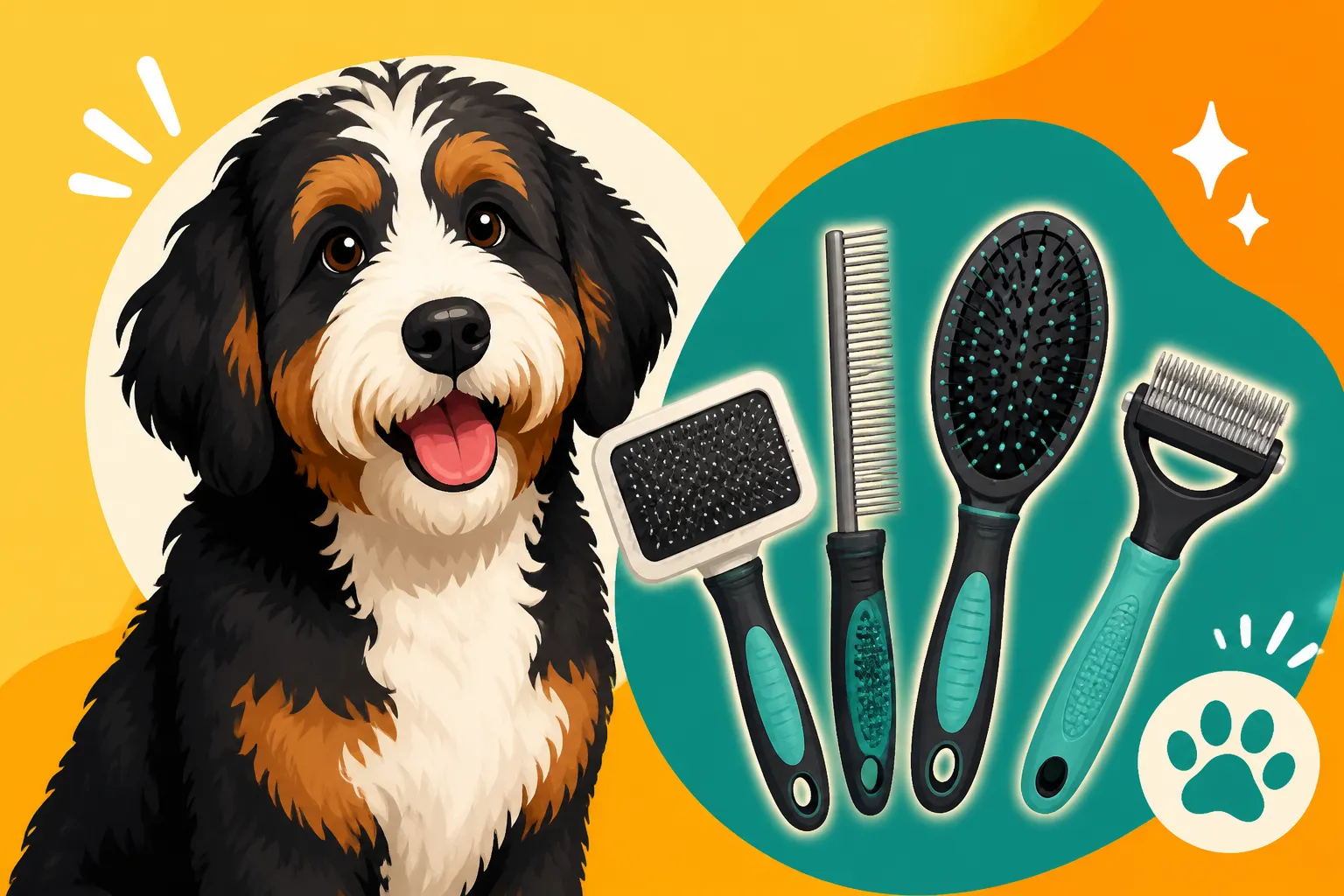
If you could only have one brush for your Bernedoodle, a slicker brush would be it. This is your absolute MVP, your daily go-to for detangling, removing loose hair, and breaking up small knots before they become major problems. A good slicker brush features a rectangular or square head covered in fine, short wire pins that are angled slightly. These pins are designed to gently grab and separate hairs, working through the layers of your Bernedoodle's dense coat.
When choosing a slicker, look for one with firm but flexible pins and a comfortable handle. There are various sizes available, but for a standard Bernedoodle, a medium to large head will be most efficient. Avoid brushes with hard, unyielding pins or those with little plastic balls on the tips, as these aren't effective at penetrating the dense Bernedoodle coat and can even cause discomfort. You can find excellent options on retailers like Amazon and Chewy, often with reviews from other doodle owners that can guide your choice. Brands like Chris Christensen, Hertzko, and Andis are popular among professional groomers and knowledgeable pet parents.
To use the slicker effectively, you must employ a technique called "line brushing." This involves parting the hair and brushing in small sections, working from the skin outwards. Don't just brush the top layer of the coat; that's how mats form underneath! Start at the bottom of a leg, for example, hold the hair above your brushing line, and brush a small section, ensuring the pins reach all the way to the skin. Then move up slightly, release a bit more hair, and repeat. This systematic approach ensures you're actually getting to all the hair, preventing those hidden mats. Line Brushing a Bernedoodle to the Skin offers a deeper dive into this essential technique.
The Unsung Hero: The Pin Brush
While the slicker brush is king for detangling and dematting, the pin brush plays an important, albeit different, role in your Bernedoodle's grooming routine. A pin brush looks a bit like a human hairbrush, with widely spaced, stiff wire pins, often tipped with small plastic or rubber balls. Its primary purpose isn't aggressive detangling but rather to gently separate and smooth the coat, removing loose surface hair, and helping to distribute natural oils.
You'll find the pin brush most useful for lighter daily maintenance on a coat that's already relatively tangle-free. It's excellent for fluffing the coat, making it look well-groomed, and can also be used as a gentler option for puppies or sensitive areas once major tangles have been removed by the slicker. Some owners prefer to finish a grooming session with a pin brush to give the coat a soft, flowing look. It's also great for longer hair that might not respond well to the closer-set pins of a slicker, helping to prevent breakage.
While not as critical for mat prevention as the slicker, a pin brush is still a valuable tool for overall coat health and comfort. It's less likely to cause static or pull on the hair unnecessarily, making it a good choice for those quick touch-ups between deeper grooming sessions. For instance, if your Bernedoodle has just come in from a run in the park and has some leaves or light debris in their coat, a pin brush can often clear it out without needing a full slicker session. Think of it as the conditioner to the slicker's shampoo – it's there to add softness and polish.
Specialty Brushes for Specific Bernedoodle Challenges
Beyond the everyday essentials, there are certain brushes and tools that become invaluable when facing specific Bernedoodle grooming challenges. These aren't necessarily for daily use but are crucial to have on hand for those moments when the coat gets extra unruly, or a sneaky mat develops despite your best efforts. Having the right tool for the job can make the difference between a quick fix and a stressful, painful ordeal for your dog.
It’s important to remember that specialty tools require careful use. Improper technique can pull hair, scratch skin, or even damage the coat. Always proceed with caution, use gentle strokes, and never yank on a mat. When in doubt, it’s always better to consult with a professional groomer who can demonstrate the correct way to use these specialized instruments, or even take your dog in for a professional de-matting if the situation is severe.
Dematting Tools: When Mats Strike
Despite your best efforts with a slicker and pin brush, sometimes a mat will form. Perhaps you missed a spot, or your Bernedoodle enjoyed a particularly enthusiastic roll in the mud, or maybe they just hit that tricky coat change period with extra vigor. When a mat does strike, you'll need specialized dematting tools, but use them judiciously. The goal is always to save the hair if possible, but never at the expense of your dog's comfort.
One of the most useful dematting tools is a good quality metal comb. A sturdy, wide-tooth comb is excellent for checking your work after brushing and for carefully working apart smaller tangles. Start with the wide-tooth side to gently tease out knots, then move to the finer side to ensure the hair is completely free of tangles down to the skin. Remember, if you can't get a comb through the coat, there's still a tangle or mat hiding in there. The Slicker and Rake a Bernedoodle Needs often refers to the use of a good comb alongside these brushes.
For more stubborn mats, a mat splitter or dematting rake with bladed teeth can be a lifesaver, but extreme caution is advised. These tools are designed to cut through mats without cutting the surrounding healthy hair, but they can easily cut skin if not used correctly. They work by inserting the bladed teeth into the mat and gently pulling, slicing the mat into smaller, more manageable sections. Never pull hard, and always ensure the blades are facing away from the skin. Some mats are just too tight or too close to the skin to safely remove at home, and in those cases, a professional groomer or a trip to the vet for a shave-down is the kindest option.
The Undercoat Rake Debate: Is It Right for Your Bernedoodle?
The term "undercoat rake" can be a bit misleading for Bernedoodle owners, as it conjures images of thick, shedding undercoats like those found on a Bernese Mountain Dog or a Husky. While Bernedoodles can inherit some degree of undercoat, particularly those with straighter, more Bernese-like coats, many tend to have a single coat or a very sparse undercoat due to their Poodle heritage. This makes the traditional undercoat rake less universally applicable than for a double-coated breed.
For Bernedoodles with a more Poodle-dominant, curly, or wavy fleece coat, a standard undercoat rake is often unnecessary and can even damage their delicate hair. Their coats don't "blow" like a double-coated breed's, so the rake isn't designed for their shedding pattern. Instead, dead hair tends to get trapped within the curls, leading to matting. For these coats, a good slicker brush used diligently is much more effective at removing trapped dead hair and preventing mats. Trying to force an undercoat rake through a curly Bernedoodle coat can pull, tear, and break the hair, leading to discomfort and an uneven look.
However, if your Bernedoodle has a noticeably thicker, denser coat that feels more like a Bernese (especially if they shed more), an undercoat rake might have a place in your grooming kit. It would be used sparingly to remove dead undercoat that could contribute to matting, but always with great care. It's crucial to understand Why the Undercoat Is What Mats on a Bernedoodle in this context. If you're unsure, ask your professional groomer to assess your dog's specific coat type and recommend whether an undercoat rake would be beneficial, and more importantly, demonstrate how to use it safely without causing pain or damage. For most Bernedoodles, the slicker brush remains the superior tool for addressing dead hair and preventing tangles.
Beyond the Brush: Complementary Tools and Best Practices
While brushes are the stars of your Bernedoodle grooming kit, they're not the entire show. A complete grooming routine involves several complementary tools and best practices that work in harmony with your brushes to keep your Bernedoodle's coat in tip-top condition. These additional items and techniques ensure that your hard work with the brushes truly pays off, leading to a happier, healthier, and more comfortable dog.
Ignoring these supplementary steps can undermine your brushing efforts. For instance, if you meticulously brush but then don't thoroughly dry your dog's coat after a bath, you're setting yourself up for a matting disaster. Similarly, neglecting a good comb means you might miss small tangles that the brush glided over. It's all about a holistic approach to coat care, making sure every part of the process contributes to the overall goal of a mat-free, beautiful Bernedoodle.
Combs: The Finishing Touch and Mat Detector
A good metal comb is often overlooked, but it's an indispensable tool for any Bernedoodle owner. Think of it as your final quality control check after a brushing session and your first alert system for sneaky mats. While slicker brushes excel at detangling and removing loose hair, they can sometimes glide over smaller, tighter knots close to the skin. That's where the comb comes in.
You'll want at least one sturdy, professional-grade metal comb, preferably a greyhound comb style with both wide and fine teeth. After you've finished brushing a section with your slicker brush, take your comb and gently try to pull it through the hair, all the way from the skin to the tips. If the comb glides smoothly, congratulations – that section is tangle-free! If it snags, you've found a spot that needs more attention with your slicker brush or a careful dematting approach. Start with the wide-tooth side for general checking, then use the fine-tooth side for detail work, especially around the face, ears, and paws.
Combs are also fantastic for tidying up specific areas. They can help separate the hair on your Bernedoodle's beard, preventing food and moisture from getting trapped and causing irritation. They're excellent for fluffing up the hair on the legs or tail for a more polished look. Regular use of a comb ensures that no mat goes undetected and that your Bernedoodle's coat is truly free of tangles, not just on the surface but down to the very skin.
Mastering the Line Brushing Technique
We touched on line brushing when discussing the slicker brush, but it deserves its own spotlight because it's the technique that differentiates effective Bernedoodle grooming from superficial brushing. Many new owners make the mistake of simply brushing over the top of the coat, which might make the surface look nice but leaves dense underlayers untouched and prone to matting. Mastering line brushing is non-negotiable for a Bernedoodle.
To execute line brushing, you need to work in small, manageable sections. Imagine you're sectioning human hair for styling. Start at the bottom of your Bernedoodle's body – typically a leg – and use your non-brushing hand to part the hair horizontally, holding the upper section of hair up and out of the way. This exposes a narrow "line" of hair. Now, with your slicker brush, brush downwards through this exposed line, ensuring the pins reach all the way to the skin. Use gentle, short strokes, always brushing away from the skin, not directly onto it.
Once that small section is tangle-free (and you've confirmed it with your comb!), release a bit more hair from the upper section, creating a new "line" just above the one you just finished. Repeat the brushing process. Continue this systematic method, working your way up the leg, then move to the body, belly, chest, neck, and finally the head and ears. It's time-consuming, yes, but it's the only way to truly get through a Bernedoodle's dense coat and prevent mats from forming at the skin level. It's particularly important during that frustrating "coat change" phase when their puppy fluff transitions to adult hair.
The Role of a Force Dryer
After a bath, even if you’re just bathing at home, a force dryer isn’t a luxury for a Bernedoodle owner – it’s a necessity. You might think your regular human hairdryer will suffice, but it absolutely will not. Those dryers use heat which can damage your dog’s skin and coat, and they simply don't have the power to penetrate a Bernedoodle's dense, multi-layered coat. Air-drying a Bernedoodle is a recipe for disaster, as the damp undercoat will quickly felt and mat as it dries, sometimes seemingly overnight.
A force dryer, also known as a high-velocity dryer, uses powerful, unheated or low-heated air to blast water out of the coat. This process not only dries the dog much faster but, crucially, helps to straighten and separate each strand of hair, preventing matting as the coat dries. As you dry, you should simultaneously brush with your slicker to ensure the air reaches every part of the coat, pushing any loose hair out. The force of the air helps to "line dry" the coat, making it lie smoothly and tangle-free. Drying a Bernedoodle to the Skin is a critical skill, and a force dryer makes it possible.
Investing in a good quality force dryer, available on sites like Amazon or through professional grooming supply stores, will save you countless hours of dematting and potentially expensive trips to the professional groomer for mat removal. It’s also much healthier for your dog’s skin, reducing the risk of fungal infections that can thrive in damp, matted areas. Learning to use it effectively, patiently introducing your dog to the noise and sensation, will be one of the best investments you make in your Bernedoodle’s long-term grooming health. Whether a Force Dryer Is Worth Buying for a Bernedoodle answers a common question.
Choosing the Right Brushes: Quality and Considerations
So, you know which types of brushes you need, but how do you actually pick them out from the seemingly endless options? The market is flooded with grooming tools, and it's easy to get swayed by fancy packaging or low prices. However, when it comes to your Bernedoodle's thick, prone-to-matting coat, quality truly matters. A cheap, flimsy brush will quickly prove ineffective, frustrate you, and potentially cause discomfort for your dog.
It’s not just about the brush itself, but also about how it feels in your hand and how well it stands up to the rigorous task of grooming a large, fluffy dog. Think of it as an investment in your Bernedoodle's health and your own sanity. Spending a little more on durable, well-designed tools will save you money and headaches in the long run.
What to Look for in a Quality Brush
When you're sifting through options, here are a few key characteristics to prioritize for your Bernedoodle's brushes:
For Slicker Brushes:
- Pin Quality: Look for firm yet flexible wire pins that have a slight bend at the tip. They should be densely packed enough to penetrate the coat but not so stiff that they scratch the skin. Avoid pins with plastic caps, as these are ineffective for dense coats and can even snag hair.
- Size: For a standard Bernedoodle, a medium to large head is ideal for efficiency. For smaller Bernedoodles or detail work around the face and paws, a smaller slicker might be useful.
- Handle Comfort: You'll be spending a lot of time with this brush, so make sure the handle is ergonomic and comfortable to hold, with a non-slip grip. This will prevent hand fatigue during long grooming sessions.
- Durability: The brush head should be securely attached to the handle, and the pins should not easily bend or fall out. Brands like Chris Christensen, known for their "Big G" and "Big K" slickers, are often recommended for their exceptional quality and effectiveness on doodle coats.
For Pin Brushes:
- Pin Material and Spacing: Opt for polished, blunt-ended metal pins. The pins should be widely spaced enough to glide through the coat without pulling. Again, plastic-tipped pins are generally fine for a pin brush as it's for gentler work.
- Cushion: A good pin brush will have a soft, rubber cushion that allows the pins to flex slightly, making the brushing experience more comfortable for your dog.
- Handle: Similar to the slicker, a comfortable and sturdy handle is important.
For Metal Combs:
- Material: Stainless steel is the gold standard – it's durable, easy to clean, and won't rust.
- Teeth Configuration: Look for a comb with both wide and fine teeth. The teeth should be smooth, with no sharp edges that could scratch your dog's skin or snag their hair.
- Sturdiness: The comb should feel solid in your hand and not bend easily when pulled through hair.
Where to Find Reliable Grooming Tools
Once you know what to look for, finding these quality tools is the next step. Thankfully, with the rise of online shopping, access to professional-grade grooming supplies is easier than ever.
Large online retailers like Amazon and Chewy are excellent starting points. They offer a vast selection of brushes from various brands, often with user reviews that can provide valuable insights into a product's effectiveness for specific coat types, including Bernedoodles. You can compare different brands, read customer experiences, and often find competitive pricing. Just be sure to filter for well-regarded brands and carefully read descriptions to ensure the brush meets your quality criteria.
Specialty pet supply stores, both online and brick-and-mortar, can also be a great resource. These stores often carry a more curated selection of high-quality grooming tools and may even have knowledgeable staff who can offer personalized recommendations based on your Bernedoodle's specific coat. Sometimes, professional groomers will also sell their preferred tools directly, which is a fantastic way to get a tried-and-true brush. While the initial cost of professional-grade tools might be a bit higher, the longevity and effectiveness they offer will undoubtedly make them worth every penny in the long run, saving you from constant replacements and frustrating grooming sessions.
Disclaimer
This article is for general informational purposes only and does not constitute professional advice. Laws, prices and regulations vary by location and change over time. Consult a qualified professional for guidance on your specific situation.