The Mat That Forms Where a Bernedoodle’s Ear Folds
If you're a Bernedoodle owner, you know the struggle: you've spent precious time brushing, only to find a stubborn mat stubbornly forming right where your furry friend's ear folds, tucked away from plain sight until it becomes a real problem. It's a frustrating, often painful issue that many of us face, turning what should be a sweet ear rub into a delicate negotiation. This guide is here to walk you through exactly why those mats love to form there, how to spot them early, and most importantly, how to tackle them with kindness and competence, ensuring your Bernedoodle's ears stay happy and healthy.
Why Bernedoodle Ears Are a Mat Magnet
It's not just bad luck that Bernedoodles seem to get these pesky ear mats; it's a perfect storm of genetics, coat type, and daily dog life. Our beloved Bernedoodles inherit traits from both the majestic Bernese Mountain Dog and the intelligent Poodle, and when it comes to ears, this mix can be a recipe for tangle trouble.
The Anatomy of a Bernedoodle Ear
Think about the Bernedoodle ear: it's typically a beautiful, floppy drop ear, often covered in a dense, wavy to curly coat. This isn't like an erect ear that lets air circulate freely. Instead, it lies close to the head, creating a warm, sometimes damp environment. The hair itself is often a thick, multi-layered affair. The Poodle side brings that wonderfully dense, low-shedding (but high-matting!) curl, while the Bernese side contributes a plush, often softer undercoat that loves to intertwine.
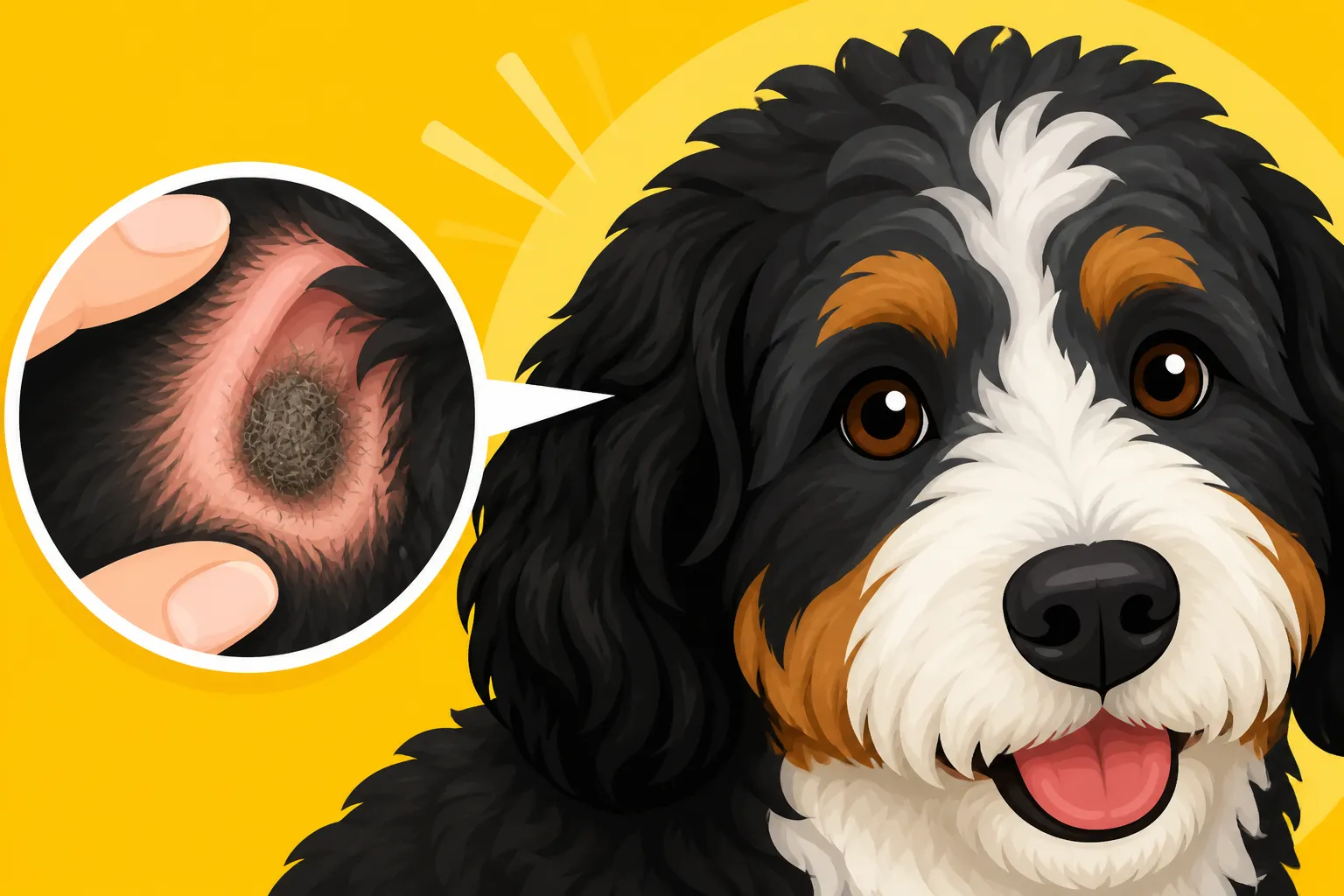
The area right where the ear leather folds and meets the side of the head – that specific crease – is a hotspot. It's an area of constant friction from head movements, sleeping positions, and even just the dog shaking their head. This friction causes the hairs to rub against each other, tangling quickly. Add to that the fact that the skin in this area is delicate and sensitive, and a small mat can rapidly become a painful, tight knot pulling on the skin. It’s truly a tricky spot, and many owners feel a pang of guilt when they discover a hidden mat here. For more about the Bernedoodle coat, check out The Coat a Bernedoodle Gets From Two Heavy Coated Parents.
The Role of Moisture and Debris
Beyond the inherent coat characteristics, daily life provides plenty of opportunities for ear mats to flourish. Our Bernedoodles are often playful, curious, and, let's be honest, a little bit messy!
Drinking and Drooling: Many Bernedoodles, especially the standard-sized ones, are not the most delicate drinkers. Their long ear fringe often dangles right into their water bowl, soaking up moisture. This dampness, combined with residual drool, creates a sticky environment. Wet hair clumps together easily, and as it dries, it tightens into mats. Imagine leaving a wet towel folded for days – that’s essentially what happens to wet fur tucked into an ear fold.
Food and Treats: If your Bernedoodle is anything like mine, they love to get their face into their food bowl. Bits of kibble, wet food residue, or even crumbs from treats can get stuck in the hair around their mouth and, you guessed it, right on those long ear fringes. This organic matter acts like glue, binding hairs together and kickstarting the matting process. It's particularly bad with sticky foods or if they've had a particularly enthusiastic, messy meal.
Outdoor Adventures: Whether it's a romp in the park, a hike through tall grass, or just a sniff-a-thon in the backyard, Bernedoodles pick up all sorts of natural debris. Burrs, twigs, seeds, leaves, and dirt all become entangled in that dense coat. The ear area is particularly vulnerable because it brushes against foliage constantly. These foreign objects act as anchors for mats, pulling hairs together and making them incredibly difficult to remove without careful attention. Even just a bit of damp grass after a morning dew can start the problem. The thick coat also contributes to Skin Problems Under a Bernedoodle's Heavy Coat, especially if mats are allowed to persist.
Early Detection and Prevention Strategies
The key to managing ear mats in your Bernedoodle isn't just reacting to them once they're severe, but actively working to prevent them and catching them when they're tiny. It takes consistency, but it's far less painful for your dog (and your wallet!) than dealing with giant, felted knots.
Daily Checks and Gentle Brushing
This is truly your first line of defense. Making ear checks a part of your daily routine, perhaps during cuddle time or after their morning walk, will save you a world of trouble.
The "Feel and See" Method: Don't just look at the ears; feel them. Run your fingers gently through the hair, paying close attention to the area where the ear attaches to the head and the crease of the ear itself. Feel for any small bumps, tangles, or areas where the hair feels denser or stiffer than the rest. Lift the ear flap to inspect the underside and the skin underneath. Look for any redness, irritation, or crusting, which could indicate a developing mat or even an ear infection.
Short, Positive Brushing Sessions: You don't need to do a full groom every day, but a quick, gentle brush of the ear area can make a huge difference.
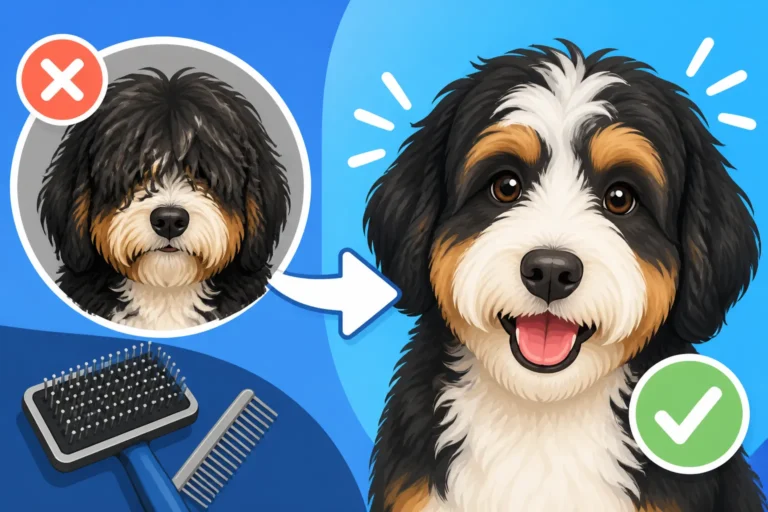
- Tools of the Trade: A good quality slicker brush and a metal comb with both wide and fine teeth are indispensable. For a Bernedoodle, I highly recommend investing in a professional-grade slicker that can reach through the dense coat without scratching the skin. Brands like Chris Christensen offer excellent quality. You can often find these readily available on Chewy or Amazon.
- Technique: Start by gently holding the base of the ear to prevent pulling on the skin. Use the slicker brush in small, short strokes, going with the direction of hair growth first, then against it if your dog tolerates it, to lift the hair. Follow up with the metal comb. Use the wide-toothed end first to detangle larger sections, then the fine-toothed end to check for smaller knots that the slicker might have missed. If the comb glides smoothly from root to tip, you're doing great! If it snags, you've found a tangle.
- Positive Reinforcement: Make these sessions positive! Offer treats, praise, and keep them short. If your Bernedoodle starts to get antsy, stop and try again later. We're building trust here.
Proactive Grooming Techniques
Beyond daily checks, there are specific techniques that can further prevent those notorious ear mats. This is all about getting ahead of the problem.
Line Brushing: This technique is crucial for any long-coated or curly-coated breed, and especially for Bernedoodles. It ensures you're brushing all the way down to the skin, not just skimming the top layer of the coat.
- How to Do It: Part the hair horizontally, starting at the bottom of the ear and working your way up towards the top. Hold the upper section of hair up with one hand, exposing a small "line" of skin. With your other hand, brush the hair in that exposed section from root to tip using your slicker brush. Once that section is free of tangles, drop a little more hair from the upper section and repeat, working your way up the ear. Finish with a comb check.
Targeted Trimming: Sometimes, a little bit of strategic trimming can drastically reduce matting potential, especially in that deep ear fold.
- "Hygiene Trim" for Ears: You can ask your professional groomer to do a very subtle, short trim on the hair inside the ear flap and right at the base where the ear meets the head. This isn't about radically changing the look of the ear, but rather reducing the bulk of hair in high-friction areas. A groomer can do this safely with clippers or blunt-nosed scissors. It helps air circulation and reduces the amount of hair available to mat. If you attempt this at home, use only blunt-nosed scissors and exercise extreme caution to avoid nipping the delicate skin. When considering your Bernedoodle's overall coat, you might find The Volume of Coat a Bernedoodle Owner Brushes Weekly helpful.
Appropriate Grooming Products: A few specialized products can make brushing much easier.
- Detangling Sprays: Before you even start brushing, a good detangling spray can work wonders. It lubricates the hair, making it easier for the brush to glide through and helping to loosen small tangles. Look for dog-specific detangling sprays with nourishing ingredients.
- Leave-in Conditioners: These can help keep the coat hydrated and less prone to friction-induced matting. Applied after a bath and before drying, they add an extra layer of protection.
Environmental Management
Sometimes, the simplest changes in your dog's environment can make a big difference in preventing ear mats.
Managing Moisture Around Water Bowls:
- Snoods or Ear Bands: For Bernedoodles with very long ear fringe, a dog snood or ear band can be a game-changer during meal times and water breaks. These are fabric tubes that slip over their ears, holding them back and keeping them dry. You can find many cute and functional options on Amazon.
- Narrow Water Bowls: Some owners find success with narrower, deeper water bowls, which make it harder for the ears to dip in.
- Quick Drying: After a drink, a quick pat dry of the ears with a towel can prevent moisture from settling and causing mats. This is especially true after baths or swimming sessions. For more on drying, refer to Drying a Bernedoodle to the Skin.
Controlling Debris Exposure:
- Regular Yard Checks: If your Bernedoodle spends a lot of time outside, regularly check your yard for burrs, thorny weeds, or other plant matter that tends to cling to fur. Removing these reduces the chances of them getting tangled in your dog's coat.
- Post-Walk Wipe Downs: After walks, especially through wooded or grassy areas, take a moment to quickly inspect and wipe down your Bernedoodle's ears and legs. A quick brush can dislodge seeds and burrs before they become embedded.
By implementing these proactive measures, you'll significantly reduce the likelihood of those frustrating ear mats forming, keeping your Bernedoodle more comfortable and happy.
Dealing with Existing Ear Mats Safely and Effectively
Even with the best prevention, sometimes a mat still manages to sneak in, especially in that tricky ear fold. The most important thing is to approach it with patience and care, prioritizing your Bernedoodle's comfort and avoiding pain.
Assessing the Mat's Severity
Before you grab any tools, take a moment to assess the mat. This will help you decide if it's something you can tackle yourself or if it's best left to a professional.
- Size and Tightness: Is it a small, loose tangle or a large, dense, felt-like mat that's pulled tight against the skin? Small, newly formed tangles are much easier to handle.
- Proximity to Skin: How close is the mat to the skin? If it's very tight against the skin, you risk cutting your dog or causing them immense pain if you try to pull it out.
- Skin Condition: Gently part the hair around the mat (if possible) and check the skin underneath. Is it red, irritated, swollen, or broken? Mats can hide skin infections, hot spots, or even parasites. If the skin is compromised, a vet visit might be in order before any grooming takes place.
- Dog's Tolerance: How does your Bernedoodle react when you touch the mat? If they're flinching, growling, or trying to bite, it's likely painful and you'll need to proceed with extreme caution, or better yet, seek professional help. Remember, a bad experience can make future grooming impossible.
Step-by-Step Detangling at Home
For small, loose mats, you can often work them out at home with the right tools and technique. Patience is your most important tool here.
- Gather Your Supplies: You'll need a slicker brush, a metal comb (preferably one with rotating teeth, which are gentler), a detangling spray, and optionally, a mat splitter or dematting tool. Some people also find cornstarch helpful for really greasy, tight mats as it absorbs oil and makes hair slipperier. Have some high-value treats ready! You can find a wide range of these tools on Chewy or Amazon.
- Make Your Bernedoodle Comfortable: Find a quiet spot where your dog is relaxed. Have them lie down or sit comfortably. Give them a treat and offer plenty of praise.
- Apply Detangling Product: Liberally spray the mat with a good quality dog-specific detangling spray. Work it into the mat with your fingers, making sure it penetrates to the core. Let it sit for a few minutes to really soak in and lubricate the hairs. If using cornstarch, sprinkle a small amount into the mat and work it in.
- Isolate the Mat: Gently hold the hair at the base of the mat (closest to the skin) with your fingers. This is crucial because it prevents you from pulling on the skin, which is very painful.
- Start Picking/Splitting: Never try to yank or brush through a mat. This will only pull on the skin and cause pain.
- Fingers First: Try to gently tease apart the outer edges of the mat with your fingers, working strand by strand.
- Comb or Mat Splitter: Once you've loosened the edges, use the fine end of your metal comb (or a mat splitter if the mat is dense) to carefully pick at the mat, starting from the very end and working your way towards the skin, one tiny section at a time. Think of it like unpicking a knot, not pulling it out.
- Mat Splitter Technique: If using a mat splitter, slide the blade underneath the mat, parallel to the skin, and gently pull it through to cut the mat into smaller sections. This doesn't remove the mat but makes it manageable to brush out. Be extremely careful with these tools as they are sharp.
- Brush and Comb: Once the mat is broken into smaller sections, use your slicker brush to gently brush through the loosened hair, followed by your metal comb to ensure all tangles are gone. Continue to hold the hair at the base of the mat to protect the skin.
- Praise and Reward: Throughout the process, keep it positive. Offer treats and praise for your Bernedoodle's cooperation. If they show signs of pain or distress, stop.
When to Call the Professional Groomer
There are times when even the most dedicated owner needs to admit defeat, and that's perfectly okay. A professional groomer has the tools, experience, and training to handle severe matting safely.
- Severe Matting: If the mat is large, tight against the skin, or has formed a solid "felt" that you can't easily separate with your fingers, it's time to call a professional. Trying to remove these yourself can cause significant pain, skin damage, or even trauma to your dog.
- Dog's Discomfort: If your Bernedoodle is clearly in pain, stressed, or becoming aggressive when you try to touch the mat, a groomer is the safest option. They might even recommend sedation for severe cases, arranged through your vet, to ensure a pain-free experience.
- Safety Concerns: Groomers have specialized clippers with different blade lengths and safety mechanisms that allow them to get under mats without cutting the skin. They also have restraint techniques (gentle ones!) to keep your dog still and safe.
- What to Expect: Be prepared for the groomer to recommend shaving the mat out. For severe mats, this is often the kindest and only safe option. They might need to shave a larger area around the mat to get it all, leaving a "bald patch" that will grow back. They will always prioritize the dog's comfort and health over aesthetics. Don't feel guilty about this – a comfortable dog is a happy dog. For details on what happens if mats go too far, see What a Matted Bernedoodle Costs to Shave.
| Mat Severity | Recommended Action | Tools/Products | Expected Outcome |
|---|---|---|---|
| Small, Loose Tangle | At-home detangling | Slicker brush, metal comb, detangling spray (Chewy/Amazon), patience | Removed tangle, minimal discomfort |
| Medium, Moderate Mat | At-home detangling with caution; consider groomer if difficult | All above, possibly mat splitter, cornstarch | Mat removed; potential for minor skin irritation if pulled |
| Large, Tight, Felted Mat | Professional Groomer Highly Recommended | Groomer's clippers, various blades, expert handling | Mat shaved out, likely leaving a bald spot; ensures dog's safety and comfort |
| Mat with Skin Irritation/Pain | Veterinarian consultation first, then professional groomer | Vet-prescribed medication if infection; groomer to shave under vet guidance | Healing of skin issue, mat removed; crucial for dog's health |
Long-Term Care and Maintenance for Healthy Ears
Preventing those stubborn ear mats is an ongoing commitment, not a one-time fix. Establishing a consistent routine and partnering with professionals will keep your Bernedoodle's ears in tip-top shape.
Regular Professional Grooming Schedule
Think of your professional groomer as an essential part of your Bernedoodle's healthcare team. They don't just make your dog look good; they play a vital role in maintaining their coat and skin health, especially in those hard-to-reach or tricky areas like the ear folds.
Frequency is Key: For most Bernedoodles, professional grooming every 6-8 weeks is a must. If your dog has a particularly dense, curly, or fine coat that mats easily, or if they are very active outdoors, you might even need to schedule appointments every 4 weeks. Consistency prevents small tangles from becoming painful, massive mats. This regular schedule allows the groomer to stay on top of the coat, ensuring mats don't have a chance to take hold deep down. You might be surprised at A Year of Grooming Bills on a Standard Bernedoodle, but it's an investment in their comfort.
Communication is Crucial: When you drop your Bernedoodle off at the groomer, clearly communicate any concerns you have, especially about ear matting. Point out the specific area where mats tend to form (the ear fold!). Discuss the desired length and style for the ears. Many owners opt for a slightly shorter trim around the ear base to prevent matting, even if the rest of the ear remains long. This "hygiene trim" can significantly reduce matting without drastically changing the overall look. Your groomer can also advise on the best clip for your Bernedoodle in general, or even specific seasonal clips like The Clip a Bernedoodle Owner Should Ask For in July.
Post-Groomer Routine: Even after a professional groom, your work isn't done. The groomer does the heavy lifting, but daily home care is still essential to maintain their work. Continue your daily ear checks and gentle brushing to keep the coat in optimal condition between appointments.
The Importance of Ear Hygiene Beyond the Coat
While coat mats are a visual and tactile problem, it's important to remember that the ear canal itself also needs attention. Matted ears can unfortunately create an environment that exacerbates other ear health issues.
Trapped Moisture and Reduced Airflow: Floppy, heavily coated ears naturally have less airflow to the ear canal. When these ears are also matted, the problem is compounded. The dense, matted fur traps moisture and heat, creating a dark, damp, and warm environment – the perfect breeding ground for yeast and bacteria, leading to uncomfortable and often painful ear infections. Symptoms of an ear infection can include excessive scratching, head shaking, redness, swelling, discharge, or a foul odor from the ear.
Regular Ear Cleaning: Beyond brushing, a routine ear cleaning can help prevent infections. Ask your vet to recommend a suitable dog-specific ear cleaner.
- How to Clean: Gently lift the ear flap. Squirt the cleaner into the ear canal (following product instructions for amount). Gently massage the base of the ear for 20-30 seconds; you'll hear a squishy sound as the cleaner breaks up debris. Let your dog shake their head (have a towel ready!). Then, use a clean cotton ball or gauze wrapped around your finger to gently wipe out any visible dirt, wax, or debris from the outer ear folds. Never insert anything into your dog's ear canal, such as a cotton swab, as this can push debris deeper or damage the eardrum.
- Frequency: The frequency of ear cleaning depends on your dog. Some Bernedoodles need it weekly, others monthly. If your Bernedoodle swims often or has a history of ear infections, more frequent cleaning might be necessary.
- Veterinary Check-ups: Regular vet check-ups are important for overall health, and this includes ear health. Your vet can perform a thorough ear examination, check for any underlying issues, and address any infections promptly. They can also demonstrate the correct way to clean your Bernedoodle's ears. For other health screenings, consider The Screening a Bernedoodle Should Have Yearly.
By staying on top of both coat grooming and ear canal hygiene, you'll ensure your Bernedoodle's ears remain healthy, comfortable, and free from those pesky, painful mats. It’s a bit of work, but seeing your happy, comfortable Bernedoodle makes it all worthwhile!
Disclaimer
This article is for general informational purposes only and does not constitute professional advice. Laws, prices and regulations vary by location and change over time. Consult a qualified professional for guidance on your specific situation.