Signs a Bernedoodle Is Too Hot to Keep Walking
It’s a heartbreaking sight: your big, fluffy Bernedoodle, usually so full of joy and energy, suddenly lagging behind on a walk, panting excessively, or even stumbling. Our Bernedoodles have such thick, gorgeous coats and an endearing enthusiasm for adventure, which unfortunately makes them incredibly vulnerable to overheating, especially when the temperatures climb. This guide is all about helping you recognize those critical early warning signs that your Bernedoodle is getting too hot, long before it becomes a dangerous emergency.
Why Bernedoodles Are Prone to Overheating
Understanding why your Bernedoodle struggles with heat is the first step in prevention. It's not just about their floofy good looks; it's deep in their genetics and physical makeup.
The Double Whammy of Coat and Breed Origin
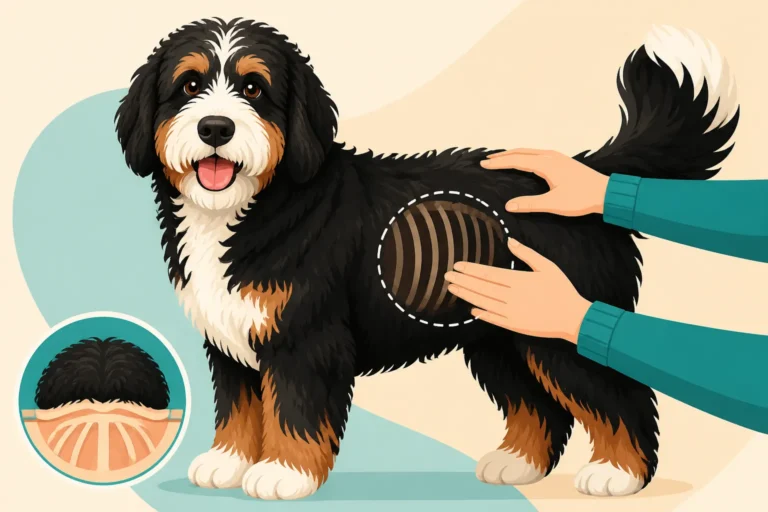
Think about the Bernese Mountain Dog side of your Bernedoodle. They hail from the Swiss Alps, bred to work in cold, snowy conditions. They're equipped with a dense, insulating double coat – a soft, woolly undercoat for warmth and a longer, coarser outer coat that repels water and snow. This incredible insulation, perfect for keeping them toasty in freezing temperatures, becomes a serious liability in heat. It's like wearing a heavy winter parka in July.
Even the Poodle side, known for its single layer, curly coat, can contribute to heat retention. While Poodle coats don't typically have the same thick undercoat as a Bernese, a long or dense Poodle-type coat on a Bernedoodle can still trap heat if not properly groomed and maintained. The combination means your Bernedoodle is essentially wearing a built-in winter wardrobe year-round. This is especially true for our darker-coated friends. You might wonder Why a Black Tri Bernedoodle Overheats, and it's absolutely true that dark colors absorb more radiant heat from the sun, making them even more susceptible. This breed was truly made for winter frolics, not long summer strolls.
Their Enthusiastic, Often Oblivious Nature
One of the most charming, yet potentially dangerous, traits of many Bernedoodles is their unbridled enthusiasm. They often have a "go-go-go" attitude and live very much in the moment. When they’re out and about, sniffing new smells, greeting friends, or chasing a ball, they can easily get carried away. They might push themselves far beyond what’s safe, ignoring their own rising body temperature because they’re simply having too much fun. It’s hard as an owner to tell them "no" when they seem so happy, but it’s crucial.
This isn't always stubbornness; it's often just pure joy and a lack of self-preservation instinct when engaged in something exciting. A young Bernedoodle, especially, might not recognize the internal signals of distress until they’re already in a dangerous situation. This puts the onus squarely on us, their human companions, to monitor them closely and intervene before they’ve gone too far. We have to be their sensible brain when their happy, bouncy spirit takes over.
Early Warning Signs: Your Bernedoodle Is Getting Too Warm
Recognizing the subtle cues that your Bernedoodle is getting overheated is absolutely vital. This isn't about looking for dramatic collapse; it's about catching those hints that tell you it's time to stop and cool down before a crisis.
Subtle Behavioral Cues
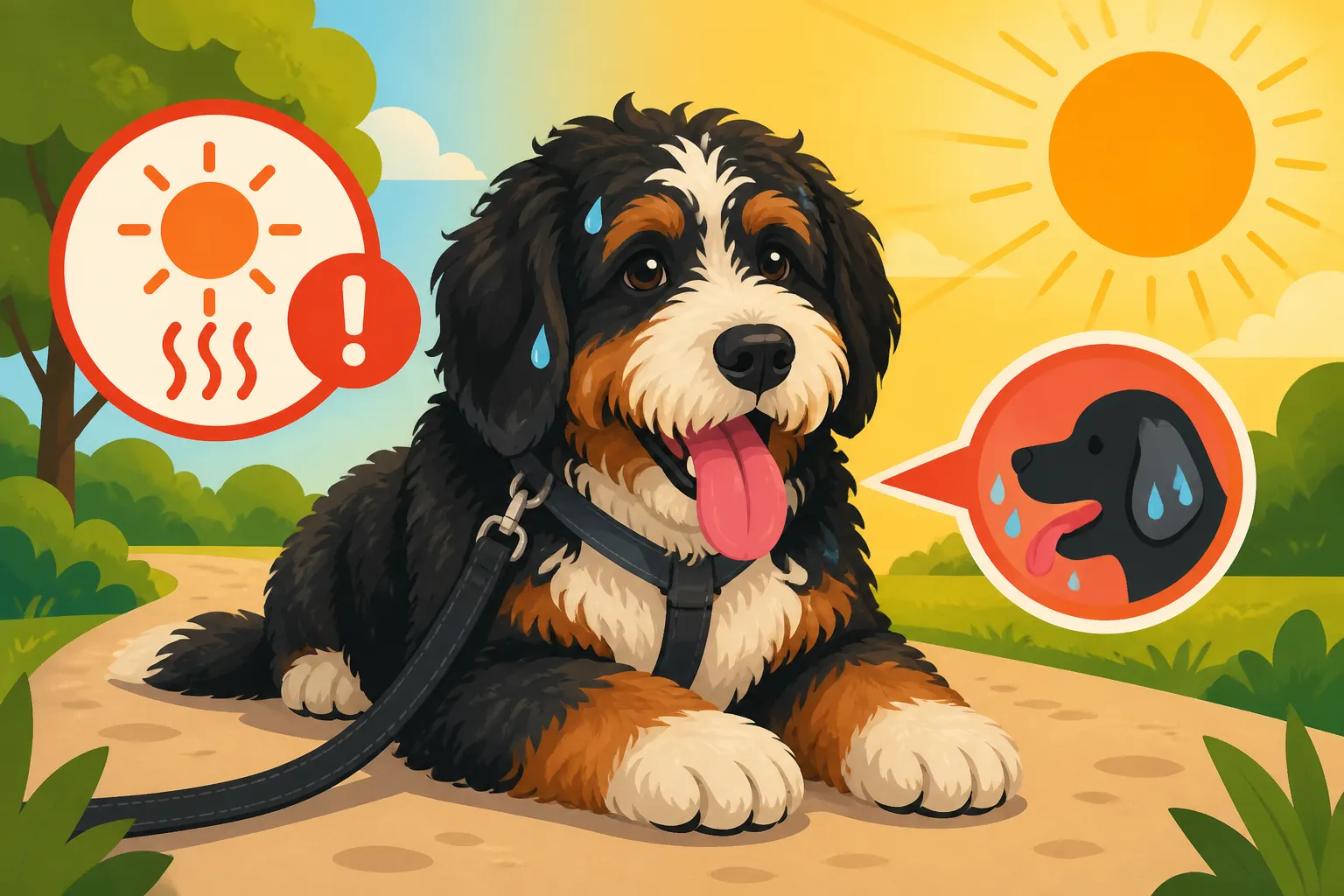
Your Bernedoodle often communicates its discomfort in ways that are easy to miss if you're not paying close attention. The first and most obvious sign is often excessive panting. Yes, all dogs pant to cool down, but pay attention to the intensity and duration. If your Bernedoodle is panting much harder or more continuously than usual for the level of activity or the ambient temperature, that's a red flag. Whether a Bernedoodle Pants More Than Other Dogs can be a breed-specific question, but generally, any sudden increase in panting effort needs your attention.
Beyond panting, watch for changes in their energy and engagement. They might start slowing down, lagging behind you, or showing a reluctance to continue playing or walking. Perhaps they're usually eager to keep going, but now they're stopping more frequently, sniffing the ground for longer, or trying to gravitate towards patches of shade. You might also notice them seeking water more frequently than usual. While good hydration is important, a sudden, desperate thirst can be a sign of their body trying to regulate its temperature. Another subtle sign can be increased drooling, especially if the saliva appears thicker or foamier than normal. Their gums might also appear a darker red than their usual healthy pink. All of these are quiet whispers from your dog saying, "I'm struggling here."
Physical Indicators You Might Miss
Beyond behavior, there are physical indicators that can signal trouble. If you gently feel your Bernedoodle's ears, belly, or the inside of their thighs, they might feel unusually warm to the touch. This means their core body temperature is rising. Their eyes might start to look a bit dull, glazed over, or less alert than usual. It's a subtle change, but one that can indicate they're feeling unwell.
As they become more distressed, you might observe a slight lack of coordination, a bit of stumbling, or an uncharacteristic clumsiness. Their tail might be tucked, and their overall demeanor could shift to one of anxiety or discomfort rather than their usual happy-go-lucky attitude. Listen carefully to their panting; if it starts to sound labored, strained, or unusually loud, it's a sign that their respiratory system is working overtime to try and dissipate heat. Don't wait for dramatic signs; these quieter physical cues are your signal to act immediately.
When It's an Emergency: Signs of Heatstroke
Sometimes, despite our best efforts, a Bernedoodle can quickly progress from being "too warm" to experiencing full-blown heatstroke. This is a life-threatening emergency, and recognizing these severe signs means the difference between life and death.
Advanced Symptoms Requiring Immediate Action
When a Bernedoodle enters the advanced stages of heat stress, the symptoms become much more dramatic and alarming. You'll likely see heavy, uncontrolled panting, which can escalate to gasping for air or struggling to breathe. Their gums and tongue, which might have been a darker red before, can now turn a shocking bright red or even a purplish color, indicating a lack of oxygen.
Gastrointestinal issues are common with heatstroke. Your Bernedoodle might start vomiting, or develop severe diarrhea, which can sometimes even contain blood. They will likely exhibit extreme weakness, struggling to stand, or even collapse outright. This can progress to seizures or uncontrolled muscle tremors. Perhaps most concerning is disorientation, confusion, or unresponsiveness. They might not recognize you, respond to their name, or be able to follow simple commands. These are not signs to wait on. If you see any of these, consider it a dire emergency.
What to Do in a Heatstroke Crisis
If you suspect your Bernedoodle is suffering from heatstroke, you need to act immediately. Time is absolutely critical.
- Move to a Cooler Area: Get your Bernedoodle out of the sun and into the coolest environment you can find – ideally an air-conditioned car or building.
- Start Cooling: The goal is to bring their body temperature down gradually, not rapidly. Apply cool (not icy cold) water to their body. Focus on areas where blood vessels are close to the surface, like their belly, armpits, and paw pads. You can use wet towels or simply pour water over them. If you have a fan, direct it towards them.
- Offer Water: If they are conscious and able to swallow, offer small amounts of cool water. Do not force them to drink if they are unresponsive or vomiting, as they could aspirate it.
- Call Your Vet IMMEDIATELY: This step should happen concurrently with your cooling efforts. Call your veterinarian or the nearest emergency veterinary clinic while you are still cooling your dog. They can provide vital instructions and prepare for your arrival. Even if your dog seems to be recovering, a vet visit is essential. Heatstroke can cause internal organ damage that isn't immediately visible.
Remember, every second counts. Don't delay seeking professional help.
Prevention and Best Practices for Hot Weather Walks
The absolute best approach to heat stress is prevention. Knowing how to manage your Bernedoodle's activity and environment during warmer months can save you a lot of worry and potentially, a trip to the emergency vet.
Timing and Location Are Everything
When the mercury rises, the most critical adjustment you can make is when you take your Bernedoodle out. Avoid walking during the hottest parts of the day, typically between 10 AM and 4 PM. Early morning or late evening walks are much safer and more comfortable for them. On truly scorching days, you might even consider skipping the walk entirely and opting for indoor play or a short potty break in the shade. It’s important to understand that The Temperature a Bernedoodle Should Not Be Walked In can be lower than you'd expect due to their dense coat.
Also, be mindful of where you walk. Asphalt and concrete absorb and retain heat, becoming incredibly hot and potentially burning your Bernedoodle's paw pads. This heat can also radiate up into their bodies, exacerbating overheating. A quick hand test is your best friend: if the pavement is too hot for your hand to hold for five seconds, it’s too hot for their paws. Seek out shaded trails, grassy parks, or even indoor shopping centers that allow dogs. Sometimes, a short, frequent potty break in the cool grass is all they need. Remember that just because it's nice to us, doesn't mean it's nice for them, especially during Whether a Bernedoodle Should Be Walked in Summer. You really need to consider The Hours a Bernedoodle Should Not Be Outside.
Gear and Hydration Essentials
Preparation is key for hot weather outings. Always, always, always carry water for your Bernedoodle. Portable dog water bottles with attached bowls are incredibly convenient. You can find excellent options on Chewy or Amazon. Make sure they have access to fresh, cool water before, during, and after any outdoor activity.
Consider cooling gear. Cooling vests or bandanas, soaked in water and worn by your dog, can help dissipate heat. These are widely available on sites like Amazon. While it might seem counterintuitive, avoid shaving your Bernedoodle down to the skin. Their coat actually provides a layer of insulation against the sun's direct rays, and shaving too short can lead to sunburn. A shorter trim, however, can be beneficial; Whether a Shaved Bernedoodle Handles Heat Better often refers to a practical summer clip, not a complete shave.
Never, ever, ever leave your Bernedoodle in a parked car, even for "just a minute" with the windows cracked. The temperature inside a car can rise to dangerous levels incredibly quickly, even on a mild day. This is a critical point that cannot be overstated, and you must understand Why a Bernedoodle Must Never Wait in a Parked Car. Even with a cooling vest, it's not safe.
| Sign Category | Mild / Early Warning | Moderate / Significant Risk | Severe / Emergency (Heatstroke) |
|---|---|---|---|
| Panting | Heavier than usual, continuous | Very heavy, rapid, possibly distressed | Labored, gasping, struggling to breathe |
| Energy/Behavior | Slowing down, seeking shade, reluctant to continue | Unusually lethargic, stumbling, disoriented | Collapse, loss of consciousness, seizures |
| Gums/Tongue | Slightly darker red than normal | Bright red, very dark red | Bright red to purple, very dry/sticky |
| Saliva | Increased drooling | Thick, ropey, foamy saliva | Thick, excessive, sometimes bloody |
| Body Temperature | Warm to the touch (ears, belly) | Very hot to the touch | Extremely hot (rectal temp >104°F) |
| Other | Increased thirst, anxious look | Vomiting, diarrhea (possibly bloody), tremors | Organ damage (internal), severe disorientation |
Knowing Your Individual Dog
Just like people, every Bernedoodle is an individual. Some are naturally more heat tolerant than others, even within the same litter. Get to know your specific dog's limits. Watch them closely, especially on warmer days. Their age also plays a role: young puppies and senior Bernedoodles are generally more vulnerable to heat stress. Similarly, dogs with underlying health conditions, such as heart disease or respiratory issues, are at higher risk.
Pay attention to their weight, too. Whether an Overweight Bernedoodle Loses Years is a critical question, and being overweight also significantly increases their risk of overheating because fat acts as extra insulation and makes their bodies work harder. If your Bernedoodle is older, you'll need to adjust your expectations for their activity levels; Caring for a Bernedoodle Past Eight means being extra vigilant about heat and exertion. Always err on the side of caution. If you have any doubt, it’s better to cut the walk short, head home, and help them cool down.
Disclaimer
This article is for general informational purposes only and does not constitute professional advice. Laws, prices and regulations vary by location and change over time. Consult a qualified professional for guidance on your specific situation.