The Hours a Bernedoodle Should Not Be Outside
It’s a truly frustrating thing when you want nothing more than to take your furry best friend out for a walk or to play in the yard, but the weather simply isn't cooperating. Many Bernedoodle owners face this dilemma, especially during warmer months, wondering how long is too long, or what temperatures are actually safe for their beloved companion. This comprehensive guide is here to help you navigate those tricky times, ensuring your Bernedoodle stays happy, healthy, and most importantly, cool, no matter the season.
Understanding Your Bernedoodle's Unique Heat Sensitivity
Bernedoodles are incredible dogs, blending the intelligence of a Poodle with the gentle, loyal nature of a Bernese Mountain Dog. But this wonderful mix also brings certain physiological traits that make them particularly susceptible to heat, a fact that can catch new owners off guard. It's not just about their luscious coats; there's more to their thermal regulation than meets the eye.
The Double-Edged Sword of Their Coat Type
One of the most defining characteristics of a Bernedoodle is its stunning coat, which can range from wavy to curly. While beautiful and often touted as "low-shedding" (though Whether Any Bernedoodle Is Truly Non Shedding is a common question), this dense coat is a significant factor in their heat tolerance. The Bernese Mountain Dog parent brings a thick double coat, designed for cold mountain climates, and even the Poodle's dense, single coat can hold heat.
Imagine wearing a heavy wool sweater in summer; that's somewhat how your Bernedoodle might feel. Their coat acts as insulation, trapping a layer of air close to their body. In winter, this is fantastic, keeping them toasty warm. In summer, however, it works against them, making it difficult for that trapped heat to dissipate. This is particularly true for those with a very dense, wool-like curl, which can prevent air circulation to the skin. Owners often ask Whether a Black Bernedoodle Absorbs More Heat, and indeed, darker coats can absorb more radiant heat from the sun, making them even more prone to overheating.
Breed-Specific Traits and Metabolism
Beyond the coat, both parent breeds contribute to the Bernedoodle's general physiology, which isn't optimized for extreme heat. Bernese Mountain Dogs, with their origins in the Swiss Alps, thrive in cooler temperatures. Their larger body mass also means they generate more internal heat simply through metabolic processes. Poodles, while more adaptable, still prefer moderate climates.
A large, active Bernedoodle, especially a standard size that can reach The Height and Weight of a Standard Bernedoodle, generates a lot of internal heat during exercise. Unlike humans who sweat profusely across their skin, dogs primarily cool themselves by panting, which is far less efficient, and through limited sweating from their paw pads. If the air around them is already hot and humid, panting becomes even less effective because the evaporative cooling process is hindered. This combination of a heat-retaining coat, larger body size, and inefficient cooling mechanisms makes them highly vulnerable when temperatures rise.
Recognizing the Dangers: Signs of Overheating and Heatstroke
It's one thing to know your Bernedoodle is sensitive to heat, but it's another entirely to recognize the subtle and not-so-subtle signs that they're truly in distress. Being able to spot these warnings early can literally be the difference between a quick recovery and a life-threatening emergency. Don't wait until it's too late; learn to be observant.
Early Warning Signs: When to Take Action Immediately
Catching the signs of overheating before they escalate to heatstroke is crucial. Your Bernedoodle might not directly tell you they're too hot, but their body language and behavior will. The very first thing you'll likely notice is excessive panting. This isn't just regular panting after a burst of play; it's rapid, heavy, and persistent, often accompanied by an open mouth with their tongue hanging out further than usual.
Another early sign is seeking shade or trying to lie down, even in situations where they'd normally be active and engaged. They might seem more tired or lethargic than usual. You might also notice their gums becoming a darker red, or their saliva becoming thicker and stickier. Their ears might feel unusually hot to the touch. If you see any of these indicators, it's time to stop whatever you're doing, get your Bernedoodle into a cooler environment, and offer water. Don't push them to "just finish the walk" or "one more throw of the ball." Listen to their body.
Advanced Symptoms: A Medical Emergency
If the early signs are missed or ignored, overheating can quickly progress to heatstroke, which is a severe and life-threatening condition requiring immediate veterinary attention. Advanced symptoms include disorientation or staggering, as if they're drunk. They might collapse or have seizures. Their gums could turn very pale, blueish, or even brick red, indicating circulation problems. Vomiting or diarrhea, sometimes bloody, can also occur.
One of the most alarming signs is a rectal temperature soaring above 104°F (40°C). If you don't have a thermometer handy, feel their body – it will be intensely hot. Their heart rate will be rapid, and they might even start breathing in short, shallow gasps instead of deep pants as their body struggles to cope. These are not symptoms you can wait out at home; every minute counts. Signs a Bernedoodle Is Overheating details these symptoms further and is a must-read for any owner.
Safe Outdoor Hours: Temperature and Time Guidelines
The question isn't just if your Bernedoodle can be outside, but when and for how long. It's about being proactive and understanding the environmental factors that can quickly turn a pleasant outing into a dangerous one. There are general guidelines, but always remember that every dog is an individual, and humidity plays a massive role.
The Critical Temperature Thresholds
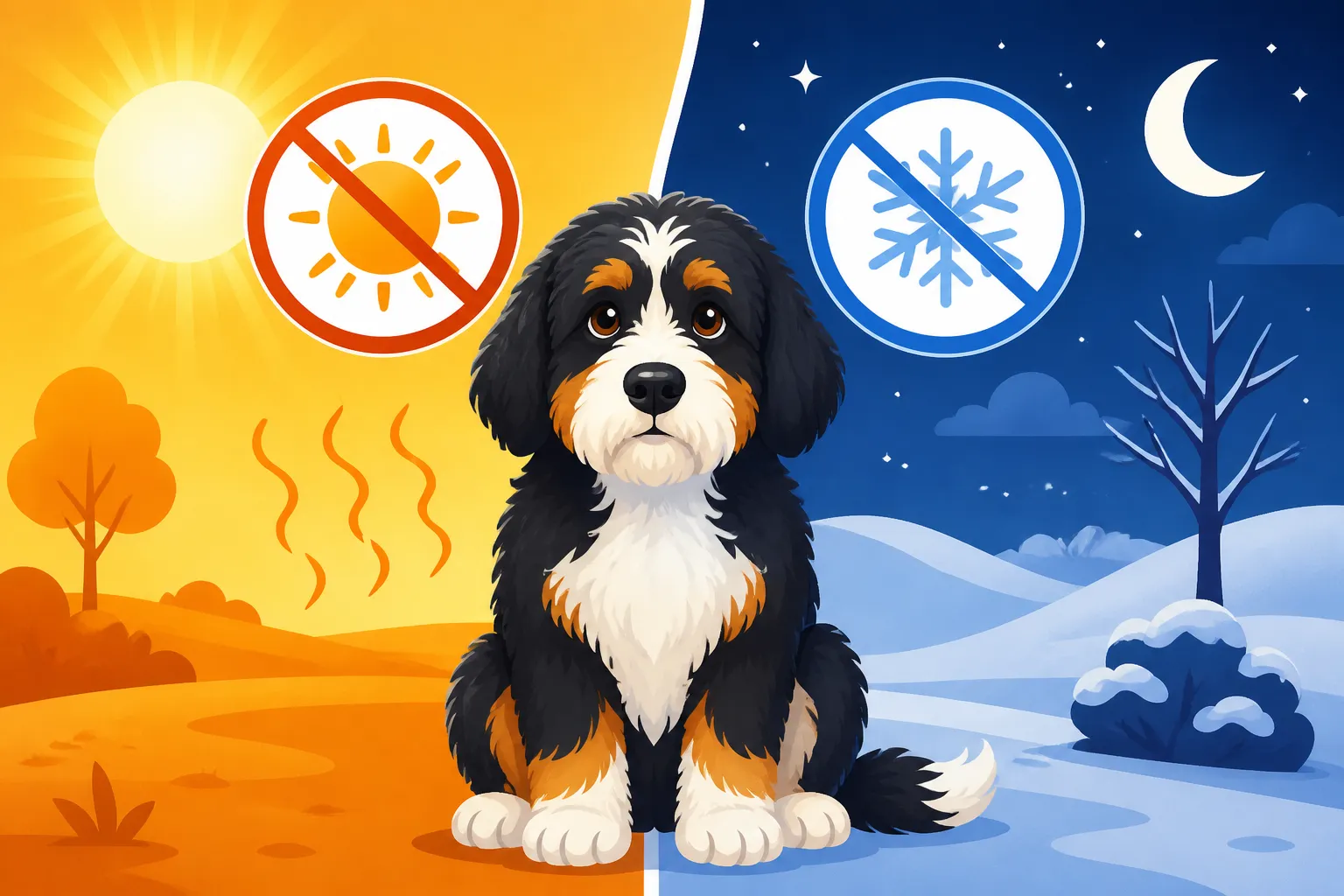
For Bernedoodles, generally, when the air temperature hits 75°F (24°C) or higher, you need to exercise extreme caution. Above 80°F (27°C), it's often best to avoid strenuous outdoor activity altogether, especially during the sunniest parts of the day. And once temperatures climb above 85°F (30°C), even short walks can be risky, particularly if there's high humidity.
Humidity is a silent danger. When the air is saturated with moisture, your Bernedoodle's primary cooling mechanism—panting and evaporative cooling—becomes far less effective. That's why a 75°F day with 80% humidity can be more dangerous than an 80°F day with very low humidity. It's helpful to look at the "heat index" or "feels like" temperature, which combines both heat and humidity. If that number is nearing or exceeding 80, it's a definite red flag.
Optimal Times for Outdoor Activity
So, when can you take your Bernedoodle out? The best times are typically early mornings and late evenings. Think before 8 AM and after 7 PM, but adjust based on your local climate. Even then, on extremely hot days, these hours might still be too warm for prolonged exercise. Test the pavement with your hand: if you can't comfortably hold it there for five to seven seconds, it's too hot for your dog's paws, regardless of the air temperature. Whether a Bernedoodle Should Be Walked in Summer often comes down to this simple pavement test.
During those hot daytime hours, short, necessary potty breaks are usually okay, but keep them brief and in shaded areas. Avoid dog parks, long walks, or any vigorous play. If you absolutely must be outside during marginal times, keep a close eye on your dog, bring plenty of water, and ensure access to shade. Consider using a cooling vest or mat, which can be found on sites like Chewy or Amazon, to help regulate their temperature both before and after short outings.
Here’s a quick guide to help you decide:
| Temperature (°F / °C) | Humidity | Risk Level | Recommended Activity |
|---|---|---|---|
| Below 68°F (20°C) | Any | Low | Normal exercise |
| 68-75°F (20-24°C) | Low | Moderate | Monitor closely, shade, water. Avoid peak sun. |
| 68-75°F (20-24°C) | High | Medium-High | Shorter walks, slower pace, lots of breaks. Avoid peak sun. |
| 75-80°F (24-27°C) | Low | High | Potty breaks only, shade, early/late hours. Pavement test! |
| 75-80°F (24-27°C) | High | Very High | Essential potty breaks only, strictly shaded. |
| Above 80°F (27°C) | Any | Extreme | Avoid prolonged outdoor time. Very short potty breaks only. |
Creating a Heat-Safe Environment for Your Bernedoodle
Knowing when to keep your Bernedoodle indoors is half the battle; the other half is making sure their indoor or supervised outdoor environment is truly safe and comfortable when the heat strikes. It's about more than just turning on the AC; it’s about thoughtful planning and providing the right resources.
The Importance of Indoor Cooling and Shade
When the temperatures soar, your home becomes your Bernedoodle's sanctuary. Air conditioning is undeniably the most effective way to keep your dog cool. If you don't have AC, or if you're trying to conserve energy, consider setting up fans, but remember that fans primarily cool by evaporation from the skin, which isn't as effective for heavily coated dogs, and they mostly just move warm air around. Still, any air movement can help.
Ensure your Bernedoodle has access to the coolest parts of your home – often tiled floors in bathrooms or kitchens. Close blinds and curtains on sun-facing windows to block out radiant heat. You can also provide cooling mats (many excellent options are available from retailers like Chewy or Amazon) which don't require refrigeration and offer a cool spot for them to lie down. If you do allow supervised outdoor time, even for short periods, absolute, dense shade is non-negotiable. Trees, awnings, or shade sails are essential. Never rely on just partial shade or shade from a small object that might shift with the sun.
Hydration and Cooling Aids
Constant access to fresh, cool water is paramount. Always have multiple water bowls available throughout the house, and consider adding ice cubes to them to keep the water colder for longer. For outdoor potty breaks, carry a portable water bottle and a collapsible bowl. Some Bernedoodles, with their Poodle lineage, can be quite particular about drinking, so make sure the water is appealing.
Beyond drinking, there are other ways to aid cooling. A kiddie pool with a few inches of water in a shaded area can be a fantastic way for some Bernedoodles to cool off, especially if they enjoy splashing. However, Whether a Bernedoodle Swims to Cool Off depends heavily on the individual dog’s preference and comfort level with water. Misting them with a spray bottle of cool water (not cold, which can cause vasoconstriction) can also provide some relief, especially on their belly and paw pads. You can also dampen a towel with cool water and let them lie on it or drape it over them. Always prioritize constant supervision during any outdoor cooling activities.
Emergency Protocol: What to Do if Your Bernedoodle Overheats
Despite your best efforts, sometimes accidents happen, or the heat simply becomes too much. Knowing exactly what to do when your Bernedoodle shows signs of severe overheating or heatstroke is vital. Quick, decisive action can be life-saving.
Immediate First Aid Steps
If you suspect your Bernedoodle is overheating or in heatstroke, the very first thing to do is get them to a cooler environment immediately. This means bringing them indoors into an air-conditioned space, or at the very least, into the deepest shade you can find.
Once in a cooler spot, begin active cooling. Do not plunge them into ice water, as this can cause their blood vessels to constrict, hindering heat dissipation and potentially sending them into shock. Instead, use cool (not freezing cold) water. Wet towels applied to their neck, armpits, and groin areas are highly effective because these are areas where large blood vessels are close to the surface, allowing for rapid heat exchange. You can also gently mist their body with cool water and use a fan to increase evaporative cooling. Offer small amounts of water, but don't force them to drink if they're disoriented or struggling, as they could aspirate it. Focus on external cooling first.
When to Seek Veterinary Care
While you're performing first aid, call your veterinarian or the nearest emergency veterinary clinic without delay. Even if your Bernedoodle seems to be improving, heatstroke can cause internal damage that isn't immediately apparent. Organs like the kidneys, liver, and brain can be affected, leading to delayed complications. Tell them you're on your way and describe your dog's symptoms and the first aid you've administered.
During the drive to the vet, continue your cooling efforts if safely possible, perhaps with wet towels. The veterinary team will assess your Bernedoodle's core temperature, administer intravenous fluids to combat dehydration and shock, and monitor them for organ damage. They might also give medications to manage any seizures or gastrointestinal upset. Early and aggressive veterinary intervention significantly improves the prognosis for heatstroke, so never hesitate to make that call.
Year-Round Considerations: Beyond Just Summer
While summer is the most obvious time for heat concerns, a Bernedoodle's susceptibility to temperature extremes, their grooming needs, and their physical capabilities demand attention throughout the year. Being a responsible Bernedoodle owner means thinking ahead and adapting your care routines seasonally.
Grooming for Comfort in All Seasons
Many owners debate The Summer Shave Argument on a Bernedoodle. While shaving down your Bernedoodle might seem like a logical way to keep them cool, it's not always the best solution. Their coat actually provides a layer of insulation from the sun's direct rays, and shaving it too short can expose their sensitive skin to sunburn, increasing their risk of skin cancer. If you opt for a shorter cut, a "summer clip" (leaving at least an inch or two of hair) is generally recommended, as opposed to shaving them bare. This still allows for better air circulation without completely removing their natural protection.
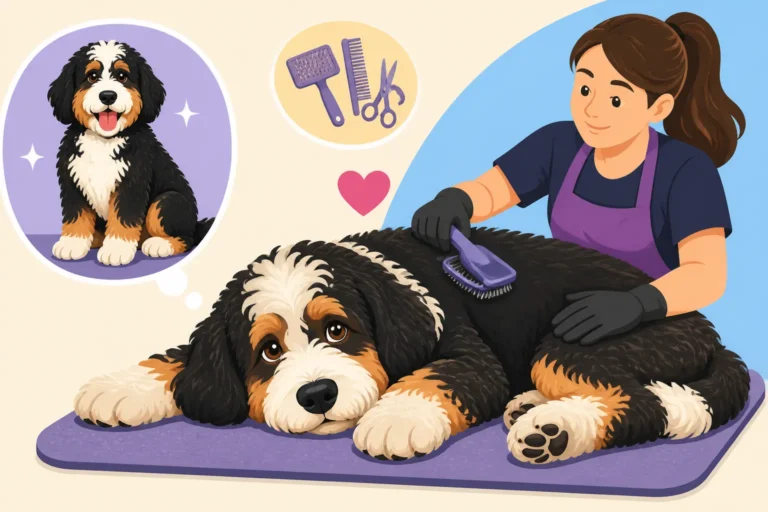
Regular grooming is crucial year-round, not just for aesthetics but for their health and comfort. A matted coat traps heat and prevents air from reaching the skin, making a Bernedoodle even more prone to overheating. Mats in a Bernedoodle's Armpits and Britches are common problem areas that must be routinely addressed. Brushing their dense coat regularly, ideally with a slicker brush and a metal comb to get down to the skin, ensures good air flow and prevents mats. A clean, well-maintained coat will serve them better in both heat and cold than a neglected one.
Exercise and Activity in Cooler Weather
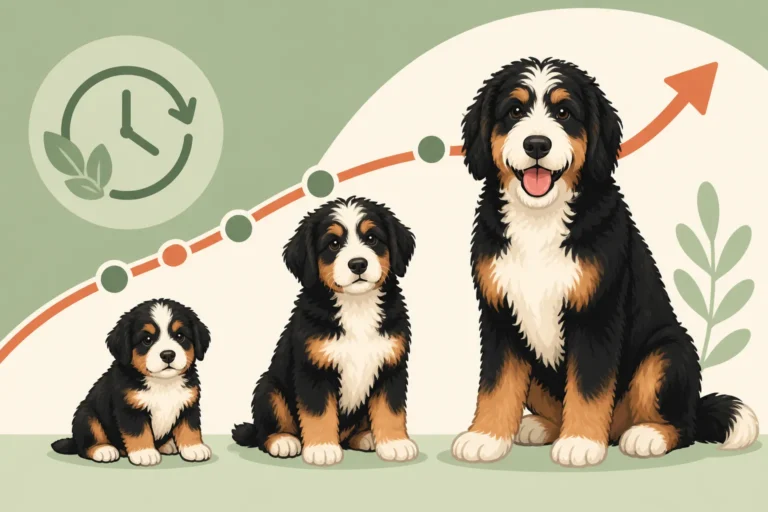
Even in cooler months, it's important to remember that Bernedoodles, especially standard sizes, still need appropriate exercise, but you must still be mindful of their joints as they grow. Growing a Standard Bernedoodle Slowly on Purpose emphasizes the importance of controlled growth and avoiding over-exercise in puppies to protect developing joints. Once mature, however, they are robust dogs who enjoy activity.
In spring and fall, when temperatures are often ideal, you can enjoy longer walks, hikes, and play sessions. Bernedoodles often excel in activities like The Draft Dog Work a Bernedoodle Can Still Do or other canine sports. However, even on cooler days, ensure they have access to water, especially during strenuous activity. In winter, their thick coat is generally a blessing, allowing them to enjoy snow and cold weather. But beware of extreme cold, ice, and road salt, which can damage their paws. Booties or paw balm can offer protection in harsh winter conditions. Always ensure their activity levels match their age and physical condition; Arthritis in a Bernedoodle at Eight might mean adjusting their routine.
Disclaimer
This article is for general informational purposes only and does not constitute professional advice. Laws, prices and regulations vary by location and change over time. Consult a qualified professional for guidance on your specific situation.