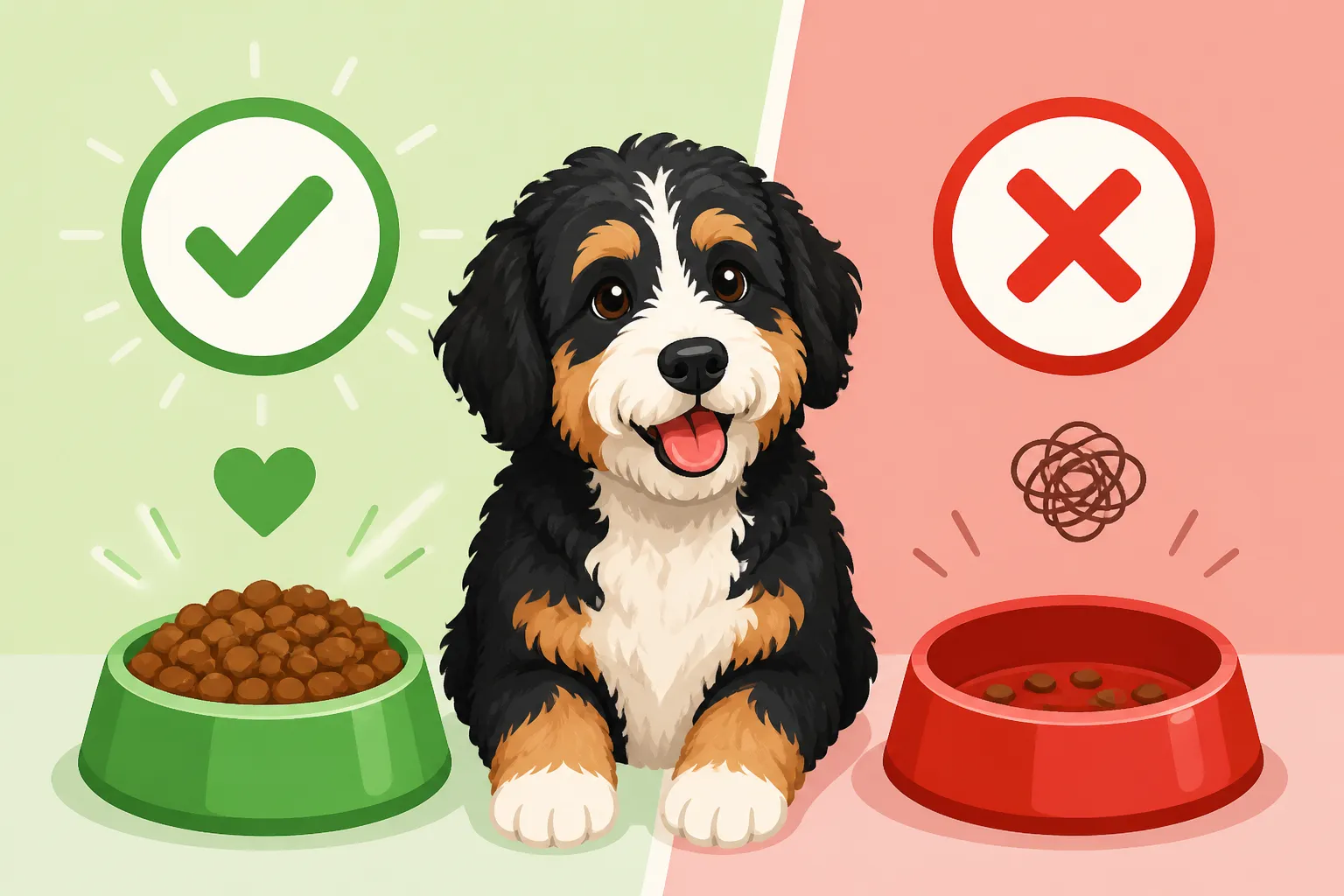
Whether a Bernedoodle Can Be Free Fed
It’s a common fantasy for many dog owners: simply filling up the food bowl once a day and letting your furry friend graze at their leisure, no fuss, no schedule. Life gets busy, and the idea of "free-feeding" your Bernedoodle can sound like a convenient solution to save time and streamline your daily routine. But before you commit to this hands-off approach, it's crucial to understand why this strategy might not be the best fit for your beloved Bernedoodle, and why it can even lead to significant health and behavioral challenges. This guide will help you understand the risks and benefits associated with different feeding methods and offer practical advice for keeping your Bernedoodle happy and healthy.
The Appeal of Free-Feeding: A Closer Look at Convenience
We've all been there – rushing out the door for work, managing kids, or simply trying to squeeze in one more task. The thought of a self-sufficient dog who manages their own meals is incredibly tempting. You just pour a large quantity of kibble into a bowl, and they eat when they're hungry. No specific meal times, no measuring, no pressure to be home at a certain hour. For some dogs, particularly smaller breeds with high metabolisms who might genuinely graze throughout the day without overeating, this can work. It offers flexibility, and for a dog that self-regulates perfectly, it might seem like a natural, stress-free way to live.
Why It Sounds Good, But Often Isn't
The allure is undeniable. You imagine your Bernedoodle gracefully taking a few bites when hungry, then wandering off, only to return hours later for another small snack. It feels natural, less regimented than our own human meal times. This perceived freedom from a strict schedule can be appealing not just to owners, but it's often marketed subtly by various food brands that show large, overflowing bowls. However, this ideal scenario often clashes with the reality of canine psychology and physiology, especially for a breed like the Bernedoodle, which is prone to certain health issues that scheduled feeding can help mitigate. The convenience for the human can sometimes come at a cost to the dog's well-being.
The Hidden Dangers: Why Free-Feeding Can Be Risky for Your Bernedoodle
While the idea of free-feeding might sound liberating, it introduces several significant risks for Bernedoodles, impacting their physical health, behavior, and your ability to monitor them effectively. This isn't just about weight gain; it's about a holistic approach to their health.
The Threat of Obesity and Joint Strain
Bernedoodles, especially the Standard variety, are large dogs, typically ranging from 70 to 90 pounds. They have a propensity for gaining weight if not managed correctly, partly due to the Bernese Mountain Dog's more laid-back nature compared to the high-energy Poodle. When food is always available, it's incredibly easy for a Bernedoodle to overeat. They might not be driven by true hunger but by boredom, habit, or simply the availability of tasty kibble.
Obesity in a large breed like a Bernedoodle is more than just a cosmetic issue; it's a serious health concern that can dramatically Whether an Overweight Bernedoodle Loses Years. Those extra pounds put immense strain on their joints, already susceptible to conditions like hip and elbow dysplasia that they inherit from their Bernese side. Over time, this accelerates arthritis, causes pain, and severely impacts their mobility and quality of life. An overweight Bernedoodle will struggle to enjoy walks, play, and even simple movements, making their golden years far less comfortable. Keeping a Bernedoodle's weight down requires careful portion control and consistent exercise.
Increased Bloat Risk
One of the most terrifying emergencies for owners of deep-chested breeds like Bernedoodles (and their Bernese ancestors) is Gastric Dilatation-Volvulus (GDV), commonly known as bloat. This life-threatening condition occurs when the stomach fills with gas, fluid, or food, and then twists, cutting off blood supply and trapping everything inside. While the exact causes aren't fully understood, rapid eating and consuming large meals are considered significant risk factors.
With free-feeding, a Bernedoodle might go for long periods without eating, then suddenly gorge themselves on a large amount of food, increasing the likelihood of stomach distention. While Whether Raised Bowls Raise a Bernedoodle's Bloat Risk used to be common advice to prevent bloat, current veterinary understanding suggests that raised bowls may actually increase the risk in some dogs by encouraging faster eating. Therefore, carefully managed meal times with smaller, more frequent meals (two or three times a day) are often recommended to reduce this horrifying risk. Understanding The Retching That Means a Bernedoodle Has Torsed is vital for any owner.
Difficulty Monitoring Health and Eating Habits
When your Bernedoodle has constant access to food, it's much harder to notice subtle changes in their appetite or eating patterns. A sudden disinterest in food, eating less, or even eating more than usual can be early indicators of a health problem, stress, or discomfort. With scheduled meals, you immediately notice if your dog doesn't finish their bowl, picks at their food, or takes an unusually long time to eat. These observations can prompt a timely vet visit and potentially catch an illness early.
Consider a scenario where your Bernedoodle develops an upset stomach. If they're free-fed, you might not realize they haven't touched their food for half a day. If they eat grass and then throw up, you won't know if they also ate their kibble beforehand or if they've been off their food for hours. With a structured schedule, you know exactly what goes in and when, making it easier to track symptoms and communicate precise information to your veterinarian. This monitoring is critical for a breed whose health status can change quickly.
Hindering House Training and Schedule Establishment
Scheduled feeding goes hand-in-hand with effective house training, especially for a puppy. When you feed your Bernedoodle at predictable times, their bathroom schedule becomes more predictable too. Typically, a dog will need to relieve themselves shortly after eating and drinking. If they're grazing all day, their bathroom needs become sporadic and harder to anticipate, making house training a frustrating, drawn-out process.
Furthermore, dogs thrive on routine. A consistent feeding schedule provides structure and predictability, helping your Bernedoodle feel secure and understand the rhythms of their day. This predictability can reduce anxiety and contribute to better overall behavior.
Embracing Structure: The Benefits of Scheduled Meals for Bernedoodles
Moving away from free-feeding and adopting a structured meal plan offers a wealth of advantages for both you and your Bernedoodle. It's not just about control; it's about fostering health, behavior, and a deeper connection.
Promoting a Healthy Weight and Digestion
With scheduled meals, you have complete control over how much food your Bernedoodle consumes each day. This is paramount for preventing obesity and ensuring they maintain a healthy weight throughout their life, which is critical given their joint predispositions. You can accurately measure out The Daily Cups a Standard Bernedoodle Needs or How Much an Adult Bernedoodle Eats, adjusting as needed based on their activity level, age, and any specific dietary requirements your vet recommends.
Dividing their daily allowance into two or three meals reduces the likelihood of rapid gorging, which in turn helps minimize the risk of bloat. Smaller, more frequent meals can also aid digestion, as their system processes manageable portions rather than being overwhelmed by a single large one. For puppies, particularly, feeding smaller meals multiple times a day is crucial for their developing systems and for promoting Growing a Standard Bernedoodle Slowly on Purpose to protect joints.
Enhancing Training and Behavior
Mealtime is a powerful tool for training and reinforcing good behavior. When your Bernedoodle knows when their food is coming, you can use it as a reward for calm behavior, waiting patiently, or performing a command. This creates positive associations and strengthens your bond. You can teach them to "sit" before the bowl is lowered, to "wait" until released, or to lie down quietly while you prepare their meal. These small rituals build discipline and respect.
Scheduled feeding also helps establish you as the provider of resources, reinforcing your role as the leader, which can be beneficial for overall obedience and management, particularly as your Bernedoodle grows into a large, powerful adult. Consistent mealtimes can help mitigate anxious behaviors and create a more secure, well-adjusted dog.
Better Health Monitoring and Bonding Opportunities
As mentioned, observing your Bernedoodle during meal times provides invaluable insight into their health. You'll quickly spot changes in appetite, chewing habits, or enthusiasm for food, allowing for early detection of potential health issues. Beyond health, mealtime becomes a bonding opportunity. It's a moment of focused interaction, a shared experience that reinforces your relationship.
You can engage with your Bernedoodle while they eat, ensuring they are comfortable and secure. This routine can also be a perfect time to administer medications or supplements if needed, as they're often more cooperative when food is involved. It's a consistent touchpoint in their day where you can check in, assess, and connect.
| Feature | Free-Feeding (Constant Access) | Scheduled Feeding (Portioned Meals) |
|---|---|---|
| Weight Control | High risk of obesity, difficult to manage | Easy to manage portions, promotes healthy weight |
| Bloat Risk | Potentially increased due to gorging | Reduced risk with smaller, frequent meals |
| Health Monitoring | Difficult to detect appetite changes | Easy to spot changes, early illness detection |
| Digestion | Can lead to overeating and digestive upset | Aids in consistent digestion |
| House Training | Unpredictable elimination schedule | Predictable bathroom breaks, aids training |
| Training Value | Minimal leverage for training | Excellent opportunity for behavior reinforcement |
| Bonding | Less focused interaction | Dedicated bonding time, strengthens relationship |
| Food Quality | Stale food, potential for pests | Fresh food at each meal, better hygiene |
| Dietary Needs | Hard to enforce special diets | Easy to manage specific dietary requirements |
Making Mealtime Matter: Practical Tips for a Healthy Bernedoodle Feeding Routine
Okay, so we've established that scheduled meals are the way to go for your Bernedoodle. Now, let's talk about how to make it work seamlessly and beneficially for everyone involved.
Choosing the Right Food and Portions
First things first, select a high-quality dog food appropriate for large breeds, considering their age and activity level. For puppies, a large breed puppy formula is essential to support Growing a Standard Bernedoodle Slowly on Purpose and healthy bone development. Consult your veterinarian for recommendations tailored to your Bernedoodle's specific needs.
Once you have your food, adhere strictly to the feeding guidelines on the package, using a kitchen scale or a dedicated measuring cup for accuracy. These guidelines are usually just a starting point; observe your Bernedoodle's body condition and adjust portions as needed. You should be able to feel their ribs easily without seeing them protruding, and they should have a discernible waist when viewed from above. Don't forget that treats count! Factor them into your daily calorie allowance. For a comprehensive range of food options, from kibble to fresh food, you can explore retailers like Chewy or specialized services such as Ollie that deliver pre-portioned meals right to your door.
Establishing a Consistent Schedule
Aim for at least two meals a day for adult Bernedoodles, typically morning and evening. Puppies will need three or even four smaller meals a day, gradually reducing as they get older. Consistency is key. Try to feed at roughly the same times each day, even on weekends. This routine helps regulate their digestive system and reduces anxiety.
Make mealtime a calm, quiet event. Designate a specific, consistent feeding spot that is free from distractions. If you have other pets, ensure each dog has their own space to eat without competition or stress.
Utilizing Slow Feeder Bowls and Enrichment
Because Bernedoodles can be enthusiastic eaters, a slow feeder bowl can be incredibly beneficial. These bowls have internal obstacles that force your dog to eat around them, slowing down their intake significantly. This not only helps with digestion but can also reduce the risk of bloat by preventing them from gulping down air with their food. You can find a wide variety of slow feeder bowls, puzzle feeders, and snuffle mats on platforms like Amazon or through pet specialty stores.
Beyond just slowing down eating, consider using meal times as an opportunity for enrichment. Instead of just putting food in a bowl, put a portion of their meal into a puzzle toy or scatter it in a designated "sniffing zone" in your yard. This turns eating into a mental exercise, engaging their natural foraging instincts and providing valuable mental stimulation. This can be especially good for a breed with both the intelligence of a Poodle and the gentle curiosity of a Bernese.
Hydration and Freshness
Always ensure your Bernedoodle has access to fresh, clean water, especially if they are only eating at specific times. If you're using dry kibble, refresh the water bowl at each mealtime. If you are using fresh food options like those offered by Ollie, be sure to store them according to the provider's instructions to maintain freshness and nutritional value.
For any dry food left out, consider if it's becoming stale or attracting pests. With scheduled feeding, you put down fresh food and pick up any uneaten portion after about 15-20 minutes. This helps maintain hygiene and prevents food from spoiling or attracting unwanted critters.
When to Consult Your Vet
If you're noticing consistent changes in your Bernedoodle's appetite, if they're gaining or losing weight despite appropriate portions, or if you have any concerns about their diet, don't hesitate to reach out to your veterinarian. They can help you determine the best feeding strategy, recommend specific food types, and rule out any underlying health issues. Especially when considering a significant change in diet or if your Bernedoodle has specific health conditions like those that might necessitate What Gastropexy Adds to a Bernedoodle's Surgery for bloat prevention, professional advice is invaluable. Your vet is your best resource for ensuring your Bernedoodle's nutritional needs are met throughout their life.
Disclaimer
This article is for general informational purposes only and does not constitute professional advice. Laws, prices and regulations vary by location and change over time. Consult a qualified professional for guidance on your specific situation.