Whether Hardwood Floors Are Bad for a Bernedoodle
It's a common worry among Bernedoodle owners, and for good reason: those beautiful hardwood floors that make our homes look so elegant can feel like an ice rink to our big, sometimes clumsy, furry friends. You've probably seen your sweet Bernedoodle slip and slide, or hesitate before launching themselves across a polished surface, and that little pang of concern about their joints is completely valid. This guide is here to walk you through why hardwood floors can be a problem for Bernedoodles and, more importantly, what practical steps you can take to keep your beloved companion safe and comfortable in your home.
The Truth About Hardwood Floors and Your Bernedoodle's Joints
Let's be honest, our Bernedoodles are substantial dogs. Even a mini Bernedoodle can pack a punch, and a standard one can easily reach ninety pounds or more. This magnificent size and weight, combined with the often-slick surface of hardwood floors, creates a perfect storm for potential joint issues. It's not just about an occasional funny slip; it's about the cumulative impact on their developing and aging bodies.
Why Hard Surfaces Pose a Risk for Bernedoodles
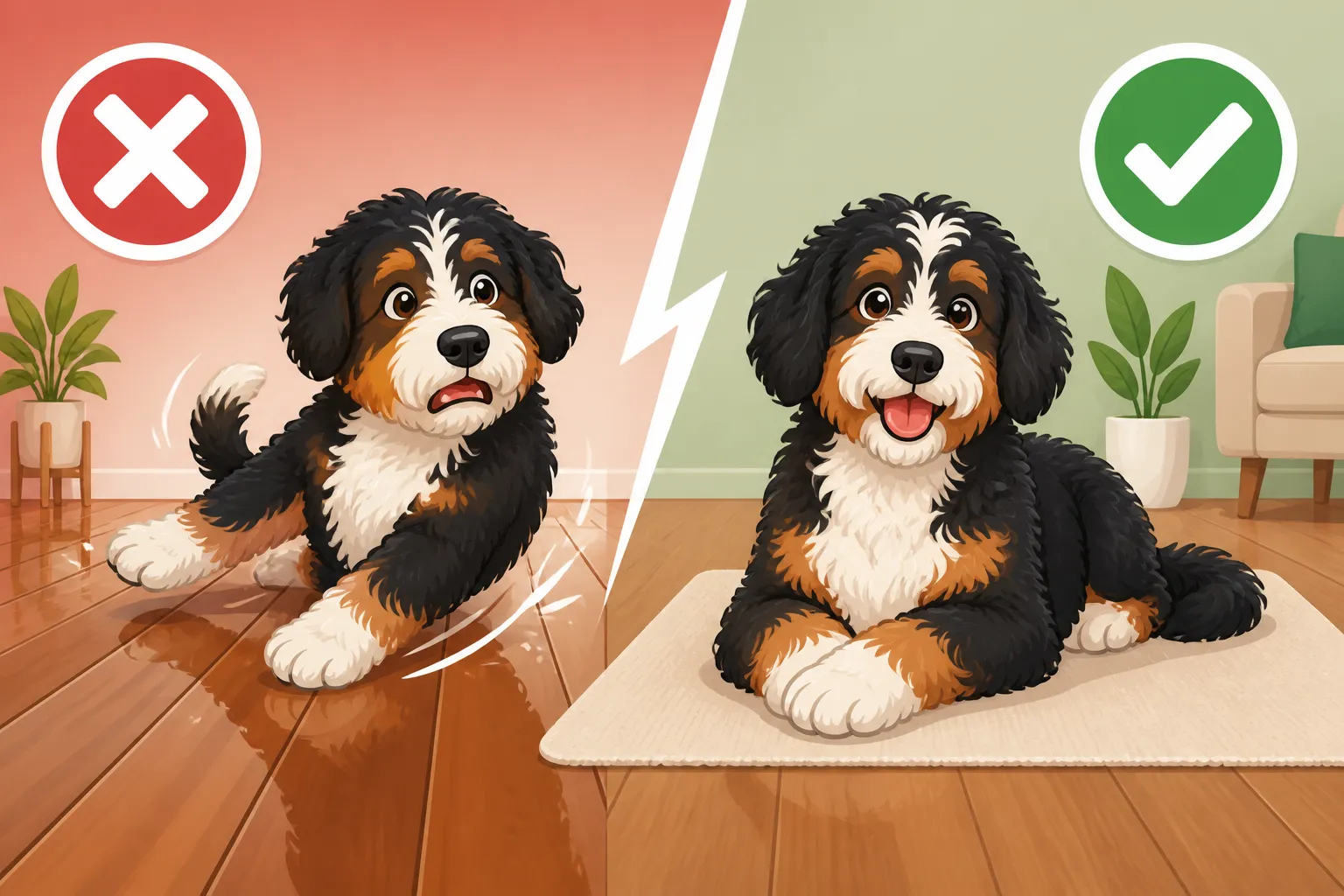
Imagine trying to walk or run on a surface that offers very little grip. You'd be constantly adjusting, bracing yourself, and your muscles and joints would take a beating trying to maintain balance. That's essentially what our Bernedoodles experience on hardwood floors. Their paw pads are designed for traction, but even the best paw pads struggle on a highly polished surface.
The repetitive micro-traumas from slipping, or even just the extra effort required to not slip, can put undue stress on their joints. Bernedoodles, inheriting traits from their Bernese Mountain Dog lineage, can be prone to certain orthopedic conditions, such as hip and elbow dysplasia. When a dog like a Bernedoodle is already genetically predisposed to these issues, adding constant jarring and instability from slippery floors can exacerbate them or even accelerate their onset. A young, growing Bernedoodle's bones and joints are still developing, and this constant strain is absolutely not ideal. Think about the long-term health of their Hips on a Ninety Pound Bernedoodle or how the stress might affect Elbow Dysplasia in a Growing Bernedoodle as they grow. It's a real concern for their lifelong comfort and mobility.
The Slipping Hazard: More Than Just a Minor Fall
Beyond the slow, insidious damage from repetitive stress, there's the immediate danger of a serious fall. A Bernedoodle launching itself to greet you at the door, or perhaps taking a sharp turn during a playful zoomie, can lose its footing in a split second. This isn't just a bruised ego; it can result in painful muscle strains, ligament sprains, or even more severe injuries like cruciate ligament tears. I've heard too many stories of active, happy Bernedoodles suddenly yelping in pain after a tumble, only to discover a torn ligament requiring expensive surgery and a long recovery. Learning about Torn Cruciates in a Heavy Bernedoodle is an important part of understanding these risks.
As our Bernedoodles age, the risks only multiply. An older Bernedoodle, perhaps already dealing with Arthritis in a Bernedoodle at Eight, will have less muscle mass, poorer balance, and slower reflexes. A fall that a younger dog might shrug off could be devastating for an older one, leading to significant pain, prolonged recovery, or even a loss of mobility that impacts their quality of life. The fear of seeing your beloved companion struggle on a surface that's supposed to be safe and comfortable is a valid one, and it's why addressing this issue proactively is so important.
Practical Solutions to Make Hardwood Floors Safe and Comfortable
The good news is that you don't have to rip out all your beautiful hardwood floors! There are many effective and aesthetically pleasing ways to mitigate the risks and ensure your Bernedoodle can navigate your home with confidence and ease. It's all about creating safe zones and increasing traction where it matters most.
Strategic Rug and Runner Placement
This is probably the most straightforward and effective solution. Think about the "flight paths" your Bernedoodle takes through your home. Do they dash from the living room to the kitchen? Do they have a favorite spot by the window? These are the areas where rugs and runners become your best friends.
For instance, placing a long runner down main hallways creates a continuous, grippy path. In larger rooms, strategically placed area rugs can break up large expanses of slick floor. You want to ensure there are always soft, non-slip surfaces for them to land on, walk across, and play on, especially in areas where they might get excited or move quickly. When selecting rugs, always prioritize those with a non-slip backing, or invest in good quality rug pads. A rug that slides just as easily as the bare floor defeats the purpose and can even become a tripping hazard for you and your dog. You can find a huge variety of options, from budget-friendly to designer, on platforms like Amazon, making it easy to match your home decor while providing safety.
Consider these high-impact areas for rug placement:
- Main Traffic Paths: Hallways, entryways, and the routes between frequently visited rooms (e.g., living room to kitchen, bedroom to outside door).
- Play Areas: If your Bernedoodle loves to romp in a particular spot, ensure that area is well-covered.
- Around Furniture: Especially near couches or beds where they might jump off, providing a soft landing spot is crucial.
- Feeding/Water Stations: To prevent slips while they eat or drink, which can be messy even without a fall.
Enhancing Your Bernedoodle's Traction
Beyond rugs, you can also help your Bernedoodle's own paws get a better grip. Their natural traction comes from their paw pads and nails, and keeping these in tip-top shape can make a surprising difference.
First up: nail trims and paw pad hair trimming. Overgrown nails can actually reduce traction because they prevent the paw pads from making proper contact with the floor. Instead, the nails act like little skates, pushing off the surface. Regular, short nail trims (where you can just barely hear them click on the floor, if at all) are essential. Similarly, the hair that grows between a Bernedoodle's paw pads can become quite long and fluffy, creating a slippery buffer zone between the pad and the floor. Trimming this hair flush with the paw pads helps expose the grippy surface underneath. This is a task you can often tackle at home with a good pair of blunt-nosed grooming scissors, or your groomer can easily do it for you during their regular visit.
For extra grip, especially for older dogs or those needing a bit more help, there are specialized products:
- Paw Grips/Socks/Boots: These are essentially little socks or boots with non-slip soles that your Bernedoodle wears. They can be particularly useful for dogs with significant mobility issues, or in specific problem areas. Some dogs tolerate them better than others, so it might take a bit of trial and error.
- Paw Wax: Products like Musher's Secret or similar paw waxes (easily found on Chewy or Amazon) can be applied to your dog's paw pads to provide a thin, grippy layer. It's often used for protection in extreme weather, but it can also enhance traction on slick indoor surfaces. It's not a permanent solution, as it needs reapplication, but it can be very helpful for temporary boosts or for dogs who refuse to wear socks.
| Traction Aid | Pros | Cons | Best For |
|---|---|---|---|
| Rugs/Runners | Highly effective, aesthetic, durable | Can be expensive, require cleaning | All Bernedoodles, high-traffic areas |
| Trimmed Nails | Essential paw health, improves natural grip | Requires regular maintenance | All Bernedoodles |
| Trimmed Paw Hair | Exposes natural paw pad grip | Requires regular maintenance | All Bernedoodles, especially fluffy breeds |
| Paw Wax | Easy to apply, temporary grip boost | Needs frequent reapplication, can be messy | Dogs needing occasional extra grip, older dogs |
| Non-Slip Socks/Boots | Excellent grip, paw protection | Some dogs dislike wearing them, can slip off | Dogs with severe mobility issues, specific tasks |
Supporting Your Bernedoodle's Joint Health Long-Term
Beyond managing the immediate environment, taking a holistic approach to your Bernedoodle's joint health is paramount. Hardwood floors are one piece of the puzzle, but nutrition, weight, and appropriate exercise are equally vital in preventing and managing orthopedic issues.
The Role of Proper Nutrition and Weight Management
For a large breed dog like a Bernedoodle, diet plays a massive role in joint health, particularly during puppyhood. Feeding a large breed puppy formula is critical because these foods are specifically formulated to support slow, steady growth. Rapid growth, often fueled by diets too high in calories or improper calcium-to-phosphorus ratios, can put immense strain on developing joints and significantly increase the risk of conditions like hip and elbow dysplasia. You'll want to choose a reputable brand that offers formulas for Growing a Standard Bernedoodle Slowly on Purpose.
Once your Bernedoodle is an adult, maintaining a healthy weight becomes the number one priority for joint longevity. Every extra pound your dog carries translates to increased stress on their hips, elbows, and knees. It's like asking them to carry a backpack full of bricks all day, every day. Obesity can worsen existing joint conditions and accelerate the development of arthritis. Regular body condition scoring (feeling for their ribs, observing their waistline) and appropriate portion control are essential. If you're looking at fresh food options, a company like Ollie might offer tailored meal plans, or your veterinarian can help you determine the right calorie intake for your Bernedoodle to ensure you're Keeping a Bernedoodle's Weight Down. Always consult your vet for dietary recommendations, especially if your Bernedoodle is prone to weight gain or has specific health concerns.
Exercise and Physical Therapy Considerations
Appropriate exercise for a Bernedoodle changes throughout their life. For puppies, it's crucial to understand The Exercise a Bernedoodle Puppy Should Not Do. Over-exercising a growing puppy can damage their still-developing growth plates and joints. Short, frequent play sessions and controlled walks are far better than long, strenuous hikes or intense running. Avoid excessive jumping, stairs, and slippery surfaces during these critical growth periods.
As adults, Bernedoodles need regular, moderate exercise to maintain muscle tone and flexibility. Low-impact activities are often best for their joints. Swimming, for example, is fantastic because it provides a full-body workout without any impact stress on the joints. Leashed walks on varied, soft terrain (grass, dirt trails) are also excellent. If your Bernedoodle is starting to show signs of joint stiffness, or if they have a diagnosed orthopedic condition, your veterinarian might recommend physical therapy. This can include targeted exercises, hydrotherapy, or therapeutic massage, all designed to strengthen supporting muscles and improve range of motion. For older dogs, or those recovering from injury, ramps for getting in and out of cars or onto furniture can be a game-changer, reducing the strain of jumping. Learning whether Whether an Old Bernedoodle Needs a Ramp is right for your dog could greatly improve their daily comfort.
Monitoring for Signs of Joint Stress or Injury
Even with all the preventative measures in place, it's vital to be vigilant for any subtle signs that your Bernedoodle might be experiencing joint pain or discomfort. Our dogs are incredibly stoic, and they often hide pain until it becomes quite severe. Being attuned to their normal movement and behavior can help you catch issues early.
Early Warning Signs to Watch For
Many signs of joint pain are subtle and can easily be mistaken for "just getting old" or "being a bit lazy." However, for a Bernedoodle, any persistent change in their movement or willingness to participate in activities warrants attention.
Keep an eye out for these red flags:
- Changes in Gait: This might manifest as a slight limp, a "bunny hop" when running (where both back legs move together), or a generally stiff, less fluid walk. You might also notice them shifting their weight more to one side. Sometimes, it's simply a refusal to put weight on a particular limb.
- Reluctance to Move: They might hesitate before jumping onto the couch, getting into the car, or going up and down stairs. They may also be slower to rise from a lying position. Watching for Signs a Bernedoodle Is Slowing Down can be crucial.
- Stiffness After Rest: This is a classic sign of arthritis. Your Bernedoodle might be stiff after waking up from a nap or in the morning, but then "warm up" and seem more comfortable after moving around for a bit.
- Pain Response: They might yelp, flinch, or pull away if you touch a particular joint or area of their body.
- Behavioral Changes: Sometimes, pain can manifest as irritability, decreased appetite, or a general lethargy. They might not want to play as much or might seek solitude.
- Muscle Atrophy: Over time, if a dog is favoring a limb, the muscles in that limb might start to waste away, making it appear thinner than its counterpart.
When to Consult Your Veterinarian
If you observe any of the warning signs mentioned above, or if you simply have a gut feeling that something isn't quite right with your Bernedoodle, it's always best to consult your veterinarian. Don't wait until the symptoms are severe; early diagnosis and intervention can make a significant difference in managing joint conditions and preserving your dog's quality of life.
Your vet will conduct a thorough physical examination, observing your Bernedoodle's gait, palpating their joints, and assessing their range of motion. They might also recommend diagnostic tests such as X-rays to get a clearer picture of their joint health. These tests can help identify conditions like hip or elbow dysplasia, arthritis, or cruciate ligament injuries. Regular veterinary check-ups are also crucial, as your vet can often spot subtle changes before they become obvious to you. Discussions about The Screening a Bernedoodle Should Have Yearly are excellent opportunities to bring up any concerns you might have about their movement or comfort, especially as they get older. Remember, you are your Bernedoodle's advocate, and acting quickly on your concerns is the best way to ensure they live a long, happy, and pain-free life.
Disclaimer
This article is for general informational purposes only and does not constitute professional advice. Laws, prices and regulations vary by location and change over time. Consult a qualified professional for guidance on your specific situation.