Whether Rugs Help an Older Bernedoodle
Watching your beloved Bernedoodle, once a bouncy, unstoppable ball of fluff, begin to struggle with the simple act of walking across your shiny hardwood floors can be heartbreaking. It’s a common, frustrating reality for many owners of larger, older dogs: those smooth surfaces become treacherous ice rinks as their joints ache and their footing falters. This guide is here to walk you through exactly how strategically placed rugs and runners can become a literal lifesaver, offering stability and comfort to your aging companion.
The Challenge of Aging Bernedoodles on Slippery Surfaces
As our sweet Bernedoodles transition from energetic pups to wise seniors, their physical capabilities naturally shift. What was once an effortless dash across the kitchen floor can become a hesitant, anxiety-inducing shuffle. This isn't just about slowing down; it's about a fundamental change in how their bodies interact with their environment, especially on surfaces that offer little to no grip.
Understanding Mobility Changes in Senior Bernedoodles
Think about the classic Bernedoodle exuberance – that joyful trot, the sudden zoomies, the way they effortlessly spring up from a nap. For senior Bernedoodles, these movements become increasingly difficult. Joint conditions like Arthritis in a Bernedoodle at Eight are incredibly common, leading to pain and stiffness in hips, elbows, and knees. This pain makes them reluctant to put full weight on their limbs, and even more so to engage in movements that require quick adjustments or solid traction.
Beyond arthritis, there's also the natural muscle loss that comes with age, known as sarcopenia. Those strong hindquarters that once propelled them forward can weaken, making it harder to stand up from a lying position, navigate stairs, or even maintain balance. Nerve degeneration, though less obvious, can also subtly impact their proprioception – their body's sense of its position in space. This means they might not always know exactly where their paws are landing, which can be disastrous on a slick surface. Imagine trying to walk on ice when your legs are stiff and you can't quite feel your feet; that's often what our senior dogs experience. Their confidence plummets, and they start associating certain areas of the house with discomfort or fear, which is truly heartbreaking to witness. The Signs a Bernedoodle Is Slowing Down are often subtle at first, but their struggles on smooth floors are a clear indicator.
The Dangers of Hardwood and Tile Floors
While aesthetically pleasing and easy to clean, hardwood, laminate, and tile floors are the bane of an aging Bernedoodle's existence. For a young, agile dog, they're just another surface. For a senior dog with compromised mobility, they represent a significant fall risk. A simple misstep can lead to a painful tumble, potentially exacerbating existing joint issues or even causing new injuries like sprains or fractures.
Beyond the physical danger, there's a huge psychological toll. We've seen it countless times: a Bernedoodle who once loved to follow you from room to room suddenly hesitates at the threshold of a tiled kitchen. They might try to "tiptoe," spreading their paws wide to gain traction, but it's an ineffective and stressful maneuver. This anxiety can manifest in various ways – reluctance to move, seeking out carpeted areas exclusively, or even refusing to get up for food or water if it means crossing a wide expanse of slippery floor. They learn to be afraid of falling, and this fear can profoundly impact their quality of life, making them feel isolated or less engaged with family activities happening in those "unsafe" zones. It truly limits their world, and that's something no dog owner wants for their beloved companion.
How Rugs and Runners Become a Lifesaver for Your Senior Bernedoodle
When you realize the profound impact slippery floors have on your aging Bernedoodle, the solution often seems simple yet incredibly effective: add traction. Rugs and runners aren't just decorative elements in these situations; they are vital safety tools that can dramatically improve your dog's comfort, mobility, and overall happiness.
Providing Essential Traction and Stability
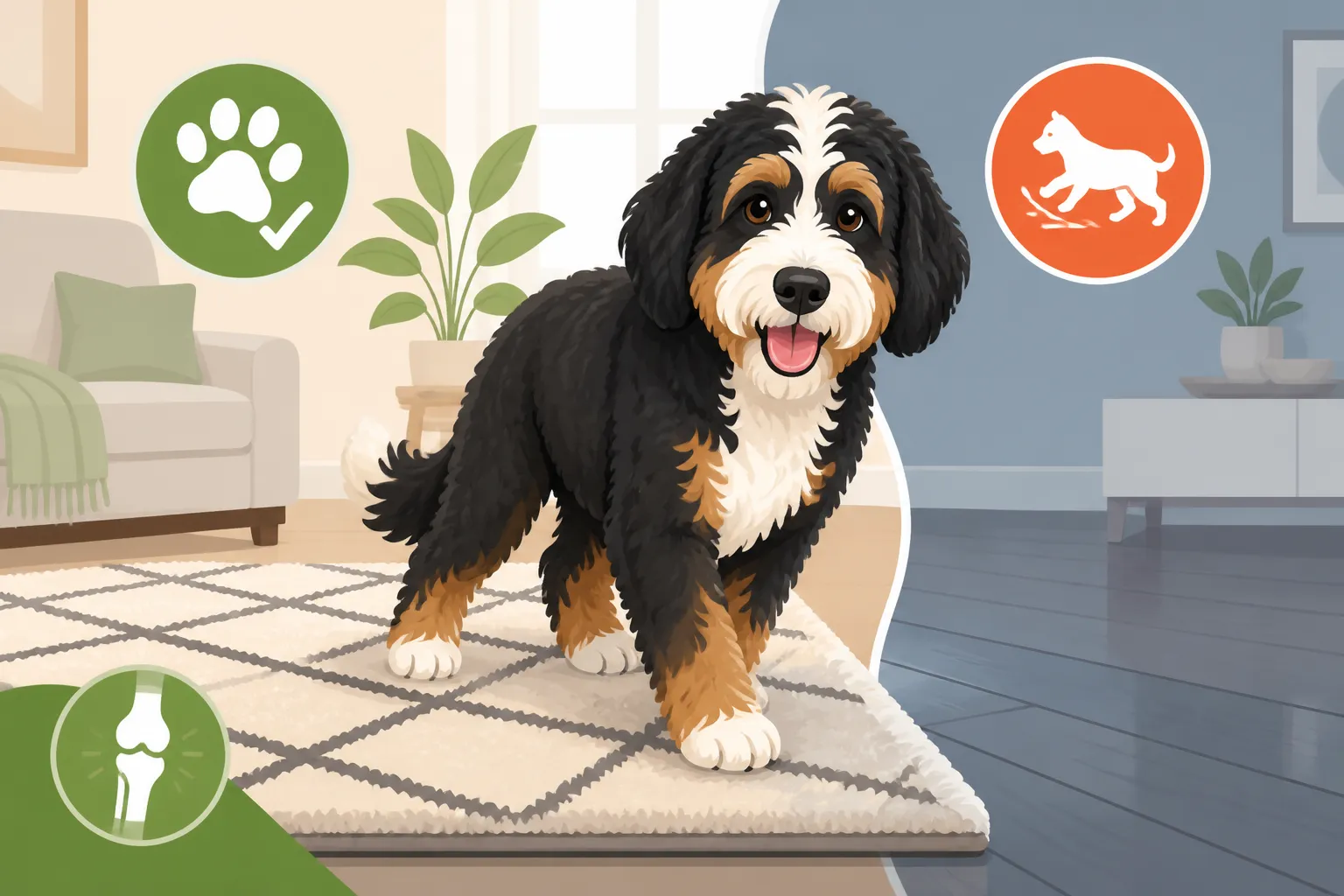
The most immediate and obvious benefit of rugs is the traction they provide. Imagine the difference between walking on a freshly waxed floor in socks versus walking on a grippy rubber mat. For your senior Bernedoodle, a rug offers that crucial "grip" that their weakened paws and joints desperately need. When they push off to stand, walk, or change direction, the rug fibers give them something to engage with, preventing their paws from sliding out from under them.
This newfound stability isn't just about preventing falls; it's about restoring confidence. A dog that feels secure on its feet is more likely to move around, explore, and engage in daily activities. We often hear from owners who say their older Bernedoodle, once hesitant to leave their bed, suddenly starts joining them in the kitchen again or navigating the hallway with a wagging tail once runners are laid down. It's truly transformative. They no longer have to brace themselves for every step, reducing strain on their muscles and joints, and ultimately, making their home feel safe again.
Cushioning for Aching Joints
Beyond traction, rugs offer a softer landing and a more forgiving surface for those tender, aging joints. Hard floors transmit impact directly up through a dog's legs, which can be painful for Bernedoodles suffering from conditions like Elbow Dysplasia in a Growing Bernedoodle or severe arthritis. A thick rug or a rug with a good quality pad underneath acts as a shock absorber, reducing the jarring impact on their hips, knees, and spine with every step.
This cushioning effect is particularly important when your Bernedoodle is lying down or getting up. Many older dogs struggle with the effort of rising, especially on hard surfaces where their paws slip as they try to push themselves up. A plush rug provides a soft, stable surface that minimizes discomfort during these transitions. It’s like the difference between sitting on a hard wooden bench versus a cushioned armchair; the comfort factor is undeniable. This comfort encourages them to relax more fully and even to sprawl out in areas they might have previously avoided due to the hardness of the floor.
Creating Safe Paths and Zones
Strategic placement of rugs and runners is key to maximizing their benefits. Instead of just scattering a few rugs haphazardly, think about mapping out "safe paths" through your home. Identify the high-traffic routes your Bernedoodle uses most often: from their bed to their food and water bowls, to the back door for potty breaks, or to their favorite spot by the couch. Lay down runners along these routes, creating a continuous, grippy pathway.
Consider also creating "safe zones" around critical areas. A large area rug in the living room where the family gathers ensures your Bernedoodle can comfortably join in without fear of slipping. Place a non-slip mat under their food and water bowls to prevent slips while eating or drinking. Even a small rug beside your bed can make a huge difference if your Bernedoodle sleeps nearby and needs to get up in the middle of the night. These thoughtful placements reduce the number of precarious steps they have to take on slippery flooring, allowing them to move more freely and confidently throughout their day. For instance, putting a runner in a long hallway can prevent a dog from doing the "splat" as they try to gain speed or turn, which can be quite alarming for both dog and owner. Whether an Old Bernedoodle Needs a Ramp is another consideration for elevated surfaces, but rugs are foundational for floor-level stability.
Choosing the Right Rugs and Mats for Your Older Bernedoodle
Selecting the perfect rugs for your senior Bernedoodle isn't just about aesthetics; it's about functionality, safety, and durability. You need options that provide optimal grip, comfort, and are easy to maintain, all while standing up to the wear and tear of a large, sometimes messy, dog.
Material and Pile Considerations
When it comes to materials, you want something that offers excellent traction and is comfortable for your dog's paws. Low-pile rugs are generally preferred over thick, shaggy ones. While plush might sound more comfortable, a very high pile can actually make walking more difficult for dogs with mobility issues, as their paws can sink into the fibers, creating an uneven surface and making them trip. A low-to-medium pile carpet or a tightly woven synthetic rug works wonderfully. Look for durable materials like nylon or polypropylene that can withstand heavy traffic and are easy to clean.
Perhaps the most critical feature is a non-slip backing. This isn't optional; it's absolutely essential. A rug that slides around defeats the entire purpose of providing traction and can actually become a greater hazard. Many rugs come with built-in rubber or latex backings. If your chosen rug doesn't have one, invest in a high-quality rug pad designed specifically to prevent slipping. You can find excellent options on Amazon or Chewy that will keep your rugs firmly in place, even with a 90-pound Bernedoodle pushing off them. Think about those heavy-duty kitchen mats often used in commercial settings – that level of grip is what you're aiming for.
Placement Strategies for Maximum Impact
Once you have your ideal rugs, strategic placement is everything. Don't just toss them randomly. Walk through your home from your Bernedoodle's perspective.
- Hallways and High-Traffic Lanes: These are prime real estate for runners. Lay them end-to-end to create a continuous carpeted path through any long, slippery corridors.
- Around Furniture: If your Bernedoodle loves to lie near the couch or under a table, place an area rug in that spot. Also, consider placing smaller mats where they routinely jump off furniture, if you allow that, to cushion the landing and prevent slips.
- Bedside and Resting Spots: Ensure there's a soft, grippy rug next to their dog bed. This makes it easier for them to stand up and lay down without struggling. Beds That Support a Heavy Old Bernedoodle are also crucial, but getting in and out of them can be the hardest part on a slick floor.
- Feeding and Water Stations: As mentioned, a dedicated mat under their bowls prevents slips and splashes while they're eating or drinking.
- Entrances and Exits: Place mats at doorways leading outside, especially if those areas are tiled or slick. This provides a secure step before heading out or coming back in.
The goal is to eliminate as many slippery stretches as possible in their regular routine. For Bernedoodles, who are often substantial dogs, having stable footing at every turn greatly reduces the strain on their joints and the mental stress of navigating a challenging environment.
Maintenance and Cleaning for a Healthy Home
With rugs, of course, comes the need for cleaning, especially with a large dog. Senior dogs, unfortunately, can sometimes have accidents, or simply track in more dirt. Choosing easy-to-clean rugs is paramount.
- Regular Vacuuming: Daily or every-other-day vacuuming is essential to remove loose hair, dander, and dirt. A powerful vacuum designed for pet hair can be a lifesaver.
- Spot Cleaning: For small accidents or spills, quick action is key. Keep pet-safe enzymatic cleaners on hand. Many low-pile synthetic rugs are quite resistant to staining if treated promptly.
- Deep Cleaning: Depending on traffic and accidents, a deeper clean a few times a year can refresh rugs. Some smaller rugs can be machine-washed, which is incredibly convenient. For larger area rugs, consider renting a carpet cleaner or hiring a professional service.
- Protective Measures: You might also consider washable rug covers or strategically placed potty pads near exits if your Bernedoodle is prone to accidents indoors. This minimizes the impact on your permanent rugs.
By staying on top of cleaning, you ensure that your rugs remain a hygienic and welcoming part of your home, continuing to provide comfort and safety for your aging Bernedoodle without becoming a source of stress for you.
Beyond Rugs: A Holistic Approach to Senior Bernedoodle Mobility
While rugs are an incredible tool for improving an older Bernedoodle's quality of life, they are just one piece of a larger puzzle. A truly comprehensive approach involves combining environmental modifications with attentive care, nutrition, and veterinary support to ensure your senior companion remains as comfortable and mobile as possible.
Complementary Aids and Adaptations
Beyond rugs, there are several other practical aids and adaptations that can make a world of difference for your aging Bernedoodle.
- Ramps and Stairs: For elevated surfaces like couches, beds, or car entry points, ramps can eliminate dangerous jumping and jarring impacts on joints. There are many sturdy, pet-friendly ramps available through retailers like Chewy or Amazon that can be a game-changer. Whether an Old Bernedoodle Needs a Ramp delves deeper into this.
- Assistance Harnesses and Slings: For dogs with significant hind end weakness, a supportive harness with a handle or a lifting sling can help you assist them in standing, climbing stairs, or getting into the car. This takes the strain off both you and your dog. Supporting an Old Bernedoodle That Cannot Rise is a topic many owners unfortunately face, and these tools are invaluable.
- Orthopedic Beds: Investing in a high-quality orthopedic bed with memory foam provides superior support for aching joints during rest. These beds conform to their body, relieving pressure points and promoting deeper, more restorative sleep. Beds That Support a Heavy Old Bernedoodle need to be robust and comfortable.
- Toe Grips or Paw Protection: For some dogs, specialized toe grips (like ToeGrips) or even non-slip socks can provide direct traction on their paws, giving them extra grip even on bare floors. This can be particularly helpful for smaller, unavoidable slippery areas.
- Joint Supplements: Many senior Bernedoodle owners find great success with joint supplements containing glucosamine, chondroitin, and MSM. These can help support cartilage health and reduce inflammation. Talk to your vet about the best options; Chewy offers a wide range of reputable brands.
- Dietary Adjustments: As your Bernedoodle ages, their metabolism changes, and maintaining a healthy weight becomes even more critical for joint health. Overweight dogs put immense strain on their joints, exacerbating conditions like arthritis. Switching to a high-quality senior dog food, or even exploring fresh food options like Ollie, can provide tailored nutrition with appropriate calorie levels and beneficial ingredients for aging bodies. Feeding a Bernedoodle Past Eight is a crucial part of their overall health.
Regular Veterinary Care and Pain Management
Perhaps the most critical aspect of caring for an aging Bernedoodle is consistent and proactive veterinary care. Your veterinarian is your best partner in managing the challenges of old age.
- Routine Check-ups: Regular vet visits, often twice a year for seniors, allow your vet to monitor their overall health, catch potential issues early, and adjust care plans as needed. This is key for What Changes in a Bernedoodle After Eight.
- Pain Management: If your Bernedoodle is experiencing joint pain or other age-related discomfort, your vet can prescribe medications such as NSAIDs (non-steroidal anti-inflammatory drugs) or other pain relievers. These medications can significantly improve their comfort and mobility, allowing them to remain active.
- Physical Therapy and Rehabilitation: Canine physical therapy, hydrotherapy (swimming), or even acupuncture can be incredibly beneficial for senior dogs. These therapies can help maintain muscle mass, improve range of motion, and reduce pain, often delaying the progression of mobility issues. Exercise for a Bernedoodle With Arthritis is something a vet or physical therapist can guide you on.
- Weight Management: Your vet can help you create a tailored diet and exercise plan to keep your Bernedoodle at a healthy weight, which is paramount for joint health.
By combining the practical benefits of rugs with these complementary aids and consistent veterinary oversight, you can create an environment and care routine that allows your older Bernedoodle to live out their golden years with dignity, comfort, and as much mobility as possible. It's about empowering them to continue being an active, beloved member of your family. Managing Arthritis in an Old Bernedoodle is a comprehensive undertaking, and every piece of this holistic approach plays a vital role.
| Feature | Low-Pile Rug/Runner | High-Pile Shag Rug | Rubber-Backed Mat | Self-Adhesive Stair Treads |
|---|---|---|---|---|
| Traction | Excellent, especially with non-slip pad | Poor, can cause tripping | Excellent, very grippy | Excellent, custom fit |
| Cushioning | Good, especially with thick rug pad | Excellent, but often impractical | Fair to good, depending on thickness | Fair, adds a thin layer |
| Ease of Cleaning | Good, vacuums easily, spot cleans well | Difficult, traps dirt and hair | Excellent, wipe cleanable | Good, often machine washable |
| Durability | Good for high traffic (nylon, poly) | Varies, can flatten quickly with weight | Excellent, very robust | Good, if properly installed |
| Recommended Use | Hallways, living areas, bedroom, general paths | Not recommended for mobility issues | Under bowls, high-spill areas, entryways | Stairs, if dog can still manage them |
| Non-Slip Backing | Essential to add or ensure built-in | Essential, but still likely to shift | Usually built-in | Built-in |
Ultimately, investing in quality rugs and runners for your older Bernedoodle isn't just about covering your floors; it's about investing in their comfort, safety, and continued enjoyment of their home life. It’s a practical and empathetic step that can truly transform their daily experience, allowing them to navigate their beloved space with renewed confidence and less pain. Your furry family member deserves to feel secure and happy, and sometimes, the simplest solutions make the biggest difference.
Disclaimer
This article is for general informational purposes only and does not constitute professional advice. Laws, prices and regulations vary by location and change over time. Consult a qualified professional for guidance on your specific situation.