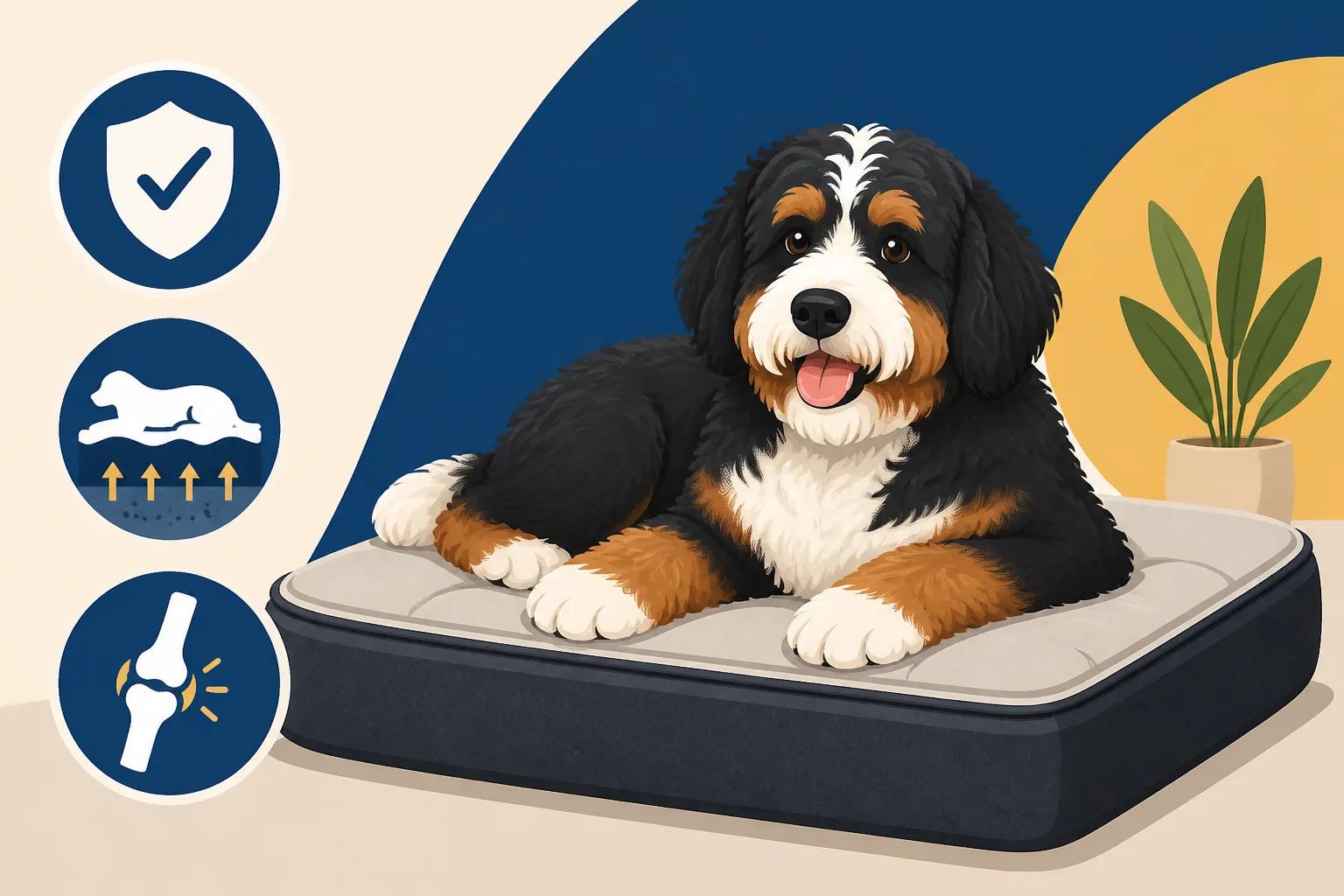
Beds That Support a Heavy Old Bernedoodle
It's heartbreaking to see your once-spry Bernedoodle, now older and heavier, struggle to push themselves up from a flat, unsupportive dog bed that offers little more comfort than the floor. As our beloved giants age, their joints ache, their muscles stiffen, and finding a bed that truly cradles and supports their substantial weight becomes less of a luxury and more of an absolute necessity. This guide is dedicated to helping you navigate the world of dog beds to find the perfect supportive haven for your heavy, senior Bernedoodle, ensuring their golden years are as comfortable as possible.
The Unique Challenges of an Aging, Heavy Bernedoodle's Joints
Our Bernedoodles, magnificent as they are, inherit certain predispositions from their parent breeds, especially the Bernese Mountain Dog, that can lead to significant joint issues as they age. Couple that with their impressive size and weight, and you have a recipe for discomfort if not properly managed. An inadequate bed only exacerbates these problems, turning rest into a painful experience rather than a restorative one.
Why Standard Beds Fall Short for Giant Breeds
Think about a typical dog bed you might pick up at a big box store – often filled with polyfill or cheap shredded foam. For a young, lightweight puppy, these might be perfectly fine. But for a seventy, eighty, or even ninety-pound Bernedoodle who is well past The Birthday a Standard Bernedoodle Counts as Senior, these beds compress almost instantly. They offer no real elevation from the hard floor, no pressure point relief, and certainly no orthopedic support. It's like trying to sleep on a pancake. Your Bernedoodle sinks right through to the floor, negating any supposed cushioning. This constant pressure on their hips, elbows, and shoulders, particularly when they lie down for extended periods, can lead to increased inflammation and pain.
Imagine your gentle giant trying to get up after a long nap on one of these flimsy beds. Instead of rising with ease, you might notice them grunting, struggling to uncurl their stiff body, or taking several attempts to stand. This isn't just a sign of age; it's often a direct consequence of a bed that isn't doing its job. Standard beds simply aren't engineered to support the weight distribution of a large or giant breed, especially one with a heavy bone structure like a Bernedoodle. They lack the density and structural integrity required to maintain a consistent supportive surface.
Common Ailments Exacerbated by Poor Bedding
As Bernedoodles age, they become more prone to a range of joint and skeletal conditions. Arthritis in a Bernedoodle at Eight is incredibly common, manifesting as stiffness, limping, and a general reluctance to move. Hip and elbow dysplasia, often genetic, can also become more pronounced with time, causing chronic pain. Even conditions like degenerative myelopathy, while neurological, can be made more comfortable with proper support that allows for easier position changes and reduces muscle strain.
When your Bernedoodle lies on a hard, unsupportive surface, their body weight presses directly onto their joints. This creates friction and pressure on cartilage, bone, and surrounding tissues. For a dog already suffering from arthritis or dysplasia, this pressure intensifies pain and can worsen inflammation. A proper orthopedic bed acts as a buffer, distributing weight evenly and relieving these critical pressure points. Without it, you might find your Bernedoodle seeking out softer, but often equally unsupportive, spots like your couch or carpet, simply to escape the harsh reality of their own flimsy bed. Providing relief isn't just about comfort; it's about helping manage their condition and improving their quality of life as they continue What Changes in a Bernedoodle After Eight.
What to Look for: Key Features of a Truly Supportive Dog Bed
When you're shopping for a bed for your heavy, old Bernedoodle, you need to think beyond pretty patterns and plush surfaces. The real magic happens inside the bed, in its construction and materials. This is an investment in your dog's comfort and health, so understanding what truly makes a bed supportive is crucial.
High-Density Orthopedic Foam
This is perhaps the single most important feature. Forget polyfill or generic shredded foam. For a large, heavy Bernedoodle, you need high-density orthopedic memory foam or supportive foam. This isn't just marketing jargon; it's about the material's ability to resist compression and contour to your dog's body.
- Memory Foam: True memory foam responds to body heat and weight, molding to your dog's shape. This provides unparalleled pressure relief, cradling their joints and spine, and distributing their weight evenly. When they get up, the foam slowly returns to its original shape, ready for the next nap. Look for beds that specify human-grade or medical-grade orthopedic foam. This indicates a higher quality and density that won't flatten out under your Bernedoodle's weight after just a few weeks. A solid slab of high-density memory foam is generally superior to shredded memory foam, as it offers more uniform support and prevents clumping or uneven spots that can develop over time.
- Supportive Base Foam: Often, a good orthopedic bed will have a layered construction. Below the memory foam layer, there should be a denser, supportive base foam. This layer acts as a foundation, preventing your Bernedoodle from sinking through the memory foam entirely and hitting the floor. It's the unsung hero that ensures long-term structural integrity, especially for dogs who are The Height and Weight of a Standard Bernedoodle.
Adequate Size and Bolstered Edges
A bed isn't supportive if your Bernedoodle can't stretch out fully or curl up comfortably without parts of their body hanging off. For a large breed, this often means going for the "XL" or "Giant" size. Measure your Bernedoodle from nose to tail while they're stretched out, and then add a few inches to that measurement to ensure ample space. Remember, even if they sometimes curl into a ball, they need the option to sprawl.
Bolstered edges, or raised sides, are a fantastic feature, particularly for older dogs. Bernedoodles love to lean, and these bolsters provide a sense of security and a comfortable place for them to rest their head, almost like a pillow. More importantly, they offer a supportive barrier, preventing your dog from rolling off the edge of the bed and landing on a hard floor, especially if they are having trouble with Supporting an Old Bernedoodle That Cannot Rise. These raised edges can also act as a cozy nook, mimicking the feeling of being nestled, which many dogs appreciate. They can provide additional neck and head support, crucial for spinal alignment in senior dogs.
Washable and Durable Cover
Let's be realistic: dogs can be messy. Older dogs, in particular, might have accidents, drool more, or just track in more dirt. A bed that's impossible to clean will quickly become a smelly, unhygienic problem. Look for a cover that is easily removable and machine washable.
- Fabric Choice: Consider fabrics that are durable, resistant to tearing, and easy to wipe down. Heavy-duty canvas, microsuede, or even certain water-resistant fabrics are excellent choices. These materials not only stand up to wear and tear but also make it easier to brush off dog hair and keep the bed looking fresh. Some covers even have anti-microbial properties to help control odors.
- Waterproof Liner: Beneath the removable cover, a waterproof liner is a game-changer. This liner protects the orthopedic foam itself from accidents, spills, or moisture. Without it, liquids can seep into the foam, leading to unpleasant odors, mold, and damage that's impossible to clean. This liner extends the life of the bed significantly and makes cleanup a breeze – just remove the cover, wipe down the liner, and wash the cover. Many high-quality orthopedic beds available on Chewy or Amazon will highlight this feature, and it's definitely something worth prioritizing.
Exploring Different Types of Orthopedic Beds for Your Giant Friend
Now that we know what to look for, let's dive into the various styles of orthopedic beds designed to cater to the specific needs of large, senior dogs like your Bernedoodle. Each type has its own benefits, and the best choice often depends on your dog's individual preferences and specific health concerns.
Solid Slab Memory Foam Beds
These are the gold standard for orthopedic support. As discussed, they feature a solid piece of high-density memory foam, often layered with a firmer support foam underneath. This construction ensures maximum pressure relief and prevents bottoming out.
Pros:
- Superior Support: A solid slab provides consistent, even support across the entire body, conforming perfectly to your Bernedoodle's contours. This is crucial for alleviating pain from conditions like Hips on a Ninety Pound Bernedoodle or Elbow Dysplasia in a Growing Bernedoodle.
- Durability: High-quality memory foam maintains its shape and density for years, making it a long-lasting investment.
- Pressure Point Relief: Ideal for dogs with arthritis, hip or elbow dysplasia, or other joint issues, as it eliminates uncomfortable pressure points.
Cons:
- Cost: These beds tend to be more expensive upfront, but their longevity and benefits often justify the price.
- Weight: Can be heavy and bulky, making them a bit more challenging to move around.
- Heat Retention: Some memory foams can retain body heat, which might be a concern for Bernedoodles, who can be prone to overheating due to their thick coats. However, many modern orthopedic beds now incorporate cooling gels or breathable covers to mitigate this.
Real-Life Scenario: Imagine your Bernedoodle, typically stiff after a nap, now slowly rising from a solid memory foam bed. You notice they don't grunt as much, their movements are smoother, and they seem generally more comfortable. This is the difference proper support makes, allowing them to truly rest and recover, not just lie down.
Bolstered Orthopedic Beds
These beds combine the benefits of orthopedic foam with the added comfort and security of raised edges or bolsters. They are incredibly popular because they cater to a dog's natural instinct to nest and provide a headrest.
Pros:
- Enhanced Comfort and Security: The bolsters offer a comfortable place for your Bernedoodle to lean against, rest their head, or feel more secure, mimicking a den.
- Versatile Positions: Allows your dog to stretch out or curl up, using the bolsters for neck and head support.
- Joint Alignment: Resting their head on a bolster can help maintain better spinal alignment, which is important for overall comfort, especially for senior dogs.
Cons:
- Size: Bolsters can take up precious floor space, and the internal sleeping area might be slightly smaller than a flat bed of the same overall dimensions.
- Cleaning: Covers with bolsters can sometimes be a bit trickier to remove and wash, especially if the bolsters themselves are integrated into the cover rather than being separate inserts.
Real-Life Scenario: Your Bernedoodle loves to be near you but also enjoys having a "spot" of their own. A bolstered orthopedic bed placed in the living room provides them with a cozy haven where they can watch the family, lean against the soft edges, and feel completely supported without being on the hard floor. It's the perfect blend of comfort and security.
Elevated or Cot-Style Beds with Orthopedic Support
While not always featuring memory foam directly, some elevated cot-style beds offer orthopedic benefits by suspending your dog off the hard floor, reducing pressure points, and improving air circulation. Some of these can be outfitted with orthopedic toppers.
Pros:
- Excellent Airflow: Great for Bernedoodles who tend to run warm, as the elevated design allows air to circulate underneath, helping them stay cool. Whether a Bernedoodle Should Be Walked in Summer or needs extra cooling measures can be a real concern.
- Easy to Clean: The mesh or fabric surface is typically easy to hose off, making them suitable for outdoor use or for dogs with frequent accidents.
- Joint Relief: By removing contact with a hard floor entirely, these beds can reduce pressure on joints.
Cons:
- Less "Cushion": The primary suspension system might not feel as plush or "cushiony" as a thick memory foam bed for some dogs, though many now come with foam toppers.
- Aesthetics: The utilitarian look might not appeal to everyone for indoor use.
- Height: Some older dogs, especially those with severe mobility issues, might find getting on and off an elevated bed challenging. However, if your Bernedoodle still enjoys Exercise for a Bernedoodle With Arthritis, a moderately elevated bed could be fine.
Real-Life Scenario: You live in a warmer climate or your Bernedoodle has a particularly dense coat, making them prone to overheating. An elevated cot-style bed with a supportive mesh surface is perfect for keeping them cool and comfortable on the porch or in a shaded spot, giving their joints a break from the hard ground without trapping heat.
Here's a quick comparison of common bed materials:
| Bedding Material | Support Level (for heavy dogs) | Durability | Pressure Relief | Breathability | Common Use |
|---|---|---|---|---|---|
| Polyfill / Fiberfill | Low (flattens quickly) | Low | Poor | High | Young, healthy, light dogs; budget option |
| Shredded Foam | Moderate (can clump) | Moderate | Fair | Moderate | Mid-range option, less consistent support |
| Solid Orthopedic Foam | High (contours and supports) | High | Excellent | Moderate | Aging, heavy, arthritic dogs; premium |
| Gel-Infused Memory Foam | High (contours and cools) | High | Excellent | High (cooling) | Aging, heavy, dogs prone to overheating |
| Elevated Mesh/Fabric | Good (suspension) | High | Good | Excellent | Outdoor, hot climates, easy cleaning |
Remember, while the material is key, the overall construction and density are what truly determine the bed's effectiveness for a heavy, old Bernedoodle.
Making the Investment Last: Care and Placement of Your Bernedoodle's New Bed
You've done your research, chosen the perfect orthopedic bed, and your Bernedoodle is already enjoying newfound comfort. Now, how do you ensure this important investment continues to serve them well for years to come? Proper care and thoughtful placement are essential for maximizing the lifespan and effectiveness of the bed.
Regular Cleaning and Maintenance
Even with a waterproof liner and a washable cover, regular maintenance is key to keeping the bed hygienic and extending its life.
- Weekly Vacuuming/Brushing: Your Bernedoodle's glorious coat, while beautiful, does shed. Even if they are an F1b or multigen Whether Any Bernedoodle Is Truly Non Shedding, some hair will still collect on the bed. Weekly vacuuming or brushing the cover removes loose hair, dander, and surface dirt before it has a chance to embed itself. This also helps reduce allergens in your home.
- Washing the Cover: Follow the manufacturer's instructions for washing the cover. For most, this means machine washing in cold water on a gentle cycle and tumble drying on low or air drying. Avoid harsh detergents or bleach, which can damage the fabric. Aim to wash the cover every 2-4 weeks, or more frequently if your Bernedoodle is particularly messy or prone to accidents.
- Inspecting the Foam: Periodically, remove the cover and inspect the orthopedic foam. Check for any signs of damage, odors, or sagging. If your bed has a waterproof liner, ensure it's still intact and hasn't ripped. If the foam itself gets wet, try to blot it dry immediately and allow it to air dry completely before replacing the cover to prevent mold or mildew. This proactive approach helps in Keeping an Old Bernedoodle Comfortable.
Strategic Placement for Maximum Benefit
Where you place your Bernedoodle's new bed can make a big difference in their willingness to use it and the overall benefit they derive from it.
- Quiet, Draft-Free Area: Older dogs often appreciate a quiet spot where they won't be constantly disturbed. Avoid high-traffic areas, direct sunlight (which can cause overheating, especially for black-coated Bernedoodles), or drafty hallways. A corner of the living room, a bedroom, or a dedicated dog nook can be ideal.
- Near the Family: Bernedoodles are deeply social dogs who thrive on being part of the family. Placing their bed in a common area where they can still see and hear you, even if they're resting, will encourage them to use it more often. They want to be included, even if their body needs more rest now.
- Easy Access: Ensure the bed is easy for your senior Bernedoodle to access. If it's elevated, check that they can comfortably get on and off without straining. Avoid placing it behind furniture or in cramped spaces that make maneuvering difficult. Whether an Old Bernedoodle Needs a Ramp might be a consideration for getting onto higher surfaces, but for their bed, it should ideally be ground level or only slightly raised for ease.
- Multiple Beds: If you have a larger home, consider having multiple supportive beds in different key areas. One in the living room, one in the bedroom – this allows your Bernedoodle to choose where they want to rest without having to travel far, especially important as they get older and may be The Signs a Bernedoodle Is Slowing Down. This means they can always have a comfortable, supportive spot, whether they're napping while you watch TV or settling down for the night. This distributed comfort system contributes significantly to their overall well-being and helps in Caring for a Bernedoodle Past Eight.
By understanding the specific needs of your aging, heavy Bernedoodle, investing in a high-quality orthopedic bed, and then maintaining it properly, you're providing more than just a place to sleep. You're giving them a sanctuary of comfort and support, which can dramatically improve their quality of life and help them enjoy their golden years by your side. Keeping a Standard Bernedoodle Sound Past Ten involves a holistic approach, and a great bed is a cornerstone of that care. Don't forget, nutrition also plays a role in joint health, and exploring options for Feeding a Bernedoodle Past Eight with an emphasis on joint support can complement the physical support from their bed.
Disclaimer
This article is for general informational purposes only and does not constitute professional advice. Laws, prices and regulations vary by location and change over time. Consult a qualified professional for guidance on your specific situation.