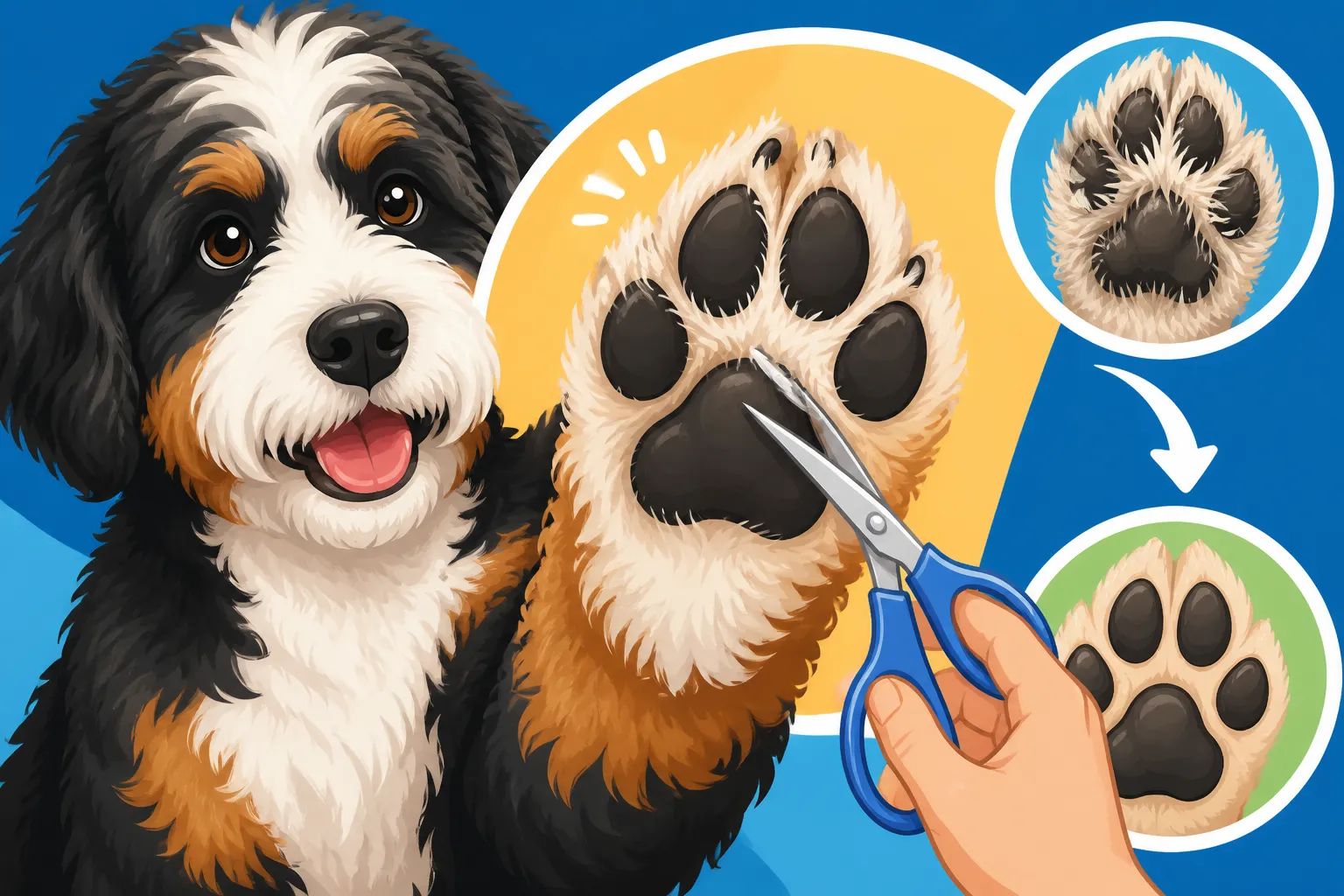
Trimming Between a Bernedoodle’s Pads
If you're a Bernedoodle parent, you know that glorious, wavy, often curly coat is a big part of their charm. But that beautiful fur doesn't stop at their legs; it grows between their paw pads too, and if left untrimmed, it can become a real source of discomfort, pain, and even danger for your beloved companion. This guide is here to walk you through exactly why and how to safely and effectively trim the hair between your Bernedoodle's paw pads, turning a potentially tricky chore into a manageable part of their regular grooming routine.
Why Trimming Paw Pads is Non-Negotiable for Your Bernedoodle
It's easy to overlook the hair between your Bernedoodle's paw pads. After all, it's mostly hidden! But just because you don't see it constantly doesn't mean it's not growing, and when it grows too long, it creates a whole host of problems that can severely impact your dog's comfort and even their health. Thinking of those furry paws as little slippers sounds cute, but in reality, it's a recipe for trouble.
The Hidden Dangers of Overgrown Paw Hair
First and foremost, overgrown paw hair is a magnet for all sorts of nasties. Imagine walking around with tiny clumps of sticky mud, burrs, tiny pebbles, and even pieces of broken glass constantly stuck between your toes. That's what your Bernedoodle experiences. This debris quickly leads to painful matting. These mats aren't just surface-level tangles; they can pull at the skin, causing extreme discomfort and even open sores if they get severe enough. When the hair gets really dense, it becomes a literal felted carpet, making it agonizing for them to put weight on their paws.
Beyond the debris, long paw hair significantly reduces your Bernedoodle's natural traction. Their paw pads are designed to grip surfaces, but when obscured by a thick curtain of fur, they lose that essential contact. This can lead to slipping and sliding on hard floors, which isn't just clumsy; it can cause serious joint injuries, especially in a large, heavy dog like a Standard Bernedoodle. Imagine a dog trying to get up from a lying position on hardwood floors when their "footing" is compromised – it's a struggle and puts immense strain on their hips and elbows.
Furthermore, a dense mat of hair between the pads traps moisture. Whether it's from a walk in the dew-covered grass, a splash in a puddle, or even just humidity in the air, that trapped moisture creates a perfect breeding ground for yeast and bacterial infections. You might notice your Bernedoodle licking or chewing at their paws incessantly, or you might detect a distinct, yeasty smell. These are often indicators that an infection is brewing right there in their fur-laden paw pads. In winter, this also means ice balls can form, freezing painfully between their toes. You might also find yourself dealing with burrs, foxtails, or grass seeds that embed themselves deep in the fur during summer walks. It’s a recurring battle that can easily be minimized with proper trimming.
Comfort and Hygiene Beyond Aesthetics
Trimming the hair between your Bernedoodle's paw pads isn't just about preventing problems; it's about actively enhancing their comfort and hygiene. When their pads are clear, they can walk, run, and play as nature intended, with full grip and no painful obstructions. This contributes directly to their overall physical well-being and prevents gait issues that can arise from constantly trying to compensate for uncomfortable feet. A dog that is constantly shifting its weight to avoid pressure on matted paw pads is putting unnecessary stress on other joints and muscles.
Think about what your Bernedoodle brings into your home. Those furry paws track in everything! Dirt, leaves, tiny crumbs, you name it. Keeping the hair trimmed minimizes the amount of outdoor grime that hitches a ride into your living space. It's not just about a cleaner house, although that's certainly a nice bonus; it's also about reducing exposure to allergens or irritants your dog might pick up outside. Regularly clearing their paw pads is an essential part of maintaining a clean and healthy environment for both your Bernedoodle and your family. It's a small task that yields significant benefits in terms of comfort, safety, and cleanliness.
Essential Tools and Preparation for a Smooth Trim
Before you even think about bringing clippers near your Bernedoodle's paws, it’s crucial to have the right equipment and, just as importantly, to prepare your dog for the experience. Rushing in with unfamiliar tools can turn a simple grooming task into a stressful ordeal for both of you. Patience and positive reinforcement are your best friends here.
Gathering Your Grooming Arsenal
First things first, let's talk about the actual trimming tools. For the bulk of the work, especially with a thick-coated dog like a Bernedoodle, you'll want a good pair of electric pet clippers. Don't just grab human hair clippers; pet clippers are designed for thicker, sometimes coarser fur and often run quieter, which is a huge plus for anxious dogs. Look for small, cordless trimmers specifically marketed for paw pads or face trimming. These are typically quieter and easier to maneuver around delicate areas. Brands like Wahl or Andis offer great options that you can often find on Amazon or Chewy. Make sure the blades are clean and sharp; dull blades pull hair and can cause discomfort.
While electric trimmers do most of the heavy lifting, a small pair of blunt-nosed scissors can be useful for very specific tasks, such as carefully snipping away tiny bits of hair that are too difficult to reach with clippers, or around the very edges of the paw pads if needed. The blunt tips are a safety feature, reducing the risk of accidentally poking your dog's sensitive skin. However, I cannot stress this enough: scissors should be used with extreme caution and only for minimal touch-ups, never for the main trimming between the pads. The webbing between your Bernedoodle's toes is incredibly delicate, and a quick slip can cause a serious injury.
You'll also want a fine-toothed metal comb to gently tease out any minor tangles before you begin and to check your work afterward. And, of course, a generous supply of your Bernedoodle's favorite high-value treats is absolutely non-negotiable! These are crucial for creating a positive association with the grooming process. Finally, having some paw balm or wax on hand can be great for moisturizing the pads after the trim, especially if they feel a bit dry or you're preparing them for rougher terrain. You can find excellent options for paw balms on Chewy.
Preparing Your Bernedoodle for the Experience
Now that you have your tools, let's focus on your Bernedoodle. If you have a puppy, start early! Handle their paws frequently, gently spreading their toes and pretending to use the clippers (without turning them on at first). Give them treats and praise for tolerance. This "desensitization" process is invaluable. For older dogs who might be less enthusiastic, it's never too late to start. The key is to make every interaction positive.
Introduce the clippers gradually. Let your Bernedoodle sniff the clippers while they're off. Then, turn them on briefly in another room so they hear the sound. Slowly, bring them closer, offering treats as you do. Don't push it; if your dog shows signs of stress, take a break. Your goal is to build trust and comfort, not to get the job done in one go. Choose a time when your Bernedoodle is naturally calm and relaxed—perhaps after a good walk and a meal, when they're a bit sleepy. Avoid trying this when they're full of energy or feeling agitated. A relaxed dog makes for a much safer and more successful grooming session. Remember, regular handling of their paws is also great for preventing issues like Dental Disease in a Tiny Bernedoodle or ensuring they are comfortable with nail trims, which often go hand-in-hand with paw pad care.
Step-by-Step Guide to Trimming Your Bernedoodle's Paw Pads Safely
Okay, you've got your tools, and your Bernedoodle is as ready as they're going to be. Now for the actual trimming. This isn't a race, so take your time, and remember that safety and comfort are paramount. A calm, methodical approach will yield the best results and ensure your dog remains cooperative for future grooming sessions.
The Gentle Approach: Clipping with Electric Trimmers
Start by getting your Bernedoodle in a comfortable position. For many, having them lie down on their side or even on your lap (if they're a Mini Bernedoodle, perhaps) works well. For larger dogs, a grooming table with a non-slip surface can be a lifesaver, allowing you to work at a comfortable height. Gently pick up one paw and hold it firmly but not tightly. Use your thumb and forefinger to spread the paw pads apart, revealing the hair growing between them. You’ll often find a dense tuft right in the center, and more hair around the edges.
With your small electric clippers, start trimming the hair that is clearly overgrown, working carefully and slowly. Always hold the clippers flat against the skin, moving them in the direction of hair growth (or against it, very carefully, for a closer trim). Think of it like a gentle shave, not a hack. The goal is to clear the hair so it's flush with the pads, exposing the rubbery texture of the pads themselves. Be extremely mindful of the delicate webbing between their toes and the small quicks that extend into their nails. These areas are incredibly sensitive. Work one paw at a time, taking breaks if your Bernedoodle gets antsy, and reward frequently with those high-value treats. If your dog has a lot of hair, it might be beneficial to give them a thorough brush-out first, focusing on problem areas like Mats in a Bernedoodle's Armpits and Britches or a general The Volume of Coat a Bernedoodle Owner Brushes Weekly to get them comfortable with being handled.
Precision Work: When to Use Scissors (and How Not To!)
As mentioned earlier, scissors are your secondary tool and should be used with extreme caution. Never use scissors to trim the bulk of the hair between the pads. This is where most serious injuries occur. The only time scissors might be appropriate is for carefully snipping away a few stray hairs that are poking out stubbornly from between the toes, after you've done the main work with the clippers. Even then, you must be incredibly careful.
When using scissors, always point the blunt tips away from the paw pad and your dog’s skin. A smart trick is to place a fine-toothed comb between the hair you want to cut and the paw pad itself. Then, only cut the hair that protrudes through the comb. This acts as a protective barrier, greatly reducing the risk of accidentally snipping the delicate skin webbing between their toes. Remember, a slip with scissors can lead to a deep cut, and paw pad injuries are notoriously difficult to heal because dogs are constantly putting weight on them. If your Bernedoodle is very wiggly, put the scissors away and stick to clippers or consider a professional groomer. It’s better to have slightly shaggy paws than a trip to the emergency vet. This level of caution is similar to what you'd use if you were learning Teaching a Bernedoodle to Give a Paw for Nails, where precision and safety are paramount.
Post-Trim Care and Regular Maintenance
Once you've finished trimming all four paws, do a thorough inspection. Gently run your fingers over and between each paw pad. Feel for any missed spots, any stray hairs that are still catching, or (heaven forbid) any nicks or irritation. If you did accidentally nick them, don't panic. Apply a little styptic powder or cornstarch to stop the bleeding, and keep an eye on it. Reward your Bernedoodle lavishly for their cooperation, making the end of the session a really positive experience.
Finally, consider applying a good quality paw balm, especially if the pads look dry or you know your dog will be walking on rough surfaces. This helps to moisturize and protect their pads, keeping them supple. You can find great options for paw care at retailers like Chewy or on Amazon. How often should you do this? It really depends on your Bernedoodle's individual hair growth. For many, a quick trim every 3-4 weeks is sufficient, perhaps more frequently if their coat grows exceptionally fast. Making it a consistent, positive routine, even if it's just a quick touch-up, will keep their paws healthy and comfortable year-round. Don’t wait until the hair is severely matted to address it; regular, proactive care is the best defense against discomfort and injury. This routine care is just as important as regular full-body brushing, as discussed in How Often a Bernedoodle Should Be Brushed.
Common Challenges and Troubleshooting Tips
Even with the best intentions and tools, trimming your Bernedoodle's paw pads can present some challenges. It's not always a perfectly calm, serene activity, especially if your dog isn't used to it. Don't get discouraged if things aren't seamless on your first attempt. Remember, consistency and patience are your secret weapons.
Dealing with a Nervous or Resistant Bernedoodle
If your Bernedoodle is nervous, anxious, or outright resistant to paw handling, the absolute worst thing you can do is force it. Forcing them will only create a negative association, making future attempts even harder. Instead, back off and re-evaluate your approach. Patience is truly key here. Start with much shorter sessions – sometimes just a minute or two of gentle paw handling, followed by immediate treats and praise, is all you can manage at first.
Consider using distraction techniques. A lick mat smeared with peanut butter (xylitol-free!) or a favorite soft treat frozen into a Kong can keep them occupied and happy while you work on one paw. Sometimes, having another person gently distract and reward them can make a huge difference. If your Bernedoodle is still extremely resistant and you're worried about their safety or your own, it's perfectly fine to consult a professional groomer. They have experience with nervous dogs and the right equipment to get the job done efficiently and safely. They can also offer tips you can use at home to gradually improve your dog's tolerance. Sometimes, simply knowing a professional can help is a relief, and you can learn a lot from watching them. If you’re considering professional help, be aware of costs like The Seventy to Hundred Fifty Dollar Bernedoodle Groom. You might also find tips in articles about broader training issues like Whether a Bernedoodle Needs a Professional Trainer or specific handling like Getting a Bernedoodle to Lie on Its Side.
Avoiding Common Mistakes and Injuries
The biggest mistake you can make is rushing the process. A quick, impatient swipe with clippers or scissors is how accidents happen. Always take your time, and if you or your dog are feeling stressed, take a break. It's better to do a little bit across several short sessions than to push through and cause an injury or traumatize your dog. Ensure your tools are always sharp and clean. Dull blades can pull hair, causing pain, and dirty blades can introduce bacteria if a nick occurs.
Be extra vigilant around their dewclaws. If your Bernedoodle has them, the hair around them can get long and matted, but they are also very easy to nick if you're not careful. Similarly, remember the quicks within their nails. Even if you're not trimming nails, a misplaced clipper can sometimes catch the quick, causing pain and bleeding. Always aim for hair, not skin or nail. If you do accidentally cut your dog, apply styptic powder or cornstarch to stop the bleeding. For deeper cuts, or if you're concerned about infection, don't hesitate to contact your vet. Knowing when to stop and when to seek professional help is a sign of a responsible pet parent. Always err on the side of caution when it comes to sharp tools and your dog's delicate paws.
| Feature | Electric Trimmers (Small Pet Clippers) | Blunt-Nosed Scissors |
|---|---|---|
| Primary Use | Bulk hair removal, clearing pad area, between toes | Precision trimming of stray hairs, touch-ups (with caution) |
| Safety Level | Generally safer for most of the work, less risk of nicks | High risk of cutting skin, especially webbing, if not careful |
| Ease of Use | Can be intimidating initially, but easier once dog is accustomed | Requires very steady hand and precision, higher skill needed |
| Speed | Faster for removing larger amounts of hair | Slower, for very small, controlled cuts |
| Comfort for Dog | Less pulling if sharp, quieter models reduce anxiety | Can pull hair if dull, risk of accidental nips |
| Recommended? | Yes, essential for Bernedoodle paw pad maintenance | Only for very careful touch-ups, with comb as guard |
Disclaimer
This article is for general informational purposes only and does not constitute professional advice. Laws, prices and regulations vary by location and change over time. Consult a qualified professional for guidance on your specific situation.