Teaching a Bernedoodle to Give a Paw for Nails
Oh, the dreaded nail trim! If you're a Bernedoodle owner, you know the struggle all too well. It starts innocently enough – a little puppy paw, easy to handle. But then they grow, and grow, and suddenly you're wrestling a fluffy, ninety-pound (or more!) dog who looks at nail clippers like they're instruments of torture. You just want to keep their paws healthy and prevent painful overgrowth, but getting them to simply "give paw" without a dramatic protest feels like an Olympic sport. This guide is here to walk you through a compassionate, effective way to teach your Bernedoodle to offer their paw willingly, making nail care less of a battle and more of a calm routine for both of you.
Understanding Why Nail Trims Are Such a Struggle
Let's be real: no dog loves having their nails trimmed. But for a Bernedoodle, with their unique blend of Bernese Mountain Dog sensitivity and Poodle intelligence, it can be an especially big deal. It's not just about being "stubborn" – there are deeper reasons behind their reluctance that, once understood, can help us approach the task with more empathy and strategy.
The Bernedoodle's Sensitive Paws and Fear Response
Think about it from your Bernedoodle's perspective. Their paws are incredibly sensitive. They're full of nerve endings, and touching them in specific ways can feel vulnerable or even painful if done incorrectly. The quick, which contains blood vessels and nerves, runs through each nail. If you've ever accidentally clipped too far back, you know the yelp and the bleeding that follows – and your dog definitely remembers it. This can quickly create a negative association, turning a routine grooming task into a source of fear and anxiety. Many Bernedoodles inherit a certain wariness from their Bernese side, making them more prone to shyness or apprehension around new or uncomfortable experiences. Couple that with the Poodle's sharp mind, which means they learn very quickly what they like and don't like, and you have a recipe for a dog that will remember that one bad clip for a long, long time. They're not being difficult on purpose; they're genuinely expressing discomfort or fear.
Beyond the physical sensitivity, there's a psychological component. Dogs, especially large ones, feel vulnerable when their feet are restrained or lifted. It's a natural instinct to want to control their own movement, and when you hold a paw, you're taking away some of that control. Imagine someone holding your hand unexpectedly and trying to do something you find unpleasant – you'd naturally pull away. Our dogs feel the same way. Their paws are essential for balance, movement, and escape, so allowing them to be handled without protest requires a huge amount of trust and positive reinforcement.
The Weight of Expectations: How a Large Dog Can Make It Worse
Let's not sugarcoat it: a squirming, unhappy Bernedoodle is a lot of dog to handle. When you're trying to trim the nails of a standard Bernedoodle that weighs seventy to ninety pounds, or even more, it's not just about skill – it's about sheer physical strength. A smaller dog might try to wriggle away, but a large Bernedoodle can easily knock you off balance, pull their paw back with surprising force, or simply lean their full weight into resistance. This quickly becomes frustrating and can lead to a cycle where you get more stressed, which makes your dog more stressed, and the whole experience spirals. You might find yourself dreading the task, putting it off longer and longer, which only makes the nails longer and the problem worse. This is why techniques for Leash Manners on a Bernedoodle Heading for Ninety Pounds are so important, as control translates to many aspects of handling.
The physical challenge also means that many owners resort to quick, forceful methods just to get it done, inadvertently reinforcing the idea that nail trims are something to be endured, not tolerated. It's tough to be gentle and patient when your dog is actively fighting you. This is why building up positive associations and teaching a specific "give paw" command is so crucial – it empowers your dog to participate willingly, rather than being forced into compliance. This approach not only makes the process easier for you but also strengthens the bond of trust between you and your Bernedoodle.
Laying the Groundwork: Desensitization and Positive Association
Before you even think about bringing out the clippers, you need to change your Bernedoodle's entire outlook on paw handling. This isn't about rushing; it's about slow, steady, positive steps that build confidence and trust. Think of it as investing in future peaceful nail trims.
The Power of Gentle Touch: Starting Slow with Paw Handling
The first step is to simply get your Bernedoodle comfortable with you touching their paws, without any tools in sight. Start by gently stroking their legs while they are relaxed, perhaps when they're napping beside you on the couch or just after a walk when they're settled. Don't go straight for the paw itself. Just a few strokes on the leg, followed by a delicious, high-value treat. Repeat this many times a day, for several days. The goal is to create an immediate mental link: leg touch equals yummy reward.
Once they're totally fine with leg strokes, gradually move your hand down towards their paw. Just a light touch on the top of the paw, then a treat. Don't hold it, don't squeeze it, just touch and release, then reward. If your Bernedoodle pulls away, that's your cue that you've gone too fast. Go back a step to what they were comfortable with and stay there for a bit longer. This process is all about incremental progress. Maybe one day you touch one paw, the next day two. It’s essential to be patient and keep sessions very short – just a minute or two at a time, several times a day. You can even try this while you're Teaching a Bernedoodle to Lie Down for Three Hours of Grooming, making general handling part of a relaxed position.
Pairing with Praise and High-Value Treats
Positive reinforcement is your best friend here. Every single time your Bernedoodle tolerates a touch to their leg or paw, no matter how brief, immediately follow it with verbal praise ("Good paw!") and a truly irresistible treat. We're talking about tiny pieces of cooked chicken, cheese, or even liverwurst – something they only get for this specific training. Regular kibble often isn't motivating enough for such a sensitive and high-stakes task. The treat needs to be delivered within seconds of the desired behavior so they clearly understand what they're being rewarded for.
The consistent pairing of touch, praise, and high-value treats creates a strong positive association. Your dog starts to anticipate the good stuff that comes with paw handling, rather than fearing it. Over time, their emotional response will shift from apprehension to anticipation. You want them to want you to touch their paws because it predicts something wonderful. This foundation is absolutely critical before you move on to the actual "give paw" command. You can even use this approach for Getting a Bernedoodle Used to Having Its Feet Held for more general purposes.
The "Give Paw" Command: Step-by-Step Training
Now that your Bernedoodle is comfortable with you touching their paws, we can introduce the actual command. This isn't just a trick; it's a way for your dog to actively participate in their grooming and communicate their willingness (or slight reluctance).
Introducing the Cue: Luring and Rewarding the Lift
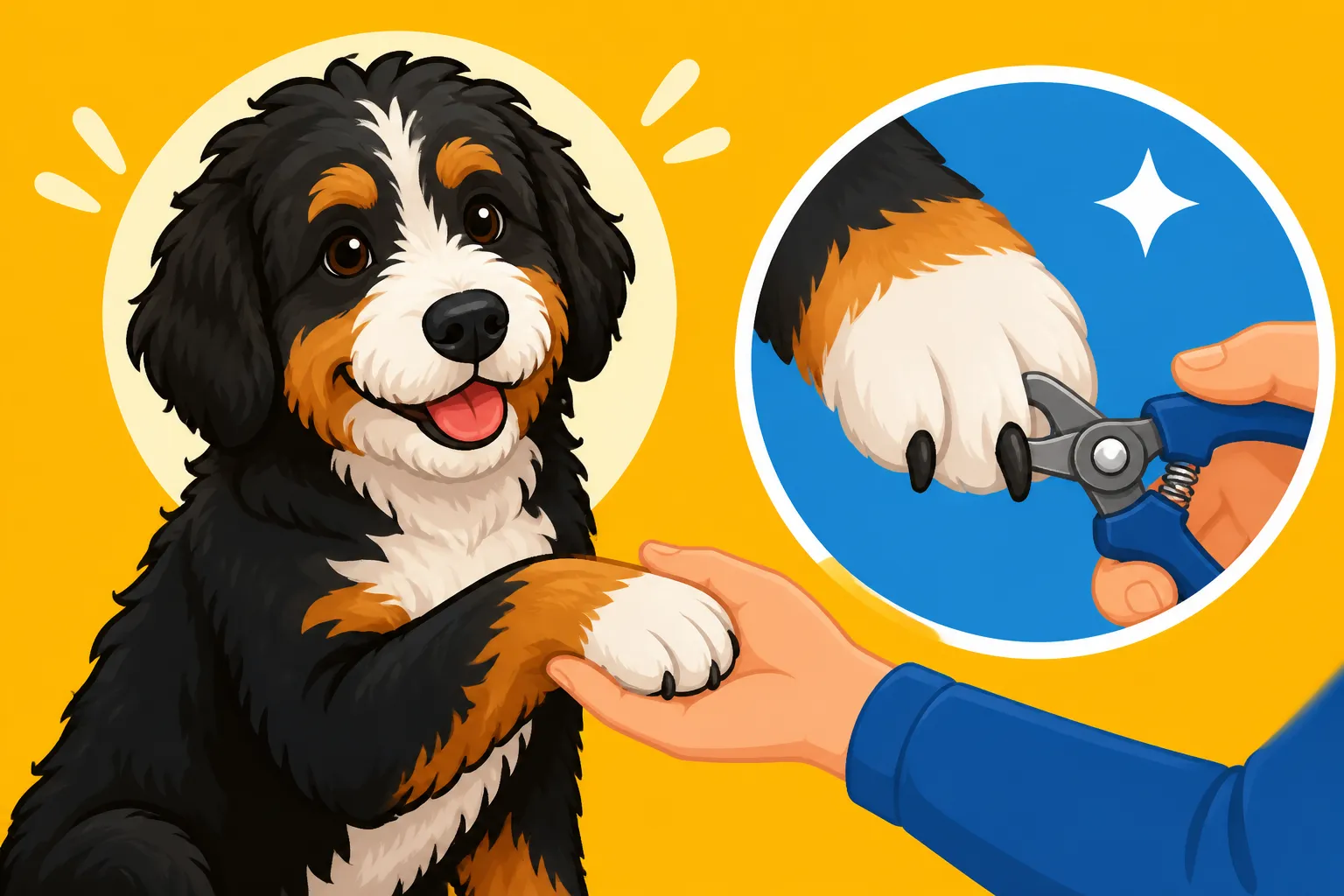
Start by sitting on the floor with your Bernedoodle, making sure they are relaxed and attentive. Hold a high-value treat in your hand and gently move it towards your dog's paw, just above it, in a way that naturally encourages them to lift their paw to investigate or bat at your hand. The moment their paw lifts off the ground, even a tiny bit, say "Paw!" (or "Shake!" or whatever cue you choose), immediately give them the treat and praise. Don't wait for them to fully place it in your hand yet; we're rewarding the initiation of the lift.
Repeat this many times. As your Bernedoodle starts to consistently lift their paw, you can gradually increase your expectation. Instead of just a lift, wait for them to touch your hand with their paw before you say "Paw!" and reward. Eventually, you'll hold your hand out, say "Paw!", and they should place their paw into your hand. Keep training sessions short, positive, and end on a success. It's not about how many times you do it in one session, but how many successful, positive repetitions you achieve over time. Consistency over days and weeks is key.
Holding the Paw and Touching the Nails: Gradually Increasing Duration and Intensity
Once your Bernedoodle consistently gives you their paw on command, it's time to introduce holding the paw for slightly longer periods. When they give paw, gently hold it in your hand for a second or two before releasing and rewarding. Gradually increase this duration. Maybe hold for three seconds, then four, then five. If they pull their paw away, shorten the duration for the next attempt. Remember, this isn't about forcing; it's about teaching them that holding their paw is okay and leads to good things.
Next, while you're holding their paw, gently touch each individual nail. Don't apply pressure, just touch. Reward after touching each nail, or after touching a couple of nails, depending on their comfort level. Use your clippers or grinder, not to clip, but just to touch the tool to each nail, without any actual cutting. This helps them get used to the sensation and sound of the tool being near their paw. For instance, holding a nail grinder (even an inexpensive one from Amazon) near their paw while it's turned on (but not touching the nail) can help them acclimate to the vibration and noise. This slow introduction is vital for preventing fear.
Here’s a small table to illustrate the progression:
| Step | Action | Reward Strategy | Goal |
|---|---|---|---|
| 1. Gentle Leg Strokes | Lightly stroke dog's leg, release. | Treat & Praise immediately | Comfortable with leg touch |
| 2. Paw Touches | Lightly touch top of paw, release. | Treat & Praise immediately | Comfortable with paw touch |
| 3. Luring Paw Lift | Lure paw with treat; reward any lift. | Treat & Praise upon lift | Dog voluntarily lifts paw |
| 4. "Paw!" Command | Add verbal cue "Paw!" as dog lifts/places paw. | Treat & Praise for placing paw | Dog offers paw on verbal cue |
| 5. Holding Paw | Hold paw for 1-2 seconds, then release. | Treat & Praise for holding still | Dog tolerates paw being held |
| 6. Touching Nails | While holding, touch each nail gently. | Treat & Praise after each nail touch | Dog tolerates individual nail handling |
| 7. Tool Introduction | Touch clippers/grinder to nails (no clip). | Treat & Praise for tolerating tool | Dog tolerates presence of grooming tools |
| 8. Mimic Clip Sound | Clip air with clippers (or turn on grinder away from paw). | Treat & Praise for remaining calm | Dog tolerates sounds of tools |
| 9. First Real Trim | Clip/grind one tiny bit off one nail, reward. | Jackpot treat & massive praise for first clip | Dog allows a real (tiny) nail trim |
Integrating Nail Care into the Routine (and When to Call for Backup)
The goal is to move from training exercises to actual nail care without losing all the progress you've made. This requires patience, consistency, and a realistic understanding of when to seek professional help. Remember that training isn't a one-and-done; it's an ongoing commitment.
Making Nail Trims a Regular, Calm Affair
Once your Bernedoodle is consistently giving paw and tolerating the brief handling of their nails and the presence of tools, you can attempt to actually trim one nail. Just one! Clip off the tiniest sliver, just the very tip. Immediately follow with a huge jackpot of treats and praise. Then, put the tools away. This keeps the experience overwhelmingly positive and short. The next day, you might do two nails. Build up slowly. Don't try to do all twenty nails in one go at first. This might mean tackling a few nails every day or every other day, rather than one big stressful session every few weeks. Regular, brief, positive sessions are far more effective than infrequent, long, and negative ones. This slow and steady approach is what helps with long term success, just like managing potential Arthritis in a Bernedoodle at Eight.
Consistency is key. Even if your Bernedoodle’s nails don’t seem to need trimming, practice the "give paw" command and gentle paw handling regularly, always with rewards. This keeps the positive association strong and ensures that when the time comes for a real trim, it’s not a surprise or a source of anxiety. You want your Bernedoodle to view their paws as a "treat dispenser" when you touch them!
Tools and Resources for Success
Choosing the right tools can make a big difference. For Bernedoodles, whose nails can be quite thick and dark, a good quality pair of scissor-style clippers with a safety guard is often recommended. Brands like Millers Forge or Safari are popular. Many owners also swear by a Dremel-style rotary tool (nail grinder) because it allows for slower, more controlled shortening of the nail, reducing the risk of hitting the quick. The vibration and noise can be a hurdle, but with the desensitization steps mentioned above, it can become a much less stressful alternative to clipping. You can find a wide range of these tools on Amazon, including different sizes and noise levels.
Beyond physical tools, consider training resources. Online courses, like those offered by BAXTER & Bella, often provide structured, step-by-step guidance for these types of behavioral challenges, complete with video demonstrations. These programs can be incredibly helpful for owners who need a bit more hand-holding and detailed instruction. Many of these resources emphasize positive reinforcement and building a strong foundation of trust, which is exactly what a Bernedoodle needs. Remember, a well-groomed Bernedoodle is a healthier Bernedoodle, which helps avoid issues like Skin Problems Under a Bernedoodle's Heavy Coat.
When Professional Help is Your Best Bet
Despite your best efforts, some Bernedoodles might have deeply ingrained fear or have had a truly traumatic experience with nail trims. If you've tried everything and your Bernedoodle is still exhibiting extreme fear, aggression, or distress, it's absolutely okay to seek professional help. A certified professional dog trainer or a veterinary behaviorist can assess your specific situation and provide tailored guidance. They might use advanced desensitization techniques, counter-conditioning, or even discuss anti-anxiety medications in severe cases, to help your dog cope.
Don't view calling for professional help as a failure on your part. It's a sign of a responsible pet owner who prioritizes their dog's well-being and is willing to do whatever it takes to ensure they live a happy, comfortable life. Sometimes, a fresh perspective and expert hands can make all the difference, transforming a terrifying ordeal into a manageable routine, much like how a vet can guide you through managing What Changes in a Bernedoodle After Eight years of age.
Disclaimer
This article is for general informational purposes only and does not constitute professional advice. Laws, prices and regulations vary by location and change over time. Consult a qualified professional for guidance on your specific situation.