Getting Weight Off an Overweight Bernedoodle
It's incredibly disheartening when you look at your beloved Bernedoodle and realize they're carrying more weight than they should. That bouncy, playful spirit can start to dim, and the worry about their long-term health quickly sets in. You might feel a pang of guilt, wondering if you've been a little too generous with the treats or if those long walks haven't been quite long enough. This guide is here to walk you through the realistic steps to safely and effectively help your Bernedoodle shed those extra pounds and get back to their vibrant, healthy self.
Understanding Why Your Bernedoodle Might Be Carrying Extra Pounds
It’s easy to feel like you’ve somehow failed your furry family member when they start to get a bit plump. But the truth is, weight gain in dogs, especially wonderful breeds like Bernedoodles, is often a complex issue with many contributing factors. It's rarely just one thing, and understanding these elements is the first step toward helping your dog reclaim their healthy physique.
The Sneaky Culprits: Overfeeding and Hidden Calories
Let's be honest, those big, soulful Bernedoodle eyes are hard to resist! Many of us fall into the trap of overfeeding, often without even realizing it. A scoop of kibble that looks "about right" might actually be far more than your dog needs, especially if you're not using an actual measuring cup. Dog food packaging provides guidelines, but these are often for highly active dogs, and your Bernedoodle's actual needs might be significantly less.
Then there are the treats. Oh, the treats! A single large dog biscuit can contain as many calories as a small meal. If you're giving several throughout the day, perhaps for training, good behavior, or just because they're cute, those calories add up incredibly fast. And table scraps? They are perhaps the biggest silent saboteur of a healthy canine weight. Even a small piece of cheese or a bite of your dinner, while seemingly harmless, can be a huge caloric bomb for a dog whose metabolic rate is much lower than a human's. It's often inconsistent too; one family member might slip them a snack, while another does the same, and suddenly your Bernedoodle has consumed an entire extra meal's worth of calories without anyone realizing the full extent of it. This becomes even more pronounced with Bernedoodles, who are often highly food-motivated and will happily accept any offering.
The Bernedoodle Lifestyle: Activity Levels and Metabolic Considerations
Bernedoodles are generally active dogs, especially in their younger years, but their activity levels can vary greatly depending on their individual personality and the Poodle-to-Bernese influence. Some are true go-getters, always ready for an adventure, while others might be more inclined to cuddle on the couch after a moderate walk. As they age, or if they have joint issues (which can unfortunately be common in larger breeds like Bernedoodles, such as Arthritis in a Bernedoodle at Eight), their natural inclination to move might decrease, leading to fewer calories burned.
Many owners underestimate just how much consistent, vigorous exercise a large, energetic dog needs. A quick trot around the block twice a day isn't enough to counteract a diet that's too rich in calories. Furthermore, a Bernedoodle's thick coat, especially The Coat a Bernedoodle Gets From Two Heavy Coated Parents, can make them prone to overheating, which might lead owners to limit their outdoor time, inadvertently reducing their caloric expenditure. When we talk about exercise, we're not just talking about short walks. It needs to be purposeful movement that gets their heart rate up. If your Bernedoodle isn't getting regular, robust exercise, those calories simply have nowhere to go but to settle around their midsection.
Age, Genetics, and Underlying Health Conditions
Just like people, dogs' metabolisms tend to slow down as they age. A Bernedoodle who was lean and active at two years old might start to pack on pounds as they approach The Birthday a Standard Bernedoodle Counts as Senior without a corresponding reduction in calorie intake or an increase in activity. This is a natural part of aging, but it means we, as their caregivers, need to be more mindful of their diet and exercise.
Genetics can also play a role. While Bernedoodles are a hybrid, they inherit traits from both the Bernese Mountain Dog and the Poodle. Both breeds can be prone to certain health issues that might impact weight. For instance, hypothyroidism, a condition where the thyroid gland doesn't produce enough hormones, can lead to weight gain despite no change in diet. Conditions like Hypothyroidism From the Bernese Side of a Bernedoodle are worth exploring with your vet if weight gain is sudden or unexplained. Certain medications can also lead to weight gain as a side effect. It’s absolutely crucial to rule out any underlying medical conditions before embarking on a weight loss journey, as treating a medical issue might resolve the weight problem or make dietary changes more effective.
Developing a Tailored Weight Loss Strategy for Your Bernedoodle
Once you understand why your Bernedoodle might be overweight, the next step is to formulate a clear, actionable plan. This isn't about crash dieting or extreme exercise; it's about making sustainable changes that will lead to long-term health. Think of it as a lifestyle overhaul for both you and your dog, focusing on balanced nutrition and appropriate activity.
Partnering with Your Vet: The First and Most Crucial Step
Before you change anything significant in your Bernedoodle's diet or exercise routine, a visit to your veterinarian is non-negotiable. This isn't just a suggestion; it's a vital part of a safe and effective weight loss program. Your vet will perform a thorough physical examination, check your dog's current weight, and assess their body condition score (BCS). This score is a more accurate indicator of fat levels than just weight alone, taking into account their frame.
More importantly, your vet can help rule out any underlying medical conditions, such as the aforementioned hypothyroidism, that could be contributing to weight gain. They can also advise on specific dietary needs, recommend a target weight, and help you calculate the precise caloric intake necessary for safe weight loss. They might suggest a prescription weight-loss diet or advise on how to adjust your current food. Trying to guess these things yourself can be risky, potentially leading to nutrient deficiencies or an unhealthy rate of weight loss. Your vet is your best ally in this journey, providing guidance tailored specifically to your Bernedoodle's unique health profile.
Overhauling the Diet: Portions, Food Choices, and Meal Management
Once you have your vet's recommendations, it's time to get serious about what goes into your Bernedoodle's bowl. This is often the most impactful area for change.
- Precise Portion Control: This is where most owners can make the biggest difference. Stop "eyeballing" portions. Invest in an actual measuring cup for dog food, or even better, a digital kitchen scale to measure food by weight. Grams are far more accurate than cups, which can vary wildly depending on how densely you pack the kibble. Your vet will provide a target calorie count; divide this by the calories per cup/gram of your chosen food to get the exact amount. Remember, the feeding guidelines on the bag are usually higher than what's needed for weight loss.
- Choosing the Right Food: Your vet might recommend a specific weight management formula. These foods are typically lower in calories, higher in fiber to promote satiety, and sometimes higher in protein to help maintain muscle mass. If you're feeding a high-quality food already, your vet might simply advise reducing the portion. Brands like Purina Pro Plan, Royal Canin, or Hill's Science Diet often have excellent weight management options. Some owners also explore fresh food diets, like those offered by Ollie, which can provide precise portioning but require careful caloric calculation with your vet.
- Meal Management: Instead of leaving food out all day (free-feeding), switch to scheduled meal times. Most adult dogs do well with two meals a day. This allows you to control exactly how much they eat and makes it easier to monitor their appetite. It also means you know exactly when they're eating, which is helpful if you also have other dogs who might "steal" food.
Designing an Effective and Safe Exercise Routine
Diet is paramount, but exercise plays a crucial supporting role. For a Bernedoodle, who can weigh The Height and Weight of a Standard Bernedoodle as an adult, appropriate exercise is vital for calorie burning, muscle maintenance, and mental well-being.
- Start Slow and Steady: If your Bernedoodle is significantly overweight or hasn't been very active, don't jump into intense workouts. Just like with humans, sudden, strenuous activity can lead to injury. Begin with shorter, more frequent walks. As their stamina improves, gradually increase the duration and intensity.
- Variety is Key: Don't just walk! Explore different types of activities. Swimming is an excellent low-impact exercise for Bernedoodles, as it’s easy on their joints while still providing a great workout. Playing fetch in a securely fenced yard, engaging in short bursts of tug-of-war, or even brisk walks on varied terrain can help. Consider puzzle toys from Amazon that encourage movement.
- Consider the Climate: Bernedoodles, especially those with darker coats like a [Black Tri Bernedoodle], can overheat easily. In warmer months, walk during the coolest parts of the day – early morning or late evening. Always carry water for your dog, and watch for signs of overheating such as excessive panting or lethargy. For some Bernedoodles, a summer shave might even be an option to consider for comfort, although opinions vary on Whether a Shaved Bernedoodle Handles Heat Better.
- Mental Stimulation: Exercise isn't just physical. Mental enrichment can burn calories and prevent boredom-induced behaviors. Scent work, puzzle feeders, or training sessions where your Bernedoodle has to think can be surprisingly tiring.
- Joint Protection: For a heavy dog, excessive impact can be detrimental. Avoid long runs on hard surfaces. Focus on controlled movements, perhaps even considering hydrotherapy if recommended by your vet. You might also ask your vet about Whether Joint Supplements Help a Bernedoodle from a young age to support their joint health.
Maintaining a Healthy Weight: Long-Term Habits and Troubleshooting
Reaching a healthy weight is a fantastic achievement, but maintaining it is the true long-term goal. This phase often requires the most dedication, as it involves embedding new habits into your daily life and being prepared to adjust when challenges arise.
Smart Snacking and Rewarding Without Calories
Cutting out treats entirely can feel harsh, but it doesn't have to be! The key is to be smarter about what you offer and how much.
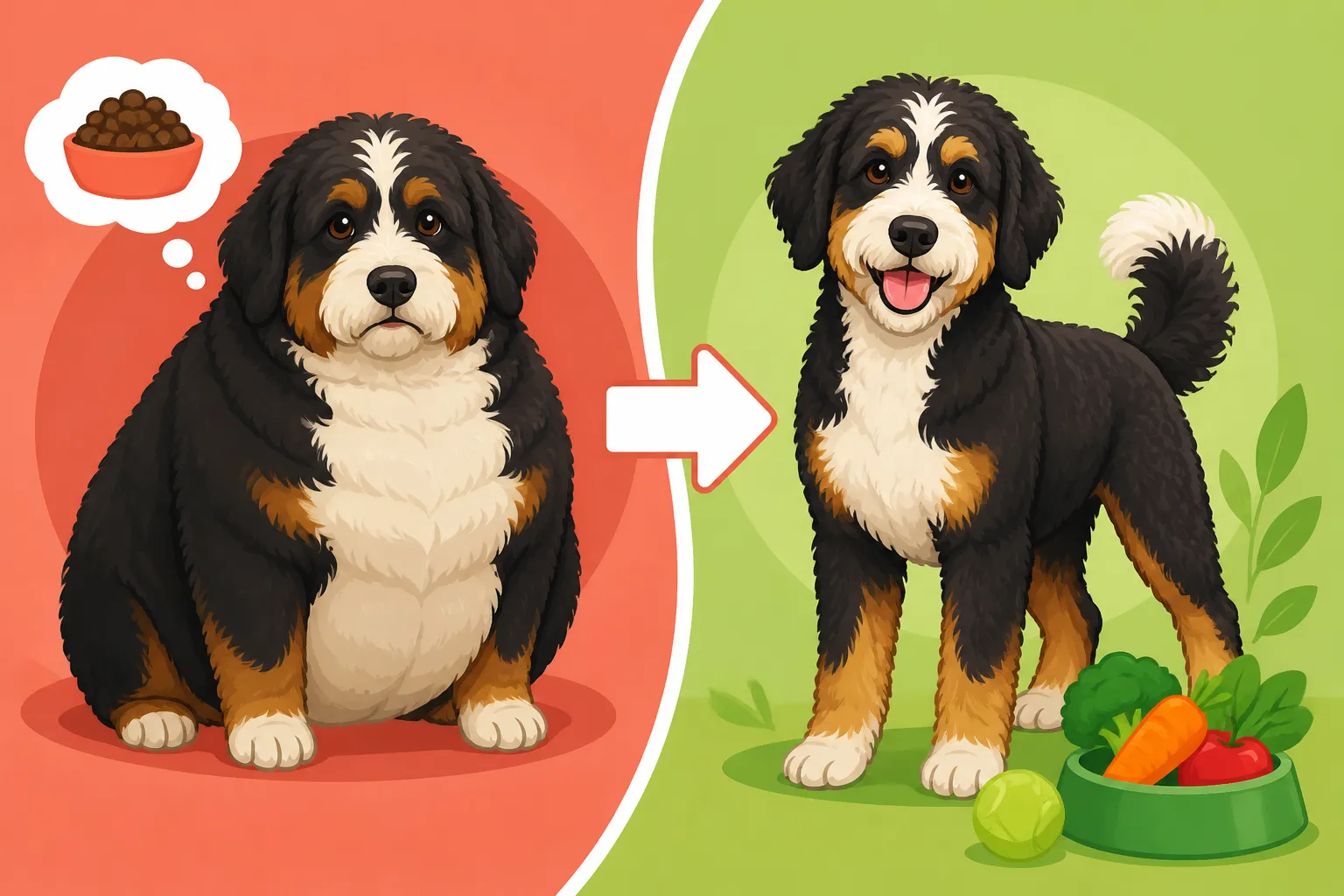
- Healthy Alternatives: Instead of high-calorie commercial biscuits, opt for low-calorie, dog-safe vegetables like baby carrots, green beans, or apple slices (without seeds). Many Bernedoodles absolutely adore these crunchy snacks. Just ensure they are cut into appropriate, choke-proof sizes.
- Use Kibble as Treats: Take a portion of your Bernedoodle's daily kibble allowance and use it throughout the day for training or rewards. This way, you're not adding extra calories, merely redistributing them.
- Non-Food Rewards: Don't forget that your Bernedoodle values your attention more than anything. A vigorous belly rub, a quick game of fetch, verbal praise, or a few minutes of play with their favorite toy can be just as effective a reward as a treat, and they come with zero calories.
- Mindful Chews: If you offer long-lasting chews, account for their caloric content. Many dental chews or bully sticks can add significant calories to their daily intake. Brands like Chewy often list caloric information for these products, so you can make informed choices.
| Healthy Treat Alternative | Caloric Impact | Benefits |
|---|---|---|
| Baby Carrots | Very Low | Crunchy, good for teeth, rich in Vitamin A. |
| Green Beans | Very Low | High in fiber, helps dogs feel full, good for digestion. |
| Apple Slices (no seeds) | Low | Good source of vitamins, fiber. |
| Cucumber Slices | Very Low | Hydrating, refreshing, virtually no calories. |
| Cooked Sweet Potato | Moderate | Good source of fiber and vitamins, but use sparingly due to higher sugar content. |
| Plain Air-Popped Popcorn | Low | Novel texture, satisfying crunch (ensure no butter, salt, or oil). |
| Ice Cubes | Zero | Hydrating, fun to crunch on, especially in summer. |
| Small Pieces of Kibble | Accounted for | No added calories if taken from daily ration, perfect for training throughout the day. |
The Power of Consistency: Family Buy-in and Regular Monitoring
Consistency is the bedrock of successful weight management. Everyone in the household needs to be on the same page. If one person is diligently portioning meals while another is constantly sneaking table scraps, your efforts will be undermined.
- Communicate the Plan: Hold a family meeting to discuss the Bernedoodle's weight loss plan. Explain the importance of strict portion control and the types of treats that are off-limits. Post a visual reminder on the fridge if needed.
- Regular Weigh-Ins: Schedule weekly or bi-weekly weigh-ins. This will help you track progress and make necessary adjustments. Your vet can advise on the ideal rate of weight loss, which is usually around 1-2% of their body weight per week. Most vet offices are happy for you to pop in for a quick weigh-in between appointments. Seeing those numbers decrease is incredibly motivating!
- Body Condition Scoring: Beyond the scale, regularly assess your Bernedoodle's body condition. You should be able to feel their ribs easily without pressing hard, see a noticeable waist when viewed from above, and have an abdominal tuck when viewed from the side. If you're unsure, ask your vet to show you how to properly assess their Feeling for a Bernedoodle's Ribs Under All That Coat.
Addressing Plateaus and Staying Motivated
Sometimes, despite your best efforts, your Bernedoodle's weight loss might plateau. Don't get discouraged! This is a normal part of the process.
- Re-evaluate: If a plateau occurs for more than a couple of weeks, it's time to re-evaluate. Have you inadvertently increased treats? Has their activity level dropped? Is someone else in the family slipping them extra food?
- Consult Your Vet Again: If you've been consistent and still hit a wall, schedule another chat with your vet. They might suggest a further reduction in calories, a different weight-loss food, or explore if there's an underlying health issue that has developed.
- Increase Activity: Perhaps it's time to slightly increase the duration or intensity of their exercise. Even an extra 10-15 minutes of brisk walking or a more engaging play session can make a difference for a standard Bernedoodle that needs a big yard to burn off energy.
- Stay Positive: This journey takes time, especially for large breeds. Celebrate small victories, like a lower number on the scale or renewed enthusiasm during walks. Your Bernedoodle relies on your positive attitude.
Common Pitfalls to Avoid on the Weight Loss Journey
While the desire to help your Bernedoodle lose weight is commendable, there are several common mistakes that owners often make. Being aware of these can help you navigate the process more smoothly and ensure your dog's health and well-being remain the top priority.
Crash Diets and Rapid Weight Loss
The idea of getting the weight off quickly might seem appealing, but crash diets or drastically cutting calories are dangerous for dogs. Rapid weight loss can lead to serious health problems, including liver issues, nutrient deficiencies, and a rebound effect where the weight quickly comes back.
A healthy weight loss rate for most dogs is between 1-2% of their body weight per week. For a Bernedoodle weighing, say, 80 pounds, that means losing about 0.8 to 1.6 pounds per week. This might seem slow, but it's the safest and most sustainable approach. Anything faster than this should be done only under strict veterinary supervision. Your Bernedoodle's body needs time to adjust to a new caloric intake and activity level, and a gradual reduction prevents them from feeling constantly hungry and deprived, which can lead to begging behaviors or even scavenging. Patience is truly a virtue here; slow and steady truly wins the race when it comes to Getting Weight Off an Overweight Bernedoodle.
Ignoring the Emotional Aspect
Weight gain and the subsequent weight loss journey aren't just physical for your Bernedoodle; there's an emotional component too. An overweight dog might be less enthusiastic about walks and play because of discomfort or pain in their joints. They might seem more sluggish or withdrawn. During the weight loss process, they might also feel hungrier than usual, leading to increased begging or mild frustration.
It's important not to punish these behaviors but to understand them. Instead of giving in to begging with food, redirect their attention with a toy, a short training session using their allotted kibble, or a comforting pet. Engage them in mental stimulation games that tire them out mentally, which can be just as effective as physical exercise in reducing boredom and cravings. Remember, your Bernedoodle relies on you for comfort and understanding. Keep the process positive, associate healthy habits with rewards (non-food ones!), and ensure they still feel loved and secure. Whether an Overweight Bernedoodle Loses Years is a real concern, and your efforts are an act of love to improve their quality of life.
Not Involving the Whole Family
This is a common stumbling block that can derail even the best-intentioned weight loss plans. If one family member is meticulously measuring food and limiting treats, but another (or a grandparent, a child, or even a houseguest) is unknowingly or knowingly slipping extra food, your Bernedoodle's weight loss will stall.
- Unified Front: As mentioned before, communication is key. Everyone who interacts with your Bernedoodle needs to understand the weight loss plan and commit to it. This includes explaining why it's important for their health.
- Designated Feeder/Treater: Sometimes it helps to have one primary person responsible for all feeding and treating to ensure consistency. If others want to give treats, they can ask the designated person for an approved, measured portion of kibble or a healthy veggie.
- Educate Guests: Don't be shy about politely informing visitors about your Bernedoodle's diet. A simple "Please don't feed Fido from the table, he's on a special diet for his health" usually suffices.
- Storage: Keep dog food and treats out of easy reach, especially from children who might be tempted to overfeed. A locking container for food on Amazon or Chewy can also help. The more consistent and unified your approach, the faster and more successfully your Bernedoodle will achieve a healthy weight.
Disclaimer
This article is for general informational purposes only and does not constitute professional advice. Laws, prices and regulations vary by location and change over time. Consult a qualified professional for guidance on your specific situation.