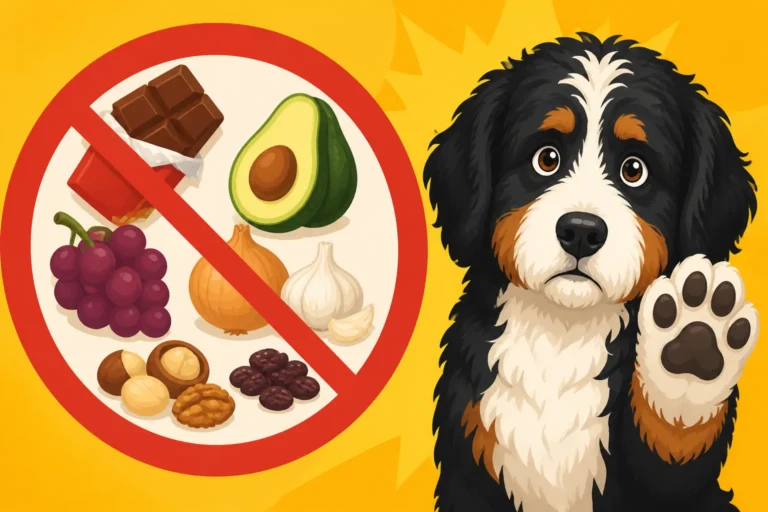
How Much a Bernedoodle Puppy Should Eat
Bringing home a fluffy Bernedoodle puppy is an absolute joy, but it quickly brings on a wave of questions, especially when it comes to feeding. You stand there, bag of puppy food in hand, staring at the confusing charts, wondering if you're giving your rapidly growing furball too much, too little, or even the wrong kind of food. It's a common struggle for new puppy parents, filled with anxiety about doing right by their new family member. This guide is here to cut through the confusion, offering a comprehensive look at how much your Bernedoodle puppy should eat, tailored to their unique growth needs, to help you feel confident in nourishing your beloved companion.
Understanding Bernedoodle Puppy Growth Stages
Bernedoodles, especially the standard size, grow at an astonishing rate. One minute you have a tiny fluffball, the next you have a lanky adolescent who seems to be growing an inch a day. This rapid growth isn't just about getting bigger; it's a complex process involving bone development, muscle gain, and organ maturation, all of which are profoundly impacted by their nutrition. Getting it right during these critical puppy stages is paramount for their long-term health and preventing issues down the road.
The Phases of Puppy Development and Nutritional Needs
Your Bernedoodle puppy goes through several distinct growth phases, each with slightly different nutritional demands. From birth to about 8 weeks, they're typically with their breeder, relying on their mother's milk and then being gradually weaned onto solid puppy food. When they come home to you, usually around 8-12 weeks, they're in a period of intense, fast-paced development. Their bones are lengthening, their muscles are starting to bulk up, and their energy levels are sky-high, demanding a diet rich in calories, protein, and essential nutrients. This high-energy phase can last for quite a while, often up to 6-8 months, especially for larger Bernedoodles.
As they transition into adolescence, roughly from 6-18 months, their growth might visually slow down a little, but their skeletal and muscular systems are still maturing. They might become lankier, going through an "awkward" phase, and while their growth plates are still closing, their energy demands might plateau or even slightly decrease as they get past the initial puppy zoomies. This is a crucial time to ensure their diet continues to support healthy, steady growth without promoting excessive weight gain, which can put undue stress on developing joints. The Age a Bernedoodle Reaches Full Height can vary, but generally, large breeds like the Standard Bernedoodle will continue to fill out and mature past their initial height growth.
Why Slow and Steady Growth is Best
It might seem counterintuitive, but for large and giant breed puppies like many Bernedoodles, slower growth is actually better. The Bernese Mountain Dog side of your Bernedoodle's genetics means they are predisposed to conditions like hip and elbow dysplasia. Rapid growth, often fueled by diets that are too high in calories or have incorrect calcium-to-phosphorus ratios, can exacerbate these genetic predispositions. When a puppy grows too quickly, their bones and cartilage may not develop properly, leading to structural weaknesses and future joint problems.
Think of it like building a house: you want a strong, stable foundation laid carefully, not rushed. For a Bernedoodle puppy, a diet designed for large breed puppies helps achieve this by providing a balanced nutritional profile that supports steady, controlled growth. This means adequate protein for muscle development, appropriate fat content for energy, and crucially, carefully controlled levels of calcium and phosphorus to ensure proper bone mineralization. Why Slow Growth Protects a Bernedoodle's Elbows is a topic often discussed by responsible breeders and vets, highlighting the long-term benefits of a measured approach to feeding.
Calculating Daily Food Portions for Your Bernedoodle Puppy
One of the biggest head-scratchers for any new Bernedoodle owner is figuring out exactly how much food to put in the bowl. It's not as simple as scooping out a fixed amount; there are several variables at play, and getting it right means paying attention to more than just the bag's instructions.
Deciphering Food Bag Guidelines
Every bag of commercial puppy food will have a feeding guide, usually a chart that recommends daily portions based on the puppy's current weight and age. These charts are your starting point, but they are exactly that: guidelines. They can't account for your individual puppy's metabolism, activity level, or the specific demands of their growth spurt that week. For instance, a very active Bernedoodle puppy who spends hours playing might need slightly more fuel than a couch potato sibling of the same age and weight.
It's also worth noting that different brands have different calorie densities. A cup of one premium large breed puppy food might have more calories than a cup of another, meaning the actual volume of food needed could differ significantly. Always check the calorie content on the bag, if available, and compare it to others if you're considering switching foods. When you're standing in the pet aisle, perhaps at a Chewy store or browsing online through Amazon, take a moment to really scrutinize these labels.
Factors Influencing Your Puppy's Portions
Beyond the bag's recommendations, several factors will dictate the precise amount of food your Bernedoodle puppy needs:
- Age: Younger puppies (8-16 weeks) generally eat more frequently and have higher calorie demands per pound of body weight due to intense growth. As they get older, their metabolism might stabilize, and their growth rate may slow, necessitating adjustments.
- Current Weight and Expected Adult Size: A Mini Bernedoodle puppy will naturally eat less than a Standard Bernedoodle puppy of the same age. Similarly, a puppy who is expected to be on the larger end of the Standard Bernedoodle scale will require more sustenance to reach that size. Keep an eye on your puppy's estimated adult weight, often provided by your breeder based on the parents, to help guide your feeding strategy.
- Activity Level: This is a big one! A Bernedoodle puppy tearing around the yard for hours, engaging in supervised play and short walks, will burn more calories than a puppy whose exercise is more limited. Be realistic about your puppy's daily activity when assessing their food intake.
- Metabolism: Just like people, dogs have individual metabolic rates. Some puppies are naturally lean and seem to burn through food quickly, while others are more prone to putting on weight. You'll get to know your puppy's unique metabolism as they grow.
- Overall Health: Any health issues, from parasites to minor infections, can affect appetite and nutrient absorption. If your puppy seems to have a sudden change in appetite or energy, always consult your vet.
It's a continuous balancing act. Don't be afraid to adjust the amount of food up or down by a small increment (say, 1/4 cup) every few days based on your puppy's body condition and energy levels. The goal is steady, healthy growth, not a chubby puppy.
Choosing the Right Food for a Growing Bernedoodle Puppy
Selecting the right food is perhaps even more critical than getting the portion size exact, especially for a large breed like the Bernedoodle. Their unique growth trajectory demands a specific nutritional profile to support their rapidly developing bones and muscles without promoting unhealthy growth.
The Importance of Large Breed Puppy Formulas
For Bernedoodle puppies, particularly the standard and mini sizes, a large breed puppy formula is almost always the best choice. These foods are specifically formulated to address the needs of puppies that will reach over 50 pounds as adults. The key difference lies not just in the overall calorie count, but in the precise balance of minerals, most notably calcium and phosphorus.
Why Calcium Levels Matter for a Growing Bernedoodle cannot be stressed enough. Large breed puppy foods typically have lower calcium levels than regular puppy foods, and a carefully controlled calcium-to-phosphorus ratio. This might sound counterintuitive—surely bigger bones need more calcium, right? However, too much calcium (or an incorrect ratio with phosphorus) can lead to skeletal growth abnormalities, increasing the risk of orthopedic diseases like osteochondrosis (OCD) and hip and elbow dysplasia. These formulas are designed to promote a slower, more even growth rate, which is protective for developing joints.
Key Nutrients and Ingredients to Look For
When you're reading those food labels, what exactly should you be looking for?
- High-Quality Protein: Puppies need ample protein for muscle development. Look for animal-based protein sources like chicken, beef, lamb, or fish as the first ingredients. Aim for a protein content typically around 25-30% for puppies.
- Moderate Fat Content: Fat provides concentrated energy, which puppies need, but too much can lead to obesity. Large breed puppy formulas usually have a moderate fat content, around 12-18%.
- Controlled Calcium and Phosphorus: As mentioned, this is crucial. Look for calcium levels generally between 1.0-1.5% (dry matter basis) and a calcium-to-phosphorus ratio between 1.1:1 and 1.4:1. These ranges help ensure proper bone development.
- DHA: Docosahexaenoic acid, an omega-3 fatty acid, is vital for brain and eye development. It's often found in fish oil.
- Prebiotics and Probiotics: These can support a healthy gut microbiome, which is essential for digestion and nutrient absorption.
- Avoid Excessive Fillers: While some carbohydrates are necessary for energy, try to choose foods where the primary ingredients are identifiable protein sources, healthy fats, and complex carbohydrates like sweet potatoes or whole grains, rather than a long list of ambiguous "by-products" or excessive corn fillers.
Brands like Ollie offer fresh-cooked options that some owners prefer, while more traditional kibble brands found on Chewy or Amazon also provide excellent large breed puppy formulas. Whatever you choose, ensure it meets these nutritional criteria and is specifically labeled for large breed puppies. Large Breed Puppy Food for a Standard Bernedoodle is not just a marketing term; it's a vital dietary requirement.
The Importance of Controlled Feeding and Preventing Overfeeding
It’s so easy to spoil a cute Bernedoodle puppy with extra treats or a perpetually full bowl. However, indulging in these habits, while well-intentioned, can have serious long-term consequences for a rapidly growing large breed like your Bernedoodle. Controlled feeding isn't just about managing weight; it's about safeguarding their skeletal health.
Why Free Feeding is a No-Go for Bernedoodle Puppies
Free feeding, where a bowl of food is left out all day for a puppy to graze on, might seem convenient, but it's generally discouraged for large breed puppies. Here's why:
- Risk of Overfeeding and Rapid Growth: As discussed, rapid growth in large breed puppies puts undue stress on developing joints and can contribute to orthopedic issues like hip and elbow dysplasia. When food is always available, puppies tend to consume more calories than they truly need, accelerating their growth past a healthy pace. This is especially true for Bernedoodles, who can be quite food-motivated!
- Difficulty Monitoring Intake: If food is always out, it’s hard to tell how much your puppy is actually eating. This makes it challenging to notice if their appetite decreases due to illness or if they’re eating excessively.
- House Training Challenges: Scheduled meals lead to predictable potty times. If your puppy is free-feeding, their bowel movements will be less regular, making house training a much longer and more frustrating process for both of you.
- Resource Guarding Potential: For some puppies, free-feeding can contribute to resource guarding, where they become protective of their food bowl because it's always available and thus seems like a high-value item they need to defend.
- Bloat Risk (for Standard Bernedoodles): While primarily a concern for adult dogs, overeating at one sitting can be a contributing factor to bloat (gastric dilatation-volvulus), a life-threatening condition. Standard Bernedoodles inherit the deep chest characteristic from the Bernese Mountain Dog, which puts them at higher risk.
Instead of free-feeding, establish a consistent meal schedule. How Many Meals a Bernedoodle Puppy Needs Daily typically starts at 3-4 meals a day for very young puppies (8-12 weeks) and gradually reduces to 2-3 meals by adolescence. Consistency is key for their digestive system and training.
The Dangers of Overfeeding and Weight Gain
The phrase "a fat puppy is a cute puppy" can be dangerous for Bernedoodles. While a little puppy chub is adorable, excessive weight gain, even in puppyhood, is detrimental. Whether Overfeeding a Bernedoodle Puppy Damages Its Joints is a resounding yes. Every extra pound your puppy carries puts additional strain on their still-developing bones, ligaments, and joints. This can worsen or even trigger the manifestation of genetic orthopedic conditions.
Consider a scenario: you have a 4-month-old Standard Bernedoodle puppy. They’re gaining weight rapidly, looking robust. But internally, that extra weight is forcing their soft, developing cartilage and growth plates to bear a heavier load than they're structurally ready for. This can lead to malformations, inflammation, and pain, setting them up for early-onset arthritis and lifelong mobility issues. It's a silent killer of joint health that many owners don't realize until it's too late. It’s far better to have a lean, healthy puppy than one carrying excess weight.
Monitoring Your Bernedoodle Puppy's Weight and Condition
You've got the right food, you're on a schedule, but how do you know if you're hitting the sweet spot? Monitoring your Bernedoodle puppy's weight and overall body condition is crucial to ensure they are growing appropriately and not trending towards being overweight or underweight. This is where your eyes and hands become your most important tools.
Regular Weigh-Ins and Growth Tracking
It's a good idea to weigh your Bernedoodle puppy regularly, especially during those first few months of rapid growth. Once a week or every two weeks can give you a good idea of their growth trajectory. You can use a bathroom scale for smaller puppies (weigh yourself, then weigh yourself holding the puppy, and subtract the difference), or for larger puppies, your vet's office usually has a large scale you can use. Keep a little journal or a simple spreadsheet to track their weight. This data can be incredibly helpful for your vet during check-ups.
Remember, though, that growth isn't always perfectly linear. Puppies have growth spurts! One week they might gain a lot, the next a little less. What you're looking for is a general upward trend that isn't excessively steep. If you notice a sudden drop or plateau in weight gain (unless directed by your vet to slow growth), or a rapid and sustained increase, it's time to re-evaluate their food intake or consult your veterinarian. Predicting What a Bernedoodle Puppy Will Weigh can be a fun game, but tracking actual weight is much more important for health.
Understanding Body Condition Scoring
Beyond the number on the scale, your puppy's actual body condition is the best indicator of their health. Vets use a "Body Condition Score" (BCS) chart, typically on a 9-point scale, to assess whether a dog is underweight, ideal, or overweight. As an owner, you can perform a simplified version at home:
- Rib Check: Gently run your hands along your puppy's sides. You should be able to easily feel their ribs, almost like feeling knuckles under a thin blanket, without having to press hard. If you can see the ribs clearly, they might be too thin. If you can't feel them at all without significant pressure, they are likely carrying too much weight.
- Waistline: Look at your puppy from above. They should have a noticeable "waist" behind their ribs, like an hourglass figure, not a straight line or bulging sides.
- Abdominal Tuck: Look at your puppy from the side. Their belly should tuck up slightly behind their rib cage, not hang low or be distended.
For a Bernedoodle puppy, especially a large breed, a lean body condition (often a BCS of 4 or 5 out of 9) is generally preferred to slightly overweight. You want to see definition, not a soft, round appearance. If you're unsure, ask your vet to demonstrate how to properly assess your puppy's body condition at their next visit. Regular checks will help you make those subtle adjustments to their food portions, helping with Keeping a Bernedoodle's Weight Down.
When and How to Transition to Adult Food
The puppy phase feels like it lasts forever when you're dealing with endless energy and house training, but eventually, your Bernedoodle will grow up! Knowing when and how to transition them from puppy food to adult formula is another important step in their nutritional journey.
The Right Time to Switch
There isn't a single, universal age to switch a Bernedoodle from puppy to adult food because their growth rates and maturation vary, especially between mini and standard sizes. However, for large breed dogs like the Bernedoodle, the transition usually happens later than for smaller breeds.
- Standard Bernedoodles: Generally, a Standard Bernedoodle should remain on a large breed puppy formula until they are 18-24 months old. This might seem like a long time, but remember, their bones and joints are still maturing and closing their growth plates even if they appear to have reached their full height earlier. The specific calcium and phosphorus ratios in large breed puppy food are beneficial during this entire development period.
- Mini and Tiny Bernedoodles: These smaller variations might transition a bit earlier, often around 12-18 months of age. While they are smaller, their Poodle and Bernese genetics still mean a relatively robust skeletal structure that benefits from a slightly prolonged puppy diet.
Always consult your veterinarian for their specific recommendation, as they can assess your individual puppy's growth rate and overall health. The Age a Bernedoodle Switches to Adult Food is a key discussion point during those adolescent vet visits.
The Transition Process
Once you've decided it's time to switch, don't do it cold turkey! A sudden change in diet can upset your Bernedoodle's sensitive stomach, leading to digestive issues like diarrhea or vomiting. A gradual transition allows their digestive system to adjust to the new ingredients and nutrient profile.
Here’s a typical transition schedule, spread over 7-10 days:
- Days 1-2: Mix 75% of the old puppy food with 25% of the new adult food.
- Days 3-4: Adjust to a 50/50 mix of old and new food.
- Days 5-6: Shift to 25% old food and 75% new adult food.
- Days 7-10: Your Bernedoodle should now be eating 100% new adult food.
During this transition, keep a close eye on your puppy for any signs of digestive upset. If you notice soft stools, diarrhea, or vomiting, slow down the process and maintain the current ratio for a few more days before progressing. If problems persist, consult your vet; it might be that the new food simply doesn't agree with your Bernedoodle.
After the transition, continue to monitor their body condition and adjust the portion size of the adult food as needed to maintain a healthy weight and energy level. Remember, adult dogs typically require fewer calories per pound than growing puppies, so you'll likely feed a slightly smaller volume of adult food compared to their puppy portions.
| Age of Bernedoodle Puppy (Standard) | Recommended Meals Per Day | General Food Type | Key Nutritional Focus |
|---|---|---|---|
| 8-12 weeks | 3-4 meals | Large Breed Puppy Kibble | High protein, moderate fat, controlled Ca/P for rapid growth |
| 3-6 months | 3 meals | Large Breed Puppy Kibble | Sustained growth, bone development, energy for play |
| 7-12 months | 2-3 meals | Large Breed Puppy Kibble | Continued bone/muscle maturation, managing growth rate |
| 12-18 months | 2 meals | Large Breed Puppy Kibble / Transition to Adult | Final growth plate closure, filling out, preparing for adult maintenance |
| 18-24 months | 2 meals | Large Breed Adult Kibble | Maintenance, joint health, preventing obesity |
Note: This table provides general guidelines. Always follow your specific food brand's recommendations and consult your veterinarian.
Disclaimer
This article is for general informational purposes only and does not constitute professional advice. Laws, prices and regulations vary by location and change over time. Consult a qualified professional for guidance on your specific situation.