Whether a Heavy Duty Harness Mats a Bernedoodle
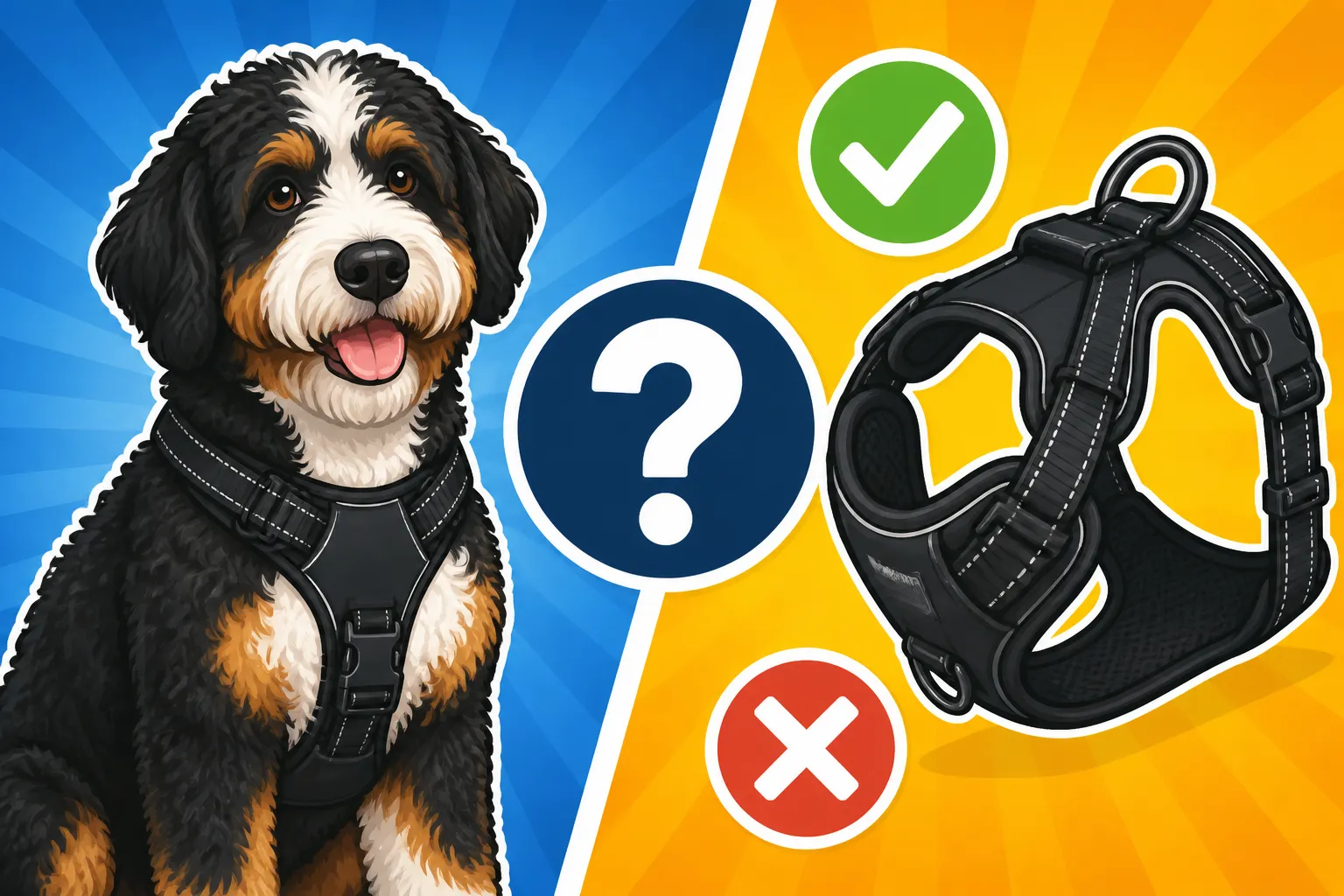
Oh, the joy and the frustration of that magnificent Bernedoodle coat! If you're anything like me, you adore your Bernedoodle's soft, often wavy or curly fur, but you're also constantly battling the dreaded mats. And it seems like no matter how vigilant you are, certain pieces of equipment, especially those heavy-duty harnesses, can turn a beautiful patch of fur into a felted disaster area overnight. This guide is going to walk you through exactly why your trusted harness might be causing those painful tangles and, more importantly, how you can prevent it and keep your Bernedoodle's coat gloriously mat-free.
The Unique Challenges of a Bernedoodle's Coat
Let's face it, a Bernedoodle's coat is a marvel, a genetic masterpiece combining the best (and sometimes most challenging) aspects of the Bernese Mountain Dog and the Poodle. But this very combination makes it a magnet for mats, especially in areas of high friction. Understanding your dog's specific coat and how it behaves is the first step in winning the matting war.
Decoding Your Bernedoodle's Specific Coat Type
Not all Bernedoodle coats are created equal, and this variety directly impacts how prone they are to matting, particularly under a harness. You might have an F1 Bernedoodle with a shaggier, sometimes straighter coat, or an F1b with tighter curls. Most Bernedoodles boast that desirable wavy or loose curly coat, which is often the biggest culprit for matting due to its texture. This wavy nature means individual hairs aren't straight, so they catch and intertwine with each other far more easily than straight hair. Think of it like a tangled ball of yarn versus neatly stacked thread – the yarn is just asking for knots.
Even if your Bernedoodle has a straighter coat, it's likely still thick, inheriting some of that dense double-coat characteristic from the Bernese side. This density, combined with potential shedding (yes, some Bernedoodles do shed, despite popular belief!), means that loose undercoat gets trapped within the outer layers, quickly leading to mats when pressure and friction are applied. The Poodle's tight, non-shedding curls are notorious for matting if not meticulously brushed, and when mixed with the Bernese coat, you get a beautiful but high-maintenance blend. For a deeper dive, you might find The Coat a Bernedoodle Gets From Two Heavy Coated Parents insightful.
The Science of Mat Formation: Friction, Moisture, and Dirt
Matting isn't just about unbrushed hair; it's a dynamic process influenced by several factors, and a harness creates the perfect storm for it. Imagine the constant rubbing of the harness straps against your Bernedoodle's fur as they walk, run, or even just stand. This friction causes individual hairs to tangle around each other. Now, add moisture into the mix – rain, dew, a swim, or even just sweat from a vigorous play session. Wet hair is far more pliable and prone to knotting. As the hair dries, these knots tighten, becoming dense, felted patches that are incredibly difficult to brush out.
Beyond just friction and moisture, dirt, debris, and even dead skin cells can get caught in these tangles, exacerbating the problem. A bit of mud from a trail walk, some burrs from the bushes, or even just dust from rolling around in the yard can embed themselves in the coat. This foreign matter acts as an anchor for the hairs to cling to, accelerating the matting process. These mats aren't just cosmetic issues; they can pull on your dog's skin, causing pain, irritation, and even skin infections if left untended.
Common Matting Zones (Beyond the Harness Area)
While we're focusing on harness-related mats today, it's helpful to remember that Bernedoodles are prone to matting in several key areas due to their coat type and body structure. The spots where a harness sits are definitely high-risk, but don't forget other common trouble spots. Areas like behind the ears, under the chin, in the armpits, and in the "britches" (the fluffy fur on their rear legs) are prime targets. These are all zones of high movement and friction, where the coat tends to be longer or thicker, and therefore more susceptible to tangles.
Mats under the collar are also a common nuisance. Anywhere the coat rubs repeatedly against an object, or where moisture tends to accumulate, is a hotspot. So, while addressing harness matting, maintain a consistent brushing routine for the whole dog. Neglecting other areas can quickly lead to widespread matting, making your grooming routine a nightmare. For more on other areas, check out Mats in a Bernedoodle's Armpits and Britches.
Why Heavy-Duty Harnesses Are Often Matting Culprits
Heavy-duty harnesses are designed for control, durability, and often for larger, stronger dogs – which many Standard Bernedoodles certainly are! But these very qualities can make them a particular challenge for a Bernedoodle's coat.
The Impact of Harness Materials and Construction
The material your Bernedoodle's harness is made from plays a significant role in its matting potential. Many heavy-duty harnesses feature thick, coarse nylon or polyester webbing. While incredibly durable, these materials can be quite abrasive against fine or wavy fur. The rough texture, combined with the constant movement of your dog's body, acts like sandpaper, rapidly rubbing hairs together and creating friction that leads to tangles. Softer materials, like those with fleece or neoprene padding, tend to be less harsh on the coat.
Consider the construction as well. Wide straps, multiple buckles, and sturdy seams mean more surface area in contact with the coat. If the harness has a tight, dense weave or exposed stitching, these elements can snag and pull at individual hairs, initiating the matting process. When you're looking for a new harness, perhaps on Chewy or Amazon, try to find options that prioritize smooth, soft linings, especially in areas that will rest against the chest and armpits. Some brands specifically design harnesses to be "coat-friendly" for long-haired breeds.
The Critical Role of Fit and Design in Preventing Mats
Even the softest material won't prevent matting if the harness doesn't fit correctly. "Heavy-duty" often implies a more substantial design with wider straps and more overall coverage on your dog's body. While this provides excellent control, it also means more opportunities for friction. If a harness is too loose, it slides around excessively, causing constant rubbing and agitation of the fur. If it's too tight, it can compress the coat, leading to severe matting and even skin irritation as hairs get pinched and felted under pressure.
The design itself matters immensely. A "Y-front" or "H-back" style harness might distribute pressure differently. For many Bernedoodles, a Y-front harness that goes around the chest and avoids the armpit area can be beneficial, as it reduces rubbing in a highly sensitive and mat-prone zone. Harnesses with straps that run directly through the armpits are almost guaranteed to cause friction mats there. Before purchasing, always measure your Bernedoodle carefully and look for adjustable points to ensure a snug but comfortable fit that doesn't restrict movement or rub excessively.
Activities That Exacerbate Harness-Related Matting
It's not just the harness; it's what you do while wearing it! Any activity that increases movement, introduces moisture, or exposes your Bernedoodle to environmental elements will accelerate matting under the harness. Long walks, hikes through brushy areas, running, or playing fetch all involve repetitive motion of your dog's legs and body, creating constant friction where the harness sits. This is amplified if your dog is particularly bouncy or pulls on the leash.
Add water to the equation, and you've got a matting super-accelerant. Swimming, walking in the rain, or even just getting sweaty on a hot day can quickly turn damp fur under a harness into a tangled mess. Wet hair is incredibly vulnerable to matting, and as it dries compressed under the harness, those tangles become much tighter and harder to remove. Always consider the weather and activity level when deciding whether to keep the harness on for extended periods. Even a simple summer walk in high humidity can contribute to this problem, so you might want to consider Whether a Bernedoodle Should Be Walked in Summer.
Practical Strategies for Mat-Free Harness Use
The good news is that with a bit of proactive effort and the right approach, you absolutely can use a heavy-duty harness on your Bernedoodle without battling constant mats. It all comes down to a consistent routine and smart choices.
Mastering the Pre-Walk Brush-Out Ritual
This might sound like an extra step, but it's perhaps the most crucial one: always brush your Bernedoodle thoroughly before putting on their harness. Think of it this way: if there are already small tangles or knots in the fur where the harness sits, the friction from the harness will only tighten and expand them into full-blown mats. Starting with a completely tangle-free coat gives you the best chance of preventing mat formation.
Make this a quick, focused ritual. Use a slicker brush and then a metal comb to ensure you're getting all the way down to the skin, especially in the areas where the harness will sit – the chest, shoulders, and along the rib cage. Pay extra attention to the armpits. If you encounter any small tangles, gently work them out before the harness goes on. This not only prevents matting but also makes the harness more comfortable for your dog. A good quality slicker brush and metal comb are essential tools, easily found on Amazon.
Selecting and Fitting the Ideal Harness
Choosing the right harness is paramount. Don't just grab the first "heavy-duty" option you see; scrutinize its design and materials with your Bernedoodle's coat in mind. Look for harnesses with smooth, soft linings in critical contact areas – fleece or padded neoprene can make a huge difference compared to raw nylon webbing. Consider designs that minimize contact points, especially around the delicate armpit region. Some harnesses are designed with wider, flat panels that distribute pressure more evenly and reduce friction lines.
| Harness Feature | Matting Risk | Comfort Level | Control Level | Notes |
|---|---|---|---|---|
| Coarse Nylon Webbing | High | Medium | High | Durable but abrasive. Look for padded versions. |
| Fleece/Neoprene Lined | Low | High | Medium-High | Softer on coat, reduces friction. May absorb moisture, requiring quicker drying. |
| Wide Straps | Medium-High | Medium | High | More surface area for rubbing. Ensure even pressure distribution. |
| Thin Straps | Low-Medium | Medium | Medium | Less surface area, but can dig in if not padded. May offer less control for strong pullers. |
| Y-Front Design | Low | High | High | Avoids armpit friction. Good for general walking and control. |
| H-Back/Step-In Design | Medium-High | Medium | Medium | Straps often run directly through armpits, high friction risk. |
| Front Clip Option | Low-Medium | High | High | Reduces pulling, can minimize side-to-side harness movement and friction. |
Beyond material and design, fit is critical. A harness should be snug enough that it doesn't shift and rub excessively, but loose enough that it doesn't pinch or compress the coat. You should generally be able to fit two fingers comfortably under the straps. Always adjust the harness to your Bernedoodle's specific body shape. Many harnesses available on Chewy offer excellent adjustability, allowing you to fine-tune the fit.
Post-Walk Grooming and Vigilance
Your matting prevention doesn't end when the walk does. As soon as you're back home, remove the harness. Don't leave it on for extended periods indoors, as this continues the friction and compression that leads to mats. Give the harness area a quick once-over with your fingers, feeling for any nascent tangles. If your Bernedoodle got wet, ensure their coat is completely dry before brushing thoroughly or reapplying the harness. A damp coat left to dry compressed under a harness is a recipe for disaster.
Make it a habit to do a full-body brush-out daily, or at least every other day, focusing on all the usual matting hotspots, including where the harness sits. This consistent vigilance allows you to catch any small tangles before they escalate into painful, difficult-to-remove mats. Investing The Weekly Hours a Standard Bernedoodle's Coat Takes in routine grooming saves you far more time and headache (and money!) down the line.
When Mats Form: Damage Control and Professional Help
Despite your best efforts, sometimes mats still happen. It's frustrating, but it's part of living with a Bernedoodle. The key is knowing how to handle them safely and effectively.
Gentle Dematting Techniques for Small Tangles
For small, superficial tangles, you might be able to tackle them at home. The golden rule here is: never use scissors near the skin. It's incredibly easy to accidentally cut your dog, as mats pull the skin taut and make it difficult to distinguish from the fur itself. Instead, arm yourself with a good detangling spray (you can find many options on Amazon), a slicker brush, and a metal comb.
Start by liberally spraying the mat with detangler. Use your fingers to gently try and pull the mat apart, working from the outer edges inward. Once loosened, use the slicker brush to gently tease apart the hairs. For tighter spots, employ a metal comb, again working slowly from the outside of the mat towards the skin. You can try a technique called "line brushing" or "splitting the mat," where you hold the hair closest to the skin and comb through small sections at a time. This process requires immense patience and a gentle touch. If your dog shows any signs of pain or discomfort, stop immediately.
Knowing When to Seek Professional Grooming Help
There are times when a mat is simply too big, too tight, or too close to the skin for you to safely handle at home. This is when your professional groomer becomes your best friend. Don't feel guilty or embarrassed; groomers see mats all the time, and they have the specialized tools, expertise, and often extra hands to safely and humanely remove even severe matting. They can often work wonders with a dematting tool or, if necessary, cleanly shave out the mat without causing discomfort or injury to your Bernedoodle.
Waiting too long can turn a manageable mat into a painful problem requiring extensive shaving, which can be stressful for your dog and costly for you. Early intervention is key. A groomer can also advise you on the best grooming schedule and techniques for your specific Bernedoodle's coat. Knowing What a Matted Bernedoodle Costs to Shave can be a wake-up call, emphasizing the value of proactive care.
Prioritizing Prevention: It's Easier Than the Cure
The overwhelming takeaway here is that prevention truly is easier, cheaper, and far less stressful than the cure. Consistent daily grooming, selecting a well-fitting and coat-friendly harness, and diligently checking your Bernedoodle's coat after every outing are your strongest defenses against harness-induced matting. It's a commitment, yes, but it’s a small price to pay for a comfortable, healthy, and happy Bernedoodle.
Remember that good nutrition also plays a role in coat health. A healthy diet, like those offered by Ollie, contributes to a strong, resilient coat that is less prone to breakage and matting. Consider your Bernedoodle's overall wellness as part of their coat care. Integrating a regular grooming routine, maybe just 15-20 minutes a day, will not only keep mats at bay but also strengthen your bond with your beloved companion. Consistent brushing, as outlined in How Often a Bernedoodle Should Be Brushed, will become second nature. It will also help manage A Year of Grooming Bills on a Standard Bernedoodle by reducing the need for emergency dematting sessions!
Disclaimer
This article is for general informational purposes only and does not constitute professional advice. Laws, prices and regulations vary by location and change over time. Consult a qualified professional for guidance on your specific situation.