Why Slow Growth Protects a Bernedoodle’s Elbows
It’s a joy watching your Bernedoodle puppy grow, transforming from a fluffy little ball into that magnificent, large companion you envisioned. But here’s the thing many new owners don’t fully realize: how they grow, and how fast they grow, can have a profound impact on their long-term joint health, especially those vulnerable elbows. This guide is all about understanding why a slower, more controlled growth rate is your Bernedoodle’s best friend, setting them up for a life of comfort and activity rather than early-onset joint issues.
The Delicate Balance of Bernedoodle Puppy Growth
When you bring home a Bernedoodle puppy, you’re not just getting a cute ball of fluff; you’re welcoming a rapidly developing creature whose body is undergoing incredible changes in a very short amount of time. Especially with standard Bernedoodles, the sheer scale of their growth, sometimes gaining several pounds a week, is staggering. This intense growth spurt, while impressive to witness, also means that their bones, joints, and soft tissues are in a delicate state, highly susceptible to damage if not managed correctly. Understanding this foundational stage is key to protecting them.
Why Large Breeds Grow Differently
Large and giant breed puppies, like our beloved Bernedoodles, have a unique growth curve compared to their smaller canine cousins. They’re not just bigger versions of a Chihuahua puppy; their skeletal development involves longer growth plates that remain open for a more extended period. This means their bones are actively lengthening and expanding at an astonishing rate. Imagine a construction project where the framework is being built at warp speed – if any part of that framework is stressed or misaligned during this critical phase, it can lead to lifelong structural issues. Their cartilage, which is meant to cushion joints, is also softer and more pliable in puppyhood, making it less resilient to impact and pressure. This rapid, complex development is what makes them prone to certain orthopedic conditions if their growth isn't carefully managed.
What often surprises new owners is just how much difference there is. A small dog might reach its adult size in six to eight months, with a much less intense period of skeletal development. A Bernedoodle, on the other hand, can continue to fill out and mature past its first birthday, sometimes even closer to two years old, particularly for the larger standards. This prolonged and accelerated growth window places unique demands on their nutrition and activity levels. Ignoring these differences and treating a giant breed puppy like any other can inadvertently put them at risk.
The Role of Genetics vs. Environment in Joint Development
It’s easy to feel overwhelmed when thinking about all the things that could go wrong with your Bernedoodle’s joints, especially given that both the Bernese Mountain Dog and the Poodle, the parent breeds, can carry predispositions to certain orthopedic conditions. Conditions like elbow dysplasia are indeed multifactorial, meaning they have a strong genetic component. A responsible breeder will have performed extensive health clearances on their breeding dogs, checking for things like hip and elbow dysplasia, to minimize the genetic risk passed down to puppies. You can read more about this in The Five Clearances a Bernedoodle Breeder Should Have. But here’s the crucial part: while genetics might "load the gun," environmental factors, primarily nutrition and exercise during puppyhood, are often what "pull the trigger."
Even with impeccable genetics from carefully screened parents, an improperly managed puppyhood can still lead to the manifestation of joint issues. This is where you, as the owner, become the most important line of defense. Think of it like a child inheriting a predisposition for a certain health issue; while the genetic code is there, lifestyle choices like diet and exercise play a massive role in whether that predisposition ever becomes a problem. For Bernedoodles, this means understanding that a solid genetic foundation is just the starting point, and that your daily care choices have a profound and lasting impact on those developing joints.
Understanding Elbow Dysplasia in Bernedoodles
Elbow dysplasia (ED) is one of those scary terms that often comes up when researching large breed dogs, and for good reason. It's a debilitating condition that can significantly impact a Bernedoodle's quality of life. Understanding what it is and how it develops is the first step in prevention, allowing us to implement strategies that truly make a difference in your puppy's well-being. This isn't just a hypothetical problem; it's a very real concern for many Bernedoodle owners, making proactive measures essential.
What Exactly is Elbow Dysplasia?
Elbow dysplasia isn't a single disease; it's a complex condition that encompasses several developmental abnormalities within the elbow joint. The elbow is a hinge joint formed by three bones: the humerus (upper arm), the radius, and the ulna (lower arm bones). In puppies with ED, one or more of these components fail to develop correctly, leading to instability, pain, and eventually, degenerative joint disease (arthritis). Common manifestations include:
- Fragmented Coronoid Process (FCP): A small piece of bone or cartilage from the ulna breaks off into the joint.
- Ununited Anconeal Process (UAP): A growth plate on the ulna fails to fuse properly, leaving a loose bone fragment.
- Osteochondrosis (OCD): A disturbance in the cartilage development, leading to a flap of cartilage separating from the underlying bone.
- Elbow Incongruity: The three bones don't fit together perfectly, causing abnormal pressure points.
Any of these issues create friction and abnormal wear within the joint, leading to inflammation and discomfort. Over time, this chronic irritation causes the body to try and repair itself, but often results in the formation of bone spurs and the breakdown of healthy cartilage, culminating in painful, irreversible arthritis. It’s a progressive condition, and unfortunately, once the damage starts, it's very difficult to fully reverse. This is why early preventative measures, focusing on how a Bernedoodle's body develops, are so critical. You can learn more about the specifics of this condition in Elbow Dysplasia in a Growing Bernedoodle.
How Rapid Growth Exacerbates Elbow Problems
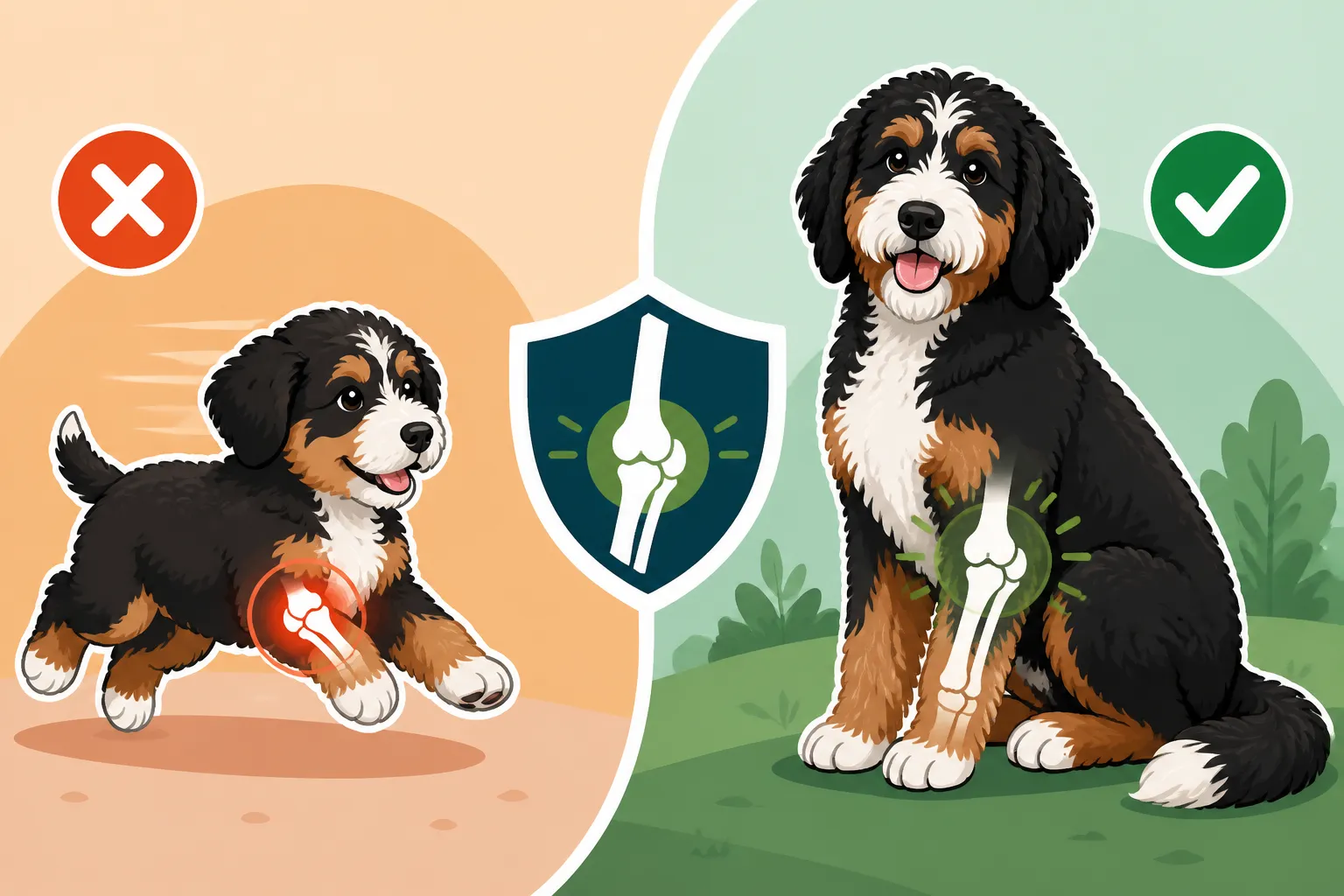
Now, let's tie this back to the "slow growth" concept. The reason rapid growth is so detrimental to developing elbows is multifaceted. When a large breed puppy grows too quickly, particularly when they gain weight too fast, it places immense mechanical stress on their still-soft, immature joint structures. Imagine these growing bones and cartilage as wet clay; if you push on them too hard or too unevenly before they’ve had a chance to properly harden, they’re going to deform.
Specifically, an accelerated growth rate can cause issues like:
- Increased Weight on Immature Joints: More body weight means more force acting on the elbow joint with every step, jump, or run. This excessive loading can literally compress and damage the delicate growth plates and cartilage, contributing to conditions like FCP or OCD. The bones might be growing longer, but they haven't achieved their full density or strength yet, making them vulnerable.
- Disruption of Growth Plate Closure: The precise timing and coordination of growth plate closure are essential for proper joint formation. If growth is too rapid, it can disrupt this delicate process, leading to asynchronous growth where one bone grows faster than another, causing incongruity within the joint. This unevenness creates abnormal pressure points, accelerating cartilage wear and the onset of arthritis.
- Microtraumas and Inflammation: High-impact activities or even just the constant pounding from a heavier-than-ideal puppy can cause microscopic damage (microtraumas) to the joint surfaces. These repeated tiny injuries, coupled with inflammation, create a vicious cycle that contributes to the degradation of cartilage and the development of bone fragments, which are hallmarks of elbow dysplasia. It’s a cumulative effect, where seemingly minor stresses add up over time to significant damage.
The Nutritional Approach to Slow Growth
When we talk about slow growth, it doesn’t mean depriving your Bernedoodle puppy of essential nutrients. Quite the opposite! It means providing a perfectly balanced diet that supports healthy, steady development rather than encouraging rapid, unsustainable weight gain. Nutrition is arguably the most controllable factor in preventing developmental orthopedic diseases, and it’s an area where you, as a dedicated owner, can make a profound difference.
Choosing the Right Large Breed Puppy Food
This is perhaps the single most critical decision you'll make regarding your Bernedoodle puppy's long-term joint health. Not all puppy foods are created equal, especially when it comes to large breeds. Standard puppy formulas, designed for smaller dogs, often contain higher levels of calories, calcium, and phosphorus to support their faster, albeit overall smaller, growth. However, for a large breed like a Bernedoodle, these elevated levels can actually be detrimental. Excess calcium, in particular, can interfere with normal bone development and increase the risk of skeletal deformities.
Look for puppy foods specifically labeled for "large breed puppies" or "giant breed puppies." These formulations are meticulously balanced to promote controlled growth. They typically have a lower calorie density, preventing rapid weight gain, and crucially, they maintain precise levels of calcium and phosphorus. The calcium content, for instance, should ideally be between 0.9% and 1.2% on a dry matter basis, with an appropriate calcium-to-phosphorus ratio. Don't just pick up any puppy chow; really scrutinize the labels and choose a reputable brand known for its large breed specific formulas. Many brands, available through retailers like Chewy or Amazon, offer excellent choices in this category. For a deeper dive, check out Large Breed Puppy Food for a Standard Bernedoodle.
It's also important to resist the temptation to supplement with additional calcium or vitamins unless explicitly directed by your veterinarian. While it might seem intuitive to give a growing puppy more of what builds bones, excess can be far more harmful than a slight deficiency. These large breed puppy formulas are scientifically designed to provide everything your growing Bernedoodle needs without overdoing it. Trust the formulation, and don't try to "improve" on it with unneeded supplements.
Avoiding Overfeeding and Excessive Calorie Intake
Once you've chosen the right food, the next crucial step is managing how much your Bernedoodle puppy eats. Overfeeding is a rampant problem in large breed puppies and is a primary driver of excessively fast growth and weight gain. Many owners, with the best intentions, see a hungry puppy and want to satisfy them, not realizing that a slightly pudgy puppy today could be a dog with painful arthritis tomorrow. Those extra calories translate directly into extra pounds, which then puts undue stress on those vulnerable, rapidly developing joints.
Always follow the feeding guidelines on your chosen large breed puppy food, but remember these are just starting points. Every puppy is an individual, and their metabolic needs will vary. It’s essential to regularly assess your puppy’s body condition. You should be able to easily feel their ribs with slight pressure, and they should have a discernible waist when viewed from above. If you're having trouble feeling those ribs, or if your puppy looks round rather than lean, it's time to reduce their food intake slightly. Resist the urge to free-feed; measured meals at set times are much better for controlling calorie intake and monitoring consumption.
| Body Condition | Description | What to Do |
|---|---|---|
| Too Thin | Ribs, spine, pelvic bones easily visible; no fat covering; abdominal tuck very pronounced. | Consult vet; increase food slightly; rule out underlying issues. |
| Ideal | Ribs easily felt with slight pressure, but not seen; waist visible when viewed from above; belly tucked up. | Maintain current feeding and exercise plan. |
| Overweight | Ribs difficult to feel under a layer of fat; no discernible waist; belly slightly distended or flat. | Consult vet; reduce food intake by 10-15%; increase appropriate exercise. |
| Obese | Ribs not palpable; heavy fat deposits over spine and tail base; no waist; belly significantly distended. | URGENT: Consult vet for weight loss plan; significant diet and exercise changes needed. |
This table is a simple guide, but a hands-on check is crucial, especially with a Bernedoodle's fluffy coat. You'll often find that the recommended portion sizes on the bag are on the generous side. Don't be afraid to feed a bit less if your puppy is looking a little chunky. Some owners even opt for fresh food delivery services like Ollie, which can offer more precise portion control based on your puppy's exact weight and age, but always ensure any diet change is balanced and discussed with your vet. Monitoring your Bernedoodle's growth, such as How Much Food a Bernedoodle Puppy Needs at Four Months, is an ongoing commitment.
Managing Exercise and Activity Levels for Joint Protection
Just as critical as nutrition is how you manage your Bernedoodle puppy's exercise and activity levels. It's a common misconception that a big, energetic puppy needs endless hours of running and playing. While Bernedoodles certainly need exercise to burn off energy and aid development, too much, or the wrong kind of exercise, can be incredibly damaging to their developing joints. The goal here isn't to turn your puppy into a couch potato, but to provide controlled, appropriate activity that supports healthy growth without causing undue stress.
The "Five-Minute Rule" and Controlled Play
This is probably one of the most important guidelines for large breed puppy owners: the "five-minute rule." This rule suggests that for every month of your puppy's age, they should have approximately five minutes of structured exercise, twice a day. So, a four-month-old puppy would get about 20 minutes of walking, twice a day. This means no marathon hikes, no long runs on hard pavement, and no endless games of fetch. The key word here is "structured" – short, controlled walks on a leash.
Beyond structured walks, all play should be supervised and controlled. This means discouraging overly rambunctious play, especially with older, larger dogs who might be too rough. Avoid prolonged periods of high-impact activities like sprinting, jumping, or sudden stops and starts. Instead, opt for shorter, more frequent play sessions throughout the day. A gentle game of tug, exploring the yard, or short sniff walks are far better than a full-on sprint. Remember, their bones and joints are still soft and vulnerable, like children’s growth plates. Putting too much stress on them before they fully mature can lead to lifelong issues. The Five Minute Rule on a Bernedoodle Puppy's Walks delves further into this.
Avoiding High-Impact Activities and Environmental Risks
Beyond the duration of exercise, the type of activity and the environment in which it occurs are equally important. Certain activities, even if brief, can put tremendous strain on developing joints. High-impact activities are particularly risky. This includes things like jumping on and off furniture, leaping out of cars, or repeatedly going up and down stairs. These actions create jarring forces that can damage growth plates and cartilage, increasing the risk of elbow and hip dysplasia.
Consider your home environment too. Slippery floors, like hardwood or tile, can cause puppies to splay out, putting awkward stress on their joints. Providing rugs or runners in frequently trafficked areas can help. When it comes to outdoor activities, avoid long runs or walks on hard surfaces like concrete or asphalt. These surfaces offer no shock absorption, transferring all the impact directly to the joints. Softer surfaces, like grass or dirt trails, are much kinder to growing bodies. If your Bernedoodle needs to get into the car, consider investing in a ramp to prevent jumping. For apartment dwellers, minimizing stair use during puppyhood can be beneficial. These seemingly small adjustments can collectively make a significant difference in safeguarding your Bernedoodle’s joint health, preventing issues like Whether Stairs Hurt a Standard Bernedoodle Puppy or Whether Jumping Off Furniture Hurts a Bernedoodle. Even gentle swimming can be a fantastic, low-impact exercise option once your puppy is old enough and comfortable in the water.
Monitoring Growth and Early Intervention
Even with the best preventative measures, it’s vital to be vigilant about your Bernedoodle’s growth and to recognize any potential signs of discomfort. Large breed puppyhood is a long journey, and ongoing monitoring is your safety net. Catching issues early can make a world of difference in management and outcome, potentially preventing minor concerns from escalating into major problems.
Regular Weight Checks and Body Condition Scoring
You're a parent, essentially, and just like parents monitor their children's growth, you should closely track your Bernedoodle puppy’s progress. Regular weight checks are a simple yet powerful tool. Weigh your puppy weekly or bi-weekly, especially during the peak growth phase (typically from 3-8 months). This helps you ensure they are gaining weight steadily, but not rapidly exceeding expectations for their breed and age. Most large breed puppies should maintain a lean body condition; they should look athletic, not round.
Beyond the scale, learning to perform a body condition score (BCS) on your puppy is invaluable. This involves visually assessing them and feeling their ribs, spine, and waistline. As mentioned in our table earlier, you should be able to easily feel your puppy's ribs with minimal pressure, almost like feeling the back of your hand. Their waist should be noticeable when viewed from above, and their belly should tuck up slightly from the side. If you're struggling to feel their ribs, or if they have a 'barrel' shape rather than a defined waist, it's a strong indicator they're carrying too much weight. This is your cue to reduce food portions and review activity levels, even if the bag says they need more. A lean puppy is a healthy puppy when it comes to joint development. This is an ongoing process right up until The Age a Bernedoodle Reaches Full Height.
Recognizing Signs of Joint Discomfort and Seeking Veterinary Advice
Despite your best efforts, sometimes issues can still arise, or your puppy might have a genetic predisposition that manifests even with careful rearing. This is why being attuned to subtle signs of joint discomfort is so important. Puppies are masters at hiding pain, especially when they’re young and still full of exuberant energy. Lameness isn't always obvious limping. It might be a slight stiffness after rest, a reluctance to play as enthusiastically as before, or a subtle change in their gait.
Look for signs like:
- Intermittent lameness: A limp that comes and goes, especially after exercise or a long rest.
- Stiffness: Difficulty getting up or lying down, or a reluctance to climb stairs.
- Changes in gait: A "bunny hop" when running (using both back legs simultaneously) can be a sign of hip or knee discomfort, but also sometimes seen with elbow issues as they compensate.
- Reluctance to jump or play: A sudden decrease in activity level or avoiding certain movements.
- Swelling or warmth around the joints: Though often harder to detect in elbows due to their deep position and Bernedoodle fluff.
- Pain on palpation: Your puppy might flinch or cry out if you gently press on their elbow joint.
If you notice any of these symptoms, do not hesitate to contact your veterinarian. Early diagnosis of conditions like elbow dysplasia can lead to earlier intervention, which may include anti-inflammatory medications, physical therapy, or even surgical options, improving the long-term prognosis. Ignoring these subtle signs can lead to more significant, irreversible joint damage down the line. Your vet can perform a thorough orthopedic examination, and possibly X-rays, to get to the bottom of any discomfort. Being proactive here is not overreacting; it's responsible pet ownership, as covered in Signs a Bernedoodle Puppy's Elbows Hurt.
Disclaimer
This article is for general informational purposes only and does not constitute professional advice. Laws, prices and regulations vary by location and change over time. Consult a qualified professional for guidance on your specific situation.