Whether the Bernese Half Ruins the Allergy Claim
It's a common dream, isn't it? You've fallen head over heels for the adorable, intelligent, and famously sweet Bernedoodle, picturing a life free from the endless sneezing and itchy eyes that often come with dog ownership. The promise of a "hypoallergenic" dog, thanks to that Poodle lineage, feels like a miracle. But then the nagging doubt creeps in: what about the Bernese Mountain Dog side? That big, beautiful, fluffy coat looks like it sheds enough to knit another dog. It’s absolutely frustrating when you’re trying to make an informed decision for your family and your health, feeling like you’re trying to navigate a minefield of conflicting information. This guide is here to shed some realistic light on whether the Bernese half truly "ruins" the allergy claim for your beloved Bernedoodle, helping you understand the nuances of their coats and how to best manage potential allergies.
The "Hypoallergenic" Hope and Its Real-World Limitations
Let's cut through the marketing fluff right away. When people talk about "hypoallergenic" dogs, it's rarely about the fur itself. It's about dander – tiny flakes of skin that all animals shed, along with dried saliva and urine proteins. These microscopic particles are the primary culprits behind allergic reactions. The Poodle, with its continuously growing hair that sheds minimally and tends to get trapped in the coat, produces less dander than many other breeds. This is why it's a popular choice for crosses like the Bernedoodle, fueling the hope for a low-allergy companion.
However, it's crucial to understand that "hypoallergenic" doesn't mean "non-allergenic." No dog breed, not even a purebred Poodle, is 100% allergy-free. They all produce dander, albeit in varying amounts. For someone with severe dog allergies, even a low-shedding dog might trigger a reaction. The frustration comes when you’ve invested so much emotional energy into finding a suitable breed, only to find the promise doesn’t quite live up to the hype. It’s not just about what you see on the floor; it's about what you can't see floating in the air. The reason Why a Poodle Was Chosen for the Cross in the first place was often this very desire for a lower-shedding companion, combined with the Bernese's wonderful temperament.
The term "allergy-friendly" is perhaps a more accurate description for many Poodle mixes. It simply means they are less likely to cause an allergic reaction in sensitive individuals. This nuance is often lost in casual conversation, leading to disappointment for families who expect a complete absence of allergens. A person’s individual sensitivity, the severity of their allergies, and even the specific dog’s unique coat and dander production can all play a significant role. It’s a very personal equation, and what works for one allergy sufferer might not work for another.
Unpacking the Bernese Contribution to Your Bernedoodle's Coat
Now, let's talk about the Bernese Mountain Dog – the majestic, gentle giant with a coat that is undeniably glorious, but also a notorious source of shedding and dander. Bernese Mountain Dogs possess a thick, double coat designed to protect them from harsh mountain climates. They have a dense undercoat and a longer, softer outer coat. This combination means they shed significantly, especially during seasonal "blows" where they lose large amounts of their undercoat. For someone with dog allergies, this kind of coat can be an absolute nightmare, sending dander and hair wafting through the house. This is the very half of the equation that often makes prospective Bernedoodle owners anxious.
When you mix a Poodle with a Bernese, the genetic lottery truly comes into play. You’re not just getting a 50/50 split of characteristics; it’s a complex interplay of dominant and recessive genes that determines the puppy’s coat type. Some Bernedoodles will inherit more of the Poodle's low-shedding qualities, while others will lean heavily towards the Bernese side, potentially even having a coat that sheds quite a bit, similar to a Bernese Mountain Dog. This genetic variability is why it's so difficult to guarantee a specific outcome, and why the question Whether any Bernedoodle is truly non shedding is always lingering for hopeful owners.
Breeders often work with different generations to try and influence the coat type. An F1 Bernedoodle is a direct cross between a purebred Bernese Mountain Dog and a purebred Poodle (50/50 split). These coats can be highly variable, ranging from wavy to curly, and some may shed minimally while others might shed more than anticipated. Then there are F1b Bernedoodles, which are typically a cross between an F1 Bernedoodle and a purebred Poodle (75% Poodle, 25% Bernese). The "b" stands for backcross, meaning they've been bred back to a Poodle to increase the Poodle's genetic influence, specifically hoping for a curlier, lower-shedding coat. This is often recommended for allergy sufferers, as Whether an F1 Bernedoodle Sheds More Than an F1b is a common concern addressed by breeders. Even further generations, like F2s or multigens, aim to stabilize these traits.
Bernedoodle coats can generally be categorized into a few types:
- Wavy Coat: This is probably the most common Bernedoodle coat, a lovely blend that’s often low-shedding. It has a soft, flowing texture. While it's generally good for allergy sufferers, it still requires regular grooming to prevent matting. The Wavy Coat Most Bernedoodles Carry often strikes a balance between the desired Poodle texture and a touch of the Bernese softness.
- Curly Coat: Closest to the Poodle, this coat is usually the most allergy-friendly and typically sheds the least. It’s dense and curly, effectively trapping any shed hair and dander within the coat. However, it’s also the most demanding in terms of grooming, needing consistent brushing to prevent severe matting. The Curly Coat Bernedoodle and Its Upkeep can be a significant time commitment.
- Straight Coat: This coat is the least common and often the result of more Bernese genes. It resembles the Bernese coat more closely and will shed. While it might still be less shedding than a pure Bernese, it’s generally not recommended for allergy sufferers. The Straight Coated Bernedoodle That Sheds can still be a wonderful companion, but not for those seeking a hypoallergenic dog.
The reality is that The Coat a Bernedoodle Gets From Two Heavy Coated Parents can still vary wildly, even within the same litter. It’s a genetic toss-up, and that’s where the hope for an allergy-friendly dog can feel a bit precarious if you’re not prepared for the full spectrum of possibilities.
Practical Steps for Allergy Sufferers Considering a Bernedoodle
Given the variability, what's a hopeful allergy sufferer to do? The key is to be proactive and realistic. Don't go into this expecting a magic bullet, but rather an informed decision based on careful investigation.
Firstly, spend time with Bernedoodles. This is hands down the most crucial step. If possible, visit breeders, friends, or even local rescue organizations that have Bernedoodles. Don't just look at pictures or videos. Spend at least an hour, if not more, interacting with adult Bernedoodles and even puppies if available. See how your allergies react. If you can, visit multiple Bernedoodles with different coat types (wavy, curly) and different generations (F1, F1b) to gauge your personal tolerance. Some people will find they react strongly to any Bernedoodle, while others might find they can tolerate a curlier-coated F1b without issue. This personal "allergy test" is invaluable.
Secondly, talk extensively with reputable breeders. A good breeder will be transparent about coat genetics and their breeding goals. They should be able to tell you about the coat types of their parent dogs and previous litters. Ask them specifically about shedding, dander, and allergy feedback from previous puppy buyers. They often have a good sense of which puppies in a litter are likely to have more Poodle-like coats versus more Bernese-like coats. A breeder who claims their dogs are "100% hypoallergenic" without any caveats should raise a red flag.
Thirdly, inquire about genetic coat testing. While not a perfect predictor, some breeders utilize genetic testing for coat traits, specifically the furnishings (F) locus and the shedding (SD) locus. These tests can help predict the likelihood of a dog being furnished (having facial hair, which is characteristic of doodles and poodles) and low-shedding. A positive result for a low-shedding gene doesn't guarantee no shedding, but it increases the chances. Ask your breeder Whether a Coat Test Tells You If a Bernedoodle Will Shed and what their breeding pairs are tested for. It's another piece of the puzzle, though not the entire picture.
Here’s a simplified table comparing Bernedoodle generations and their typical characteristics concerning shedding and allergy potential:
| Bernedoodle Generation | Poodle/Bernese Mix | Typical Coat Characteristics | Shedding Potential | Allergy Friendliness |
|---|---|---|---|---|
| F1 (First Generation) | 50% Poodle / 50% Bernese | Wavy, sometimes curly or straight | Variable (low to moderate) | Fair to Good (depending on coat) |
| F1b (First Generation Backcross) | 75% Poodle / 25% Bernese | More consistently wavy to curly | Low to very low | Good to Excellent |
| F2 (Second Generation) | F1 Bernedoodle x F1 Bernedoodle | Highly variable, can revert to shedding | Highly variable (low to high) | Fair to Poor (less predictable) |
| F2b (Second Generation Backcross) | F2 Bernedoodle x Poodle | More wavy/curly than F2 | Low to very low | Good to Excellent |
| Multigen (Multi-generational) | Bernedoodle x Bernedoodle (later generations) | Breeder-selected for specific traits | Often low, but depends on lines | Good, but still no guarantee |
Remember, this table provides generalizations. Individual puppies can always surprise you. The more Poodle genetics are present, generally, the lower the shedding and higher the allergy-friendliness, but the Bernese genes always hold the potential to introduce more variability.
Living with a Bernedoodle When Allergies Are a Concern
If you've decided to bring a Bernedoodle into your life despite allergy concerns, you're not powerless. There are many strategies you can employ to minimize dander and manage your environment. It requires commitment, but many allergy sufferers successfully live with their beloved Doodles.
1. Consistent Grooming is Your Best Friend: This is the absolute cornerstone of managing allergies with any dog, especially a Bernedoodle. Regular and thorough grooming helps remove loose hair and dander before it can disperse throughout your home.
* Brushing: Aim for daily brushing, especially if your Bernedoodle has a wavy or curly coat. Use a slicker brush and a long-toothed comb to get down to the skin and remove any shed hair and prevent mats. For straight-coated Bernedoodles, daily brushing is equally important to remove shedding hair. You can find a wide variety of effective grooming tools on platforms like Chewy or Amazon. Consistent brushing also means The Volume of Coat a Bernedoodle Owner Brushes Weekly will be contained and manageable, reducing allergens in the environment.
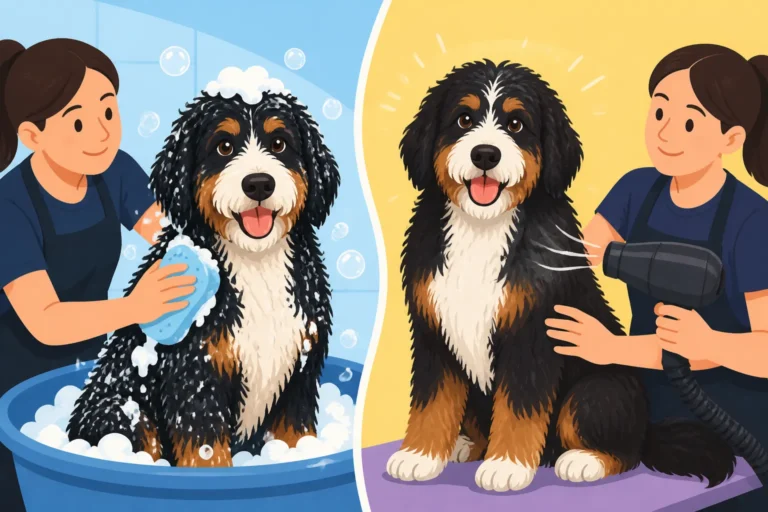
* Bathing: Regular baths (every 2-4 weeks, or as recommended by your vet or groomer) can help wash away dander and allergens from the coat. Use a gentle dog shampoo to avoid drying out their skin, which can actually increase dander production.
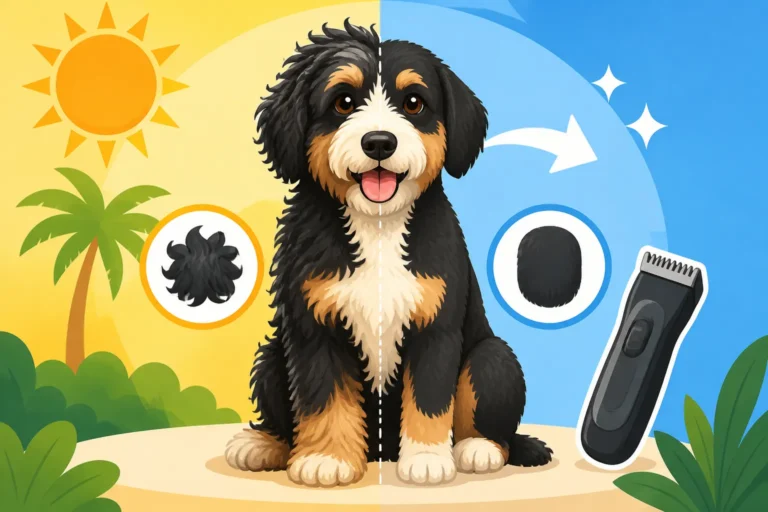
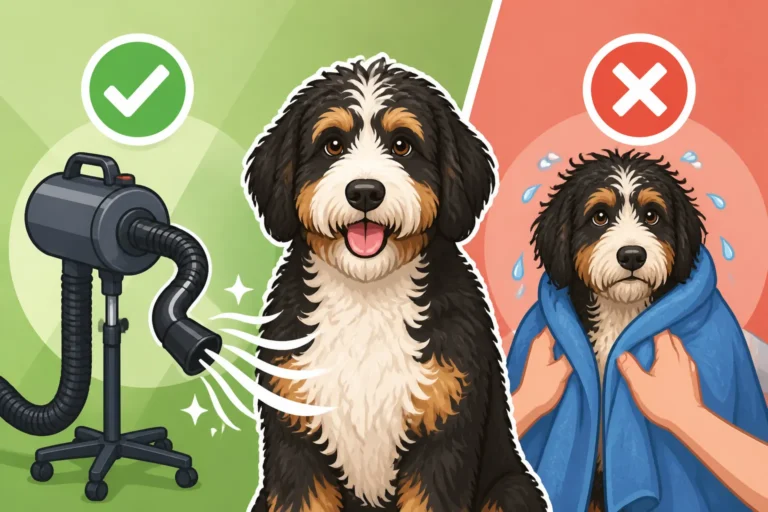
* Professional Grooming: Schedule professional grooms every 6-8 weeks. A professional groomer has the tools and expertise to give your Bernedoodle a thorough bath, blow-dry (which helps remove loose hair and dander), and clip that keeps their coat healthy and manageable. This is particularly important for curly-coated Bernedoodles, as The Curly Coat Bernedoodle and Its Upkeep demands specialized care.
2. Environmental Controls in Your Home: Your home environment plays a huge role in allergen management.
* Air Purifiers: Invest in high-quality HEPA air purifiers for the rooms where your Bernedoodle spends the most time, especially bedrooms. These can significantly reduce airborne dander. You can find a range of options on Amazon.
* Vacuuming: Use a vacuum cleaner with a HEPA filter regularly, ideally daily or every other day. Focus on carpets, rugs, and upholstered furniture where dander can collect. For solid floors, frequent sweeping or mopping is also beneficial.
* Restricting Access: Consider making your bedroom a "dog-free" zone. This creates a sanctuary where allergen levels are kept to a minimum, allowing you a place to recover, especially overnight.
* Washing Bedding: Wash your Bernedoodle's bedding (and your own, if they're allowed on furniture) frequently in hot water to remove dander.
3. Diet and Overall Health: While diet isn't a direct allergy fix, a healthy dog with a healthy coat can produce less dry skin and dander. Ensure your Bernedoodle is on a high-quality, balanced diet. Brands like Ollie offer fresh, human-grade food that some owners find contributes to a healthier coat and skin, potentially reducing excessive shedding or dryness. Always consult with your veterinarian about the best diet for your specific dog's needs.
4. Medications for Humans: For some individuals with milder allergies, over-the-counter antihistamines or nasal sprays can help manage symptoms, allowing them to live comfortably with their Bernedoodle. Always consult with your doctor before starting any new medication.
Ultimately, while the Bernese half of a Bernedoodle's lineage does introduce the potential for shedding and increased dander, it doesn't automatically "ruin" the allergy claim for everyone. It means that finding an allergy-friendly Bernedoodle requires more diligence, research, and ongoing management than simply picking any puppy. By understanding the genetics, carefully selecting your puppy, and committing to a consistent grooming and cleaning routine, many families with mild to moderate allergies can successfully welcome these wonderful dogs into their homes. It’s a journey, not a guarantee, but the love and companionship of a Bernedoodle often make the effort more than worthwhile.
Disclaimer
This article is for general informational purposes only and does not constitute professional advice. Laws, prices and regulations vary by location and change over time. Consult a qualified professional for guidance on your specific situation.