Why a Poodle Was Chosen for the Cross
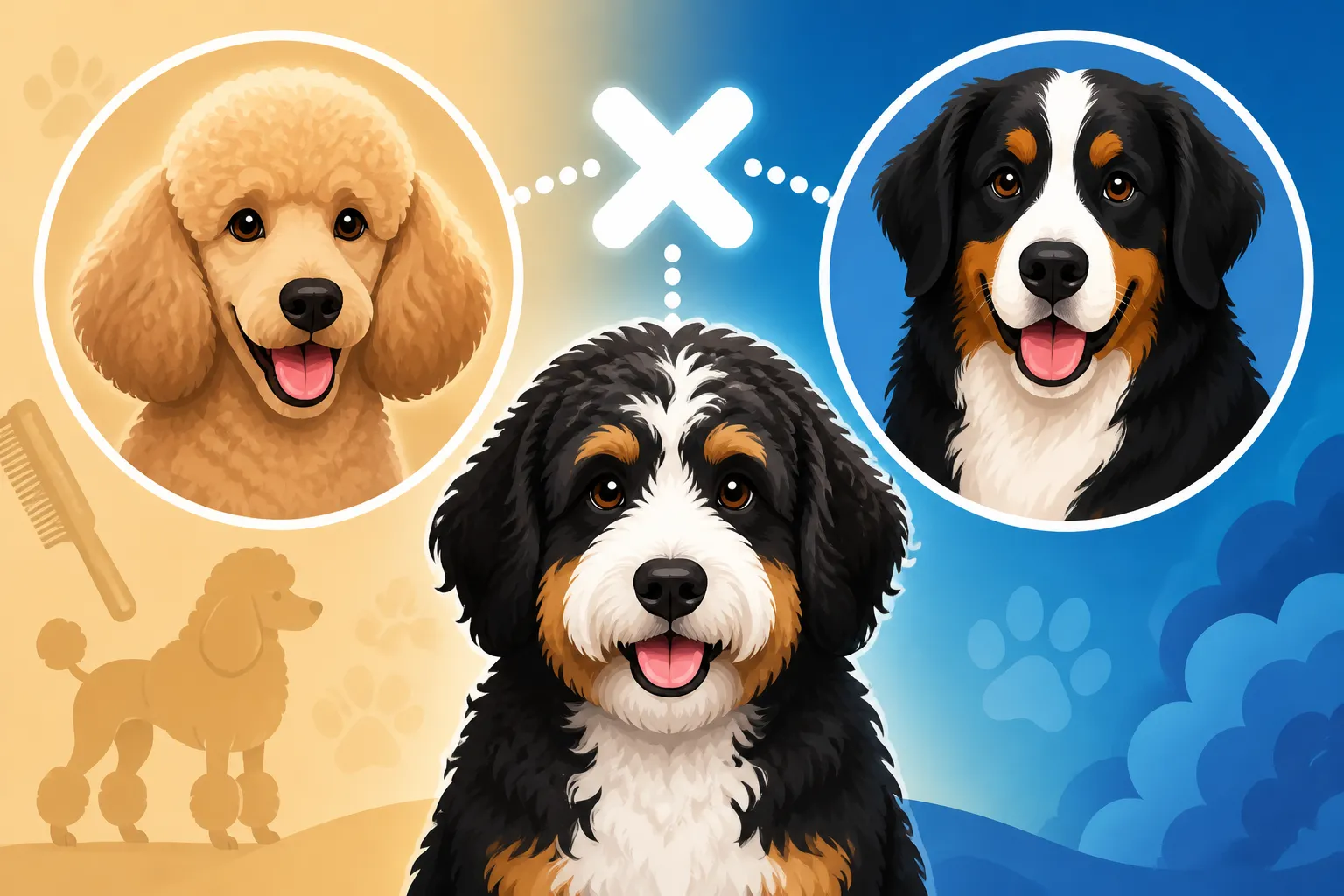
Many prospective dog owners fall head over heels for the majestic Bernese Mountain Dog, but find themselves grappling with the heartbreaking reality of their relatively short lifespans and common health struggles. It's a common dilemma: how do you get that incredible, loyal, goofy temperament and stunning presence without the associated worries? This guide delves into the precise reasons why the Poodle was strategically chosen as the partner for the Bernese Mountain Dog to create the beloved Bernedoodle, addressing those very concerns while creating an entirely new, cherished companion.
The Bernese Mountain Dog's Alluring Qualities and Inherent Challenges
Before we can truly understand why the Poodle was chosen, we need to appreciate what people loved so much about the Bernese Mountain Dog in the first place, and what challenges breeders were hoping to address. It wasn't about discarding the Bernese; it was about enhancing and protecting their wonderful qualities.
A Shorter Lifespan and Lingering Health Concerns
It's a tough truth that Bernese Mountain Dogs, for all their grandeur and gentle spirit, often have a heart-wrenchingly short lifespan. Many owners report losing their beloved companions far too soon, sometimes well before their eighth birthday. This isn't just anecdotal; it's a known breed characteristic. The median lifespan for a Bernese is often cited in the 6-8 year range, which is significantly less than many other large breeds. This short span is frequently attributed to a predisposition to certain health issues that are unfortunately prevalent in the breed.
Cancer, particularly, is a devastating concern for Bernese owners. Malignant histiocytosis, lymphoma, and mast cell tumors are far too common and often aggressive. It's a cruel reality that many Bernese fall victim to these diseases. What Histiocytic Sarcoma Does to a Bernese speaks to this particular challenge. Beyond cancer, they're also prone to serious orthopedic problems like hip and elbow dysplasia, which can cause chronic pain and severely impact their quality of life, especially as they age. Conditions like Von Willebrand's disease, a bleeding disorder, also factor into the health considerations. For anyone who has experienced the profound grief of losing a dog early to disease, the idea of a healthier alternative with a similar temperament is incredibly appealing.
The Irresistible Temperament and Majestic Look
Despite these health challenges, the Bernese Mountain Dog possesses an almost magnetic charm that makes them incredibly desirable. Their temperament is, for many, the epitome of a perfect family dog. They are renowned for being exceptionally gentle, calm, loyal, and affectionate, often forming deep bonds with their human families. They're typically wonderful with children, patient and tolerant, and generally get along well with other pets. This "gentle giant" personality is what captures so many hearts. They have a certain goofy charm, too, a playful side that can be delightful.
Then there's their undeniable aesthetic appeal. That stunning tri-color coat, with its deep black, rich rust, and crisp white markings, is truly iconic. Their sturdy build, intelligent eyes, and overall majestic presence make them stand out in a crowd. People are drawn to their traditional farm dog look, the kind of dog that looks equally at home lounging by a fireplace or romping in the snow. Retaining this visual appeal and that signature "Berner personality" was paramount in any breeding decisions. The Tri Color Markings People Buy a Bernedoodle For explains just how captivating these markings are.
The Poodle's Strategic Contributions to the Bernedoodle Cross
When considering a crossbreed to mitigate the Bernese's issues, the Poodle emerged as an almost ideal candidate. It wasn't a random choice; it was a deliberate selection based on a host of complementary traits that could address the Bernese's weaknesses while preserving many of its strengths.
Hybrid Vigor and Enhanced Longevity
One of the primary motivations behind crossing a Bernese with a Poodle was the hope of achieving "hybrid vigor," also known as heterosis. This genetic phenomenon suggests that the first-generation offspring of two unrelated purebred lines tend to be healthier and more robust than either parent breed. The idea is that by introducing new genetics, you dilute the concentration of breed-specific genetic predispositions to certain diseases.
Poodles generally enjoy a significantly longer lifespan than Bernese Mountain Dogs, often living into their early to mid-teens, with some even reaching 17 or 18 years old. By introducing these longer-lived genetics, breeders hoped to extend the Bernedoodle's lifespan considerably beyond that of a purebred Bernese. While no hybrid cross can entirely eliminate the risk of genetic diseases, especially those carried by both parent breeds, the expectation was that the Bernedoodle would inherit a more diverse genetic pool, reducing the incidence and severity of conditions common to the Bernese, particularly cancer and severe joint issues. This desire for a longer-lived companion is a powerful one for many dog lovers. You'll find many resources, even on sites like Chewy, discussing the importance of genetic diversity in dog health. The Twelve to Fifteen Years a Bernedoodle Is Sold On highlights this extended lifespan.
The Low-Shedding, Allergy-Friendly Coat
Another massive draw of the Poodle, and perhaps one of the most widely recognized reasons for the Bernedoodle's popularity, is its coat. Poodles are renowned for their curly, dense, single coats that shed minimally and are often better tolerated by people with allergies. The Bernese Mountain Dog, on the other hand, has a thick, double coat that sheds quite a bit, especially during seasonal "blows." This constant shedding can be a deal-breaker for many families, and a significant challenge for those with sensitivities.
The Poodle's coat offered a solution. By crossing with a Poodle, the aim was to produce offspring with a coat that inherited the Poodle's low-shedding qualities. While not every Bernedoodle is 100% non-shedding (some can inherit more of the Bernese coat characteristics, resulting in a "flat coat" or a wavy coat that sheds lightly), the vast majority have a wavy or curly coat that significantly reduces the amount of hair in the home. This made the Bernedoodle accessible to a much wider audience, including those who previously couldn't consider a Bernese due to allergies or simply a dislike of excessive shedding. The grooming commitment, however, shifts from shedding management to mat prevention, requiring regular brushing and professional grooming, something Chewy offers a wide range of tools for. Whether Any Bernedoodle Is Truly Non Shedding delves deeper into coat expectations.
Intelligence and Trainability
Poodles are not just pretty faces with great coats; they are incredibly intelligent dogs. Historically bred for retrieving waterfowl, they are highly trainable, eager to please, and excel in various canine sports and tasks. Their sharp minds make them quick learners, often picking up commands with impressive speed. The Bernese, while intelligent, can sometimes have a stubborn streak, a characteristic often associated with their working dog heritage.
The Poodle's intelligence was seen as a way to balance this. The hope was that the Bernedoodle would inherit the Poodle's mental agility, making them more receptive to training and potentially less prone to the "Berner stubbornness." This blend creates a dog that is often smart, eager to learn, and responsive, making them a joy to train for everything from basic obedience to more advanced tricks or even therapy work. This intelligence, combined with the Bernese's desire to please, makes for a highly adaptable and rewarding companion. If you're looking for training treats, Chewy has a huge selection that can motivate even the most Poodle-brained Bernedoodle. The Stubborn Streak Under a Bernedoodle's Poodle Brain further explores this dynamic.
Crafting the Bernedoodle: A Deliberate Design
The creation of the Bernedoodle was far from accidental. It was a thoughtful process, an attempt to leverage the best qualities of two distinct breeds to produce a dog that filled a specific niche for dog lovers.
Balancing Traits: The Art of the Hybrid
The art of creating a hybrid breed lies in predicting and balancing the traits of the parent breeds. For the Bernedoodle, breeders aimed for a specific combination: the Bernese's gentle, loyal, and affectionate temperament, combined with the Poodle's intelligence, low-shedding coat, and improved health and longevity. It's a delicate dance, as genetics can be unpredictable, but the goal was always to achieve a "best of both worlds" dog.
Breeders carefully select parent dogs that exemplify the desired traits of their respective breeds, and just as importantly, have undergone extensive health testing. The Five Clearances a Bernedoodle Breeder Should Have is crucial reading for this. The Bernedoodle's appeal comes from this unique combination: a dog that often looks like a shaggy, cuddly Bernese, but with a more robust constitution and a coat that won't leave tumbleweeds of hair under every piece of furniture. They wanted the majestic appearance and the loving heart, without the shorter lifespan and heavy shedding.
Generations and Genetic Outcomes
The journey to consistently produce Bernedoodles with desired traits often involves multiple generations. The first cross, known as an F1 Bernedoodle (50% Bernese, 50% Poodle), is where hybrid vigor is often strongest. However, the traits can be quite variable – some F1s might lean more heavily towards the Bernese side in terms of coat or temperament, while others might favor the Poodle.
To further refine and stabilize traits, breeders then introduce F1b Bernedoodles (an F1 Bernedoodle bred back to a Poodle, making them 75% Poodle, 25% Bernese) or even multigen Bernedoodles (Bernedoodle bred to Bernedoodle). Each generation aims to achieve a more predictable outcome, particularly regarding the low-shedding coat and consistent temperament. For instance, an F1b is often chosen by those with more severe allergies, as the higher Poodle percentage usually results in a curlier, even lower-shedding coat. Understanding these generations helps buyers choose the Bernedoodle that best fits their lifestyle and allergy needs. Whether an F1b Bernedoodle Lives Longer Than an F1 explores some of the considerations.
The Enduring Appeal of the Poodle-Bernese Combination
The decision to cross the Bernese Mountain Dog with the Poodle was a strategic one, born out of a desire to create a healthier, longer-lived, and more allergy-friendly companion without sacrificing the beloved qualities of the Bernese. The resulting Bernedoodle has captured the hearts of many, offering a unique blend of traits that continues to grow in popularity.
From the intelligence and trainable nature of the Poodle to its renowned low-shedding coat, these characteristics perfectly complement the Bernese's gentle demeanor, loyalty, and stunning appearance. The Poodle brought genetic diversity, promising a future with potentially fewer heartbreaking health challenges and more years of cherished companionship. This thoughtful cross has given countless families the opportunity to welcome a truly special dog into their homes, one that embodies the best of both worlds. Even something as simple as finding the right collar or food bowl on Chewy for your Bernedoodle is a testament to the thriving community built around this incredible crossbreed.
| Trait Category | Bernese Mountain Dog Contribution | Poodle Contribution | Resulting Bernedoodle Trait |
|---|---|---|---|
| Temperament | Gentle, loyal, affectionate, calm, patient | Intelligent, eager to please, playful, sometimes sensitive | Goofy, intelligent, loving, adaptable, often good with families |
| Health | Predisposition to certain cancers, joint issues, shorter lifespan | Generally robust, longer lifespan, fewer breed-specific cancers | Hybrid vigor, potential for extended lifespan, some inherited risks (less concentrated) |
| Coat | Thick, double coat, heavy shedding | Curly, single coat, low shedding, potentially hypoallergenic | Wavy to curly coat, minimal to low shedding, requires regular grooming |
| Size/Build | Large, sturdy, muscular build | Varied sizes (Standard, Miniature, Toy), elegant yet athletic | Varies by Poodle parent size (Standard, Mini, Tiny), generally sturdy |
| Trainability | Intelligent but can have a stubborn streak | Highly intelligent, quick learner, eager to please | Highly trainable, smart, can inherit Poodle's eagerness or Berner's stubbornness |
Disclaimer
This article is for general informational purposes only and does not constitute professional advice. Laws, prices and regulations vary by location and change over time. Consult a qualified professional for guidance on your specific situation.