The Tri Color Markings People Buy a Bernedoodle For
Oh, the tri-color Bernedoodle! If you're anything like me, you've probably scrolled through countless breeder photos, your heart fluttering at the sight of those striking black, white, and rust markings, only to feel a little overwhelmed by the differing descriptions and prices. It's easy to fall in love with a specific look, but understanding what makes these markings so special, why they’re so sought after, and what to realistically expect, can save you a lot of confusion and even heartache down the road. This guide is here to walk you through everything you need to know about the beloved tri-color Bernedoodle.
What Exactly Are Tri-Color Bernedoodle Markings?
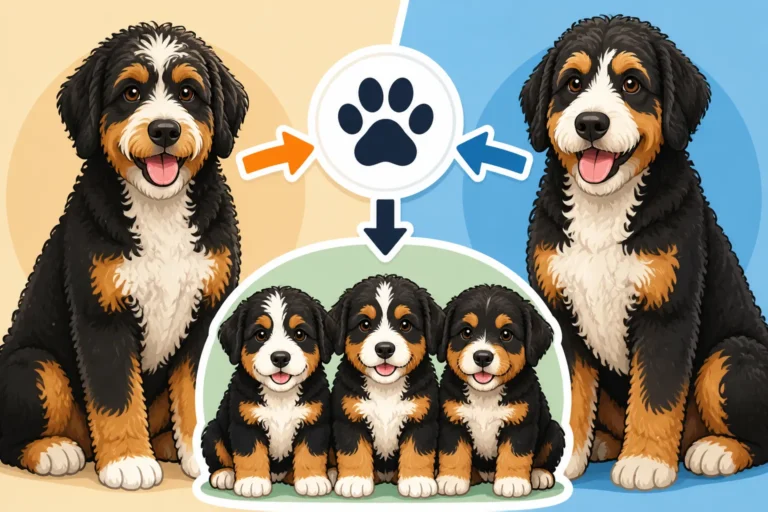
When we talk about a tri-color Bernedoodle, we're really talking about a specific genetic pattern that results in a dog displaying three distinct colors on its coat. It's more than just "three colors"; it's about where those colors appear and the combination they create. This specific pattern is highly prized because it’s a direct nod to one of the Bernedoodle's parent breeds, the magnificent Bernese Mountain Dog.
Deconstructing the "Tri" in Tri-Color
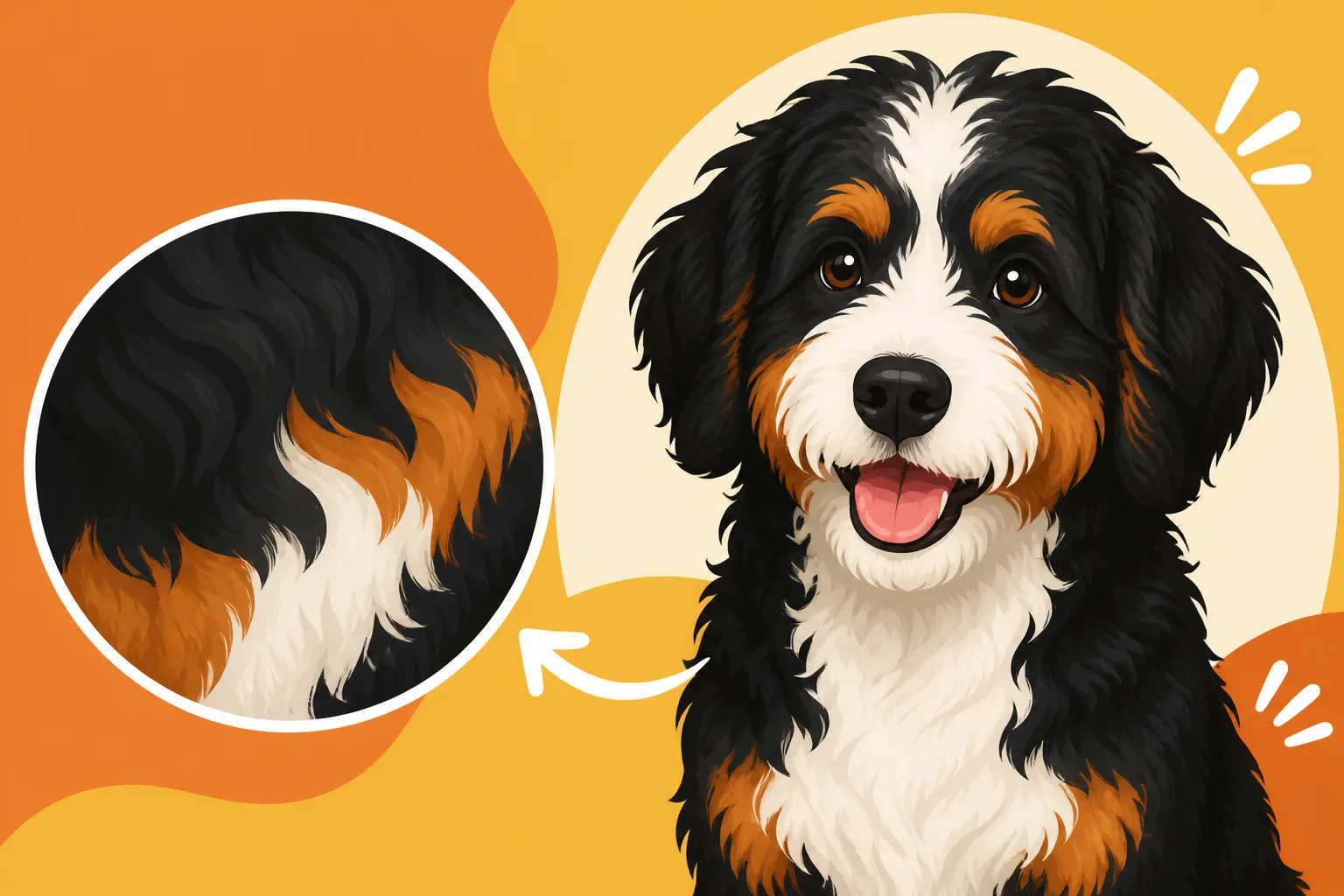
At its core, "tri-color" means three colors: black, white, and a rich, warm tan or rust. Think of it like this: your Bernedoodle will have a dominant black body coat, usually with white markings on the chest, muzzle, and paws, and then those unmistakable rust or tan points. These tan points are often seen above the eyes, on the cheeks, along the sides of the muzzle, on the inside of the legs, and under the tail. It’s not just patches of random color; it's a beautifully distributed pattern that highlights the dog's features. Imagine a classic Bernese Mountain Dog, but perhaps with the wavy or curly texture of a Poodle. That's the dream, isn't it? The contrast between the deep black, the crisp white, and the warm tan creates a truly eye-catching effect that many prospective owners simply adore.
The Ideal vs. The Reality of Tri-Color
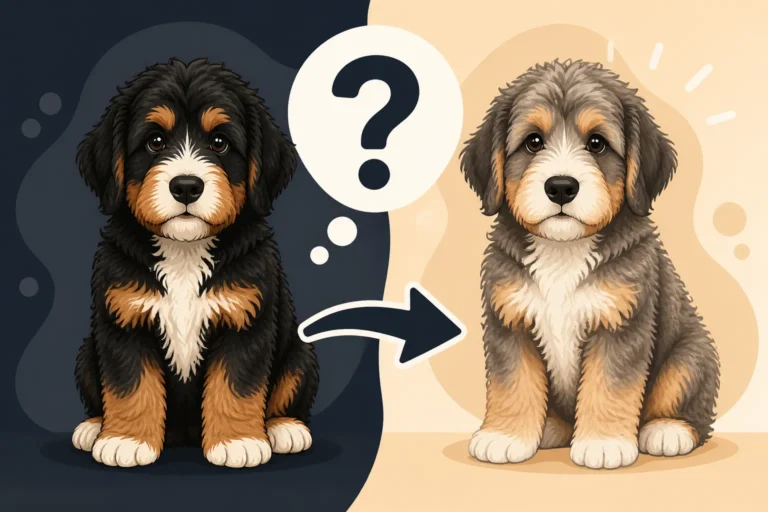
It's so easy to get caught up in those perfect breeder photos, isn't it? You see a puppy with perfectly symmetrical rust eyebrows, a pristine white blaze, and socks that look like they were painted on. The reality, however, is that while many Bernedoodles do come close to this ideal, nature is full of delightful variations. Some tri-colors might have more white than black, or the tan points might be lighter or darker, or even less defined. You might have a "split face" where the white blaze isn't perfectly centered, or one rust eyebrow is more prominent than the other. These aren't "flaws"; they're just unique expressions of the tri-color gene. What's more, a Bernedoodle's coat, especially the tri-color markings, can undergo changes as they mature. Those vibrant puppy colors might shift slightly, and the intensity of the tan points can sometimes soften. This is completely normal and part of the journey of owning a mixed-breed dog.
Why Are Tri-Colors So Desirable?
There's no denying the magnetic pull of a tri-color Bernedoodle. They often stand out in a litter, and many people specifically seek them out. This desirability isn't just a random preference; it's deeply rooted in the breed's origins and aesthetic appeal.
The Bernese Mountain Dog Connection
For many, the primary allure of the Bernedoodle is its connection to the Bernese Mountain Dog. These gentle giants are instantly recognizable by their distinctive tri-color coats. When you decide on a Bernedoodle, you're often hoping for that wonderful Bernese temperament—the loyal, calm, affectionate nature—combined with the intelligence and potentially lower-shedding coat of the Poodle. The tri-color markings allow you to visually carry over that Bernese heritage, offering a "mini Bernese" or a "Bernese-esque" look without all the shedding (hopefully!). It’s a way to feel connected to the traditional charm of the Bernese while embracing the benefits of the hybrid vigor that the Poodle brings. This visual link makes the tri-color pattern feel authentic and desirable to those who appreciate the original breed.
Aesthetic Appeal and Rarity Perception
Let’s be honest, those black, white, and tan markings are simply stunning. The clear delineation of colors creates a striking contrast that really pops. A well-marked tri-color Bernedoodle is a head-turner, and they often draw compliments wherever they go. Beyond pure aesthetics, there's also a perception of rarity and exclusivity that drives up demand. While tri-color isn't truly "rare" in the grand scheme of Bernedoodle genetics (it's actually quite common, given one parent is typically a Bernese), it's often marketed that way, especially for puppies with "perfect" markings. This perceived rarity can make people feel like they're getting something extra special. It's a similar phenomenon to certain car colors or limited edition items—the perceived scarcity boosts desire. It's important to remember that while the look is captivating, the real value of your Bernedoodle lies in their health, temperament, and the joy they bring to your family, not just their coat pattern.
The Genetics Behind the Tri-Color Magic
Understanding why some Bernedoodles are tri-color and others aren't can feel like deciphering a secret code. But at its heart, it's all about genetics, inherited from both the Bernese Mountain Dog and the Poodle parents. Don't worry, we won't go too deep into a biology lecture, but a basic understanding can help manage expectations.
The A-Locus and K-Locus Genes
The specific genes responsible for the tri-color pattern primarily reside on what geneticists call the A-locus (Agouti series) and the K-locus (Dominant Black series).
The Bernese Mountain Dog inherently carries the genes for the traditional tri-color pattern. Specifically, they typically carry two copies of the "a" allele at the A-locus (meaning they're genetically "tan point") and typically have a "ky" allele at the K-locus (which allows the expression of the A-locus pattern).
When you mix a Bernese Mountain Dog with a Poodle, the Poodle's genetics come into play. Poodles can carry a variety of coat colors and patterns, including solid, phantom, sable, and even "fading" genes. For a Bernedoodle to be tri-color, it needs to inherit the "tan point" gene from the Bernese side and often specific genes from the Poodle side that allow these markings to be expressed. If a Bernedoodle puppy inherits a dominant black gene (K) from the Poodle, it might be solid black, even if it carries the tan point gene. The Poodle's "fading" gene can also influence how vividly those tan points remain over time, leading to some of those lighter or less defined markings we discussed earlier. It’s a fascinating interplay! For a much deeper dive into the specific genetic combinations that lead to this beautiful pattern, you might find The Genetics Behind a Bernedoodle's Tri Markings an incredibly helpful resource.
Why Breeding for Tri-Color Isn't Always Straightforward
Given the complex genetic dance, it's not always a simple case of "breed two tri-colors, get tri-color puppies." This is why breeders who focus on specific patterns invest heavily in genetic testing and a deep understanding of canine coat color genetics. Even if both parents appear tri-color, their underlying genetic makeup could lead to surprises in a litter. For example, if both parents carry a strong fading gene, the tri-color puppies might end up with very light or ghost-like tan points as they mature. Conversely, if one parent is a solid-colored Poodle that carries the tan-point gene recessively, and the Bernese parent contributes their own tan-point genes, you can still get stunning tri-color puppies.
It's a nuanced process, and sometimes, even with the best intentions and genetic knowledge, a litter might produce a mix of patterns: some tri-color, some bi-color (like black and white), some solid, or even phantom or sable patterns. Breeders cannot always guarantee a full litter of tri-colors, which is part of what can sometimes drive up the price for these specific puppies due to perceived scarcity or the effort involved in trying to consistently produce them. If you’re curious about how often certain pairings work out, checking out Whether Two Tri Parents Guarantee a Tri Bernedoodle could shed more light on the realities of breeding for specific patterns.
Common Tri-Color Variations and What to Expect
While the classic tri-color pattern is black, white, and rust, the world of Bernedoodle coats is full of delightful nuances. Not all tri-colors look exactly alike, and understanding these variations can help you appreciate the individuality of your furry friend.
Traditional Tri vs. Phantom Tri vs. Sable Tri
When people talk about a tri-color Bernedoodle, they're usually picturing the Traditional Tri-Color. This is the one that most closely mimics the Bernese Mountain Dog's coat: a mostly black body with distinct white markings on the chest, muzzle, and paws, and clear rust/tan points above the eyes, on the cheeks, and on the legs. It’s the quintessential look everyone imagines. If you want to see exactly What a Traditional Tri Color Bernedoodle Looks Like, there are plenty of examples out there that showcase this stunning classic.
However, genetics are fun and surprising! You might also encounter what’s sometimes called a Phantom Tri-Color. A phantom pattern means the dog has a solid base color (often black) with points of a secondary color (usually tan or rust), similar to a Doberman or a Rottweiler. When a phantom pattern is combined with white markings, it can look like a tri-color, but the distribution of the black and tan might be slightly different. The tan points are very defined and typically appear in the same places as a traditional tri-color, but without the broad patches of black and white that truly distinguish a traditional tri from the Bernese side. It's often a solid-colored dog with tan markings and then white only on the chest/paws.
Then there's the Sable Tri-Color. Sable is a pattern where the individual hairs are banded with different colors, typically darker at the tip and lighter at the base. A sable tri-color will have this sable pattern replacing the solid black base, often giving the coat a softer, more shaded appearance, especially when they are puppies. The tips of the hair might be black, transitioning to lighter brown or tan towards the skin. Over time, the sable coloring often fades or lightens, sometimes making it look more like a tan and white dog with black shading. The white and tan points are still present, but the overall effect is softer and less defined than a traditional tri. For a more detailed comparison of these captivating variations, you'll find The Phantom and Sable Bernedoodle to be a great resource.
The "Ghost" or Fading Tri-Color
One of the most common questions and sometimes sources of surprise for new Bernedoodle owners is the phenomenon of "fading" tri-color markings, sometimes affectionately called "ghost" tri-color. You bring home a puppy with the most vibrant rust points, and by the time they’re a year old, those points have softened, lightened, or even disappeared into a creamy white or light silver. This often happens because of the "fading" gene that many Poodles carry. Poodles are known for their coats changing color as they mature, often lightening from a dark puppy color to a much lighter adult shade. When this fading gene is passed on to a Bernedoodle, it can affect the black base coat, turning it charcoal or silver, and it can definitely affect those rust tan points, causing them to lighten significantly.
It can be a little disheartening if you were expecting those bold, vibrant markings to last forever, but it's a completely natural genetic occurrence and doesn't affect your dog's health or wonderful personality one bit. Think of it as a beautiful evolution of their coat! Your Bernedoodle is still a magnificent tri-color, just perhaps a softer, more ethereal version. This change is simply part of the unique tapestry of Bernedoodle genetics. For more information on how and why these beautiful markings can shift over time, take a look at Whether a Bernedoodle's Markings Fade With Age.
The Price Tag: Does Tri-Color Really Cost More?
Ah, the age-old question that causes many prospective Bernedoodle owners to scratch their heads (and sometimes their wallets). You've probably noticed that tri-color Bernedoodle puppies often come with a higher price tag compared to their bi-color or solid-colored siblings. Is this justified? Let's unpack it.
Supply, Demand, and Perceived Value
The simple economic answer is supply and demand. Because the tri-color pattern is so highly sought after, especially the traditional tri-color that strongly resembles the Bernese Mountain Dog, breeders know there's a strong market for them. People are willing to pay a premium to get that specific look. It's not necessarily because it's genetically "harder" to produce in every instance, but because the desire for it creates a higher market value. Think of it like a popular car model that comes in a limited edition color; that color might not cost the manufacturer much more to produce, but its desirability drives up the consumer price. This can be frustrating, of course, when you're simply in love with the aesthetics and feel like you're paying extra for something purely cosmetic. However, it's a reality of the market for designer breeds. Many breeders will readily admit that the tri-color pattern, particularly the "traditional" tri, often commands The Premium a Tri Color Bernedoodle Carries.
What You're Really Paying For (and What You're Not)
It's crucial to understand that paying more for a specific color or pattern does not inherently mean you're getting a healthier, better-tempered, or higher-quality dog. A Bernedoodle with a solid black coat or a bi-color might have the exact same wonderful genes for health and temperament as a tri-color. What you should always be paying for is a puppy from a reputable breeder who conducts extensive health clearances on both parent dogs (such as OFA certifications for hips and elbows, eye clearances, and genetic testing for conditions like Von Willebrand's Disease and Degenerative Myelopathy). You're paying for a breeder who provides excellent early socialization, a clean and safe environment, and who stands behind their puppies with a health guarantee.
A breeder focused solely on producing a certain color to justify a higher price, without prioritizing health and temperament, is a red flag. Always look past the pretty coat to the substance of the breeding program. Sometimes, a perfectly healthy, wonderfully tempered Bernedoodle with slightly "imperfect" markings or a less sought-after color can be an incredible value and still bring just as much joy. Make sure your decision is about finding the right dog for your family, not just the right color. The bottom line is, Whether Color Should Change What You Pay for a Bernedoodle is a question that truly requires you to prioritize health and ethics over aesthetics. Don't be swayed by marketing alone; do your homework!
Living with a Tri-Color Bernedoodle: Beyond the Looks
Once you've brought your beautiful tri-color Bernedoodle home, the dazzling markings become just one small part of their charm. What truly matters is the everyday reality of living with a large, intelligent, and often goofy companion. The joy of a Bernedoodle isned't just skin deep, or coat deep in this case!
Maintenance and Coat Care for Any Bernedoodle
Regardless of whether your Bernedoodle is a stunning tri-color, a sleek black, or a playful sable, the reality of their coat care remains the same. The Poodle side brings that low-shedding, often hypoallergenic trait, but it comes with a trade-off: extensive grooming needs. Those beautiful wavy or curly coats are prone to matting, especially in high-friction areas like armpits, behind the ears, and around the collar. You'll need to commit to regular brushing, ideally every day or every other day, to prevent painful mats from forming.
Beyond daily brushing, professional grooming is an absolute must. Plan for appointments every 6-8 weeks, where your groomer will bathe, dry, brush, and clip your Bernedoodle's coat. This isn't just about aesthetics; it's about hygiene and preventing skin issues. Imagine trying to brush through a thick, matted coat—it's uncomfortable for your dog and a nightmare for you. Many owners also invest in good quality grooming tools for home use, which you can often find readily on sites like Chewy. Having a sturdy slicker brush, a metal comb, and a good detangling spray can make all the difference. The financial commitment for this is real; knowing The Seventy to Hundred Fifty Dollar Bernedoodle Groom is essential for budgeting.
Focusing on Health and Temperament Over Aesthetics
As a prospective Bernedoodle owner, it's easy to get fixated on the perfect tri-color markings or the softest puppy fluff. However, the most critical factors for a happy, long life with your dog are their health and temperament. A Bernedoodle with outstanding markings but a shy, anxious disposition or underlying health issues will bring more challenges than joy.
Always prioritize finding a breeder who is transparent about their health testing. Look for evidence of OFA (Orthopedic Foundation for Animals) clearances for hips and elbows, which are crucial for large breeds prone to joint problems. Eye clearances (CAER exams) and genetic testing for conditions common in both Bernese Mountain Dogs and Poodles, such as Von Willebrand's Disease (a bleeding disorder) and Degenerative Myelopathy (a progressive neurological condition), are equally important. These tests help ensure that parents are not passing on known genetic predispositions to their offspring. Don't be afraid to ask for these results; a reputable breeder will be proud to share them. Whether a Bernedoodle Breeder Should Show OFA Numbers is a fantastic article to prepare you for what to look for in health clearances.
Temperament is also paramount. A well-socialized Bernedoodle, regardless of color, will be more adaptable, friendly, and a joy to live with. Early exposure to different people, sights, sounds, and other vaccinated dogs is key. Think about the long-term commitment: What a Bernedoodle Costs Over Its Whole Life will far outweigh the initial purchase price, and a healthy, well-adjusted dog makes that investment infinitely more rewarding.
Final Thoughts: Embracing the Bernedoodle You Get
Choosing a Bernedoodle is an exciting journey, and it's natural to have a picture in your mind of the perfect companion. The tri-color markings certainly paint a beautiful picture, a visual tribute to the Bernese Mountain Dog heritage that many of us adore.
The Joy of Uniqueness
While the quest for the "perfect" tri-color marking can be intense, remember that every single Bernedoodle is a unique individual. Even within a litter of tri-colors, each puppy will have slightly different patterns, shades, and personalities. Some might have more white on their face, others might have distinct "eyebrows" that make them look perpetually surprised, and some might have softer, ghost-like tan points that evolve over time. These variations are what make them special. My own Bernedoodle's markings changed quite a bit from puppyhood, and while I initially had a specific image in my head, I wouldn't trade her unique look for anything. Embrace the delightful surprises that come with a mixed breed, knowing that the dog's true beauty lies in its spirit, not just its coat.
Responsible Ownership First
Ultimately, being a responsible Bernedoodle owner means looking beyond surface-level aesthetics. It means doing your research, finding an ethical and reputable breeder who prioritizes health, temperament, and responsible breeding practices, rather than just chasing popular colors or trends. It means understanding the significant commitment of time, energy, and resources that goes into raising and caring for a Bernedoodle for their entire lifespan. Whether your Bernedoodle is a traditional tri-color, a phantom, a sable, or a solid color, the bond you build and the love you share will be the most vibrant and lasting "markings" of all. Make sure you're asking your breeder insightful questions about the health history of their lines, perhaps even questions like Asking a Breeder About Cancer in the Bernese Line, to ensure you're making the most informed decision possible for your future furry family member. Your Bernedoodle will bring so much joy, and learning about what a Bernedoodle keeps of the Bernese temperament is far more important than any specific color.
| Tri-Color Variation | Description | Typical Appearance | Genetic Influence (Simplified) |
|---|---|---|---|
| Traditional Tri | Classic Bernese Mountain Dog pattern. | Predominantly black body, white on chest/muzzle/paws, rust/tan points above eyes, cheeks, legs, under tail. | Specific A-locus (tan point) and K-locus alleles allow full expression. |
| Phantom Tri | Solid base color with distinct tan/rust points, plus white markings. | Black base with clear tan points (like Doberman), plus white chest/paws. Less extensive white than traditional. | A-locus (tan point) present, but white piebald gene less prominent than traditional tri. |
| Sable Tri | Hairs banded with different colors, often fading/lightening over time. | Black-tipped hairs blending into lighter tan/brown, creating a shaded look. White and tan points visible. | A-locus (sable) combined with tan points and white markings. Often fades due to Poodle gene. |
| Fading/Ghost Tri | Tri-color markings, especially tan points, lighten significantly with age. | Originally vibrant tan points turn creamy, silver, or light tan. Black base may grey out. | Often due to fading genes inherited from the Poodle side. |
Disclaimer
This article is for general informational purposes only and does not constitute professional advice. Laws, prices and regulations vary by location and change over time. Consult a qualified professional for guidance on your specific situation.