The Bernedoodle Against the Sheepadoodle
Deciding on a new furry family member is a huge decision, and for many families drawn to the charm and intelligence of Poodle mixes, the choice often comes down to two absolute darlings: the Bernedoodle and the Sheepadoodle. Both breeds offer that adorable "doodle" look, promise lower shedding, and come with a reputation for being wonderful companions. But if you’re standing at this crossroads, wondering which fluffy face is the right fit for your home, you're not alone. This guide will walk you through the nuances of each breed, helping you understand their unique personalities, needs, and what truly sets them apart, so you can make an informed choice that brings joy for years to come.
Origins and the Allure of Designer Doodles
It’s easy to get swept up in the adorable looks of a Bernedoodle or a Sheepadoodle, but understanding where they come from gives us a vital glimpse into their potential personalities, health, and overall care requirements. Both breeds are relatively new on the canine scene, born from the desire to combine the best traits of two beloved purebreds into one fantastic companion.
The Bernedoodle's Backstory
The Bernedoodle emerged from a thoughtful cross between the majestic Bernese Mountain Dog and the intelligent, often non-shedding Poodle. This wasn't a random pairing; it was a deliberate effort to create a dog with the beloved temperament of the Bernese but with increased longevity and a more allergy-friendly coat. The Bernese Mountain Dog, while incredibly gentle and loyal, is unfortunately known for a relatively short lifespan and a propensity for certain health issues, particularly various cancers. The Poodle, on the other hand, is renowned for its intelligence, trainability, and long lifespan, not to mention its minimal shedding coat.
The idea was to harness the hybrid vigor (heterosis) often seen in first-generation crosses, which can lead to healthier, more robust offspring. The earliest notable efforts to intentionally breed Bernedoodles can be traced back to SwissRidge Kennels in Ontario, Canada, around the early 2000s. Their goal was clear: produce a companion dog with a wonderful temperament, intelligence, and a longer life free from the heavy shedding of the Bernese. The resulting Bernedoodle quickly captured hearts with its often tri-color markings and affectionate, sometimes goofy, demeanor, offering a dog that was both striking to look at and a joy to live with.
The Sheepadoodle's Lineage
Much like the Bernedoodle, the Sheepadoodle is a designer cross, bringing together the Old English Sheepdog (OES) and the Poodle. The motivation behind this cross was quite similar: to create a highly intelligent, low-shedding, and family-friendly companion. The Old English Sheepdog is famous for its shaggy, cloud-like coat and its sweet, gentle nature. These dogs are often described as "nanny dogs" due to their historical role in herding and their affectionate bond with children. However, their incredibly thick double coat requires extensive grooming and sheds quite a bit, making them a challenge for some households, especially those with allergies.
Enter the Poodle, once again bringing its keen intelligence, trainability, and a coat that sheds minimally. By crossing the OES with a Poodle, breeders aimed to retain the Old English Sheepdog's charming, playful disposition and iconic look, but with a more manageable coat and potentially improved health outcomes. Sheepadoodles have rapidly gained popularity for their distinctive black and white "panda" markings, their boundless energy, and their highly social personalities. They embody a unique blend of the OES's shaggy charm and the Poodle's athletic grace, resulting in a dog that is both striking and spirited.
Size and Physical Presence
When you're welcoming a new dog into your home, especially a large one, understanding their potential size and physical characteristics is absolutely essential. Both Bernedoodles and Sheepadoodles are typically large dogs, though both come in various sizes intended to fit different lifestyles and living spaces. However, the influence of their parent breeds means there are subtle but important differences in their typical build and appearance.
Bernedoodle Size Variations
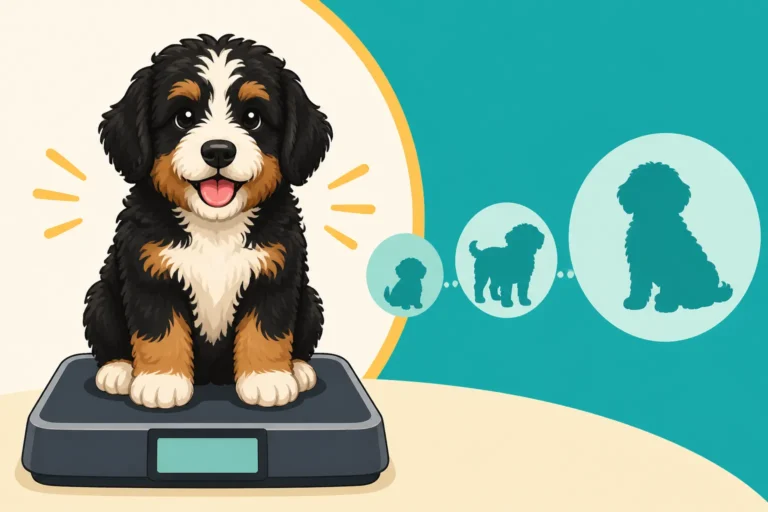
Bernedoodles generally come in three main size categories, largely determined by the size of the Poodle parent used in the cross.
- Standard Bernedoodle: This is the original and largest size, typically resulting from crossing a Bernese Mountain Dog with a Standard Poodle. These dogs can be quite substantial, often weighing anywhere from 70 to over 90 pounds and standing 23 to 29 inches tall at the shoulder. They are truly gentle giants, but their size means they require ample space, both indoors and out. A large backyard is definitely a plus, and even inside, they need room to stretch out and play without constantly bumping into furniture or people.
- Mini Bernedoodle: Bred from a Bernese Mountain Dog and a Miniature Poodle, Mini Bernedoodles offer a more manageable size for many families. They usually weigh between 25 and 49 pounds and stand 18 to 22 inches tall. While still sturdy, they are much easier to handle on a leash and fit more comfortably in smaller homes or apartments, provided they still get sufficient exercise.
- Tiny/Micro Bernedoodle: For those seeking the Bernedoodle charm in a smaller package, the Tiny or Micro Bernedoodle is bred from a Bernese Mountain Dog and a Toy Poodle. These can range from 10 to 24 pounds and stand 12 to 17 inches tall. It’s important to remember that breeding for these smaller sizes often involves more generations of Poodle crosses, and size can still be somewhat variable. When considering a Bernedoodle, it’s always wise to ask a breeder about the predicted adult weight and height, though even then, nature can surprise you!
Sheepadoodle Size Range
Sheepadoodles also come in different sizes, primarily influenced by the Poodle parent.
- Standard Sheepadoodle: This is the most common size, usually the result of breeding an Old English Sheepdog with a Standard Poodle. These big, shaggy dogs typically weigh between 60 and 80 pounds, sometimes more, and stand 22 to 27 inches tall. Like their Bernedoodle counterparts, Standard Sheepadoodles need space to thrive. Their robust build and energetic nature mean they're not best suited for cramped living situations.
- Mini Sheepadoodle: Created by crossing an OES with a Miniature Poodle, Mini Sheepadoodles are smaller, generally weighing 25 to 55 pounds and standing 18 to 21 inches tall. While they're smaller than the Standard, they still carry a significant physical presence due to the sturdy bone structure inherited from the Old English Sheepdog. They're a fantastic option for families who love the Sheepadoodle personality but need a slightly less imposing companion. It’s less common to find "Tiny" or "Micro" Sheepadoodles because the Old English Sheepdog itself is such a large, heavily boned breed, making it a greater challenge to consistently produce extremely small offspring without compromising health or conformation.
Visual Distinctions and First Impressions
While both are "doodles," their parentage gives them distinct looks.
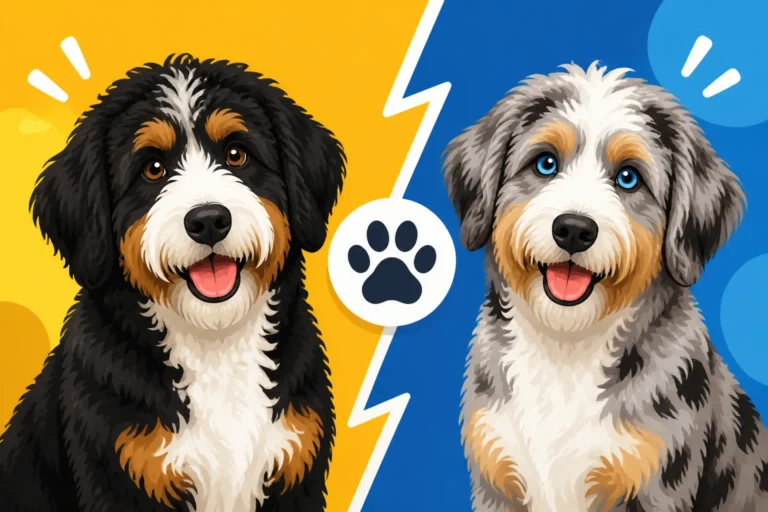
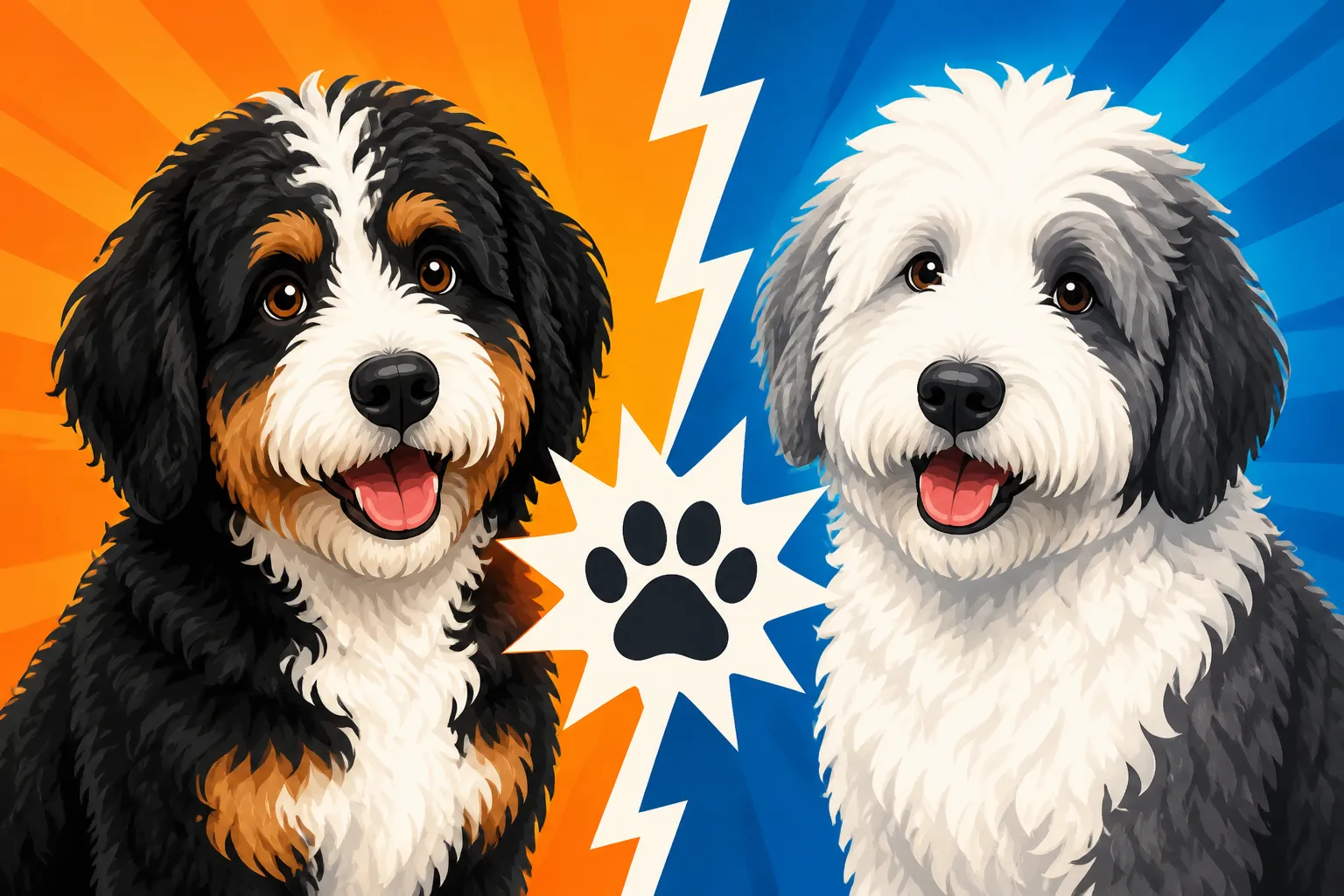
The Bernedoodle often embodies a striking blend of its parents. Many people are drawn to the classic tri-color Bernedoodle, which sports the black, white, and rust markings of the Bernese Mountain Dog. However, they can also come in bi-color (black and white), sable, phantom, or solid black. Their coats can range from quite curly, much like a Poodle, to a wavy, shaggy look that hints at the Bernese. They tend to have a slightly blockier head shape than a Poodle, but often with the longer Poodle muzzle. Their expression is usually sweet and soulful.
The Sheepadoodle, on the other hand, often has a more uniform, shaggy appearance reminiscent of the Old English Sheepdog, but with tighter curls or waves that characterize the Poodle. Their most common coloration is black and white, often in large patches, giving them a distinct "panda bear" look, though solid black or variations of gray and white are also seen. Their face is often obscured by their shaggy hair, giving them a whimsical, playful appearance. They tend to have a strong, square build inherited from the OES, which is often described as sturdy and robust.
Here’s a quick comparison of their typical physical traits:
| Feature | Bernedoodle | Sheepadoodle |
|---|---|---|
| Parent Breeds | Bernese Mountain Dog & Poodle | Old English Sheepdog & Poodle |
| Average Size (Standard) | 70-90+ lbs (23-29 inches) | 60-80+ lbs (22-27 inches) |
| Typical Coat Types | Wavy, curly, straight | Wavy, shaggy, curly |
| Shedding Level | Low to moderate (can vary) | Low to moderate (can vary) |
| Common Colors | Tri-color, bi-color, sable, phantom, black | Black & white, gray & white, solid black |
| Build | Sturdy, well-boned, often slightly leaner | Robust, square, often very shaggy |
| Head Shape | Can be blockier like Bernese, or more refined Poodle-like | Often broad and square like OES, or Poodle-like with lots of hair |
Choosing between these two big, beautiful breeds often comes down to personal preference in looks, but also what you can realistically accommodate in terms of space and handling a large, energetic dog.
Temperament and Personality Traits
Ah, temperament! This is often the deciding factor for many families, and both the Bernedoodle and the Sheepadoodle are known for their delightful dispositions. However, the personalities of their parent breeds contribute to distinct differences that are worth exploring. Understanding these nuances will help you find the perfect match for your family's dynamic.
The Bernedoodle's Affectionate and Goofy Nature
Bernedoodles are widely celebrated for their charming blend of the Bernese Mountain Dog's loyalty and gentleness with the Poodle's intelligence and playful spirit. What you often get is a truly affectionate companion, sometimes described as a "goofball" because of their playful antics and clumsy charm. They tend to form deep bonds with their families and thrive on companionship, often wanting to be right in the middle of whatever you're doing.
From the Bernese side, they inherit a calm, gentle demeanor and a desire to be close to their people. Many Bernedoodles will exhibit the characteristic "lean" where they simply press their body weight into you for comfort and reassurance. This loyalty often translates into a dog that loves spending time curled up beside you on the couch, or simply being in the same room. However, some Bernedoodles can also inherit The Shyness a Bernedoodle Gets From the Bernese, especially if not well-socialized as puppies. This means they might be a bit reserved around strangers initially, preferring to observe before engaging. Early and consistent socialization is key to helping them grow into confident, well-adjusted adults. The Poodle influence, meanwhile, contributes to their intelligence and an eagerness to please, making them generally trainable, though they can sometimes have a mind of their own.
The Sheepadoodle's Playful and Social Disposition
Sheepadoodles, owing to their Old English Sheepdog heritage, are often described as exceptionally playful, outgoing, and social dogs. The OES is known for being a bit of a class clown, and this delightful trait often shines through in the Sheepadoodle. They love to entertain, and their energetic, joyful personalities can be incredibly infectious. They are typically very friendly with everyone they meet, from family members to strangers, and often greet new people with an enthusiastic wag of their shaggy tail.
The Old English Sheepdog's history as a herding dog means they are intelligent and responsive, but also possess a boisterous side. Coupled with the Poodle's high energy and quick wit, Sheepadoodles often have a higher drive for activity and mental engagement. They thrive in environments where they are included in family activities, whether it's a game of fetch in the yard, a long hike, or learning new tricks. Their social nature means they generally get along well with other pets and are quick to make friends. However, their boundless energy and sometimes clumsy enthusiasm mean they might need a bit more guidance to learn appropriate manners, especially when they are young and still figuring out their considerable size.
Adapting to Family Life
Both breeds are generally excellent family dogs, but their nuances in temperament can make one a better fit than the other for specific households.
For families with young children, a Bernedoodle can be a wonderful choice. Their gentle and patient nature, inherited from the Bernese, often makes them tolerant and loving companions for kids. However, their sheer size means that supervision is always necessary, especially with toddlers, as even an accidental bump could knock a small child over. It's crucial to consider A Standard Bernedoodle and a Small Child and teach both dog and child how to interact respectfully. Their moderate energy levels mean they're usually content with family walks and playtime in the yard, and then happy to settle down inside.
A Sheepadoodle is also often fantastic with children, bringing an incredibly playful and patient spirit to the family. Their OES lineage, with its "nanny dog" reputation, can make them very nurturing towards kids. However, their higher energy and sometimes boisterous playstyle might be a bit much for very young or timid children without proper training and management. Sheepadoodles need consistent mental and physical stimulation to prevent boredom, which can lead to destructive behaviors. If your family enjoys an active outdoor lifestyle and is ready for a dog that wants to be a constant participant in every adventure, the Sheepadoodle might be a perfect match.
In essence, while both breeds are affectionate and intelligent, the Bernedoodle tends to lean towards a slightly calmer, more laid-back (though still goofy!) companion, while the Sheepadoodle often brings a more energetic, exuberant, and overtly playful presence to the home.
Coat Types, Shedding, and Grooming Needs
One of the primary reasons people gravitate towards "doodle" breeds like the Bernedoodle and Sheepadoodle is the promise of a low-shedding, potentially hypoallergenic coat. While both breeds often deliver on this, it's crucial to understand that "low-shedding" doesn't mean "no-shedding," and it certainly doesn't mean "low-maintenance." In fact, these coats require significant attention to keep them healthy and mat-free.
Bernedoodle Coat Variety and Maintenance
The Bernedoodle coat can be quite variable, depending on the generation and the specific genetics inherited from the Bernese Mountain Dog and Poodle parents. You'll typically see three main types:
- Wavy Coat: This is the most common and often desired Bernedoodle coat. It's a soft, loose wave that tends to shed minimally and is usually easier to maintain than a tightly curly coat.
- Curly Coat: More like the Poodle parent, this coat is tighter and curlier. It is typically the lowest shedding and often the most allergy-friendly. However, it’s also the most prone to matting and requires diligent daily brushing.
- Straight Coat: Less common, this coat resembles the Bernese Mountain Dog more. It will shed more than the wavy or curly coats, and is generally not considered allergy-friendly.
Regardless of the specific type, all Bernedoodle coats require substantial grooming. The soft, dense hair, particularly with the Poodle's influence, is prone to tangles and mats if not brushed regularly. Think about The Volume of Coat a Bernedoodle Owner Brushes Weekly – it's considerable! For wavy and curly coats, you should plan for daily or at least every-other-day brushing sessions to prevent mats from forming, especially in friction areas like armpits, behind the ears, and around the harness. Professional grooming is also essential, typically every 6 to 8 weeks, to keep the coat trimmed to a manageable length. Without this consistent care, the coat can become severely matted, leading to discomfort, skin infections, and potentially a full shave-down, which no one wants.
Sheepadoodle's Signature Shag and Upkeep
The Sheepadoodle's coat, while also variable, generally leans towards a shaggy, wavy, or curly texture, often retaining that fluffy, cloud-like appearance from the Old English Sheepdog, but with the Poodle's characteristic curl.
- Wavy/Shaggy Coat: This is a hallmark of the Sheepadoodle, giving them that adorable, slightly unkempt look. It tends to be soft and dense.
- Curly Coat: Closer to the Poodle, this coat is denser and curlier, offering the lowest shedding potential.
The Old English Sheepdog parent has a very heavy, dense double coat, which historically required extensive grooming. While the Poodle cross aims to reduce the shedding, the Sheepadoodle's coat still inherits a good deal of that density and length, making it incredibly prone to matting. Many Sheepadoodle owners find their grooming commitment to be even higher than Bernedoodle owners, largely due to the sheer volume and texture of the hair. Daily brushing is not just recommended, it's pretty much mandatory, especially if you prefer to keep their coat long. You'll need to brush all the way down to the skin to prevent mats from forming deep within the coat. Professional grooming every 6 to 8 weeks is non-negotiable for a Sheepadoodle to maintain a healthy, untangled coat. Skipping grooming appointments or regular home brushing will quickly lead to painful matting that can only be resolved by shaving the dog down.
Allergy Considerations
For individuals with allergies, both Bernedoodles and Sheepadoodles are often advertised as "hypoallergenic" or "allergy-friendly." It's important to approach this claim with a realistic perspective. No dog breed is 100% hypoallergenic, as people can be allergic to dander, saliva, or urine, not just hair. However, breeds that shed less hair do tend to release less dander into the environment, which can make them more tolerable for some allergy sufferers.
- Bernedoodle and Allergies: Bernedoodles with more curly, Poodle-like coats are generally better for allergy sufferers than those with wavy or straight coats. The straight-coated Bernedoodle, which is less common but does occur, will shed more and is unlikely to be allergy-friendly.
- Sheepadoodle and Allergies: Sheepadoodles, due to the Poodle influence, also tend to be low-shedding. Their thick, shaggy coats still need immense care to prevent dander and allergens from building up, even if the hair isn't falling out in clumps.
Ultimately, if allergies are a significant concern, spending time with a specific Bernedoodle or Sheepadoodle puppy (or adult dog) that you are considering is the best way to gauge your reaction. Look for puppies with curlier coats, as these tend to be the lowest shedding. Remember, even with low-shedding dogs, regular grooming—both at home and professionally—is vital to manage dander and keep the coat healthy. Using brands like Chewy for grooming supplies can help keep costs manageable for the constant care required.
Exercise Requirements and Training Aptitude
Bringing a Bernedoodle or Sheepadoodle into your life means committing to their physical and mental well-being. Both breeds are intelligent and capable, but they have different energy levels and temperaments that influence their exercise needs and how they respond to training. Understanding these aspects is crucial for a harmonious household.
Bernedoodle Energy Levels and Activity
Bernedoodles generally fall into the moderate energy category. They are not typically as intensely driven as some working breeds or purebred Poodles, but they are certainly not couch potatoes. Their energy level is a lovely blend: they enjoy active play and walks, but they are also usually content to settle down and relax with their family afterwards.
A standard Bernedoodle will thrive with at least 60-90 minutes of dedicated exercise per day, which can include:
- Daily Walks: Long, brisk walks around the neighborhood or on trails are excellent. These dogs love to explore and sniff.
- Playtime: Fetch, tug-of-war, or romping in a securely fenced yard. They often have a goofy, playful side that enjoys interactive games.
- Mental Stimulation: Puzzle toys, training sessions, or even learning new tricks will keep their intelligent minds engaged.
- Adventure: Many Bernedoodles enjoy hiking, swimming (if introduced positively), or even activities like The Draft Dog Work a Bernedoodle Can Still Do, embracing their Bernese heritage for pulling.
It's important to remember that while they can be calm indoors, consistent daily exercise helps prevent boredom and the destructive behaviors that can come with it. A bored Bernedoodle might decide to redecorate your living room with chewed furniture or dig up your prize-winning rose bushes.
Sheepadoodle's Need for Engagement
Sheepadoodles, on average, tend to have higher energy levels than Bernedoodles. This is largely due to the Old English Sheepdog's background as an active herding dog, combined with the Poodle's inherent athleticism. Sheepadoodles need more than just a leisurely stroll; they require consistent and often vigorous exercise to truly be content.
Expect to dedicate at least 90 minutes to two hours of exercise daily for a standard Sheepadoodle, ideally broken into a couple of sessions. This could look like:
- Vigorous Walks or Runs: Longer, more intense walks or even jogs are often appreciated. If you're a runner, a Sheepadoodle could be a great partner once fully grown.
- Active Play: Fetch is often a favorite, as are games that involve chasing and retrieving. Their herding instincts might make them interested in chasing balls or even playing "tag" with their human family.
- Dog Sports: Sheepadoodles often excel in dog sports like agility, obedience, rally, or even herding trials if available. These activities provide both physical and mental outlets.
- Social Play: Dog parks or playdates with other well-socialized dogs can be an excellent way for them to burn off energy and satisfy their social nature.
Without sufficient exercise and mental stimulation, a Sheepadoodle can become restless, destructive, and even prone to excessive barking. They need an outlet for their intelligence and energy to prevent boredom-induced mischief.
Trainability and Intelligence
Both Bernedoodles and Sheepadoodles are highly intelligent dogs, inheriting the keen minds of their Poodle parents. This makes them generally very trainable, but their individual personalities from the other parent breed do add some interesting quirks.
Bernedoodles are intelligent and eager to please, which makes them respond well to positive reinforcement training methods. They pick up on commands quickly and enjoy the mental challenge of learning. However, the Bernese Mountain Dog side can sometimes contribute a bit of a The Stubborn Streak Under a Bernedoodle's Poodle Brain. This isn't usually outright disobedience, but sometimes they might need a moment to process what you're asking, or they might try to see if they can get away with not doing it! Consistency, patience, and making training fun with plenty of praise and high-value treats are key. Early puppy classes are highly recommended to build a strong foundation and help with socialization.
Sheepadoodles are also incredibly intelligent and typically very keen to learn. They often have a strong desire to work with their humans, making them quick studies in obedience and trick training. Their Poodle brain, combined with the OES's responsiveness, means they can excel in structured training environments. However, their high energy and playful nature can sometimes translate into a mischievous streak. If training isn't engaging or consistent, they might try to invent their own games or challenge boundaries. For Sheepadoodles, incorporating mental stimulation into their daily routine is just as important as physical exercise to keep their intelligent minds happy and focused. They respond best to positive reinforcement, clear communication, and training sessions that are varied and exciting.
In summary, while both breeds are smart and trainable, the Bernedoodle might require a bit more patient encouragement, whereas the Sheepadoodle might need more varied and energetic training to keep them engaged and prevent boredom.
Health Concerns and Lifespan
When considering any dog breed, especially a large one, understanding potential health concerns and average lifespan is paramount. Both Bernedoodles and Sheepadoodles, being designer crosses, aim to benefit from hybrid vigor, potentially reducing the incidence of certain genetic conditions prevalent in their purebred parent lines. However, they are still susceptible to issues common to their parent breeds. Choosing a reputable breeder who conducts extensive health clearances is the single most important step you can take to bring home a healthy puppy.
Bernedoodle Health Considerations
Bernedoodles inherit potential health risks from both the Bernese Mountain Dog and the Poodle.
From the Bernese Mountain Dog side, they can be predisposed to:
- Cancer: This is a significant concern for Bernese Mountain Dogs, particularly aggressive forms like Histiocytic Sarcoma. While the Poodle cross is hoped to dilute this risk, Bernedoodles can still develop various cancers. It's why many sought the cross in the first place, but Whether the Bernedoodle Cross Actually Reduced Cancer is still a question breeders are working on.
- Orthopedic Issues: Hips on a Ninety Pound Bernedoodle and Elbow Dysplasia in a Growing Bernedoodle are major concerns. These conditions can lead to arthritis and pain as the dog ages. Responsible breeders screen parents rigorously.
- Bloat (Gastric Dilatation-Volvulus – GDV): As a deep-chested breed, Bernedoodles, particularly standard sizes, are at risk for bloat, a life-threatening condition where the stomach twists. Owners should be aware of Bloat in a Standard Bernedoodle's Deep Chest and its symptoms.
From the Poodle side, potential issues include:
- Eye Conditions: Progressive Retinal Atrophy (PRA) and cataracts.
- Thyroid Issues: Hypothyroidism.
- Addison's Disease: An adrenal gland disorder.
- Von Willebrand's Disease: A blood clotting disorder, which can also come from the Bernese side.
A Bernedoodle's lifespan is typically longer than a purebred Bernese Mountain Dog, often ranging from The Twelve to Fifteen Years a Bernedoodle Is Sold On. This extended lifespan is one of the key benefits sought after in the cross.
Sheepadoodle Health Profile
Sheepadoodles also come with a set of potential health challenges inherited from their Old English Sheepdog and Poodle parents.
From the Old English Sheepdog side, they may be prone to:
- Orthopedic Issues: Hip and elbow dysplasia are common in large breeds, including the OES.
- Eye Conditions: Progressive Retinal Atrophy (PRA) and cataracts are also seen in OES.
- Hypothyroidism: An underactive thyroid gland.
- Deafness: Some OES lines can carry a predisposition to deafness.
From the Poodle side, they share many of the same potential issues as Bernedoodles, including:
- Eye Conditions: PRA and cataracts.
- Addison's Disease.
- Bloat: As Poodles are also deep-chested, Sheepadoodles can inherit this risk.
- Sebaceous Adenitis: A skin condition.
Sheepadoodles generally have a good lifespan, typically living between 10 to 14 years, a healthy range for a large breed dog.
Importance of Responsible Breeding and Health Clearances
For both Bernedoodles and Sheepadoodles, the importance of choosing a reputable breeder cannot be overstated. A good breeder will meticulously screen their breeding dogs for genetic health conditions common to the parent breeds. This means:
- OFA (Orthopedic Foundation for Animals) Certifications: For hips, elbows, patellas, and sometimes shoulders.
- Eye Certifications: From a veterinary ophthalmologist (CAER exams).
- Cardiac Clearances.
- Genetic Testing: For conditions like Von Willebrand's Disease (vWD), Progressive Retinal Atrophy (PRA), Degenerative Myelopathy (DM), and others relevant to the specific parent breeds. For Bernedoodles, this often includes specific cancer markers if available. For Sheepadoodles, deafness screening might be relevant.
Never buy a puppy from a breeder who cannot or will not provide proof of these health clearances for both parent dogs. These tests are expensive and time-consuming, but they are absolutely critical for minimizing the risk of passing on debilitating genetic diseases to puppies. You can often find a list of The Five Clearances a Bernedoodle Breeder Should Have, and similar standards apply to Sheepadoodles. While health testing doesn't guarantee a completely healthy dog for its entire life, it significantly increases the odds.
Here's a simplified table comparing typical health focus areas:
| Health Concern | Bernedoodle | Sheepadoodle |
|---|---|---|
| Orthopedic | High risk of Hip/Elbow Dysplasia | High risk of Hip/Elbow Dysplasia |
| Cancer | Higher risk, particularly from Bernese side | General cancer risk, but not as specific as Bernese |
| Bloat | Moderate to High risk (deep-chested) | Moderate to High risk (deep-chested) |
| Eye Conditions | PRA, Cataracts | PRA, Cataracts |
| Thyroid | Hypothyroidism | Hypothyroidism |
| Blood Disorder | Von Willebrand's Disease (Type 1 or 3) | Von Willebrand's Disease |
| Skin Conditions | Fewer breed-specific skin issues | Sebaceous Adenitis (Poodle side) |
| Neurological | Degenerative Myelopathy (Bernese side) | Some deafness risk (OES side) |
| Lifespan | 12-15 years | 10-14 years |
Remember, investing in a puppy from health-tested parents is an investment in your future dog's well-being and can save you significant heartache and veterinary bills down the line.
Which Doodle is Right for Your Family?
Now that we’ve delved deep into the unique characteristics of both Bernedoodles and Sheepadoodles, it's time to bring it all together and consider which fluffy friend might best integrate into your specific family and lifestyle. There's no single "better" breed; it's all about finding the right match.
Lifestyle Compatibility
Consider your daily routine, your energy levels, and your living situation.
A Bernedoodle might be your ideal companion if:
- You appreciate a loyal, affectionate, and sometimes goofy presence. Bernedoodles love to be part of the family and often develop a deep, devoted bond. They're typically happy to chill with you after a good walk or play session.
- You can provide moderate daily exercise. While they're not extreme athletes, they need consistent walks, playtime, and mental engagement to prevent boredom. Think 60-90 minutes of dedicated activity.
- You are prepared for extensive grooming. Even with a wavy coat, daily brushing is often necessary, and professional grooming every 6-8 weeks is essential. If you aren't ready for Six Hundred to Twelve Hundred a Year Grooming a Bernedoodle, you might be in for a surprise.
- You have the space for a large dog. Especially if considering a standard Bernedoodle, they need room to stretch out and move comfortably, both indoors and out.
- You prefer a dog that is generally calm indoors, but still up for an adventure. They're often described as having an "off switch" once their exercise needs are met.
- You are seeking a dog that is generally gentle and patient with children, understanding that their size requires supervision.
A Sheepadoodle might be a better fit if:
- You thrive on high energy and a consistently playful, outgoing companion. Sheepadoodles are often described as the "class clowns" of the dog world, bringing boundless enthusiasm to every interaction.
- You lead a very active lifestyle and want a dog to join you. If you love hiking, running, or engaging in dog sports, a Sheepadoodle will likely be a more enthusiastic partner than many Bernedoodles. Plan for 90-120 minutes of vigorous activity daily.
- You are committed to intensive grooming. The Sheepadoodle's coat, with its OES heritage, often demands even more diligent daily brushing than a Bernedoodle's to prevent matting. Professional grooming is a must.
- You have a securely fenced yard and ample space. Their energy and potential size mean they truly need room to romp and play.
- You are looking for a highly social dog that is friendly with everyone. Sheepadoodles typically greet strangers and other animals with open enthusiasm.
- You enjoy training and mental challenges. Sheepadoodles are smart and eager to learn, but they also need that mental stimulation to prevent boredom-driven mischief.
Time and Financial Commitments
Let's be realistic: both of these breeds are substantial commitments in terms of both time and money.
- Time: Whether you choose a Bernedoodle or a Sheepadoodle, you are signing up for a significant time investment. This includes daily exercise, consistent training, regular grooming (at least 20-30 minutes daily for brushing, plus nail trims, ear cleaning, etc.), and simply spending quality time with your dog. They are companion animals and do not thrive being left alone for excessively long periods.
- Financial: The initial purchase price of a well-bred puppy from health-tested parents can be considerable. What a Standard Bernedoodle Sells For or a Sheepadoodle from a reputable breeder is an investment. Beyond that, the ongoing costs are significant:
- Food: Large breed dogs eat a lot! Quality kibble or fresh food will be a major expense.
- Grooming: Professional grooming every 6-8 weeks, plus all the tools for at-home maintenance. This can easily run into the hundreds per year, if not more.
- Veterinary Care: Routine check-ups, vaccinations, parasite prevention, and unexpected health issues. Pet insurance is often recommended for these larger breeds, given their predispositions to orthopedic problems and other conditions.
- Training: Puppy classes, advanced obedience, or even private trainers can add up.
- Supplies: Crate, bed, toys, leashes, harnesses. You'll want durable items, especially for strong chewers. You might find great deals on these items at stores like Chewy.
Making an Informed Decision
Ultimately, the best way to choose between a Bernedoodle and a Sheepadoodle is to do your homework and, if possible, spend time with both breeds in person.
- Meet the Parents (or at least see them): A reputable breeder will be transparent about their breeding dogs' health clearances, temperaments, and living conditions. Observe the parent dogs’ personalities – this is often the best indicator of what a puppy might grow into.
- Talk to Owners: Seek out Bernedoodle and Sheepadoodle owners in your community or online forums. They can offer invaluable insights into the day-to-day realities of living with these breeds.
- Consider Your "Non-Negotiables": Do you absolutely need a lower-shedding dog due to allergies? Is an extremely calm disposition paramount? Are you committed to two hours of active exercise daily? Be honest with yourself about what you can realistically provide.
- Embrace Individuality: While these breed overviews provide general characteristics, remember that every dog is an individual. Puppies within the same litter can have varying temperaments and coat types. Your chosen puppy's personality will also be shaped by early socialization, training, and the environment you provide.
Both Bernedoodles and Sheepadoodles are truly wonderful dogs that bring immense joy and love to their families. By understanding their origins, physical traits, temperaments, and needs, you can confidently choose the doodle that will be the perfect furry addition to your home.
Disclaimer
This article is for general informational purposes only and does not constitute professional advice. Laws, prices and regulations vary by location and change over time. Consult a qualified professional for guidance on your specific situation.