Whether a Bernedoodle Suits a Family With Young Children
A Bernedoodle can be affectionate and playful around children, but a friendly reputation does not make any dog automatically safe with a baby or toddler. The real-life challenge is matching a dog’s size, energy, and training needs to a busy family’s routines. This guide explains what to consider, how to reduce common risks, and how to help children and a Bernedoodle live together safely.
What Family Life With a Bernedoodle Can Be Like
A loving temperament is not a safety guarantee
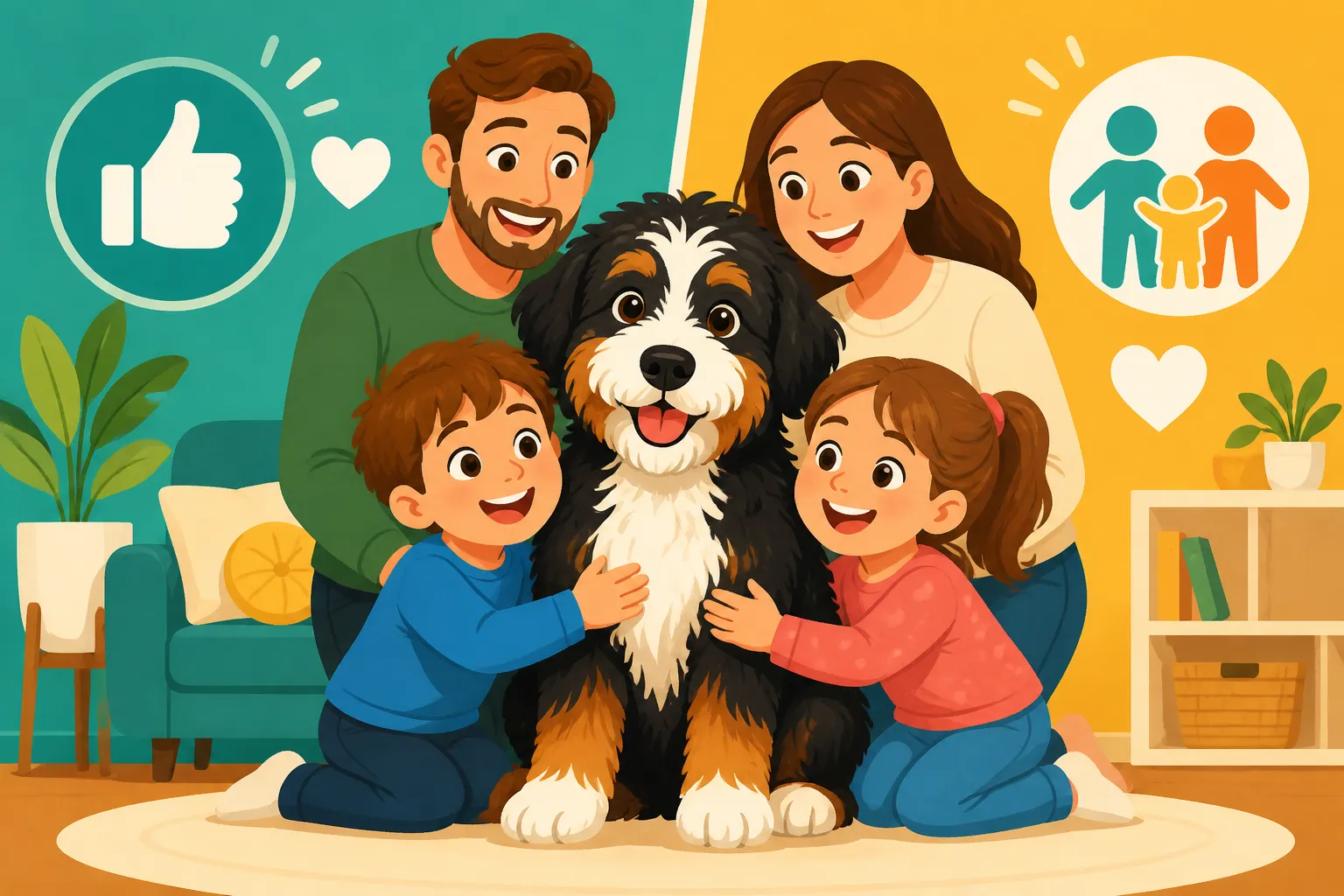
Many Bernedoodles enjoy being close to their people and may form strong bonds with children. They can be cheerful playmates, eager walking companions, and soft, warm presences during quiet family time. But breed tendencies describe possibilities, not promises. A puppy’s behavior is shaped by inherited traits, early experiences, socialization, training, health, and the way people treat the dog.
Even a gentle dog can startle, guard a valued object, or react when hurt or overwhelmed. A toddler may stumble into a sleeping dog, grab an ear, or hug tightly without realizing that the dog needs space. The dog may respond by moving away, growling, or snapping. Those moments are not proof that the dog is “bad”; they are reminders that young children cannot reliably read canine boundaries and need close adult guidance.
If you are preparing for a newborn, it may help to think beyond the sweet photos and plan the daily routine. Where will the dog rest when the baby cries? Who will take the dog out when the parents are exhausted? How will you keep a crawling baby away from food bowls, toys, and a dog’s bed? The article Whether a Bernedoodle Is Gentle With a Baby offers a closer look at that particular transition.
Size and exuberance matter around little children
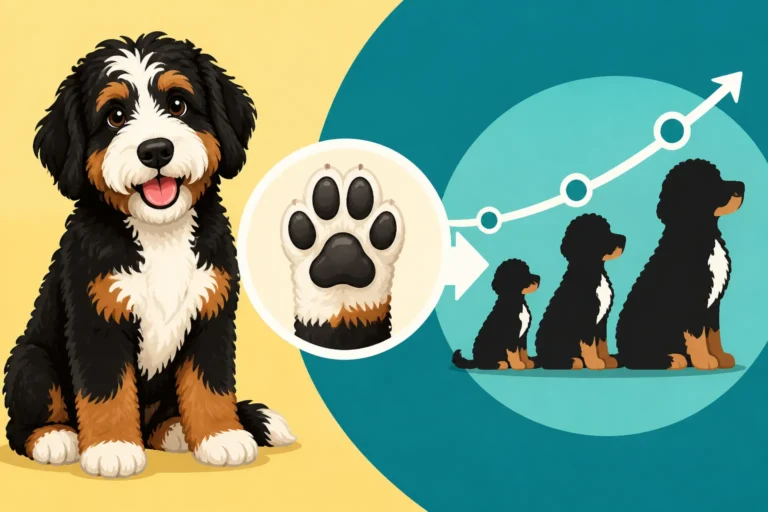
Bernedoodles vary considerably in size. A small dog may be easier to physically manage in a compact home, while a standard Bernedoodle can grow into a large, strong companion. A dog does not need to be aggressive to knock over a toddler: a happy greeting, a quick turn, or a game of chase can be enough. Large paws and an enthusiastic body can be startling even when the dog is trying to play.
Size alone does not decide whether a dog is suitable. A small dog can still nip if frightened, and a large dog can learn to move calmly around children. What matters is the combination of the individual dog’s temperament, the child’s age and behavior, the adults’ ability to supervise, and the household’s ability to provide training and management. For a family comparing options, Which Bernedoodle Size Suits Which Household can help frame the size question in practical terms.
| Family consideration | Why it matters | A practical approach |
|---|---|---|
| Dog size and strength | A playful dog can accidentally bowl over a young child | Teach calm greetings and use gates or separate spaces |
| Child’s age | Babies and toddlers cannot reliably follow safety rules | Keep an adult within immediate reach during interactions |
| Dog’s energy | An under-exercised or overstimulated dog may struggle to settle | Build predictable walks, play, rest, and enrichment into the day |
| Coat care | Brushing and grooming take regular time | Make grooming a routine rather than an occasional scramble |
| Adult availability | Children cannot be responsible for a dog’s care | Assign feeding, walking, training, and supervision to adults |
The family also needs to be comfortable with the ordinary work of owning a Bernedoodle: brushing, grooming appointments, exercise, training, and veterinary care. A fluffy puppy may look manageable, but coat maintenance becomes part of the weekly schedule. Children can help with simple, supervised tasks as they grow, but adults remain responsible for the dog. For a broader picture of what the breed asks from a household, see What a Bernedoodle Asks of a First Time Owner.
Matching a Bernedoodle to Your Child’s Age and Home
Babies need protected space and gradual introductions
A baby and a dog should not be left together unattended, even if the dog has been calm and affectionate for years. Babies move unpredictably, make sudden sounds, and eventually crawl toward things that smell interesting, including dog bowls and toys. Gates, play yards, closed doors, and a dog-only resting area can create safe separation without making the dog feel pushed out of family life.
Prepare the dog before the baby arrives if possible. Practice settling on a bed, responding to a cue such as “come away,” and relaxing behind a gate. Let the dog experience baby-related sounds and changes in household routines gradually, while pairing new experiences with calm, positive rewards. During introductions, keep the dog at a comfortable distance and let the dog choose whether to approach. Avoid forcing a nose-to-nose greeting or placing the baby in the dog’s face.
If the dog is stiff, repeatedly turns away, hides, growls, or appears unable to settle, give more distance and seek qualified help. A growl is useful information that the dog is uncomfortable; punishing it can suppress a warning without changing the underlying feeling. For detailed considerations around small children, read A Standard Bernedoodle and a Small Child.
Toddlers need constant coaching and active supervision
Toddlers are often fascinated by dogs, but their affection can be physically overwhelming. They may run, squeal, reach into a dog’s face, or grab at fur. Adults should stay close enough to intervene immediately, not simply watch from across the room. If you are cooking, answering the door, or caring for another child, use a gate or another safe separation method rather than relying on a toddler to behave perfectly.
Keep interactions simple and brief. Help your child offer a treat with an open palm if the dog is relaxed and the dog’s adult handler agrees. Teach the child to let the dog approach, stroke the shoulder or side gently, and stop when the dog moves away. Do not encourage children to climb on the dog, pull its coat, disturb it while sleeping, or take food and toys from its mouth. The safety concerns in Whether a Bernedoodle Is Safe Around Toddlers apply even when the dog seems exceptionally patient.
A family can make these rules concrete: “Let the dog sleep,” “Call an adult if the dog has a toy,” and “Pet gently, then pause.” Use gates to separate the dog from noisy play or visitors when needed. If your child is old enough to help, involve them in calm activities such as placing a toy on the floor or asking the dog for a familiar cue with an adult beside them. Never make a child responsible for controlling a powerful dog on a leash.
Building Safe Habits Before Problems Start
Train calm greetings and four paws on the floor
A Bernedoodle puppy may not seem strong at first, but a behavior that is adorable at a few months old can become difficult when the dog is full-grown. Teach the dog to greet people with four paws on the floor, move away when called, settle on a mat, and leave dropped items alone. Reward the behavior you want to see, and practice in short sessions when the dog is not already wound up.
For greetings, ask visitors and family members to avoid rewarding jumping with attention. They can turn slightly away, pause interaction, and give attention when the dog is calmer. Children should not be asked to push the dog down or shout commands; that can make the interaction more exciting or intimidating. Teaching a Bernedoodle Not to Jump on Guests covers a useful skill for family visits as well as everyday greetings.
Train in realistic settings, but manage the situation while the dog is learning. A leash, baby gate, or exercise pen can prevent rehearsal of jumping and chasing. Keep treats and toys available for adults to reward quiet behavior. Chewy may be one place families look for basic training supplies such as treat pouches or enrichment toys, but the important part is choosing items suited to the dog and using them consistently.
Socialization should be thoughtful, not overwhelming
Socialization means helping a puppy become comfortable with ordinary sights, sounds, people, handling, and environments. It does not mean allowing every stranger to crowd the puppy or taking the dog into chaotic situations before it is ready. Calm, positive exposure is more helpful than a flood of experiences that leaves the puppy frightened or overstimulated. Socializing a Bernedoodle Before Twelve Weeks is a relevant resource for thinking through early experiences.
Introduce children gradually and supervise every interaction. Let the puppy observe children playing from a distance before expecting close contact. Pair the experience with rewards and breaks. Teach children not to chase, corner, or hug the puppy, and give the dog a quiet place where nobody follows. Socialization should help the puppy feel safe, not teach it that it must tolerate anything people do.
The same approach applies to grooming and handling. A family dog may need regular brushing, paw care, and visits to a groomer. Help the puppy become comfortable with brief, gentle touches and reward calm behavior. If you use supplies from a retailer such as Chewy, introduce brushes, mats, and other equipment gradually rather than turning grooming into a long, stressful session. Stop and seek professional guidance if the dog shows persistent fear or distress.
Deciding Whether a Bernedoodle Fits Your Family
Consider the adults’ time, energy, and support
A young child does not reduce a dog’s needs; it usually makes planning more important. Bernedoodles need exercise, attention, training, coat care, and rest. A household with a baby may find that walks become harder to schedule and grooming gets postponed. A family with school-aged children may have more predictable routines, but sports, work, and school activities can still leave little time for the dog.
Before committing, map an ordinary weekday. Who takes the dog out first thing in the morning? Who handles exercise when a child is sick or a parent is traveling? Where can the dog rest during playdates? Can the family afford regular grooming and arrange care when schedules get tight? These are not signs that a Bernedoodle is unsuitable; they are the practical questions that make a good match more likely. Consider Whether a Bernedoodle Suits a Household That Works and Whether a Bernedoodle Needs Someone Home while planning your routine.
If you are choosing a puppy, remember that puppy behavior can be tiring in a home with small children. House-training, mouthing, chewing, and interrupted sleep require patience and supervision. An adult dog with a known temperament may suit some families better, though an adult dog still needs a careful introduction and time to adjust. Either way, meet the individual dog and ask about its experiences with children, handling, noise, and being separated from people.
Use a realistic readiness checklist
A Bernedoodle may suit your family if the adults are ready to supervise closely, set consistent boundaries, provide daily care, and protect both the dog’s and child’s space. It may be sensible to wait if no adult can manage training and exercise, if the dog would be expected to tolerate rough handling, or if the family cannot provide a safe separation area. Choosing to wait is not a failure; timing can make the experience better for everyone.
Before bringing a dog home, talk through these questions together:
- Can an adult supervise every interaction between the dog and a baby or toddler?
- Is there a quiet, dog-only place where children will not follow?
- Can the adults manage training, exercise, brushing, and grooming even when family life gets hectic?
- Will the dog have a safe way to avoid a child rather than being cornered?
- Does the family have a plan for walks, care, and supervision during busy or stressful days?
- Are all adults prepared to respond calmly to warning signs and seek qualified help when needed?
You may also want to arrange a supervised meeting with a Bernedoodle before deciding, while remembering that one brief visit cannot predict every aspect of life at home. Ask the breeder, rescue, or current caregiver specific questions, and observe whether the dog can relax, recover from surprises, and move away from interaction. Meeting a Bernedoodle in Person First can help you think about what to look for.
A Bernedoodle can become a cherished family companion, but the safest match is not chosen by breed reputation alone. Look at the individual dog, your child’s developmental stage, your available time, and the routines you can maintain. With realistic expectations, active supervision, training, and protected resting space, families can give both children and dogs a much better chance to feel secure together.
Disclaimer
This article is for general informational purposes only and does not constitute professional advice. Laws, prices and regulations vary by location and change over time. Consult a qualified professional for guidance on your specific situation.