Whether Breeders Should Cross Two Merle Bernedoodles
It’s a heart-stopping moment when you first see a Bernedoodle with those stunning merle patterns – swirling grays, blacks, reds, with splashes of white, sometimes even those captivating blue eyes. There’s a definite allure to their unique appearance, which makes them incredibly popular. But beneath that beautiful coat pattern lies a crucial genetic truth that every aspiring Bernedoodle owner and, especially, every breeder needs to understand: the serious dangers of breeding two merle dogs together. This guide will walk you through why crossing two merle Bernedoodles is a practice fraught with severe health risks for the puppies, and why responsible breeders go to great lengths to avoid it.
Understanding the Merle Gene and Its Visuals
The merle gene is a fascinating bit of canine genetics that creates a distinct coat pattern, often characterized by irregular patches of diluted pigment on a solid or piebald base coat. It's not a color itself, but rather a modifier that lightens random sections of the base color, leading to those gorgeous, mottled effects. Think of it like a painter dipping their brush into water, then touching the canvas – the color spreads, but with lighter, faded areas. This gene can also affect eye color, often leading to mesmerizing blue eyes or eyes with flecks of blue within another color.
In Bernedoodles, the merle pattern creates a truly striking look, combining the classic Bernese Mountain Dog tri-color or bi-color patterns with the poodles' potential for dilution. You might see a black tri-color Bernedoodle with splotches of slate gray, or a red merle with lighter, faded patches of red and cream. It’s undeniably beautiful, and it's easy to see why these puppies are so sought after. However, the merle gene also carries a hidden complexity, especially when it comes to breeding. It’s essential to understand that while the merle pattern is visually stunning, the gene itself is associated with much more than just coat color.
The Visuals of Merle in a Bernedoodle Coat
When you see a merle Bernedoodle, you're usually looking at a dog that has inherited one copy of the merle gene. This single copy creates the desired mottled patches, which can range from faint to very distinct. For instance, a blue merle Bernedoodle might have a black base coat with gray splotches, while a red merle would have a liver or red base with lighter red or cream patches. Often, these dogs will have stunning blue eyes, or eyes that appear to be marbled with blue. Some might even have heterochromia, meaning one eye is blue and the other is brown, or partially blue. The white markings from the Bernese side of their lineage can still appear, interacting with the merle pattern to create an even more unique appearance. These visual traits are what make single merle Bernedoodles so popular and why many people are drawn to them.
The appeal of these unique patterns is undeniable, and breeders who responsibly produce merle Bernedoodles understand the genetics to ensure the health of their puppies. They know that getting that desirable What a Merle Bernedoodle Looks Like is all about careful pairing.
Cryptic Merle: The Hidden Danger
One of the trickiest aspects of the merle gene is the existence of "cryptic merle," sometimes called "phantom merle." A dog can carry the merle gene, but it doesn't express visually. This means the dog might look like a solid-colored Bernedoodle, perhaps black or brown, but genetically, they carry a merle allele. This happens when the merle gene is so minimally expressed that it's nearly invisible, or when other genes mask its appearance. The danger here is obvious: a breeder might mistakenly believe they are breeding a solid-colored dog (a non-merle) to a visible merle dog, when in reality, they are inadvertently breeding two merles together.
Without proper genetic testing, a cryptic merle dog can easily be bred to a visible merle, resulting in a "double merle" litter. This is why genetic testing is absolutely critical for any dog involved in a merle breeding program, regardless of their visual appearance. Relying solely on what you see with your eyes can lead to devastating consequences for the puppies, as the double dose of the merle gene dramatically increases the risk of severe health issues. It's a silent threat that only DNA can truly uncover, highlighting the importance of due diligence in breeding.
The Genetic Risks of Breeding Two Merles
This is where the conversation turns serious. While a single copy of the merle gene typically results in a healthy, beautifully patterned dog, inheriting two copies (one from each parent) can lead to what’s known as "double merle" or "homozygous merle." This isn't just about a diluted coat; it's about a double dose of a gene that, in its homozygous state, is known to cause significant health problems. The merle gene affects not only coat color but also cell development in the eyes and inner ears. When a puppy inherits two copies, these developmental processes can be severely disrupted, leading to profound sensory impairments.
The risks associated with double merle are not mild or cosmetic; they are often life-altering for the affected puppies and heartbreaking for their owners. We're talking about irreversible conditions that require extensive care and can significantly impact the dog's quality of life. This is why ethical breeding standards universally advise against breeding two merle dogs together. It’s a preventable tragedy that responsible breeders work diligently to avoid through genetic testing and careful pairing. The consequences are so severe that the practice is widely considered irresponsible and unethical.
Ocular Defects in Double Merles
One of the most common and devastating health issues found in double merle Bernedoodles is a range of severe ocular defects. These can vary in severity but often include microphthalmia, where one or both eyes are abnormally small, sometimes even appearing shrunken or underdeveloped within the socket. This condition usually results in blindness or severely impaired vision. Another common defect is coloboma, which is a hole or gap in parts of the eye, such as the iris or retina, leading to distorted vision or blind spots.
Beyond these specific conditions, double merle dogs are also highly susceptible to other eye abnormalities, including irregular pupils, detached retinas, and even complete lack of eye development. These puppies are born with vision problems that cannot be corrected, profoundly impacting their ability to navigate the world. Imagine a puppy trying to learn and explore when its world is a blurry, distorted mess, or completely dark. It’s a profound challenge that requires immense dedication and specialized care from their families. Ethical breeders consider these risks unacceptable and entirely preventable by avoiding merle-to-merle breedings. Ensuring a puppy has clear eyes free from genetic defects is a fundamental part of responsible breeding, and knowing about The Eye Conditions a Bernedoodle Is Tested For is key.
Auditory Impairments and Deafness
Just as the double merle gene can wreak havoc on eye development, it has an equally significant impact on the inner ear, frequently leading to auditory impairments, ranging from partial hearing loss to complete deafness. The merle gene plays a role in the development of pigment cells in the inner ear, and when two copies are present, these cells can fail to develop properly. This lack of pigment cells (melanocytes) disrupts the delicate structures responsible for hearing.
A double merle Bernedoodle puppy might be born profoundly deaf, making communication and training incredibly challenging. While deaf dogs can live full, happy lives with dedicated owners who learn to use sign language and other visual cues, it is a significant disability that requires a specific environment and a deep understanding from their human companions. It means special considerations for their safety, as they cannot hear cars, warnings, or even their owner's voice calling them back. The potential for deafness is a primary reason why breeding two merle Bernedoodles is considered highly irresponsible, as it knowingly introduces a high risk of this life-altering condition. It is important to know whether a merle Bernedoodle is deaf before committing to a puppy.
Recognizing a 'Double Merle' Puppy
So, how do you spot a double merle puppy? While not all double merles will look exactly the same, there are common characteristics that can indicate a puppy has inherited two copies of the merle gene. Unfortunately, these visual cues are often accompanied by the severe health issues we've just discussed. The appearance is typically a result of an extreme dilution of pigment across their body, often far more pronounced than a single merle dog. It's a crucial thing for buyers to be aware of, especially if they are looking at merle puppies, to ensure they aren't inadvertently supporting unethical breeding practices.
It’s heartbreaking to see these puppies, often so fragile and vulnerable due to the choices made by irresponsible breeders. Being able to recognize the signs means you can make informed decisions and, hopefully, avoid contributing to the demand for dogs bred unethically. The goal is always to support breeders who prioritize health and welfare above all else.
Physical Appearance of Double Merles
The most striking physical characteristic of a double merle Bernedoodle is often an excessive amount of white on their body, particularly on their head and face. This isn't just the white markings you'd typically see from the Bernese side; it's a profound, almost bleached-out look, far beyond what would be considered normal. Their coats might appear almost entirely white, or have large, unpigmented areas. The merle pattern itself might be very diluted or even absent in areas where it would normally appear.
Beyond the coat, look closely at their eyes and nose. Their eyes are frequently pale blue, often lacking the rich pigment of a single merle, and may appear smaller (microphthalmia) or oddly shaped. Their noses and paw pads might also be pink or unpigmented, rather than the dark black or brown you'd expect. These dogs often look very "ghostly" or "pale" compared to their single merle siblings. This extreme lack of pigment is a strong visual indicator of the double merle genetic status and the potential for associated health problems.
Behavioral Signs of Impairment
Observing a double merle puppy’s behavior can also reveal the impact of their genetic conditions. Puppies born deaf might not startle at loud noises, won't respond to their littermates' barks or cries, and may seem disoriented or unaware of sounds around them. They might compensate by relying heavily on their other senses, being very alert to vibrations or visual cues. Sometimes, they might appear unusually calm or even withdrawn, simply because they aren't processing the auditory world.
Puppies with severe vision impairments or blindness will also exhibit distinctive behaviors. They may bump into objects, especially in unfamiliar environments, or have trouble locating toys or food. Their movements might be tentative or hesitant. They might rely heavily on scent and touch to navigate, sniffing constantly and bumping their nose against things. They may also appear less engaged in play with their sighted littermates. Any of these behavioral signs, especially in a puppy with the physical characteristics of a double merle, should raise immediate red flags and prompt a veterinary check-up. Training such a dog will require a dedicated approach, and sometimes even a professional trainer specializing in dogs with special needs, much like when tackling Whether a Bernedoodle Needs a Professional Trainer.
Ethical Breeding Practices for Merle Bernedoodles
Given the severe risks associated with double merle puppies, ethical breeding of merle Bernedoodles hinges entirely on responsible practices. It's not about avoiding merle entirely, as single merle dogs can be perfectly healthy and make wonderful companions. It's about ensuring that two merle genes are never combined in a breeding pair. This requires diligence, knowledge, and a commitment to the health and welfare of every puppy produced. For anyone considering buying a merle Bernedoodle, understanding these practices will help you identify a truly reputable breeder.
A responsible breeder understands that their role is to improve the breed and ensure healthy, well-adjusted companions for families, not to produce puppies with avoidable genetic defects for novelty. They will be transparent about their breeding philosophy and eager to educate potential buyers on the steps they take to prevent double merles. It's about integrity and putting the dogs first, always.
Genetic Testing is Non-Negotiable
For any breeder working with merle lines, genetic testing is not an option; it is an absolute necessity. Before any breeding pair is considered, both prospective parents must undergo DNA testing to determine their merle status. This testing will identify if a dog carries the merle gene (M/m), if they are non-merle (m/m), or in rare and unethical cases, if they are already double merle (M/M). Crucially, this testing can identify cryptic merles – those dogs that visually appear non-merle but genetically carry the gene.
By knowing the genetic merle status of both parents, a breeder can make informed decisions about pairings, guaranteeing that a merle dog is only ever bred to a non-merle dog. This completely eliminates the risk of producing double merle puppies. Any breeder who claims to breed merle Bernedoodles without DNA testing their breeding stock is operating irresponsibly and putting their puppies at severe risk. Always ask for proof of genetic testing for merle, among other health clearances, as it’s a critical component of ethical breeding. This kind of testing is as important as the health clearances outlined in The Five Clearances a Bernedoodle Breeder Should Have.
Responsible Breeding Pairings
The rule for responsible merle breeding is simple and non-negotiable: a merle dog (M/m) must only ever be bred to a non-merle dog (m/m). This pairing ensures that while some puppies in the litter will inherit the single merle gene (M/m) and display the desirable merle pattern, none will inherit two copies of the gene. Every puppy will receive one non-merle gene (m) from the non-merle parent, making it impossible for any puppy to be a double merle (M/M).
| Parent 1 (Merle) | Parent 2 (Non-Merle) | Potential Offspring | Outcome |
|---|---|---|---|
| M/m | m/m | M/m, m/m | 50% Merle, 50% Non-Merle |
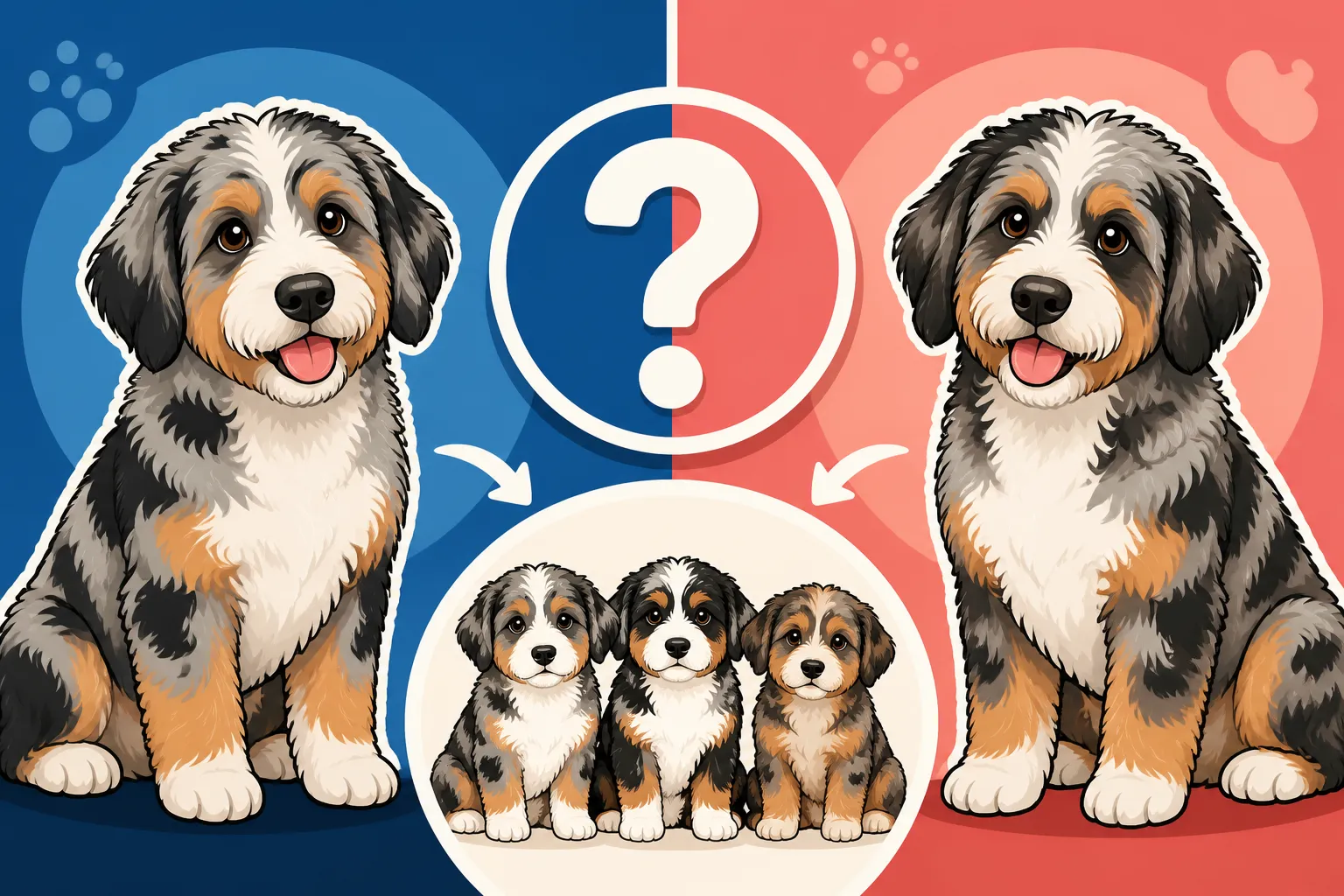
This is the only acceptable pairing when merle is involved. Breeding a merle dog to another merle dog (M/m x M/m) creates a 25% chance of producing double merle (M/M) puppies, along with 50% single merle (M/m) and 25% non-merle (m/m). This 25% risk of severe, preventable health issues is why M/m x M/m breedings are considered unethical. A truly responsible breeder will never engage in such a pairing, prioritizing the welfare of their puppies above all else. This careful selection helps address concerns about Whether Merle Is Safe to Breed in a Bernedoodle.
Breeder Transparency and Buyer Responsibility
When looking for a Bernedoodle, especially a merle one, buyer responsibility goes hand-in-hand with breeder transparency. A reputable breeder will be completely open about their genetic testing protocols and be able to show you the merle test results for both parent dogs. They should be eager to explain why they make certain breeding choices and how they ensure the health of their litters. Don't be shy about asking direct questions: "Have both parents been tested for the merle gene? Can I see the results? What specific steps do you take to avoid double merle puppies?"
If a breeder seems evasive, rushes you, or dismisses your questions about genetic health, that's a major red flag. They should also provide comprehensive health guarantees that cover genetic conditions, which you can then discuss with your veterinarian and potentially your pet insurance provider. Reputable breeders often work closely with veterinarians and can recommend good food choices, perhaps even from a reputable brand like Chewy, knowing that nutrition plays a part in overall health. As a potential owner, it's your duty to educate yourself and ensure you're supporting ethical practices. Never purchase a merle puppy from a breeder who cannot provide documented proof of responsible merle gene testing and breeding practices. Your choice impacts not only your future puppy but also the broader breeding community.
Considerations Beyond Merle for Bernedoodle Health
While the focus here is squarely on the critical importance of avoiding double merle breedings, it's vital to remember that a Bernedoodle's health encompasses much more than just their merle status. These wonderful dogs, being a cross between Bernese Mountain Dogs and Poodles, can inherit genetic predispositions from both parent breeds. Responsible breeders are diligent about screening for a whole host of other conditions to ensure robust health in their puppies.
When you're bringing a Bernedoodle into your family, you're looking for a companion who will be with you for many happy years. This means doing your homework on all aspects of their health, not just one specific gene. A truly ethical breeder will be able to discuss all potential health concerns, provide proof of all relevant health clearances, and be a resource for you throughout your dog's life. It's an investment in a living, breathing family member, and their well-being should always be the top priority.
Common Health Concerns in Bernedoodles
Bernedoodles can be susceptible to several health issues common to their parent breeds. From the Bernese Mountain Dog side, there are concerns like hip and elbow dysplasia, which are painful joint conditions that can severely impact mobility. They can also be prone to certain cancers, like histiocytic sarcoma, which is a particularly aggressive form. Learning about Histiocytic Sarcoma and Whether a Bernedoodle Escapes It is an important part of understanding Bernedoodle health.
From the Poodle side, concerns include Von Willebrand's disease, a bleeding disorder, and certain eye conditions like progressive retinal atrophy. Bloat, or Gastric Dilatation-Volvulus, is another serious concern for large, deep-chested dogs like the standard Bernedoodle, making it important to understand Bloat in a Standard Bernedoodle's Deep Chest. A good breeder will screen for these conditions in their breeding stock and share those results transparently. They understand that a truly healthy Bernedoodle puppy is one whose parents have been cleared of the most common and debilitating genetic diseases, ensuring a better chance at a long, healthy life for your furry friend. You should be informed about Von Willebrand's Disease in a Bernedoodle as well.
The Importance of Health Clearances
Health clearances are documents from certified veterinary specialists confirming that a breeding dog has been screened for specific genetic conditions and found free of them (or to have passed at an acceptable level). For Bernedoodles, this typically includes certifications for hips and elbows (often through organizations like OFA or PennHIP), eye clearances, cardiac screenings, and genetic testing for conditions like Von Willebrand's disease and degenerative myelopathy. Knowing The SOD1 Test Both Bernedoodle Parents Need is critical for preventing degenerative myelopathy.
These clearances aren't just pieces of paper; they are evidence of a breeder's commitment to reducing the incidence of inherited diseases in their lines. A breeder who cannot or will not provide these clearances for both parent dogs should be avoided. It shows a lack of dedication to the long-term health of their puppies and, by extension, to the families who will adopt them. Don't be afraid to ask for these documents and even call the certifying organizations to verify them. It's a vital step in ensuring you bring home a healthy, well-bred Bernedoodle. Many reputable breeders will also recommend specific supplements or food for joint health as a preventative measure, often found readily available on sites like Chewy.
Long-Term Care for Your Bernedoodle
Once you've found a healthy, ethically-bred Bernedoodle puppy, your journey as a responsible owner truly begins. Long-term care involves much more than just feeding and walking; it's about providing a lifetime of appropriate nutrition, exercise, mental stimulation, and regular veterinary care to ensure your Bernedoodle thrives. Even the healthiest puppy can face challenges if not given the right environment and attention.
Bernedoodles are generally robust dogs, but their large size and mix of breed traits mean they have specific needs that should be met consistently throughout their lives. Being prepared for these commitments is part of being a responsible pet parent and ensures that your beloved companion lives the happiest, healthiest life possible. It's a continuous learning process, but one that is incredibly rewarding.
Nutrition and Exercise for a Growing Bernedoodle
Proper nutrition is paramount, especially for a large breed like the standard Bernedoodle. Puppies need a high-quality large breed puppy food that supports slow, steady growth to protect their developing joints. Overfeeding or feeding a diet too high in calcium can lead to developmental orthopedic diseases like Elbow Dysplasia in a Growing Bernedoodle or hip problems. As they transition to adulthood, a balanced diet that maintains a healthy weight is crucial to prevent strain on their joints and organs. Many dog owners find a wide variety of suitable large breed formulas and dietary supplements, such as joint support, available from online retailers like Chewy.
Exercise should be appropriate for their age and size. Young Bernedoodle puppies need playtime and short, controlled walks, avoiding strenuous activities or excessive jumping that could harm their still-developing bones and joints. As they mature, regular moderate exercise, such as daily walks, playtime in a secure yard, and even swimming, will keep them fit and mentally stimulated. While they are energetic, they aren't typically high-strung, and over-exercising them as puppies can do more harm than good. It’s all about finding that happy medium to keep them sound and happy. Understanding Keeping a Ninety Pound Bernedoodle Off Its Joints is key to their longevity.
Regular Veterinary Care and Screenings
Even the most carefully bred Bernedoodle needs consistent veterinary care throughout its life. Regular check-ups are essential for monitoring overall health, administering vaccinations, and performing preventative treatments for parasites. As your Bernedoodle ages, annual screenings may become more comprehensive, including blood work to check organ function and thyroid levels, which can be an issue as detailed in Hypothyroidism From the Bernese Side of a Bernedoodle.
Beyond routine care, it's important to be vigilant for any changes in behavior, appetite, or physical condition. Bernedoodles, like all dogs, can develop health issues as they age, including arthritis or cancer. Early detection through regular vet visits and attentive observation at home can make a significant difference in treatment outcomes and quality of life. Establishing a strong relationship with a trusted veterinarian from the moment you bring your puppy home is one of the best investments you can make in your Bernedoodle's long-term health and well-being. Keeping up with The Screening a Bernedoodle Should Have Yearly is vital.
Disclaimer
This article is for general informational purposes only and does not constitute professional advice. Laws, prices and regulations vary by location and change over time. Consult a qualified professional for guidance on your specific situation.