The Weight a Mini Bernedoodle Settles At
One of the most common questions and sometimes, the biggest source of anxiety for prospective Mini Bernedoodle parents is figuring out just how big their furry friend will get. You fall in love with the idea of a "mini," picturing a certain size, but then you see all these variations and wonder if your puppy will end up closer to a standard or a tiny. It's confusing, and you want to be prepared! This comprehensive guide is here to demystify the adult weight of a Mini Bernedoodle, exploring the factors that play into their final size and offering insights into what you can realistically expect.
Understanding Mini Bernedoodle Sizing Categories
The term "Mini Bernedoodle" itself can conjure a specific image, but the reality is that it represents a range, not a fixed, precise measurement. When breeders talk about minis, they're generally aiming for a dog that's smaller than the traditional Standard Bernedoodle, but still substantial enough to embody the beloved traits of the Bernese Mountain Dog side of the family without being overly delicate. It's a delicate balance, and there are many variables at play, which can lead to quite a bit of overlap and sometimes, delightful surprises.
The "Mini" in Mini Bernedoodle: What it Really Means
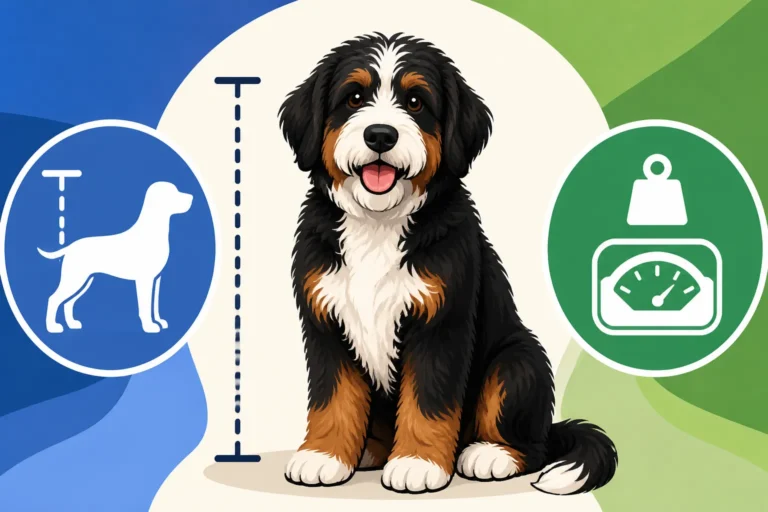
When we say "Mini Bernedoodle," we're generally talking about a dog that will mature to be somewhere between 25 and 50 pounds, with a height ranging from around 18 to 22 inches at the shoulder. This is a significant step down from the Standard Bernedoodle, which often weighs 70 to 90 pounds, and sometimes even more. The "mini" designation usually comes from the Poodle parent involved in the cross, where a Miniature Poodle is bred with a Bernese Mountain Dog, or sometimes with a Standard Bernedoodle to reduce size further in later generations.
It's important to understand that this isn't an exact science like baking a cake. You're working with genetics, and genetics can be wonderfully unpredictable. Two parents within the "mini" range can still produce a puppy that falls outside of it, either a little smaller or, more commonly, a little larger. Breeders strive for consistency, but nature often has its own plans. This is why managing expectations from the outset is so crucial. Don't expect a guarantee, but rather a strong probability within a given range.
Why There's a Range, Not a Fixed Number
The broad weight range for Mini Bernedoodles—25 to 50 pounds—exists because of the genetic diversity inherent in a hybrid breed. You're combining two distinct purebred lines, and while breeders try to select for certain traits, the genetic lottery still plays a significant role. Think of it this way: even in human families, siblings can vary greatly in height and build, despite sharing the same parents. Dogs are no different.
Factors like the size of the individual Bernese Mountain Dog parent and Miniature Poodle parent, not just their breed standards, contribute to the outcome. If a breeder uses a particularly large Miniature Poodle or a smaller-than-average Bernese, it will influence the average size of their Mini Bernedoodle offspring. Furthermore, different generations (F1, F1b, F2, etc.) can also introduce variation. An F1 Mini Bernedoodle (Bernese x Mini Poodle) might have a slightly different average size expectation than an F1b (Mini Bernedoodle x Mini Poodle), which typically aims for a smaller size and potentially less shedding. This is part of the exciting, if sometimes uncertain, journey of welcoming a The Mini Bernedoodle at Twenty Five to Fifty Pounds into your home.
Factors Influencing Your Mini Bernedoodle's Adult Weight
Understanding the factors that contribute to your Mini Bernedoodle's adult weight can help you manage expectations and even influence their healthy growth. It's not just about what the breeder tells you; it's a combination of nature and nurture that shapes your dog's final physique. Getting familiar with these elements will make you a more informed and prepared owner.
The Genetic Blueprint: Parentage and Pedigree
The most significant factor in determining your Mini Bernedoodle's adult weight is, without a doubt, its genetic inheritance. This comes directly from its parents and, to a lesser extent, its grandparents. A reputable breeder will be transparent about the size and weight of both the Bernese Mountain Dog and Poodle parents used in the cross. If both parents are on the smaller side of their respective breed standards, or if they have a history of producing smaller offspring, then your puppy is more likely to fall into the lower end of the Mini Bernedoodle weight range.
Conversely, if one or both parents are larger, or if there's a Standard Poodle in the lineage further back, your "Mini" might surprise you by leaning towards the higher end of the scale, possibly even nudging into what some might consider a small Standard. This is why asking to see the parents, or at least photos and their registered weights, is crucial. Don't be afraid to ask about the typical size of past litters from those parents, if applicable. A good breeder will also have health clearances and often DNA testing available, which indirectly speaks to the quality of the genetic blueprint being passed down.
Nutrition, Growth Rate, and Overall Health
While genetics sets the potential, nutrition and environment play a huge role in how that potential is realized. Overfeeding a puppy, especially a large breed or large-breed-hybrid puppy like a Bernedoodle, can lead to excessively rapid growth. This isn't healthy. Rapid growth can put undue stress on developing joints, potentially contributing to orthopedic issues like elbow or hip dysplasia later in life. This is why careful feeding, using a high-quality large breed puppy formula, is so important. Large Breed Puppy Food for a Standard Bernedoodle might sound like it's for larger dogs, but the principles of controlled growth apply across the size spectrum of Bernedoodles to protect their joints.
Monitoring your puppy's body condition, rather than just its weight, is key. You want to see a lean, athletic build, not a chubby one. Consult with your veterinarian on appropriate food portions and types for your growing Mini Bernedoodle. Regular vet check-ups will also ensure your puppy is growing at a healthy rate and that any underlying health issues that could affect growth are caught early. Things like parasites or chronic illnesses can impact a puppy's ability to grow properly, making overall health a non-negotiable factor. You can find excellent options for large breed puppy food on sites like Chewy, making it easier to provide optimal nutrition.
Predicting Your Puppy's Future Size
When you bring home a fluffy little Mini Bernedoodle puppy, it's hard not to wonder just how big they're going to get. Will they stay small enough for apartment living, or will they need a bit more space? While it's impossible to give an exact number, there are some common methods and observations that can help you estimate their adult weight, though each comes with its own set of limitations.
Puppy Paw Size: A Myth or a Clue?
Ah, the classic "big paws, big dog" theory! This is one of those old wives' tales that gets passed around puppy owners constantly. The idea is that if a puppy has disproportionately large paws for its current body size, it's destined to be a big dog. While there's a tiny kernel of truth in that puppies from larger breeds tend to have larger paws overall, it's far from a reliable predictor for an individual dog's adult weight, especially in a hybrid breed like the Bernedoodle.
A Bernedoodle's growth can be quite uneven. Some puppies might have a growth spurt in their paws before their body catches up, while others might have their body grow more uniformly. Because Mini Bernedoodles are a mix, their growth patterns can be even more varied than a purebred dog. So, while it's fun to look at those big, clumsy puppy paws, don't rely on them as your sole predictor of adult size. For a deeper dive into this, you might want to read Whether Paw Size Predicts a Bernedoodle's Adult Weight. It's far better to look at the genetics and the growth charts we'll discuss next.
Growth Charts and Their Accuracy
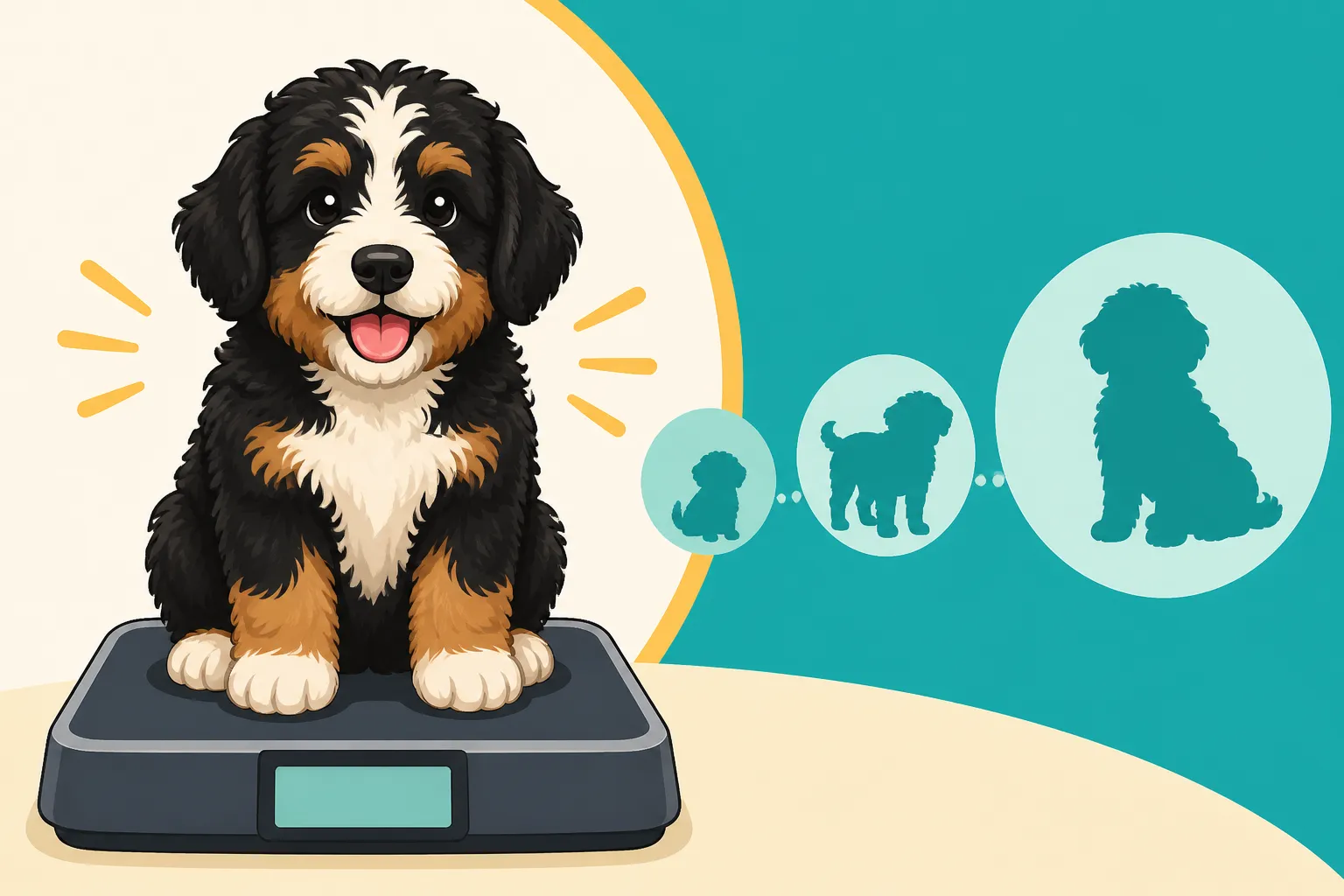
One of the more helpful tools for predicting your Mini Bernedoodle's adult weight is a puppy growth chart. These charts typically track average growth rates for different sizes of dogs. While there isn't a specific "Mini Bernedoodle growth chart," you can use charts designed for medium to large breed dogs as a general guideline. Many vets use these as well. The general rule of thumb for many medium to large breeds is that they reach about half of their adult weight by 4-5 months of age. You can then extrapolate from there.
For instance, if your Mini Bernedoodle puppy weighs 20 pounds at 4 months old, you might estimate an adult weight of around 40 pounds. However, remember this is an estimate. Different bloodlines and individual dogs will grow at different paces. Some might have a slower, steadier growth curve, while others might hit their growth spurts earlier or later. You can also ask your breeder if they have specific growth curves from previous litters from the same parents, which can be a more accurate indicator. Reputable breeders often keep detailed records. Always keep in mind that these charts are guides, not guarantees, and your dog will typically reach its full height around 12-18 months, though they can continue to fill out for another year or so. The Age a Bernedoodle Reaches Full Height provides more insights on this.
| Bernedoodle Size | Expected Adult Weight Range | Expected Adult Height Range (at shoulder) | Key Characteristics |
|---|---|---|---|
| Standard Bernedoodle | 70-90+ pounds | 23-29 inches | Large, robust, ideal for active families with space. |
| Mini Bernedoodle | 25-50 pounds | 18-22 inches | Medium-sized, more manageable for various living situations. |
| Tiny Bernedoodle | 10-24 pounds | 12-17 inches | Small, best for those desiring a smaller companion, typically higher cost. |
This table shows typical ranges, but individual dogs can, and do, fall outside of these averages. It just gives you a general idea of what breeders are aiming for in each category.
Living with a Mini Bernedoodle of Any Size
Bringing a Bernedoodle into your life means embracing a bit of uncertainty when it comes to their final size. Even with all the predictions and genetic information, sometimes Mother Nature has her own plans. What's most important is being prepared for whatever size your beloved companion settles at and ensuring they thrive, regardless of whether they fit perfectly into a size category.
When a Mini Bernedoodle Outgrows Its Size Class
It can definitely be a moment of surprise, or even a slight disappointment, when your "Mini" Bernedoodle puppy starts to grow and keeps on growing, eventually surpassing the expected 50-pound mark and heading towards a weight more typical of a smaller Standard. This isn't uncommon, and it's rarely a sign of anything wrong, but it can certainly change your practical considerations. Perhaps you bought a "mini" specifically for apartment living or because you wanted a dog that was easier to manage on a leash. Whether a Bernedoodle Outgrows Its Size Class is a real concern for many owners.
If your Mini Bernedoodle ends up being a 60-pound dog, that's still a wonderful companion, but it's important to adjust your expectations. This might mean larger dog beds, bigger crates, and potentially more vigorous exercise needs than you initially planned for. It also might mean re-evaluating certain activities. For example, a larger dog might have a higher risk of joint issues if over-exercised when young, so you'll want to be mindful of their developing bones and joints, just as you would with a full Standard. Your focus should shift from a specific number to ensuring your dog is healthy and happy at whatever size they reach. This is also where good nutrition, like selecting appropriate food from a wide selection at Chewy, remains important throughout their growth.
Practical Considerations for a Larger-Than-Expected Mini
So, your Mini Bernedoodle might not be so mini after all. What does this mean for daily life? Well, for starters, expect your budget for things like food to lean towards what a smaller Standard Bernedoodle might consume. More food means more cost, and definitely more trips to stock up! Their larger size might also mean their grooming bills are closer to those of a Standard, as groomers often charge based on size and coat volume.
Beyond finances, consider your living space. A 60-pound dog needs more room to stretch out than a 30-pound one. If you're in an apartment, you'll need to commit even more to daily walks and playtime to keep them adequately exercised. Training becomes even more critical too. A large dog that pulls on the leash or jumps up on guests is much harder to manage than a smaller one. Solid leash manners and impulse control are paramount. On the upside, a larger Bernedoodle often retains that wonderfully goofy, loving personality that makes the breed so appealing, just in a more substantial package. They can still be the perfect family dog, perhaps even better suited for active adventures or simply a more robust snuggle buddy. Don't let a little extra weight deter you from enjoying your amazing companion!
Disclaimer
This article is for general informational purposes only and does not constitute professional advice. Laws, prices and regulations vary by location and change over time. Consult a qualified professional for guidance on your specific situation.