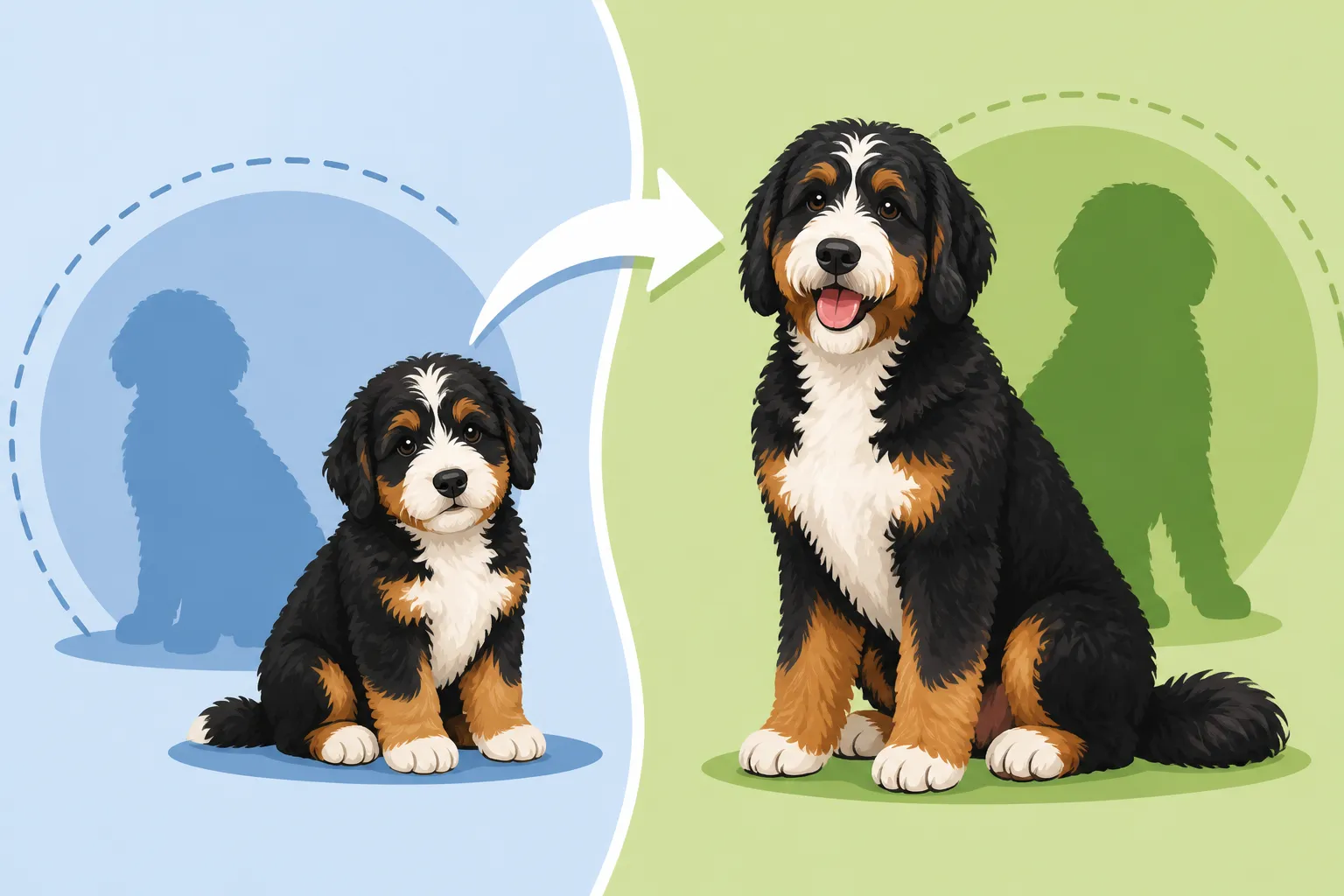
Whether a Bernedoodle Outgrows Its Size Class
It's a common worry for many prospective Bernedoodle parents: you've picked out your adorable fluffball, perhaps expecting a snuggly mini or a stately standard, but a tiny voice in the back of your head whispers, "What if they get bigger?" This guide will delve into the realities of Bernedoodle growth, the factors that influence their ultimate size, and what to do if your beloved companion outgrows its predicted size class.
The Complex Dance of Bernedoodle Genetics and Growth
Bringing home a Bernedoodle puppy is an exciting time, filled with dreams of their future size and temperament. However, the exact adult size of a Bernedoodle isn't always a straightforward prediction. Unlike purebreds, where generations of selective breeding have established relatively consistent size standards, Bernedoodles are a hybrid, which introduces a charming, but sometimes unpredictable, genetic blend.
The Influence of Parentage and F-Generations
A Bernedoodle's genetic blueprint is a fascinating mix of two distinct breeds: the Bernese Mountain Dog and the Poodle. The Bernese is known for its impressive size and sturdy build, while Poodles come in various sizes, from the toy and mini to the standard. The combination means a wide spectrum of possible outcomes.
When we talk about F-generations (like F1, F1b, or Multigen Bernedoodles), we're essentially describing how much of each parent breed's genetics are present and how many generations removed the dog is from the original cross. An F1 Bernedoodle is a direct cross between a purebred Bernese Mountain Dog and a purebred Poodle, meaning it gets a 50/50 genetic split. This generation often has the most variability in size, as it's the first roll of the genetic dice. Some F1s might lean more towards the Bernese side in terms of build and height, while others take after the Poodle.
An F1b Bernedoodle, on the other hand, is usually a cross between an F1 Bernedoodle and a purebred Poodle (or sometimes a Bernese, though less common for size reduction). This backcross typically aims to increase the Poodle's influence, often resulting in a curlier, less shedding coat and a more predictable size, usually smaller than an F1. However, even with F1b or later multigen Bernedoodles, there's always a chance for a genetic wildcard. You might find that one puppy in a litter, despite predictions, carries a little more of that Bernese growth gene than its siblings. It's a bit like human genetics – sometimes a child ends up significantly taller or shorter than both parents, even within the same family.
Predictors: What Breeders Can (and Can't) Tell You
Reputable breeders put a lot of effort into predicting the adult size of their puppies. They'll typically look at the size of the parent dogs, especially the Poodle parent, to give you an estimate. For example, if a standard Poodle is used, you can expect a larger Bernedoodle than if a mini Poodle is involved. Breeders often have charts or formulas they use, based on puppy weight at certain ages, to project adult size. You might hear them talk about paw size as an indicator, but this is often more anecdotal than scientific. A large-pawed puppy might grow into a large dog, but it's not a foolproof guarantee.
The reality is that these are estimates, not promises. Genetics are complex, and even with the best intentions and most thorough understanding, there can be surprises. A responsible breeder will be transparent about this variability. They should provide a range, such as predicting a mini Bernedoodle to be between 25 and 45 pounds, rather than an exact figure. This flexibility acknowledges the inherent unpredictability of hybrid vigor. If you're looking for more insight into how breeders approach this, you might find articles like "Predicting What a Bernedoodle Puppy Will Weigh" very helpful. While breeders strive for accuracy, it's crucial for prospective owners to understand that a Bernedoodle's final size can sometimes fall outside the expected range, a testament to their unique genetic heritage.
Understanding Bernedoodle Growth Spurts and Plateaus
Watching a Bernedoodle puppy grow is like witnessing a magic trick, except it's a very fast one! They sprout up with incredible speed, and sometimes it feels like you can see them getting bigger right before your eyes. Understanding their growth patterns can help you manage expectations and ensure they develop healthily.
The Rapid Early Months
Bernedoodle puppies, especially those destined to be standard-sized, experience incredibly rapid growth during their first 6-8 months. This is when they gain most of their height and a significant portion of their weight. Imagine a tiny fluffball arriving at 8 weeks, weighing just a few pounds, and then skyrocketing to half its adult weight by 4-5 months old. It's astonishing!
During this phase, proper nutrition is absolutely paramount. Large breed puppy formulas are often recommended because they are specifically designed to support the slower, more controlled bone growth necessary for large breeds to develop healthy joints. Overfeeding or feeding a puppy formula not designed for large breeds can sometimes lead to excessive, rapid growth, which can put undue stress on developing joints like hips and elbows. This period of intense growth means you'll be adjusting their food portions frequently. Resources like Chewy offer a wide variety of large breed puppy foods, making it easy to find suitable options to support healthy development. It’s during these months that owners often start to realize if their puppy is trending towards the higher end of their predicted size class.
When Growth Slows and Stops
While the rapid ascent in height generally tapers off around 10-12 months for most Bernedoodles, their growth isn't entirely finished then. Many Bernedoodles, particularly the larger standard variety, will continue to "fill out" or gain muscle mass and girth for several more months, often until they are 18-24 months old. Think of it like a teenager hitting their final growth spurt in height, but then taking a year or two to broaden their shoulders and develop their adult physique.
This filling-out phase means that even if your Bernedoodle has reached its adult height, its weight can still increase, sometimes pushing it into a higher weight category than initially expected. For example, a "mini" Bernedoodle might hit its full height by a year but could then gain an extra 5-10 pounds of muscle and density over the next 6-12 months. Understanding "The Age a Bernedoodle Reaches Full Height" and "The Age a Bernedoodle Finally Settles" can provide a more complete picture of their developmental timeline. This extended growth period is why patience and continuous monitoring of their weight and body condition are important for Bernedoodle owners.
When Expectations Don't Match Reality: Navigating a Larger Bernedoodle
It's a moment many Bernedoodle owners have faced: looking at their strapping young dog and realizing, "Wow, you're a lot bigger than we thought you'd be!" While it might be a delightful surprise for some, for others, it can introduce unexpected challenges.
Adjusting Your Lifestyle and Space
Bringing home a dog that turns out to be significantly larger than anticipated can impact various aspects of your life. For starters, your living space might feel a little more crowded. A tiny Bernedoodle that was supposed to stay under 20 pounds but grows to 35-40 pounds suddenly needs a bigger crate, a larger bed, and more space to comfortably sprawl out on the living room floor. A "standard" Bernedoodle predicted to be 60 pounds might end up closer to 90 pounds, which changes everything from how much room they take up on the couch to whether they fit comfortably in your car.
Consider the practicalities:
- Vehicle Size: That compact SUV might suddenly feel very small when a 90-pound Bernedoodle needs to share the back seat or cargo area.
- Household Items: Their collar and harness will need to be larger, and their toys might need to be more durable to withstand a stronger jaw. Their food bowl will definitely need to hold more.
- Daily Routines: Walks might require more strength on your part if you're managing a larger, stronger dog, leading some owners to invest in specialized harnesses.
- Budget: A larger dog means larger everything – more food, bigger beds, higher grooming costs, and potentially larger doses of medications if needed. When shopping for their daily essentials, whether it's kibble or toys, sites like Chewy can be a lifesaver for finding bulk options or specialized large-dog products.
Health Implications of Rapid or Unexpected Growth
While growth is natural, excessively rapid growth, especially in large and giant breed puppies, can sometimes contribute to developmental orthopedic diseases like hip or elbow dysplasia. This isn't to say a larger-than-expected Bernedoodle is automatically unhealthy, but it does highlight the importance of careful management during their puppyhood.
Overfeeding a large breed puppy can accelerate growth, potentially putting stress on their still-developing bones and joints. This is why following a veterinarian's guidance on appropriate large breed puppy food and portion sizes is so crucial. Articles like "Whether Overfeeding a Bernedoodle Puppy Damages Its Joints" underscore these concerns. Additionally, a heavier dog, regardless of its size class, will naturally put more strain on its joints over its lifetime. This might mean you need to be more proactive with joint support as they age. Thinking ahead to "Whether a Bernedoodle Needs Joint Supplements From Young" could be a conversation to have with your vet, particularly if your Bernedoodle is charting a course to be on the larger side. Regular vet check-ups are essential to monitor their growth and ensure their weight is healthy for their frame, not just their age. This is where pet insurance, like plans offered by Healthy Paws, can provide peace of mind for covering unexpected veterinary costs that can arise with any dog, especially larger ones prone to certain orthopedic issues.
Breeder Contracts, Guarantees, and Managing Disappointment
When you've meticulously planned for a specific size of Bernedoodle, discovering your puppy is growing beyond that can be a source of frustration or even disappointment. It's important to understand what breeders can realistically offer in terms of size guarantees and how to manage your expectations.
What a Size Guarantee Might Entail
Let's be upfront: a true, ironclad size guarantee from a breeder is a rare find, and frankly, it's often a red flag. Responsible breeders know that predicting the exact adult size of a hybrid breed like a Bernedoodle is more of an art than a science, even with all the genetic information available. What you might see in a breeder contract is a guarantee of a size range, for example, "this puppy is expected to mature between 40-60 pounds." If your dog significantly falls outside that range (say, a 40-60 pound predicted dog grows to 85 pounds), some very rare breeders might offer a partial refund or a future puppy discount. However, this is far from standard. Most contracts focus more on health guarantees for genetic conditions, which is arguably much more important.
It's critical to read any breeder contract very carefully and ask explicit questions about size predictions. Understand that a "mini" puppy might still grow to the larger end of the mini spectrum, or even creep into a small standard size. Don't be afraid to discuss hypotheticals with your breeder: "What happens if this 'mini' puppy reaches 65 pounds?" Their answer will tell you a lot about their integrity and approach. For more on this, the article "Whether a Breeder Refunds an Oversized Bernedoodle" directly addresses this specific concern. Ultimately, the best breeders will emphasize health and temperament over precise size predictions, because a healthy, well-adjusted companion is truly priceless, regardless of a few extra pounds.
The Emotional Side of an "Oversized" Companion
It's okay to feel a bit of disappointment if your Bernedoodle doesn't quite match the size you envisioned. Perhaps you live in a small apartment and were hoping for a mini, only to find you have a small standard on your hands. Or maybe you wanted a lap dog and ended up with a canine companion that covers the entire couch. These feelings are valid, but it's important to move past them quickly and focus on the wonderful dog you have.
Remember, your Bernedoodle doesn't know its "size class." It just knows it loves you. The bond you build with your dog transcends inches and pounds. Focus on adapting your environment and routines to suit their actual size. This might mean investing in a larger dog bed (maybe from a brand like Ollie, known for their quality pet products), adjusting your walking routes for their energy levels, or learning new grooming techniques for a larger coat. Most importantly, continue to shower them with love and consistent training. A slightly larger Bernedoodle is still the same loving, goofy, loyal companion you brought home. If you're concerned about unexpected health issues that sometimes accompany larger dogs, especially with those beautiful Bernese genetics, remember that proactive veterinary care and a good pet insurance policy, such as those from Healthy Paws, can help manage potential future costs and give you peace of mind.
No matter their final dimensions, a Bernedoodle is a commitment of love and care for over a decade. Embracing them for who they are, rather than for a size expectation, is the most rewarding path.
Bernedoodle Size Class Comparison Table
To give you a clearer picture, here's a general guide to Bernedoodle size classes. Remember, these are broad ranges, and individual dogs can vary.
| Size Class | Typical Weight Range (Adult) | Typical Height Range (Adult, at shoulder) | Primary Poodle Parent Size Used |
|---|---|---|---|
| Tiny/Micro | 10-24 lbs | 12-17 inches | Toy/Mini Poodle |
| Mini | 25-49 lbs | 18-22 inches | Mini/Small Standard Poodle |
| Standard | 50-90+ lbs | 23-29+ inches | Standard Poodle |
These are approximations, and some breeders might have slightly different ranges or additional classifications like "small standard" or "medium."
Disclaimer
This article is for general informational purposes only and does not constitute professional advice. Laws, prices and regulations vary by location and change over time. Consult a qualified professional for guidance on your specific situation.