Whether a Breeder Refunds an Oversized Bernedoodle
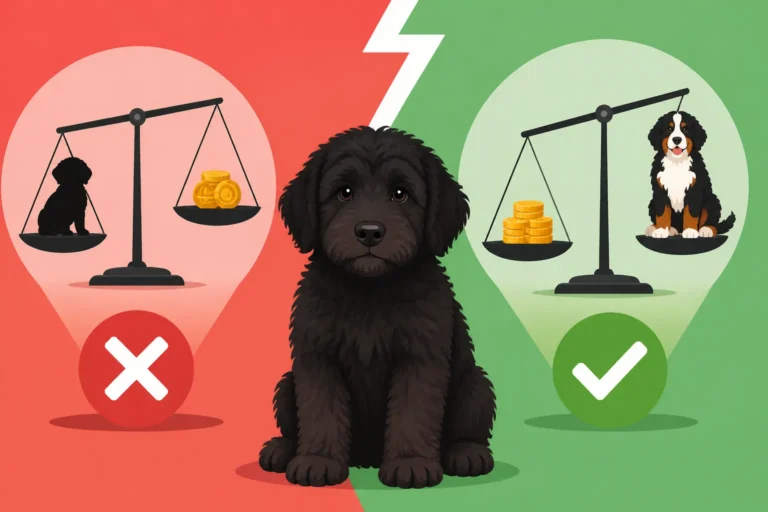
It’s a scenario that can weigh heavily on the heart (and the wallet): you bring home that adorable Bernedoodle puppy, dreaming of a certain size – perhaps a mini that fits perfectly into your city apartment or a standard that still feels manageable. You might have even paid a premium, expecting a specific adult weight. But then, as the weeks turn into months, your little fluffball just keeps growing and growing, sailing right past the breeder’s projections and often into the next size category. This guide is here to walk you through the complexities of breeder contracts, size guarantees, and what your options might be if your beloved Bernedoodle grows to an unexpected size.
The Unpredictable Nature of Bernedoodle Size
Bringing a Bernedoodle into your life is an exciting journey, and often, prospective owners have a very clear vision of what their adult dog will be like, especially when it comes to size. It's understandable; a tiny Bernedoodle requires different living arrangements and budgets than a standard one. Many people specifically seek out mini or tiny Bernedoodles because they believe these sizes are more manageable, both in terms of physical space and the daily demands of a large dog. The problem is, these adorable hybrids, while wonderful companions, come with an inherent genetic lottery when it comes to their final stature.
Breeders do their best to estimate adult size based on the parents' genetics, previous litters, and growth charts, but it's never an exact science. You might have seen breeders advertise a range like "25-45 pounds" for a mini, or "under 25 pounds" for a tiny. The desire for these smaller sizes is so strong that they often command a higher price tag. This can make it even more frustrating when your puppy grows beyond those carefully chosen parameters, feeling like you’ve paid for something you didn’t quite get. It’s not just about the numbers on a scale; it’s about the mental picture you had, the space you planned, and the budget you allocated.
Why Bernedoodle Sizes Are Hard to Pin Down
Unlike purebred dogs where generations of selective breeding have created a fairly predictable size range, Bernedoodles are a crossbreed. They inherit genes from both the sturdy Bernese Mountain Dog and the often more slender, but variable-sized, Poodle. This genetic mix can lead to a lot of variation, even within the same litter. You might see one puppy from a "mini" pairing shoot up to the size of a smaller standard, while a littermate stays perfectly within the mini range.
The breeder can examine the size of the parent dogs and even grandparent lines, but recessive genes and the complex interplay of growth hormones can throw a curveball. A Bernedoodle puppy's growth isn't always linear, either. Sometimes they hit unexpected growth spurts, or they might just keep adding weight and height longer than anticipated. It’s this very unpredictability that makes some breeders hesitant to offer strict size guarantees. They can offer an educated guess, but Mother Nature often has the final say. Understanding Predicting What a Bernedoodle Puppy Will Weigh involves looking at multiple factors, none of which are foolproof.
The Financial Implication of Size Premiums
It’s no secret that the smaller Bernedoodle sizes often come with a premium price tag. People are willing to pay more for a "tiny" or "mini" partly due to demand and partly because the breeding process for these sizes can be more involved, sometimes requiring multiple generations to consistently downsize. This means that if you've paid a significant amount for what you were told would be a 25-pound dog, only to have it grow to 60 pounds, it feels like a double whammy. You paid for a specific outcome, and the cost difference between, say, What a Mini Bernedoodle Runs at Twenty Five Pounds and a standard can be substantial.
This financial expectation creates a unique frustration. It’s not just about getting a bigger dog; it’s about feeling like the investment didn't match the final product. You might have chosen a Bernedoodle over a purebred Bernese precisely for the "manageable size," and when that promise isn’t met, it’s fair to feel a sense of disappointment. After all, the cost of ownership, from food to grooming, scales with size, which further compounds the unexpected financial burden. Understanding Why the Smallest Bernedoodles Cost the Most highlights this investment.
Breeder Contracts and Size Discrepancies
When you purchase a Bernedoodle, especially from a reputable breeder, you'll almost certainly sign a contract. This document is the cornerstone of your agreement and lays out everything from health guarantees to spay/neuter clauses. When it comes to size, this contract is where you need to look for any explicit guarantees or, more commonly, disclaimers. Many buyers, in the excitement of getting a puppy, might skim over these details, only to find themselves revisiting them with a rapidly growing pup.
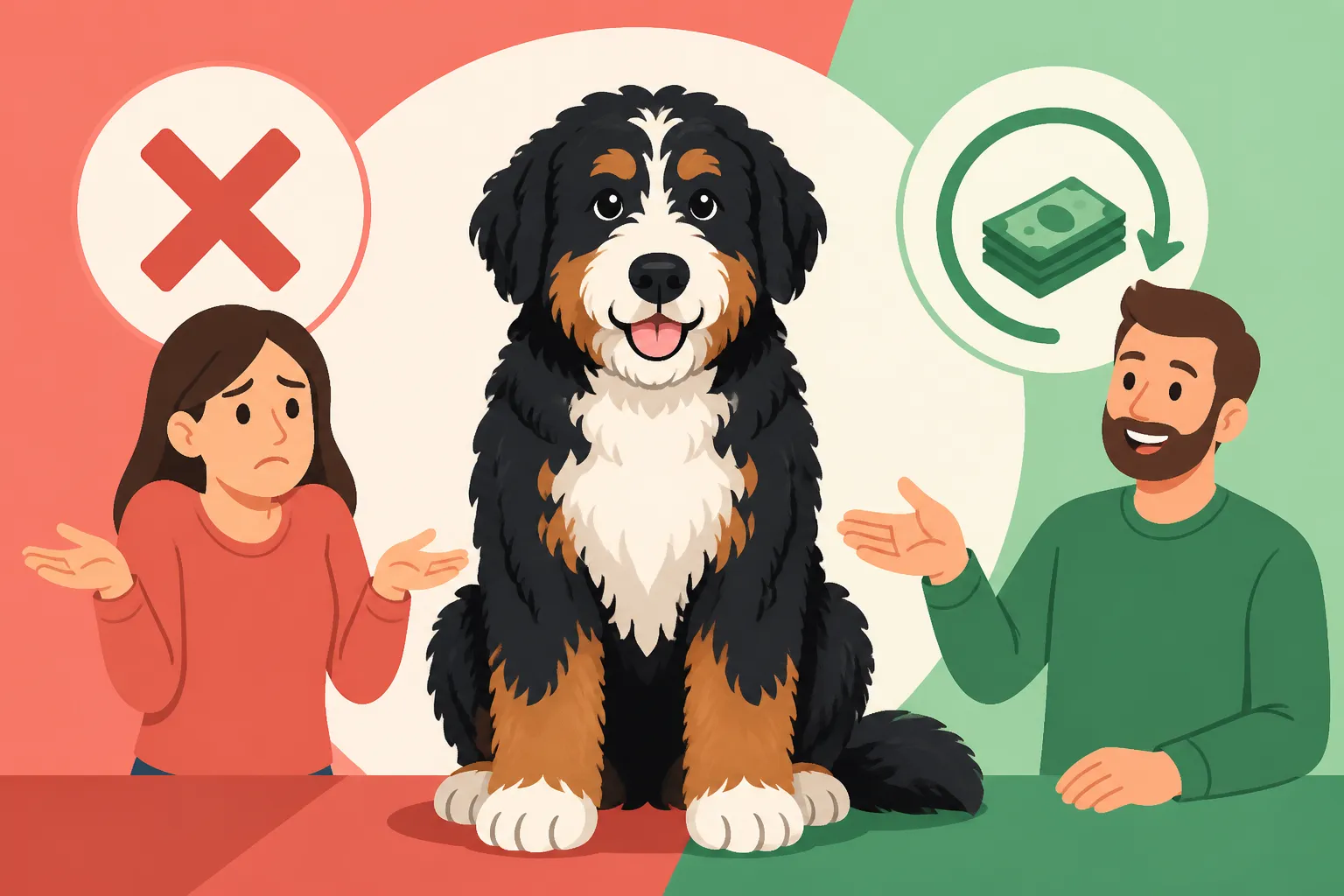
The reality is that very few breeders offer a hard and fast "size guarantee" that promises a full refund if your puppy exceeds a certain weight. The genetic unpredictability makes such a guarantee a huge liability for them. Instead, you'll often see clauses that state size is an "estimate" or provide a wide weight range that allows for significant variation. It’s important to understand the legal and practical implications of these clauses.
Deciphering the Breeder's Guarantee (or Lack Thereof)
A crucial point is whether the breeder's contract explicitly mentions a size guarantee. Many contracts, even those from excellent breeders, will state something to the effect of: "Adult size is an estimate based on parent weights and past litters; no guarantee on adult weight or height is provided." If this is the case, you have little to no recourse for a refund based purely on your dog's size. It's a risk you implicitly agreed to take when you signed.
Some breeders might offer a "range" (e.g., "expected to be between 40-60 pounds"). If your dog falls outside this stated range, you might have a stronger case, but even then, the specific remedy (if any) would need to be detailed in the contract. A full refund is incredibly rare, as the breeder has already incurred costs, and more importantly, you've formed a bond with the animal. For more on what these agreements should cover, read about Whether Size Is Guaranteed in a Bernedoodle Contract.
What a "Health Guarantee" Covers
While size guarantees are rare, health guarantees are standard practice among reputable Bernedoodle breeders. These guarantees typically cover congenital and hereditary diseases for a certain period, usually the first one or two years of the dog's life. Issues like hip and elbow dysplasia, heart conditions, or certain genetic disorders are often included. However, an oversized Bernedoodle, in itself, is generally not considered a "health defect" covered by these clauses unless its size leads directly to a debilitating health issue within the warranty period (which is a harder case to prove).
It’s important to differentiate. A dog growing larger than expected isn't a disease. While a larger dog might have different health considerations down the line (e.g., increased strain on joints for a massive dog), the size itself isn't usually covered. Therefore, if your concern is purely about the dog’s weight, a standard health guarantee probably won't offer a remedy. Knowing What a Bernedoodle Health Guarantee Covers is vital, but often it's not applicable to size.
Navigating a Size Discrepancy with Your Breeder
Finding your Bernedoodle growing larger than the breeder’s projection can be disheartening. The first step, before you even consider asking about a refund, is to honestly assess your feelings about your dog. By this point, your Bernedoodle is a member of your family, and that bond often outweighs any financial disappointment. If you’re truly struggling with the unexpected size, open communication with your breeder is key, but temper your expectations regarding a full refund.
Most breeders operate on good faith and genuinely want their puppies to find happy homes. They also understand the investment you've made. While a full refund for size is highly unlikely, there might be other avenues for resolution or support, especially if the size discrepancy is significant and clearly outside any reasonable expectation or stated range in the contract.
The Art of Communication and Documentation
If your Bernedoodle has grown significantly larger than anticipated, and you feel the breeder’s original estimates were misleading, gather your evidence. This includes your purchase contract, any written communications (emails, texts) where size was discussed, and current photos and weight measurements of your dog. A vet’s assessment of your dog’s weight and projected adult size can also be valuable.
Approach your breeder calmly and professionally. Explain your concerns, referencing the initial discussions and contract clauses. Focus on the impact the size has had on your planning (e.g., "we bought a small crate and now need a jumbo," or "we budgeted for mini-dog food costs, and now the bills are much higher"). Avoid accusatory language; instead, seek a collaborative solution. Most breeders would prefer to resolve issues amicably rather than have an unhappy customer. For instance, if your "mini" is clearly becoming a "standard" size, this is when you might address Whether a Bernedoodle Outgrows Its Size Class with them.
Potential Resolutions Beyond a Full Refund
It's important to be realistic. A breeder almost certainly won't take your dog back or give you a full refund simply because it's bigger than you wanted. The emotional bond and the practicalities make this unfeasible. However, a breeder might be willing to offer other forms of compensation or support:
- Partial Refund or Credit: Some breeders might offer a small partial refund, perhaps equivalent to the price difference between the size you expected and the size your dog is becoming. Alternatively, they might offer a credit towards a future puppy, though this may not be practical for you.
- Assistance with Costs: They might offer a discount on future grooming at their facility (if applicable) or a small stipend towards the increased cost of food. For example, if you're now feeding a much larger dog, the monthly food bill from a brand like Chewy or Ollie can increase substantially.
- Guidance and Support: Sometimes, just having the breeder acknowledge your frustration and offer advice on managing a larger dog can be helpful. They might have tips for training or care specific to their lines.
Remember, the aim is usually to find a solution that helps alleviate your unexpected burden, not to undo the purchase. The true value of your Bernedoodle as a family member transcends any size discrepancy.
Table: Common Breeder Approaches to Bernedoodle Size
| Aspect | Breeder's Standard Practice | Impact on Buyer | Potential Resolution (if significant discrepancy) |
|---|---|---|---|
| Size Promise | "Estimate based on parents," "Expected range," "No guarantee." | Unpredictable adult size. | Rarely a full refund. |
| Contract Clause | Disclaimer regarding adult size. | Limited to no legal recourse for size alone. | Partial refund, credit for future puppy (rare). |
| Price Variation | Smaller sizes often command higher prices. | Financial disappointment if paid for smaller size. | Possible difference reimbursement (partial). |
| Health Guarantee | Covers genetic health issues, not size. | Size-related costs (e.g., more food) not covered. | None directly, but general advice may be offered. |
| Ethical Approach | Reputable breeders value satisfaction, but within reason. | Communication is key for any discussion. | Good will gestures, advice, minor discounts. |
Embracing Life with an Unexpectedly Larger Bernedoodle
Once the initial surprise and perhaps frustration over an oversized Bernedoodle fade, the reality sets in: you have a wonderful, loving dog, regardless of its size. The Bernedoodle personality – often goofy, affectionate, and loyal – shines through irrespective of whether it's a 30-pound mini or a 90-pound standard. Most owners quickly realize that the joy and companionship their dog brings are far more important than a few extra pounds or inches.
However, embracing a larger Bernedoodle does come with practical considerations. Your life might need some adjustments, and your budget certainly will. But with the right approach and a lot of love, you can ensure your big Bernedoodle lives a full and happy life.
Adjusting to a Larger Dog's Needs
A bigger Bernedoodle means bigger everything. Your puppy might have started in a modest crate, but now you need a heavy-duty one that can comfortably house a ninety pound Bernedoodle. Their caloric needs will be higher, meaning more dog food. Brands like Chewy offer large bags of high-quality kibble, and companies like Ollie provide fresh food tailored to a dog's specific weight and activity level, which for a bigger dog, means larger portions and a higher monthly cost.
Grooming is another area where size really makes a difference. What a Full Groom Costs on a Ninety Pound Bernedoodle can be substantially more than for a mini, simply because there's more coat to contend with, and it takes longer. You'll need bigger brushes, a larger grooming table if you do it yourself, and more shampoo. Think about everything from collars and harnesses to dog beds and even the size of your vehicle – a giant Bernedoodle needs space!
Health Considerations and Preventative Care
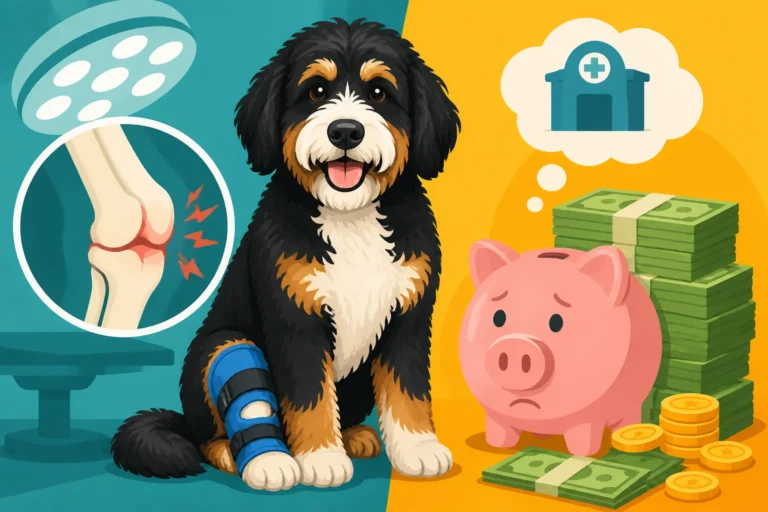
Larger dog breeds, including standard Bernedoodles, can be prone to certain joint issues like hip and elbow dysplasia, as well as bloat. While these are concerns for all Bernedoodles, the sheer weight of a larger dog can exacerbate them. It becomes even more crucial to ensure your dog maintains a healthy weight; Whether an Overweight Bernedoodle Loses Years is a stark reminder of the impact of extra pounds on joint health and overall lifespan.
Consider preventative measures like quality large-breed dog food, appropriate exercise that doesn't overtax growing joints, and potentially joint supplements as they age. Investing in pet insurance from providers like Healthy Paws can also be a wise decision. While it might not cover existing conditions, it can offer peace of mind for future accidents, illnesses, or unexpected surgeries that could arise, especially for a large breed with potentially higher vet bills.
Redefining Your Lifestyle and Expectations
Ultimately, an oversized Bernedoodle challenges your initial expectations, but it also invites you to adapt and embrace the dog you have. Instead of focusing on the size you thought you were getting, shift your focus to the wonderful companion who shares your life. You might need to adjust your exercise routines, perhaps finding new walking trails or dog parks that accommodate a larger, more active dog. Your living space might feel a little tighter, but creative solutions can make it work.
The love and loyalty a Bernedoodle offers are boundless, regardless of whether they fit neatly into a "mini" or "standard" box. Many owners find that their "oversized" Bernedoodle becomes even more endearing, a testament to the fact that sometimes the best things in life come in unexpected packages. Learning to manage the needs of a larger dog, and even exploring topics like Keeping a Standard Bernedoodle Sound Past Ten for long-term health, becomes part of the journey. What started as a size discrepancy often blossoms into a beautiful, unconditional bond.
Disclaimer
This article is for general informational purposes only and does not constitute professional advice. Laws, prices and regulations vary by location and change over time. Consult a qualified professional for guidance on your specific situation.