Whether Size Is Guaranteed in a Bernedoodle Contract
It’s a tale as old as time for many hopeful Bernedoodle owners: you fall in love with a fluffy puppy, get an idea of its future size from the breeder, and then watch anxiously as it grows, sometimes dramatically exceeding or falling short of those initial expectations. This common frustration often leaves owners wondering if the size listed in their breeder contract holds any real weight, especially if their once-miniature darling is now on its way to becoming a standard-sized couch potato. This guide will delve deep into the realities of Bernedoodle size predictions, what breeders can and cannot guarantee, and how to navigate those crucial contract details to set realistic expectations for your furry family member.
The Tricky Terrain of Bernedoodle Size Prediction
Bringing home a Bernedoodle puppy is an exciting time, filled with dreams of a perfectly sized companion. But the truth is, predicting the exact adult size of a mixed breed like a Bernedoodle, which combines the substantial Bernese Mountain Dog with the versatile Poodle, is far more art than science. Many new owners feel a pang of worry as their adorable furball seems to be growing at an exponential rate, or perhaps not quite hitting the growth milestones they anticipated.
Why Pinpointing Bernedoodle Size is More Complex Than It Seems
Unlike purebred dogs where generations of selective breeding have established relatively predictable size ranges, Bernedoodles are a hybrid. This means they inherit a fascinating, sometimes unpredictable, blend of genetics from two very different parent breeds. The Bernese Mountain Dog is known for its impressive size, often reaching 70 to 115 pounds, while Poodles come in Standard, Miniature, and Toy varieties, ranging from under 10 pounds to over 70 pounds. When these two genetic blueprints combine, the outcome can vary significantly, even within the same litter.
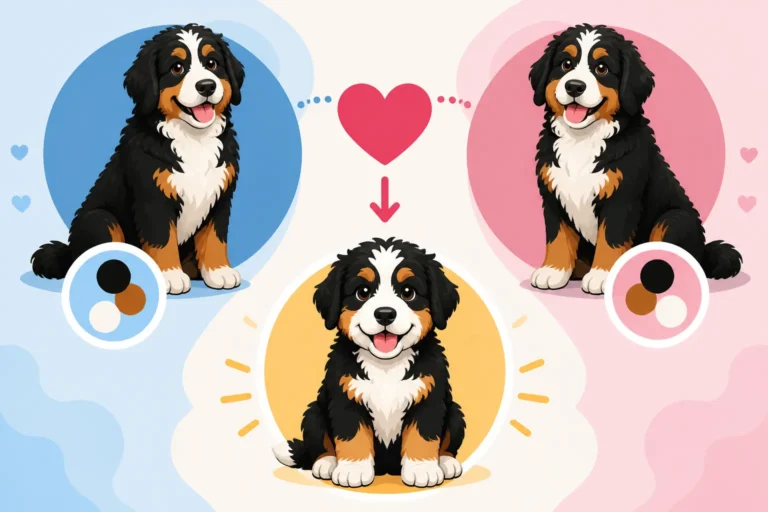
Think of it like this: your Bernedoodle puppy gets a mix of genes from both sides. One pup might inherit more of the Bernese "big dog" genes, growing surprisingly large, while another from the same litter might take after its Poodle lineage more, staying on the smaller side. Factors like the specific generation (F1, F1b, Multigen) also play a role, as further generations might stabilize some traits, but never entirely eliminate the variability inherent in a crossbreed. Breeders do their best by looking at the parent dogs, grandparents, and previous litters, but nature always holds a few surprises. It's not uncommon for a "Mini" Bernedoodle to creep into the lower end of the "Standard" range, simply because of that genetic lottery.
Navigating the Bernedoodle Size Categories and Their Fuzzy Boundaries
Bernedoodles are typically categorized into three main sizes: Standard, Mini, and Tiny (sometimes Micro). These classifications are generally based on the size of the Poodle parent used in the cross, but the actual adult weight and height can still fall into a wide spectrum.
- Standard Bernedoodle: Usually bred from a Standard Poodle and a Bernese Mountain Dog. They generally weigh 70-90+ pounds and stand 23-29 inches at the shoulder. However, it's not unheard of for them to hit 100 pounds or more, especially males. If you're hoping for a specific size within this range, say on the lower end, an unexpected jump to the higher end can be quite a shock.
- Mini Bernedoodle: Resulting from a Miniature Poodle and a Bernese, these dogs typically range from 25-49 pounds and 18-22 inches. This category, in particular, often sees significant variability. An owner might be expecting a dog around 30 pounds, only to find their "mini" is pushing 55 pounds. This is especially impactful for families who specifically chose a mini for apartment living or ease of travel.
- Tiny/Micro Bernedoodle: Bred using a Toy Poodle and a Bernese (or often, a Mini Bernedoodle breeding back to a Toy Poodle), these are usually under 25 pounds and under 18 inches. Again, a "Tiny" Bernedoodle can easily land at the top of its range, sometimes reaching 28-30 pounds, which, while still small, isn't quite the "micro" size some owners envision.
The reality is that these categories are guidelines, not strict demarcations. Breeders often provide an estimated adult weight and height, usually a range, based on the parents and their breeding experience. It's vital to understand that an estimate, even an educated one, is not a guarantee. The joy of a Bernedoodle is often their unique blend of traits, but this also means embracing a certain level of delightful unpredictability when it comes to their ultimate size. If you're curious about individual growth, you might find insight in articles like Whether a Bernedoodle Outgrows Its Size Class, which explores how puppies can sometimes exceed or fall short of initial projections.
Demystifying Breeder Contracts and Size Guarantees
When you commit to bringing a Bernedoodle into your home, you'll almost certainly sign a contract with your breeder. This document outlines various agreements, from health guarantees to return policies. But what exactly does it say, or not say, about your puppy's eventual size? It’s a common misconception that a breeder can definitively guarantee a Bernedoodle will hit a precise weight or height.
What Constitutes a "Size Guarantee" in a Breeder Contract?
In most reputable breeder contracts, an explicit, hard-and-fast "size guarantee" is rare, and for good reason. As we've discussed, the genetics of a hybrid breed make such a promise almost impossible to uphold with 100% accuracy. What you're far more likely to see are terms like "estimated adult weight," "expected size range," or "projected mature height." These are based on the breeder's experience with the parent dogs, their lineage, and prior litters.
For example, a contract might state: "Puppy's estimated adult weight is 40-50 pounds." This is the breeder offering their best guess, but it rarely comes with a clause for recourse if the dog ends up being 60 pounds. Some breeders might offer a vague clause about "significant deviation," but this is often left open to interpretation and could be difficult to enforce. A true guarantee would need to specify a precise deviation percentage or poundage that triggers a specific remedy, such as a partial refund or future puppy credit. Without such specific language, it's highly unlikely that the estimated size is legally binding in the way many owners might hope.
It's crucial for prospective owners to scrutinize these clauses. If a breeder does offer a "size guarantee," ask for clarification: What constitutes a deviation? What is the remedy? Is it a full refund, a partial refund, or the option for another puppy? And are there any conditions attached, such as specific feeding protocols or veterinary check-ups required to prove the deviation wasn't due to owner care? Most often, what sounds like a "guarantee" is simply the breeder's best, albeit sometimes imperfect, prediction.
The Legal Framework Around Breeder Agreements
The enforceability of a breeder contract, particularly regarding size, can vary significantly depending on local laws and the specific wording of the agreement. Generally, for a clause to be legally enforceable, it needs to be clear, unambiguous, and specify remedies for breach. Vague terms like "will be a small Mini" are rarely strong enough to stand up in court.
Furthermore, most breeder contracts prioritize health guarantees over size. They are far more likely to offer remedies for genetic health conditions than for a dog that simply grew a bit larger than expected. This makes sense from a legal perspective: health conditions are often diagnosable and can incur significant veterinary costs, whereas size is a subjective preference unless it poses a specific physical limitation.
It's also important to remember that breeders are running a business, and while they want satisfied customers, they also need to protect themselves from claims that are difficult to prove or are beyond their control. A significant deviation in size that genuinely impacts an owner's ability to keep the dog (e.g., a "Tiny" Bernedoodle growing into a "Standard" when the owner lives in a 500 sq ft apartment with strict weight limits) might be grounds for discussion, but without clear contractual terms, it becomes a goodwill negotiation rather than a legal right. This is why clear communication with your breeder upfront is paramount.
Key Influencers on a Bernedoodle's Mature Size
While a breeder's estimate is a starting point, several factors actually contribute to how big your Bernedoodle will get. Understanding these can help you better assess your puppy's potential growth, even if your contract doesn't offer an iron-clad size guarantee.
Genetics: The Primary Driver of a Bernedoodle's Stature
Without a doubt, genetics play the most significant role in determining your Bernedoodle's adult size. This isn't just about the immediate parents but also the lineage stretching back several generations. The size of the Poodle parent (Toy, Mini, or Standard) sets the general trajectory, but the Bernese contribution is equally powerful.
- Parental Influence: Look at the size of both the Bernese Mountain Dog and the Poodle parents. Are they at the upper or lower end of their breed's typical size range? If both parents are larger examples of their types, there's a higher probability their offspring will also be on the larger side. Conversely, smaller parents tend to produce smaller offspring.
- Generational Blending: An F1 Bernedoodle (50% Bernese, 50% Poodle) often has more unpredictable size variations due to the direct mix of two distinct breeds. An F1b (75% Poodle, 25% Bernese, typically a Bernedoodle bred back to a Poodle) might lean more towards the Poodle's size, depending on the size of that Poodle. Multigenerational Bernedoodles, where Bernedoodles are bred to other Bernedoodles, can offer slightly more predictability if breeders have consistently selected for certain sizes over generations, but the variability is still there. For a deeper dive, consider articles like Whether the Poodle or the Bernese Sets a Bernedoodle's Size.
- Recessive Genes: Sometimes, a puppy might inherit a combination of recessive genes that leads to a size unexpected from the immediate parents. This is part of the "hybrid vigor" charm but also contributes to the challenge of precise size prediction.
A responsible breeder will consider all these genetic factors when giving you a size estimate. They should be able to provide information on the size of the parent dogs and even showcase pictures of previous litters at various ages to give you a visual idea of their growth patterns.
The Role of Nutrition and Environmental Factors in Growth
While genetics set the blueprint, nutrition and environment can certainly influence how that blueprint is executed. However, it's crucial to understand that these factors primarily impact how a dog grows to its genetic potential, not drastically change that potential.
- Proper Nutrition: Feeding a high-quality, large-breed specific puppy food (if it's a Standard Bernedoodle, or appropriate size-specific food for minis/tinies) is essential for healthy, controlled growth. Overfeeding a puppy, especially a large breed like a Standard Bernedoodle, can lead to excessively rapid growth, which puts undue stress on developing joints and can contribute to orthopedic problems like elbow or hip dysplasia. It doesn't necessarily make the dog taller than its genetic potential, but it can lead to an unhealthy dog that reaches its maximum weight too quickly. Many owners trust reputable pet supply companies like Chewy for their wide selection of quality puppy foods tailored to different sizes and growth rates. Conversely, underfeeding or providing inadequate nutrition can stunt growth, but again, this doesn't change the dog's genetic potential; it just prevents them from reaching it fully. You can explore this further in Why Calcium Levels Matter for a Growing Bernedoodle and Whether Overfeeding a Bernedoodle Puppy Damages Its Joints.
- Exercise and Activity: Appropriate exercise is vital for healthy bone and muscle development. Over-exercising a growing puppy, especially high-impact activities like jumping or long runs on hard surfaces, can stress growth plates and joints, potentially leading to injuries. However, moderate, age-appropriate exercise helps build strong bodies. Neither extreme will drastically alter the dog's final genetically determined size, but they will impact overall health and well-being.
- General Health: A puppy that experiences significant illness or parasites during its critical growth phases might have its growth temporarily or even permanently impacted. Regular vet check-ups and preventative care are important for ensuring your Bernedoodle can thrive.
Remember, while a well-balanced diet from brands like Ollie, which offers fresh, human-grade food, can ensure optimal health, it won't transform a genetically mini Bernedoodle into a standard. These factors support healthy growth within the genetic framework.
The Impact of Sex and Spay/Neuter Timing
Believe it or not, your Bernedoodle's sex and when they are spayed or neutered can have a subtle, yet measurable, effect on their final size.
- Sex: Generally, male Bernedoodles tend to be larger and heavier than female Bernedoodles from the same litter. This is a common biological difference across most dog breeds. If you're aiming for a dog on the smaller side of a given category, a female might slightly increase your chances, though individual variation still applies.
- Spay/Neuter Timing: Research has shown that early spaying or neutering (before a dog is fully mature and its growth plates have closed) can sometimes lead to dogs growing slightly taller than their intact counterparts. This is because sex hormones play a role in signaling the closure of growth plates in long bones. When these hormones are removed early, the growth plates may remain open longer, resulting in slightly longer limbs. This doesn't usually result in a massive size difference, but it can contribute to a Bernedoodle ending up an inch or two taller. The decision on when to spay or neuter is a complex one, balancing health benefits, behavioral considerations, and potential impact on size. Many vets now recommend waiting until a dog is more mature, especially for larger breeds, to allow for full development. You can learn more about this in Whether Neutering Age Changes a Bernedoodle's Lifespan.
While these factors contribute to the final expression of your Bernedoodle's size, they are secondary to the underlying genetic code.
When an Unexpected Size Becomes a Real Problem
It's one thing for your Bernedoodle to be a few pounds off the estimated mark, but sometimes the discrepancy is significant enough to cause genuine concern or practical difficulties. This is where the emotional and practical impact of an unexpected size can truly hit home.
The Emotional and Practical Impact of an Unexpected Size
Imagine you selected a Mini Bernedoodle specifically because you live in a small apartment with weight restrictions, or you chose a Standard Bernedoodle hoping for a robust, active companion for long hikes. Then, your 25-pound "Mini" starts pushing 50 pounds, or your expected 80-pound "Standard" maxes out at a lean 60.
- Living Situations: For many, size is a crucial factor in dog selection. A Bernedoodle that grows much larger than anticipated might exceed apartment weight limits, struggle for space in a smaller home, or even necessitate a larger vehicle for comfortable travel. Conversely, a Bernedoodle that remains significantly smaller than expected might not be able to participate in the strenuous activities its owner had planned, such as extensive hiking or working as a brace dog.
- Cost Implications: Larger dogs generally mean higher costs. They eat more food (consider how quickly a 90-pound Bernedoodle goes through a bag of premium kibble from Chewy compared to a 40-pound one!), require larger crates, beds, and toys, and veterinary care costs (medication dosages, anesthesia) are often weight-dependent. Grooming a larger Bernedoodle can also be significantly more expensive.
- Training and Management: A larger, stronger dog, even a well-behaved Bernedoodle, requires more physical strength to handle on a leash, especially during their boisterous adolescent phase. Owners who anticipated a smaller, more manageable dog might feel overwhelmed if their Bernedoodle grows unexpectedly large and strong. This is especially true when considering Leash Manners on a Bernedoodle Heading for Ninety Pounds.
- Emotional Disappointment: While we love our dogs regardless of their size, there can be a genuine sense of disappointment or even betrayal if the breeder's promise (or implication) of size was far off. This isn't about loving the dog less, but about the disruption to expectations and planning.
These impacts can range from minor inconveniences to major life adjustments, highlighting why clear communication and realistic expectations are so important from the very beginning.
How to Approach Your Breeder About Size Discrepancies
If your Bernedoodle's size deviates significantly from the breeder's estimate in your contract, the first step is always open and respectful communication with your breeder.
- Gather Documentation: Have your contract ready, noting the specific size estimates. Keep records of your dog's weight at various vet visits, and take clear, consistent photos showing their growth. This provides objective evidence.
- Contact Your Breeder: Reach out to them professionally and calmly. Explain your observations and refer back to the contract. Avoid accusatory language. Start with something like, "We adore [dog's name], but we've noticed [he/she] is significantly [larger/smaller] than the estimated size in our contract, and this is creating [explain the specific practical issue, e.g., 'challenges with our apartment's weight limit']."
- Understand Their Stance: A reputable breeder will likely acknowledge the variability inherent in Bernedoodles and may express regret that their prediction was off. They might explain the genetic factors or offer advice.
- Discuss Potential Resolutions (if any): If your contract has a specific size guarantee clause with a defined remedy, politely inquire about initiating that process. If not, you're entering a negotiation based on goodwill. Breeders are rarely legally obligated to offer a refund or exchange solely for size discrepancies without explicit contract language. However, some might offer a gesture of goodwill, such as a partial refund or discount on future supplies, especially if the deviation is truly extreme and causing hardship.
- Be Realistic: Understand that breeders are working with living creatures, and exact size predictions for hybrid breeds are incredibly difficult. While it's valid to express your concerns, it's also important to manage your expectations about what a breeder can or will do, especially if the contract doesn't explicitly protect you on size.
The goal is to maintain a constructive dialogue, as breeders value their reputation and often want to ensure their puppies find loving, suitable homes.
Safeguarding Your Expectations When Choosing a Bernedoodle
Navigating the world of Bernedoodle breeding can be overwhelming, especially with so many variables. To minimize the chances of an unexpected size creating problems down the line, proactive steps are your best bet.
Essential Questions to Ask Your Breeder About Size Guarantees
Before you even put down a deposit, open a dialogue with potential breeders about their approach to size. This isn't about being confrontational, but about gathering information and ensuring transparency.
- "What is the typical size range of your Standard/Mini/Tiny Bernedoodles?" Ask for ranges, not absolutes.
- "What are the sizes (height and weight) of the dam and sire of this litter?" Ask to see photos or even meet the parents if possible.
- "Can you provide adult photos and weights of puppies from previous litters out of these same parents, or similar pairings?" This is incredibly valuable for visualizing potential growth.
- "How do you determine your size estimates for puppies?" Understand their methodology – is it just parent size, or do they track growth charts?
- "Does your contract include any clauses related to adult size, and if so, what are the specifics and what remedies are offered if the adult size falls outside the guaranteed range?" Get this in writing, always.
- "What generation are these puppies (F1, F1b, Multigen), and how might that affect size predictability?" As mentioned, earlier generations often have more variability.
A breeder who is transparent and willing to discuss these questions openly, providing data and managing expectations, is a good sign. They won't promise you the moon, but they will give you a realistic picture.
The Undeniable Value of a Reputable Bernedoodle Breeder
The easiest way to navigate the uncertainties of Bernedoodle size (and health, for that matter) is to choose an ethical, reputable breeder. These breeders prioritize the health and well-being of their dogs, along with responsible breeding practices, which naturally leads to more predictable outcomes, even if not absolutely guaranteed.
- Health Testing: A reputable breeder will conduct extensive genetic health testing on both parent dogs for conditions common to Bernese Mountain Dogs and Poodles, such as Degenerative Myelopathy Both Bernedoodle Parents Can Carry, Elbow Dysplasia in a Growing Bernedoodle, and Hips on a Ninety Pound Bernedoodle. While not directly related to size, a breeder dedicated to health is usually dedicated to overall responsible practices. Always ask about The Five Clearances a Bernedoodle Breeder Should Have.
- Transparency: They will be open about their breeding practices, facility, and the health and temperament of their parent dogs. They won't shy away from questions about size and will provide realistic projections, often emphasizing the range of possibilities.
- Experience: Experienced breeders have a better understanding of their lines and can often give more accurate size estimates because they’ve seen the results of past breedings. They track their puppies' growth and maintain relationships with puppy owners, feeding that information back into their breeding program.
- Ethical Practices: A good breeder focuses on producing healthy, well-socialized puppies, not just on popular colors or "micro" sizes that might be achieved through questionable breeding practices. They won't make outlandish claims about guaranteed sizes.
Investing in a puppy from a reputable breeder might cost more upfront, but it reduces the risk of expensive health issues and gives you a much clearer picture of what to expect, including a more reliable size estimate.
Deciphering the Fine Print: What to Look for in Your Contract
Your Bernedoodle contract is a crucial document. Don't skim it; read it thoroughly, especially the sections pertaining to health, temperament, and any mention of size.
Here's what to pay close attention to:
- Size Terminology: Distinguish between "guarantee," "estimate," and "projection." A "guarantee" should explicitly state a specific weight/height range and the exact recourse if that range is not met. If it just says "estimated," it's a prediction, not a promise.
- Health Guarantees: These are usually more robust than any size-related clauses. Understand what genetic conditions are covered, for how long, and what steps you need to take if your dog develops one. While a health guarantee won't help with size, it protects against the far more devastating financial and emotional costs of serious illness. Consider looking into pet insurance providers like Healthy Paws, which can offer broad coverage for unexpected illnesses and accidents, offering peace of mind beyond what a breeder contract might cover.
- Return Policy/Rehoming Clauses: Many contracts require you to return the dog to the breeder if you can no longer care for it, rather than taking it to a shelter. Understand these terms. While not directly about size, an unexpectedly large dog might force you to reconsider your ability to keep it, making these clauses relevant.
- Mandatory Spay/Neuter: Pay attention to clauses dictating when your Bernedoodle must be spayed or neutered. As discussed earlier, timing can subtly affect growth. Ensure the breeder's timeline aligns with your veterinarian's recommendations for optimal health and development.
Before signing, if there's any language you don't understand, ask the breeder for clarification. If they're hesitant or vague, that's a red flag. A clear, comprehensive contract from an honest breeder is your best protection against future surprises, whether related to size, health, or temperament.
Bernedoodle Size Prediction and Contract Terms Summary
| Feature | Breeder's Approach (Typical) | Contract Language (Common) | Legal Enforceability (General) | Owner Takeaway |
|---|---|---|---|---|
| Size Prediction | Estimates based on parents & past litters | "Estimated adult weight/height" | Low, as "estimate" is not a guarantee. | Treat as a guideline, not a strict promise. |
| Size Guarantee | Rare, difficult to provide for hybrids | Explicit range with defined remedies | High, if specific deviation & remedy are clearly stated. | Scrutinize: What constitutes deviation? What is the specific remedy? |
| Factors Influencing Size | Genetics (primary), nutrition, environment, S/N timing | Not typically detailed | N/A (factors are explanatory, not contractual promises) | Understand these to manage expectations for your puppy's growth. |
| Health Guarantees | Standard practice for reputable breeders | Covers genetic conditions, duration | High, if specific conditions & remedies are clearly stated. | Prioritize a strong health guarantee over a vague size promise. |
| Breeder Transparency | Shares parent info, previous litter data | Implied through professional conduct | N/A (relates to breeder's reputation, not contract clause) | Choose a breeder who provides open, honest information. |
Disclaimer
The information provided in this guide is intended for educational purposes only and should not be considered a substitute for professional veterinary advice. Every Bernedoodle is an individual, and health, growth, and behavioral outcomes can vary. Always consult with a qualified veterinarian regarding your specific pet's health and care needs. Breeder contracts are legally binding documents, and it is advisable to seek legal counsel if you have questions or concerns about their terms.