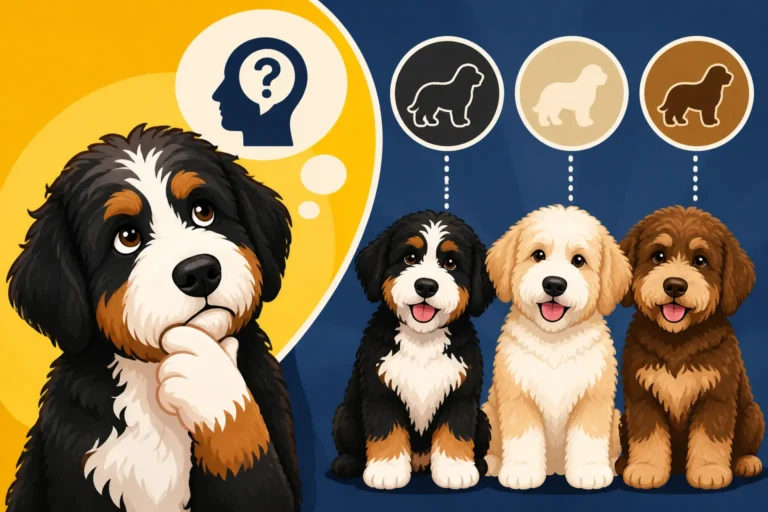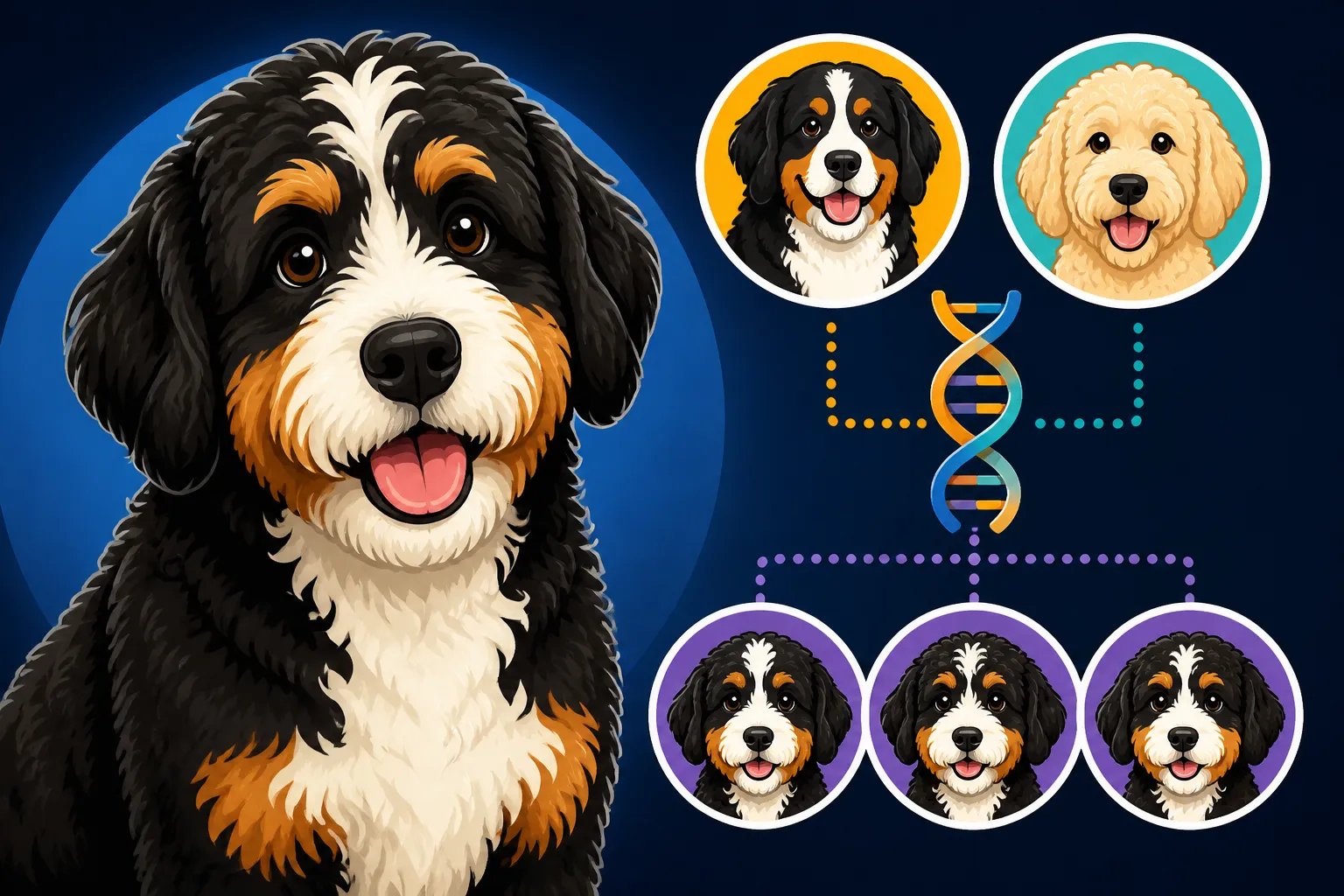
The Genetics Behind a Bernedoodle’s Tri Markings
Oh, the allure of those stunning tri-color Bernedoodles! It’s what draws so many of us in, isn’t it? You see those beautiful black, white, and rust markings, and you just have to know how they get there. But then you start digging, and suddenly you’re swamped in terms like "A-locus" and "K-locus," and it feels like you need a genetics degree just to understand what you're looking at. If you’ve ever felt overwhelmed trying to figure out how that gorgeous pattern ends up on your furry friend, you're absolutely not alone. This guide is going to break down the fascinating science behind a Bernedoodle's tri markings, helping you understand the genetic puzzle pieces that come together to create that iconic look.
The Building Blocks of Bernedoodle Color Genetics
Before we dive into the specifics of a tri-color Bernedoodle, it's really helpful to get a handle on some basic canine color genetics. Think of it like a recipe. You need certain ingredients in certain amounts for the dish to turn out right. In dogs, these "ingredients" are genes, and they sit on different spots, called loci (plural of locus), on their chromosomes. Each locus controls a different aspect of coat color. When we talk about tri-color, we're really focusing on a few key players.
Understanding the A-Locus and Tri-Color Expression
One of the most crucial genes for tri-color is found at the A-locus, often referred to as the "Agouti" series. This locus is responsible for how and where colors are distributed on the dog's body, particularly the banding of color on individual hairs and the overall pattern of the coat. It’s where the magic happens for things like sable, fawn, and yes, our beloved tri-color.
Within the A-locus, there are several alleles (variations of the gene). For a tri-color pattern to even be a possibility, a dog needs to inherit at least one copy of the "at" allele, which stands for "tan points" or "phantom." If a dog has two copies, written as at/at, they have the genetic potential for a tri-color or phantom pattern. One copy (Ay/at or at/a) can also result in a phantom or tri-color, depending on other genes. These tan points are what give the rust-colored eyebrows, cheek patches, and leg markings that are so distinctive in a tri-color Bernedoodle. Without at least one at allele, a true tri-color pattern, which relies on those distinct tan points, simply won't form.
The Importance of the K-Locus
Now, having the at/at genes at the A-locus is a great start, but it's not the whole story. Imagine you have the ingredients for a cake, but you need an oven to bake it. The K-locus is kind of like that oven. It determines whether those beautiful tan points from the A-locus actually show up on the dog.
The K-locus has a dominant allele called KB (often written as K^B), which stands for "dominant black." This gene has a powerful effect: if a dog inherits even one copy of KB, it will express a solid black coat (or solid brown/blue/lilac if other genes are at play), completely masking any tan points that might be present at the A-locus. So, a dog could be genetically at/at, meaning it has the tri-color potential, but if it also has KB/KB or KB/ky at the K-locus, those tan points will be hidden, and the dog will appear solid colored. For the tri-color pattern to be visually expressed, the dog must be ky/ky at the K-locus, meaning it has two copies of the "non-black" allele, allowing the A-locus pattern to shine through. This is why you can have two solid black Bernedoodle parents who carry the right genes, and suddenly, a tri-color puppy appears in the litter, much to everyone's surprise and delight!
The B-Locus and Liver/Chocolate Markings
While the A and K loci dictate the pattern of tri-color, the B-locus influences the color of the darker pigment. Most traditional tri-color Bernedoodles have black as their dominant dark color. This is controlled by the B-locus, where the dominant allele B produces black pigment.
However, if a dog inherits two copies of the recessive allele b (b/b), all of its black pigment turns to liver or chocolate. This means a tri-color Bernedoodle that is b/b would be a "chocolate tri." Instead of black, white, and rust, you'd see chocolate, white, and rust markings. These are less common than traditional black tri-colors but are equally striking. It's just another layer of genetic possibility that breeders consider when planning litters. You might find a gorgeous dark chocolate pup on Chewy's pet adoption listings, and knowing this genetic background helps you understand why some dogs look a little different.
How the Bernese Mountain Dog Influences Tri-Color
The Bernedoodle is a cross between a Bernese Mountain Dog and a Poodle, and understanding the typical genetic makeup of each parent breed is key to predicting the likelihood of tri-color puppies. This is where the mix gets really interesting, as the two breeds bring different genetic strengths to the table.
The Bernese Mountain Dog's Genetic Blueprint
The Bernese Mountain Dog is inherently a tri-color breed. This isn't just a coincidence; it's because almost all Bernese Mountain Dogs carry the specific genetic combination needed for tri-color expression. They are typically at/at at the A-locus (meaning they have two copies of the tan point gene) and ky/ky at the K-locus (meaning they don't have the dominant black gene that would hide those tan points). Additionally, they usually carry two copies of the dominant black gene at the B-locus (B/B), which ensures their dark patches are black, not brown.
So, when you see a purebred Bernese Mountain Dog, you're seeing a living, breathing example of exactly the genetic combination we're trying to understand for tri-color Bernedoodles. They are the gold standard for tri-color in the Bernedoodle lineage, and this strong genetic foundation is why the tri-color pattern is so common and sought after in their crossbred descendants.
The Poodle's Genetic Contribution
Poodles, on the other hand, come in a vast array of colors and patterns. While many Poodles are solid colored, they can carry the at allele at the A-locus and the ky allele at the K-locus, allowing for phantom or tri-color patterns. In fact, phantom Poodles display a similar black and rust pattern to what we see in the tri-color Bernedoodle, just without the white markings. This means a Poodle used in a Bernedoodle breeding program could be a carrier for the tri-color genes, even if it doesn't visually display them itself.
The key is that not all Poodles carry these genes. Many Poodles are KB/KB at the K-locus, meaning they are genetically solid colored and would mask any tan points from the A-locus. So, if a Bernese Mountain Dog (who is at/at, ky/ky) is bred with a solid-colored Poodle who is KB/KB, all the resulting puppies (F1 Bernedoodles) will inherit at least one KB gene and therefore be solid colored, even though they will carry the at gene from their Bernese parent. This explains why an F1 Bernedoodle isn't always tri-color, despite having a tri-color Bernese parent. You might see breeders talking about a Poodle's "color panel" – that's what they're testing for to ensure they know what genetic cards their Poodle holds!
F1 vs. F1b and Tri-Color Likelihood
Understanding the F (filial) generation designations is crucial for predicting tri-color Bernedoodles.
-
F1 Bernedoodle: This is a first-generation cross, meaning one parent is a purebred Bernese Mountain Dog, and the other is a purebred Poodle.
- If the Bernese parent is at/at, ky/ky, B/B (as they usually are for tri-color) and the Poodle parent is KB/KB (solid black), then all F1 puppies will inherit at from the Bernese and KB from the Poodle. This makes them at/at, KB/ky. Because they have the dominant KB gene, they will appear solid black (or brown, depending on the B-locus of the Poodle). They are genetically tri-color carriers, but the pattern is masked. So, for the question Whether an F1 Bernedoodle Can Be Tri Color, the answer is typically no, not if the Poodle parent is dominant black (KB/KB).
- However, if the Poodle parent is ky/ky and at/at (a phantom Poodle, for example), then an F1 Bernedoodle could be tri-color, as it would receive at/at and ky/ky from both parents, allowing the pattern to express. This is less common but certainly possible.
-
F1b Bernedoodle: This is a backcross, meaning an F1 Bernedoodle is bred back to a purebred Poodle. This is often done to increase the non-shedding qualities or to introduce more specific genetic traits.
- If the F1 Bernedoodle parent is a solid black at/at, KB/ky (a carrier from the previous example), and it's bred to a Poodle that is ky/ky (meaning the Poodle doesn't have the dominant black masking gene), then there's a 50% chance for each puppy to inherit the ky from the F1 parent and the ky from the Poodle parent, resulting in a ky/ky puppy that can express its tri-color pattern. This is why F1b generations often see a higher percentage of tri-color pups, as breeders can select Poodles known to carry the necessary recessive genes.
- This also addresses the question of Whether an F1b Bernedoodle Loses the Markings – quite the opposite! If bred strategically, the F1b generation can be where the tri-color markings become more reliably expressed, especially if the F1 parent was a carrier and the Poodle parent was chosen for specific recessive traits.
This genetic dance is why you sometimes see litters where only a few pups are tri-color, even if one parent is a gorgeous Bernese Mountain Dog.
Decoding the Visuals: What Makes a Tri-Color Bernedoodle
When we talk about "tri-color," we're not just throwing around a fancy term. It refers to a very specific, recognizable pattern of three distinct colors on the dog's coat. This is often the mental image most people conjure when they think of a Bernedoodle.
The Signature Black, White, and Rust
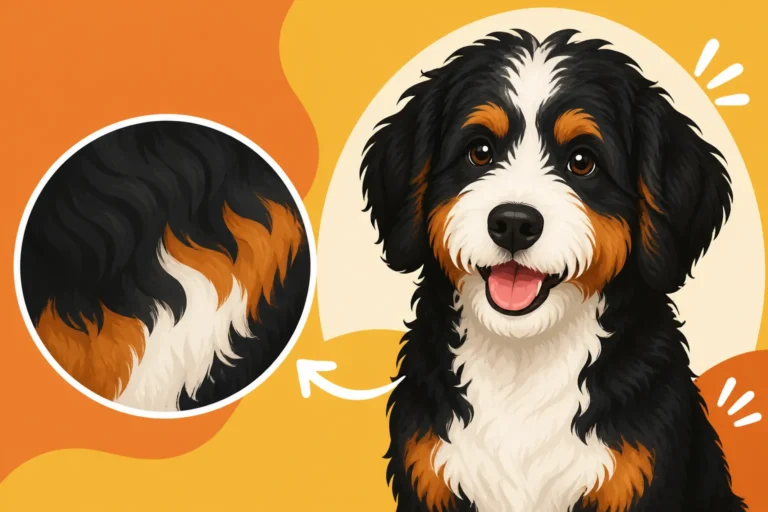
A traditional tri-color Bernedoodle is truly a work of art, displaying a stunning canvas of three distinct shades. The primary color is usually a rich, deep black, covering the majority of the dog's body. This isn't just a generic black; it's a vibrant, often glossy black that forms the backdrop for the other two colors.
Then you have the white markings, typically found on the chest, paws, tail tip, and often as a blaze extending up between the eyes. This white can be pure and crisp, providing a striking contrast against the black. Finally, and perhaps most characteristic, are the rust or tan points. These are warm, reddish-brown patches that appear in specific locations: above the eyes (like eyebrows), on the cheeks, sometimes on the inside of the legs, and around the vent (under the tail). It's these rust points, combined with the white, that truly complete the tri-color picture. The Rust and White Markings a Tri Bernedoodle Carries are unmistakable, giving the dog an expressive and often soulful look. When you see a Bernedoodle with this classic combination, you're seeing What a Traditional Tri Color Bernedoodle Looks Like in its full glory.
Variations and Hidden Genetics
While the classic black, white, and rust is what most people picture, there are fascinating variations that can occur due to other genetic influences. For example, a "chocolate tri" Bernedoodle will have liver or brown instead of black as its dominant base color, still accented by white and rust. This is due to the b/b genotype at the B-locus, as discussed earlier.
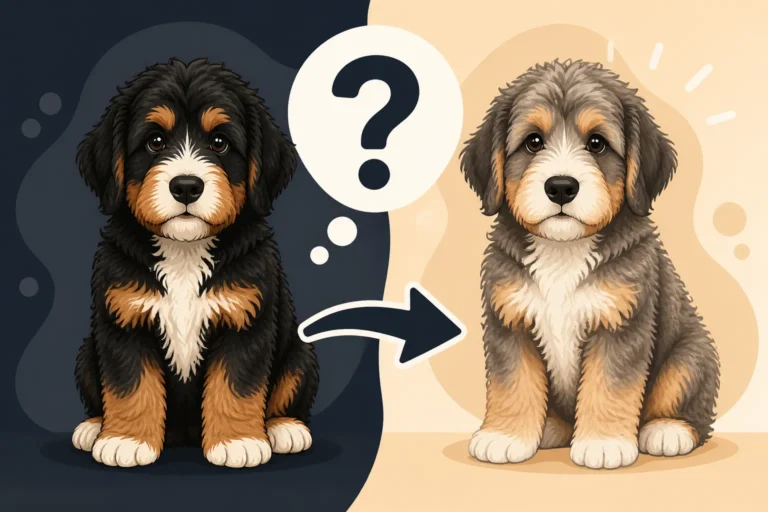
Furthermore, a Bernedoodle can be genetically tri-color but visually appear different. Some dogs might have extremely minimal white or rust markings, making them appear almost solid black or phantom. Other genetic modifiers, like those for progressive graying or fading, can cause the black parts of the coat to lighten over time, turning charcoal or silver. This means a puppy might be born a vibrant black tri, but as they mature, their black coat could "clear" to a softer shade, which can sometimes surprise owners who were expecting the color to remain constant. It’s a subtle reminder that genetics are complex and sometimes hold delightful surprises!
Why Tri-Color Can Be "Harder" to Achieve
It's a common frustration for prospective Bernedoodle owners: why isn't every Bernedoodle a tri-color, especially when the Bernese Mountain Dog parent is always tri-colored? The answer, as we've delved into, lies squarely in the Poodle's genetics. As mentioned, for a tri-color pattern to visibly express, the dog needs to be at/at at the A-locus AND ky/ky at the K-locus.
The Bernese Mountain Dog reliably provides the at/at and ky/ky genes. The Poodle, however, often carries the dominant black gene (KB). If a Poodle carries even one copy of KB, and passes it to an F1 Bernedoodle puppy, that puppy will appear solid, regardless of the tri-color genes it inherited from the Bernese parent. This means Whether Tri Color Is Recessive in Bernedoodles is essentially true in practice, as the expression relies on two specific recessive alleles (at/at and ky/ky) being present without the dominant KB masking gene.
So, while the tri-color gene set is indeed present and strong in the Bernese line, it requires specific genetic combinations from the Poodle side, or through subsequent generations (like F1b crosses with ky/ky Poodles), for those gorgeous markings to actually show up. This selective process is why Whether Two Tri Parents Guarantee a Tri Bernedoodle isn't a simple "yes" – you still have to ensure the K-locus genes align correctly. This complexity makes finding a perfectly marked tri-color feel like winning the genetic lottery sometimes, and it's certainly a factor in What a Traditional Tri Color Bernedoodle Costs due to breeding difficulty.
Ethical Breeding and Genetic Testing
Understanding the genetics behind a Bernedoodle's tri markings isn't just for curiosity; it's a critical aspect of responsible breeding. Ethical breeders don't just hope for a certain coat color; they understand the science to make informed decisions that benefit the health and predictability of their puppies.
The Role of Genetic Testing for Color
Gone are the days when breeders had to guess what genes their dogs carried. Today, advanced genetic testing for dogs is readily available and widely used by reputable breeders. These tests can analyze a dog's DNA and identify the specific alleles present at key loci, including the A-locus, K-locus, and B-locus. This means a breeder can know, with certainty, whether their Poodle carries the dominant black gene (KB) or the recessive ky gene, or if their Bernedoodle is a carrier for a chocolate coat (b/b).
By testing both parent dogs, a breeder can predict the probability of certain coat colors and patterns in a litter. This isn't just about meeting demand for popular colors like tri-color; it also helps prevent accidental breeding outcomes, like undesirable patterns or even double merle issues (though merle is a different gene, the principle of knowing genetic combinations applies). It's a testament to how far canine genetics have come, allowing breeders to make incredibly precise and responsible choices. When considering a puppy, asking about the color genetics of the parents, especially their K-locus status, can be very insightful.
Beyond Color: Prioritizing Health Clearances
While coat color genetics are fascinating, it's absolutely crucial to remember that they are only one small piece of the puzzle when it comes to responsible breeding. Far more important are comprehensive health clearances. A beautiful tri-color coat is wonderful, but a healthy, long-lived companion is priceless. Reputable Bernedoodle breeders will prioritize genetic testing for health conditions that can affect both Bernese Mountain Dogs and Poodles.
This includes screening for hip and elbow dysplasia, eye conditions, cardiac issues, and genetic diseases like Von Willebrand's disease and Degenerative Myelopathy. For instance, testing for The SOD1 Test Both Bernedoodle Parents Need or checking for Von Willebrand's Disease in a Bernedoodle are far more important than just knowing if a puppy will be tri-color. Always look for a breeder who is transparent about The Five Clearances a Bernedoodle Breeder Should Have and who can provide evidence of these tests for both parent dogs. Don't be shy about asking Whether a Bernedoodle Breeder Should Show OFA Numbers or other certification results. A truly responsible breeder will be eager to share this information and discuss their health protocols.
Understanding Breeder Claims and Expectations
When you're searching for a Bernedoodle, you'll encounter all sorts of breeders and claims. Some might market "rare" colors or guarantee a specific pattern. It's important to approach these claims with a critical eye, especially when it comes to coat color. As we've seen, while the genetics can predict probabilities, nature still has a way of throwing in surprises. Plus, some of the descriptions can be a bit fluid!
Instead of focusing solely on color, prioritize breeders who are knowledgeable about the full genetic profile of their dogs, both for color and, more importantly, for health. They should be able to explain the genetic background of their parent dogs and why they expect certain outcomes, rather than just making vague promises. Ask about the heritage of the Bernese and Poodle lines, and if they've had success producing consistent tri-color patterns. This thoroughness is a sign of a breeder who understands the breed deeply, not just superficially. If a breeder focuses too much on "rare" colors and less on health and temperament, it might be a red flag. Remember, a Bernedoodle's personality and health are far more important than its exact markings, though a beautiful tri-color is certainly a bonus! You might even find yourself ordering special shampoos and conditioners from Chewy for that gorgeous coat, or perhaps an extra durable chew toy for a teething pup. Don't forget to have a cozy bed ready for them – perhaps a comfortable orthopedic one from Chewy – as they grow, regardless of their eventual markings.
| Locus | Key Alleles for Tri-Color | Effect | Typical Bernese Contribution | Typical Poodle Contribution (Variable) |
|---|---|---|---|---|
| A-Locus | at (tan points) | Controls distribution of black/tan pigment; at/at needed for pattern | at/at | at (can be present, but often masked) |
| K-Locus | ky (non-black) | Allows A-locus pattern to show; ky/ky needed to express tri-color | ky/ky | KB (dominant black) or ky |
| B-Locus | B (black pigment) | Determines if dark pigment is black or brown/liver | B/B | B or b (brown/liver) |
This table illustrates how the combination of genes at these three loci ultimately determines whether a Bernedoodle expresses the classic tri-color pattern. It's truly a dance of genetics! Many owners prefer to research and purchase a wide variety of toys and enrichment items through reliable online retailers like Chewy as they enjoy their beautiful pups.
Disclaimer
This article is for general informational purposes only and does not constitute professional advice. Laws, prices and regulations vary by location and change over time. Consult a qualified professional for guidance on your specific situation.